Hello! In our last lesson, we dove into affinity diagramming, a powerful technique for transforming a chaotic collection of interview notes into clear, organized themes. You learned how to group raw data to uncover user needs, pain points, and motivations. This process gave you a structured understanding of what your users are experiencing.
Now, we'll take the next crucial step in the UX research process. This lesson focuses on bringing those synthesized themes to life by constructing a user persona. A persona is a fictional character created to represent a user type that might use a site, brand, or product in a similar way. By creating a persona, we move from abstract data points ("users are frustrated with navigation") to a tangible, empathetic representation ("Sarah, a busy working mom, gets lost trying to find the returns page"). This artifact will become a cornerstone for all your future design decisions.
By the end of this lesson, you will be able to take the qualitative themes you've identified and construct a detailed, data-driven user persona.
What is a User Persona, and Why Bother?
At its heart, a user persona is a tool for building empathy. As a graphic designer, you are already familiar with designing for a specific audience or brand identity. Personas serve a similar purpose but in a much more specific and human-centered way. They prevent us from designing for a generic "user" and instead force us to focus on the goals, behaviors, and frustrations of a representative individual.
They are not simply "made up" characters; they are composites built directly from the patterns you discovered in your user research. Let's watch a short video from Google's UX Design Certificate course that explains what personas are and why they are so vital for building empathy and making better design decisions.
The Importance of Empathy in UX Design | Google UX Design Certificate
This video provides an excellent overview of the role personas play in the UX design process.
Please watch the introduction to what personas are, from the definition, and then the segment explaining why they are so important for building empathy, storytelling, and stress-testing designs.
As the video highlighted, personas help humanize data, tell a compelling story to stakeholders, and ensure we're designing for a diverse range of real-world needs. They serve as our north star, keeping the team grounded in the user's perspective throughout the design process.
The Anatomy of a User Persona
A persona document is a one-page summary that brings your character to life. While the exact format can vary, most persona templates include a standard set of components designed to give a holistic view of the user.
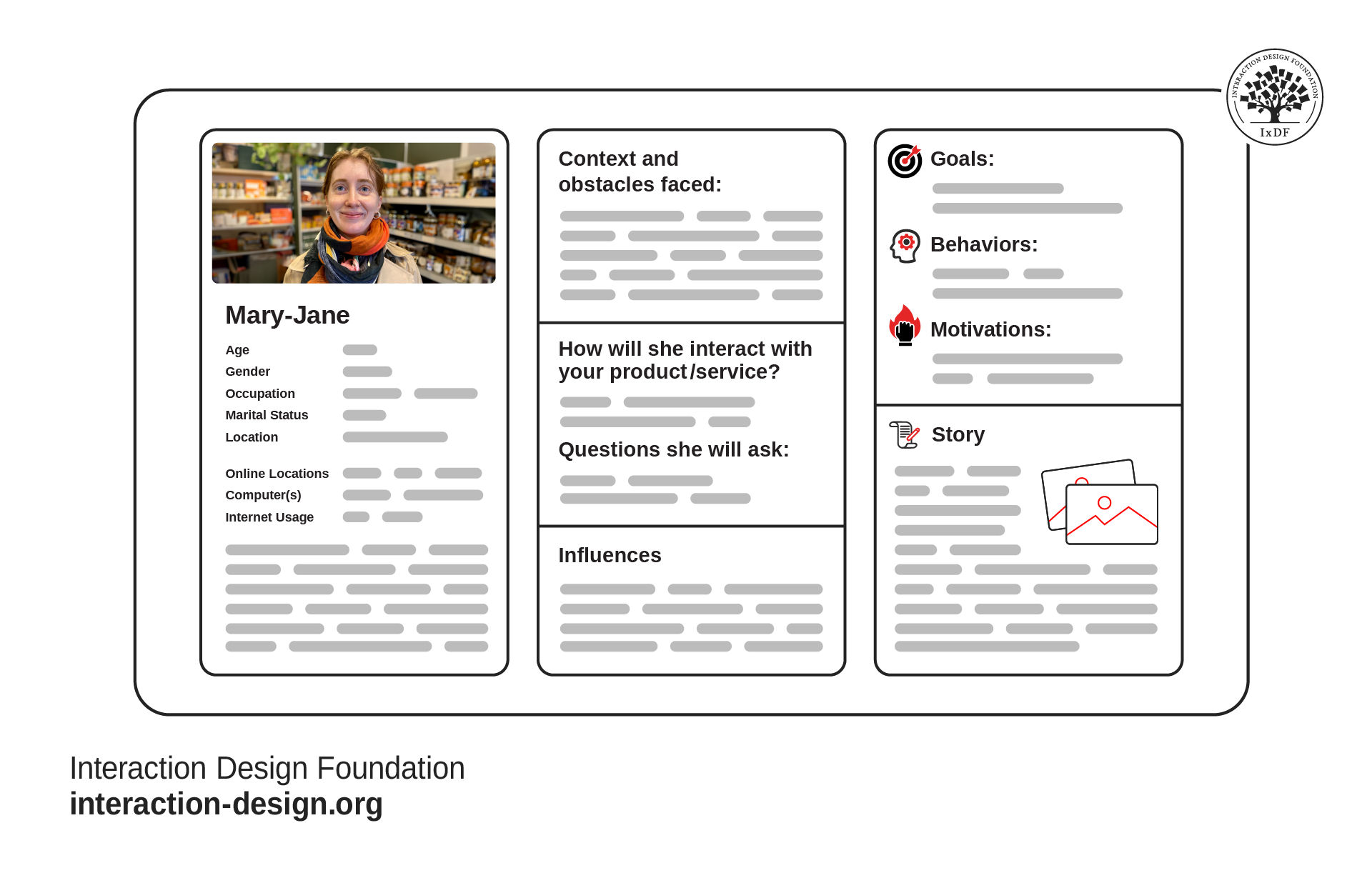
Let's break down these essential building blocks.
Transforming Qualitative Data to User Personas | Blogs
This article from PrepsUs outlines the core components of a detailed persona.
Find the section titled "Step 4: Build Detailed User Personas" and read the list of building blocks, from the "Photo" to the "Problems" section. This will give you a clear understanding of what information goes into each part of the persona.
As you can see, a strong persona includes:
- Photo & Name: To give the persona a human face and make them memorable.
- Demographics: Basic factual details like age, occupation, and location. This helps to contextualize the user.
- Bio / Story: A short narrative that summarizes the persona's background and current situation relevant to the product.
- Goals: What the user is trying to achieve. This is arguably the most important section.
- Frustrations / Pain Points: What is currently blocking them from achieving their goals?
- Motivations & Behaviors: What drives them, and how do they typically act?
The Process: From Research Data to a Living Persona
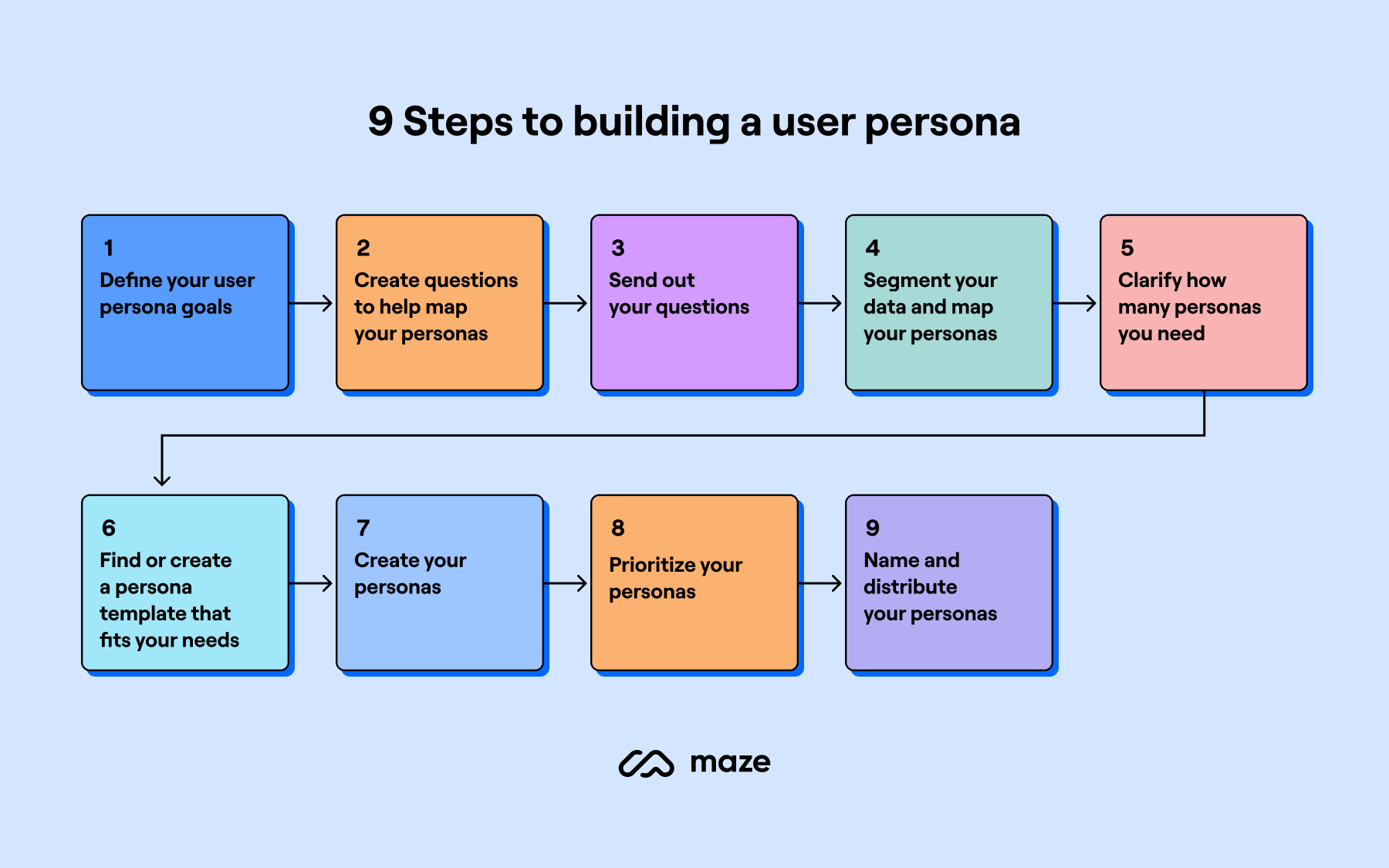
Now for the most important part: how do we actually create a persona from the themes we generated in our affinity diagram? The process involves analyzing your data for patterns, grouping users into segments, and then filling out the persona template with information drawn directly from those data clusters.
The image below shows a high-level overview of the steps involved. We will be focusing on the steps that bridge research analysis (steps 1-4) with the actual creation of the persona artifact (steps 6-9).
Step 1: Analyze and Segment Your Audience
Your affinity diagram from the last lesson has already done most of the heavy lifting. You have groups of notes clustered around specific themes (e.g., "Concerns about price," "Needs help with setup," "Wants faster performance"). The next step is to look for patterns across your research participants. Do certain users consistently exhibit similar goals, behaviors, and pain points? These patterns form the basis of your user segments.
For example, you might notice that one group of users is highly tech-savvy, values efficiency above all else, and is frustrated by pop-ups. Another group might be less confident with technology, need clear instructions, and be motivated by security features. These two groups represent two distinct segments, and each could be developed into a persona.
The following resource provides a great guide on how to perform this segmentation.
10 steps to creating a persona—a guide with examples
This article from UXPressia offers a practical method for segmenting your audience based on behavioral attributes found in your research.
Please read Step Two: Segment your audience. Pay close attention to the idea of using scales to map participants' behaviors and identify clusters.
Step 2: Build the Persona Document
Once you have identified your primary user segment, it's time to build the persona. You'll give them a name and find a stock photo that feels appropriate. Then, you'll go section by section, filling in the details using the data from your research synthesis.
- Goals & Frustrations: Pull these directly from the names of your affinity diagram clusters. If you have a cluster named "Frustrated by complex checkout," your persona's pain point is "Complex checkout process."
- Bio & Demographics: Synthesize the background information from the participants who make up your chosen segment. If 80% of them are in their 30s and work in marketing, your persona should reflect that.
- Quote: Look through your raw interview notes for a direct quote that powerfully summarizes the persona's main goal or frustration.
The following video provides an excellent, practical walkthrough of this entire process.
How To Create A User Persona (Video Guide)
This guide from CareerFoundry demonstrates how to fill out a persona template step-by-step.
Watch from the beginning of the process. The video walks you through: Adding a header (name, photo, quote). Adding a demographic profile. Defining the end goal. Writing a narrative scenario. Tips on keeping the persona focused and relevant.
Conclusion
In this lesson, you've learned how to bridge the gap between raw data and human-centered design. User personas are not just decorative documents; they are powerful strategic tools that ensure your design decisions are grounded in real user needs. They build empathy, foster alignment within a team, and ultimately lead to more successful products.
Here are your key takeaways:
- Personas Humanize Data: They transform abstract research findings (from your affinity diagram) into a relatable, memorable character.
- They are Data-Driven: Personas are not based on assumptions but are built from the patterns and themes discovered through qualitative user research.
- Anatomy of a Persona: A typical persona includes a photo, name, demographics, a bio, and, most importantly, the user's goals, motivations, and pain points.
- The Process: Building a persona involves segmenting your research participants into groups with similar behaviors and then synthesizing data from that group to fill out a persona template.
Now that you know how to create a persona to represent who you are designing for, our next lesson will focus on what that person does. We will learn how to create a user journey map, an artifact that visualizes the steps your persona takes to achieve their goals, helping us pinpoint exact moments of frustration and opportunity.