In our last lesson, we mapped the market's food chain, identifying the predators, the prey, and the house that always wins. You learned that the market isn't a level playing field but a fiercely competitive ecosystem where wealth is systematically transferred from the uninformed to the informed.
Today, we expand our map from the players to the battlefields themselves. The market is not a single game; it's a collection of different arenas, each with its own physics, rules of engagement, and dominant species. This lesson addresses the learning outcome: understanding what stocks, bonds, commodities, FX, crypto, and derivatives are, and more importantly, what kind of game is played in each arena. Mastering this is crucial. Applying a stock-picking mindset to the oil market is like trying to win a chess match using the rules of poker—a guaranteed way to lose your stack.
Defining the Arenas: What is an Asset Class?
Formally, an asset class is a group of investments that share similar characteristics, behave similarly in the marketplace, and are subject to the same laws and regulations. Think of it as categorizing military hardware: tanks, fighter jets, and submarines are all weapons, but you wouldn't use a submarine in a desert battle.
This categorization is the foundation of professional portfolio management and tactical trading. Different asset classes react differently to economic events. When fear grips the stock market, capital might flee to the perceived safety of government bonds or gold. Understanding these relationships is the first step toward thinking in a macro-aware, probabilistic way.
Let's begin by getting a clear, high-level overview of the main asset classes.
What Are Asset Classes? What Are the Different Types? - tastylive
This article from tastylive provides a concise definition and a comprehensive list of the major asset classes.
First, read the introductory section, What is an asset class?, to solidify the formal definition. Then, review the bulleted list under Different types of asset classes to familiarize yourself with the names of the key categories we will be dissecting.
Now that you have the textbook definitions, let's dissect the game behind each one.
The Asset Class Breakdown: Understanding the Game
We will explore the primary asset classes through a simple framework:
- What it is: The textbook definition.
- The Game: The strategic objective. How do you win? What are the core dynamics? Who are the dominant players?
For a broad video overview of these investment types, you can watch the following. It's a good primer before we get into the tactical analysis.
Every Type of Investment Explained for Beginners
The video "Every Type of Investment Explained for Beginners" gives a solid introductory rundown of the most common investment vehicles.
Watch the sections on Stocks, Bonds, Mutual Funds/ETFs, Real Estate/REITs, Cryptocurrencies, Commodities, and Options. Focus on the core description of each asset and its main pros and cons. Don't worry about memorizing every detail; we are building a mental map.
1. Equities (Stocks)
- What it is: A share of ownership in a publicly traded company.
- The Game: This is a game of growth and narrative. When you buy a stock, you are betting on the company's future ability to generate more cash flow than the market currently expects. The long-term game is about identifying businesses with durable competitive advantages ("moats") and reinvesting capital at high rates of return. The short-term game is a brutal psychological war fought over quarterly earnings, sentiment, and news flow. The predators we discussed in the last lesson—hedge funds and market makers—thrive here, exploiting the behavioral biases of retail and the cumbersome nature of large institutions. Winning requires you to either have a longer time horizon than everyone else (the investor's edge) or a better understanding of near-term catalysts and positioning (the trader's edge).
2. Fixed-Income (Bonds)
- What it is: A loan made to a corporation or government, which pays you interest ("coupon") and returns your principal at a future date ("maturity").
- The Game: This is a game of creditworthiness and interest rate trajectory. It's fundamentally defensive. You aren't betting on explosive growth; you are betting that the borrower won't go bankrupt. The primary way to win is by correctly assessing the risk of default and locking in a yield that compensates you for that risk. The second, more complex game is speculating on the direction of central bank interest rates. When rates fall, the value of existing, higher-yielding bonds rises. This is the arena of pension funds, insurance companies, and the bedrock of the global financial system. It's less volatile than stocks, but it is the ocean upon which the equity ship sails.
3. Commodities
- What it is: Raw, physical goods like crude oil, gold, copper, or wheat.
- The Game: This is a game of pure, physical supply and demand. Unlike a stock, a barrel of oil doesn't have a CEO, a marketing department, or a quarterly earnings report. It doesn't grow or innovate. Its value is driven by global economic growth (demand), production levels (supply), geopolitics, and weather. It's a primal market. The game is won by macro forecasters who can anticipate supply disruptions or shifts in global demand. Commodities are also a primary tool for hedging against inflation. When the value of paper money erodes, the value of tangible "stuff" tends to hold firm.
4. Currencies (Forex or FX)
- What it is: The exchange of one country's currency for another (e.g., buying US Dollars with Indian Rupees).
- The Game: This is a relative value game on a global scale. You are not betting on the absolute strength of a currency, but on its strength relative to another. It's the largest and most liquid market in the world. The game is a grand chess match between economies, driven by interest rate differentials, economic growth, capital flows, and central bank policy. High leverage is standard, meaning small price movements can lead to massive gains or losses. This is the domain of central banks, massive hedge funds, and corporations hedging their international operations. It is an exceptionally difficult game for retail traders due to the complexity of macro factors and the extreme speed.
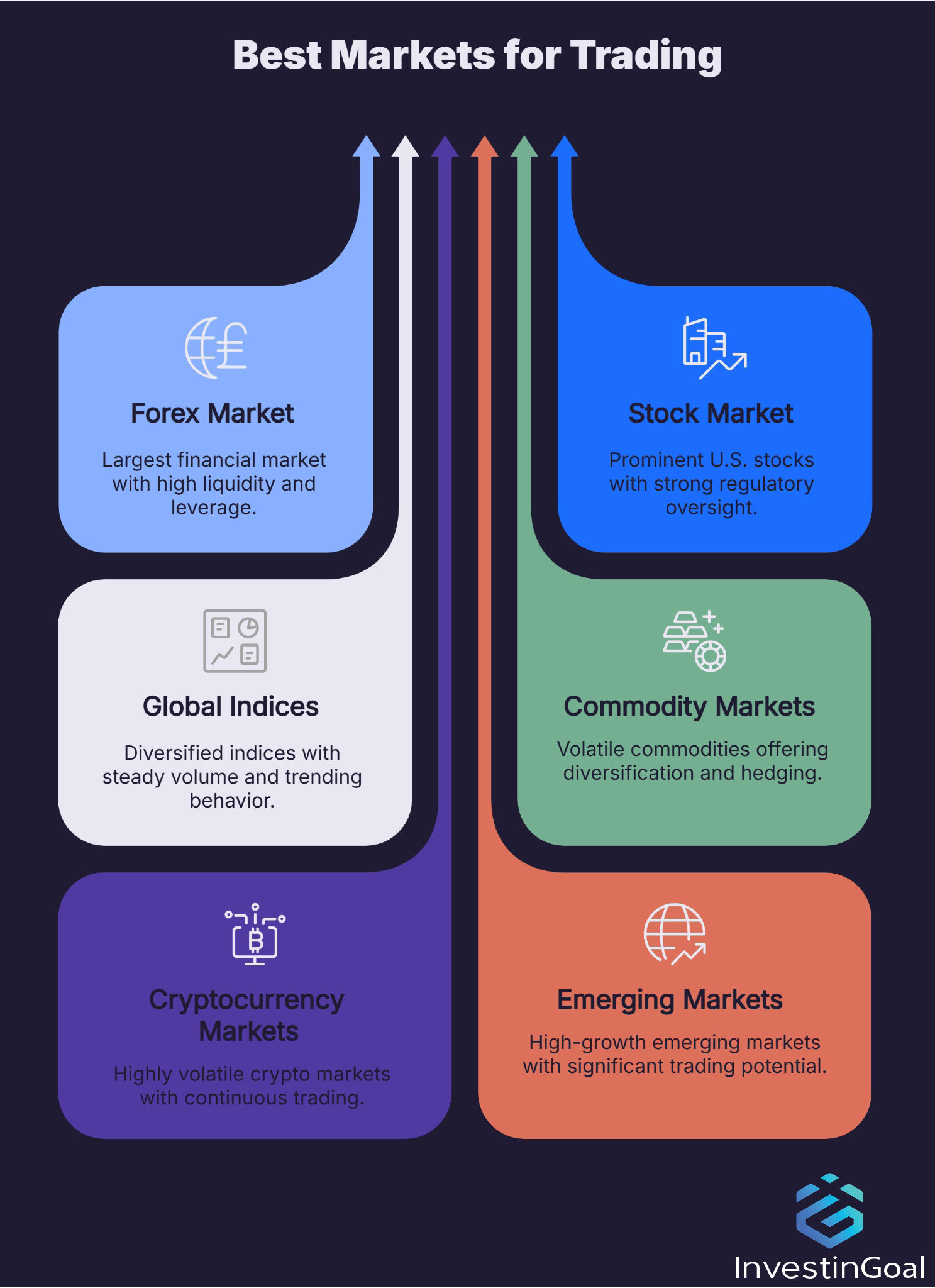
To crystallize the differences between the three most common speculative arenas—Equity, Commodity, and Forex—let's examine a direct comparison.
This article from Enrich Money provides an excellent, structured comparison of these three core asset classes.
First, study the table under Differences at a Glance. This is a powerful cheat sheet. Then, read the Detailed Differences section for an elaboration on each point in the table. Focus on the core distinctions in Nature of Asset, Ownership, and Market Structure.
5. Cryptocurrencies
- What it is: Digital or virtual tokens that exist on a distributed ledger, or blockchain.
- The Game: The "Wild West." This is a game of technology adoption cycles and pure narrative. There are no cash flows or dividends in the traditional sense. Value is driven by belief in the technology's future utility, network effects, and highly reflexive sentiment. The game is dominated by venture capitalists who get in early, developers building the protocols, and highly sophisticated quantitative firms that exploit the market's inefficiencies and volatility. For everyone else, it is largely a game of speculation on momentum and narrative, making it an environment of extreme risk and potential reward.
6. Derivatives (Options and Futures)
- What it is: Financial contracts that derive their value from an underlying asset like a stock, commodity, or index. They are not assets themselves, but tools for speculating on or hedging the price movements of other assets.
- The Game: This is a game of leverage, time, and volatility.
- Futures are a game of leveraged price direction. You're making a binding agreement to buy or sell an asset at a future date, at a price agreed upon today. It's a straightforward, though highly leveraged, bet on where the price will go.
- Options are a far more complex game. You're buying the right, but not the obligation, to buy or sell an asset. The game is won not just by being right about direction, but by being right about the timing and magnitude of the move before the option's value decays to zero. This is a game where professionals sell options to collect the premium from amateurs whose contracts expire worthless. This is the arena where a deep understanding of probability, volatility, and time decay (theta) provides a powerful edge. It is the fastest way for an amateur to be separated from their capital.
The Rotating Battlefield
No single asset class is the "best" performer forever. Leadership rotates based on the economic cycle, inflation, interest rates, and global events. An operator understands which battlefield is most favorable at any given time.

Conclusion
You have now mapped the major battlefields of the financial markets. You know that stocks are a game of growth, bonds a game of safety, commodities a game of physical supply and demand, and forex a game of macro chess. You also know that crypto is a high-stakes bet on new technology, and derivatives are weapons for leveraging views on time and volatility.
The key takeaway is that each asset class has a unique personality and requires a different strategy. The pop-finance idea of simply "investing" is dangerously vague. An operator asks, "What asset? What game am I playing? And what is my edge in this specific arena?"
In our next lesson, we will zoom in further. Now that you know the players and the playing fields, you must learn their language. We will cover the core market terminology—bid, ask, spread, volume, liquidity, and volatility—so you can start to read the tape and understand the action as it happens.