Introduction
In our last lesson, we explored the hidden machinery of the market—HFT, dark pools, and the constant technological battle for milliseconds of advantage. You learned that what you see on the screen is only a fraction of the story. Today, we equip you with a tool to act on the other side of the market: betting against a stock. This lesson is about short selling.
Most investors only know how to make money when prices go up. Market operators, however, must be able to profit in any environment. Short selling is the primary weapon for expressing a bearish view. But it is a weapon with a vicious recoil. Your objective for this lesson is to master the mechanics of this powerful strategy, understand its unique costs, and, most importantly, internalize the severe, asymmetric risks—like borrow costs, margin calls, and the catastrophic event known as a "short squeeze"—that can destroy even the most confident traders.
The Mechanics: How to Sell What You Don't Own
At its core, the principle of short selling is the inverse of traditional investing. Instead of "buy low, sell high," you aim to "sell high, buy low." But this raises an immediate logistical question: how do you sell something you don't own? The answer is: you borrow it.
The process involves several steps:
- Borrow: You borrow shares of a stock from your broker. These shares typically come from the accounts of other investors at the firm who have agreed to let their shares be loaned out.
- Sell: You immediately sell these borrowed shares on the open market at the current price. Your account is credited with the cash from this sale.
- Wait: You wait, hoping your bearish thesis plays out and the stock price falls.
- Buy to Cover: You buy back the same number of shares from the market at the new, lower price. This is called "covering your short position."
- Return: The shares you just bought are automatically returned to your broker, closing the loan.
- Profit (or Loss): The difference between the cash you received from the initial sale and the cash you spent to buy the shares back is your gross profit or loss.
To see this process explained clearly, the following video provides an excellent overview.
This video from The Plain Bagel explains the fundamental concept of short selling, including the mechanics of borrowing and the use of margin.
First, watch the section that defines the strategy as selling today and buying back in the future. Next, focus on how an investor can sell a stock they don't own. Pay close attention to the concepts of borrowing from a broker, "covering" the short, and the requirement for a margin account to act as collateral.
The Price of Pessimism: Borrow Costs and Other Fees
Unlike buying a stock, shorting comes with continuous costs that can eat away at your potential profits. This is a critical factor that many novice traders ignore.
Easy-to-Borrow vs. Hard-to-Borrow
Not all stocks are equally easy to borrow. Brokers categorize them into two main groups:
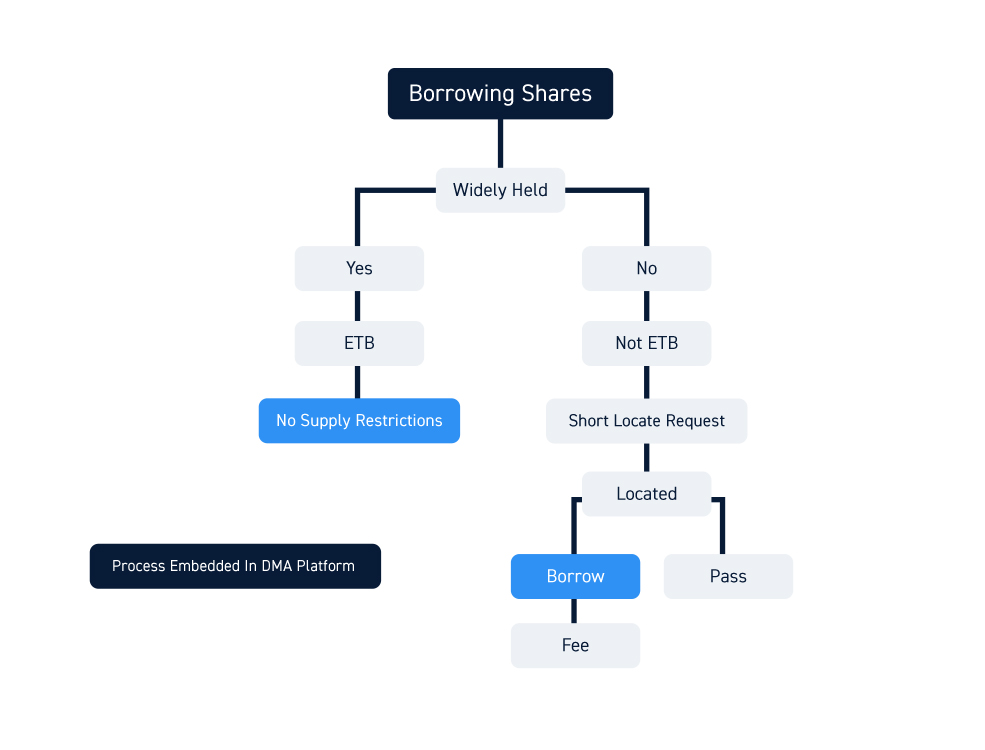
- Easy-to-Borrow (ETB): These are typically large, liquid stocks with enormous floats (like Reliance, HDFC Bank, or Apple). There is a vast supply of shares available to borrow, so the cost is negligible or zero.
- Hard-to-Borrow (HTB): These are often smaller, less liquid, or high-momentum stocks. The supply of lendable shares is limited. When many traders want to short the same stock, this high demand and low supply create a competitive market for borrowing shares.
To short an HTB stock, you must first pay a locate fee. This is a per-share cost you pay upfront just for the privilege of borrowing the shares for the day. This fee is determined by supply and demand and can become extremely expensive for stocks that are heavily targeted by short sellers.
The article below provides a clear, practical breakdown of this crucial distinction.
Hard-to-Borrow Stocks & Short Locates Explained - TradingSim
This article from TradingSim gives a trader's perspective on the real-world process and costs of shorting.
First, read the introduction to understand what HTB stocks are. Next, read the definition of a short locate fee. Note that you pay this fee regardless of whether you actually use the shares. Then, read the section explaining the difference between HTB and ETB stocks. Understand why stocks become hard to borrow — it's often linked to the very volatility that makes them attractive short targets. Finally, see how supply and demand dictate these costs, turning share lending into a profitable business for brokers.
The process of finding and paying for these shares is built directly into professional trading platforms. The flowchart below shows the decision path a trader takes.
Other Hidden Costs
Beyond locate fees, you are also responsible for:
- Dividends: If you are short a stock when it pays a dividend, you must pay that dividend amount out of your pocket to the lender of the shares.
- Margin Interest: Shorting requires a margin account. The value of the shares you borrow is effectively a loan from your broker, and you will pay interest on it.
The Asymmetric Bet: Unlimited Risk, Limited Reward
This is the single most important concept to understand about short selling. The risk/reward profile is dangerously skewed against the short seller.
- When you go long (buy a stock), your maximum loss is 100% of your investment (if the stock goes to zero). Your maximum gain is theoretically infinite.
- When you go short, your maximum gain is 100% of the initial value (if the stock goes to zero). Your maximum loss is theoretically infinite.
A stock can only fall to ₹0, but it can rise indefinitely.
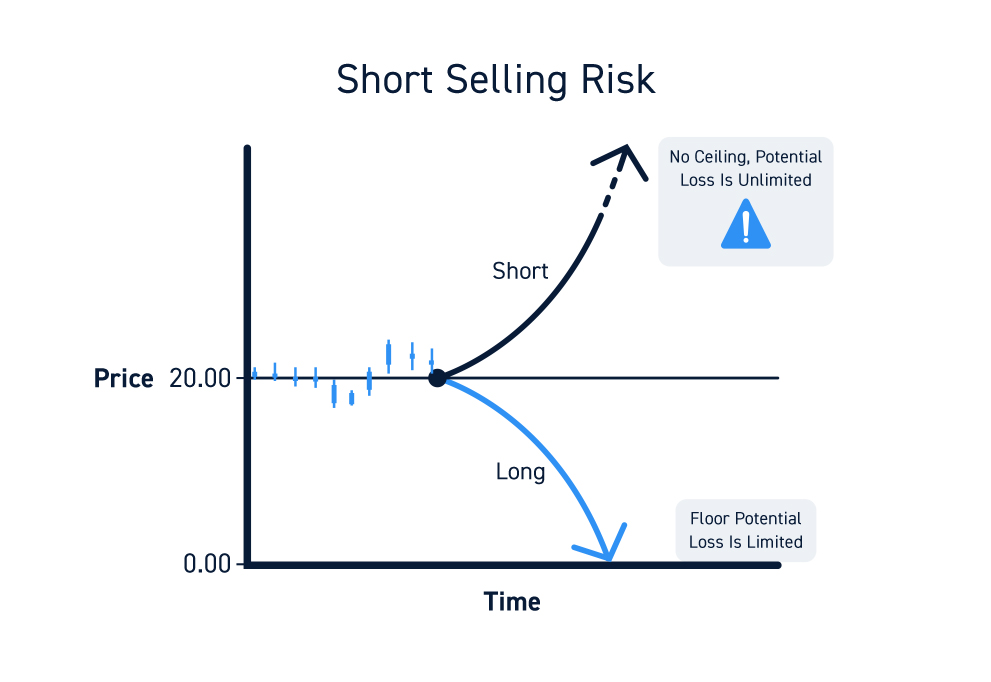
This isn't just a theoretical abstraction. It has very real consequences. As a stock you are shorting rises, your losses mount. Your broker will issue a margin call, demanding you deposit more cash to cover your growing losses. If you cannot, or if the price moves too fast, the broker will force you out of your position by buying back the shares at the current market price—whatever that may be. This is called forced liquidation, and it happens at the moment of maximum pain.
The following video provides a visceral, real-world perspective on this danger, using an extreme example that every aspiring market operator should burn into their memory.
Discover the Shocking Truth About Short Selling
This video from Warrior Trading moves from theory to the brutal reality of what happens when a short position goes wrong.
Watch the section starting from this example where a stock went from $20 to over $2,500. This illustrates the concept of unlimited loss in a way no textbook can. Then, watch the critical explanation of margin calls and auto-liquidation. This shows how a broker's risk management protocol will force you to buy back shares at the worst possible time, compounding the disaster.
The Short Squeeze: A Cascade of Forced Buying
A short squeeze is one of the most explosive phenomena in financial markets. It occurs when a heavily shorted stock starts to rise, triggering a cascade of forced buying that creates a violent, self-reinforcing price spike completely detached from the company's fundamentals.
Here’s the sequence of events:
- The Setup: A stock has high short interest (many traders are betting against it) and is often hard to borrow (high borrow costs).
- The Catalyst: Unexpected good news (an earnings beat, a new contract, a positive trial result) acts as a trigger, causing the stock price to start rising.
- The Cascade Begins: The initial price rise inflicts losses on short sellers. Some decide to cut their losses and "buy to cover." This buying adds more upward pressure on the price.
- Margin Calls: As the price climbs higher, more short sellers receive margin calls from their brokers. Unable to add more funds, they are forcibly liquidated. Their brokers' automated systems start buying shares at any price to close the positions.
- The Feedback Loop: This wave of forced, price-insensitive buying creates a supply-demand crisis. Long-only buyers might also jump in (FOMO). The price goes parabolic as the panicked short sellers all rush for the same small exit door.
The infamous GameStop saga in 2021 was a textbook short squeeze that resulted in a multi-billion dollar hedge fund, Melvin Capital, blowing up. This wasn't a case of amateurs getting wrecked; it was a supposedly sophisticated institution being destroyed by market mechanics they failed to respect.
Discover the Shocking Truth About Short Selling
Let's revisit the Warrior Trading video to see this dynamic in action.
The discussion of the GameStop squeeze and its impact on Melvin Capital is a perfect case study of this risk. The final piece of the puzzle is the explanation of how this imbalance occurs: short sellers covering, long holders canceling sell orders, and brokers auto-liquidating create a perfect storm.
Regulators have implemented rules to curb downward volatility, such as the Short Sale Restriction (SSR), also known as the "uptick rule." When a stock drops more than 10% from its previous day's close, SSR is triggered. For the rest of the day, you can only short the stock on an "uptick"—meaning you can only sell to a buyer who is actively bidding the price up. You cannot hit the bid to push the price down further. This is a crucial piece of market plumbing to be aware of.
Conclusion
You now understand that short selling is far more complex than simply clicking a "sell" button. It's a strategy that demands respect for market structure, costs, and a uniquely dangerous risk profile. While it can be a source of significant profit during market downturns or when a company's fundamentals are deteriorating, it is unforgiving of carelessness.
Key Takeaways:
- Mechanics: Shorting is the process of borrowing shares, selling them, and buying them back later at a lower price.
- Borrow Costs: Shorting is not free. You must pay locate fees for hard-to-borrow stocks, cover any dividends paid, and pay margin interest. These costs create a "negative carry" on your position.
- Asymmetric Risk: The defining feature of shorting is its risk profile: your profit is capped at 100%, while your potential loss is theoretically unlimited.
- Short Squeeze: This is the ultimate risk, where a price rise triggers a feedback loop of forced buying from covering short sellers and margin calls, leading to a catastrophic price spike.
In our next lesson, we will shift our focus from the aggressive, tactical world of short selling to the massive, strategic force of Indexes, ETFs, Mutual Funds, and Passive Flows. You will learn how the trillions of dollars flowing into passive investment vehicles can systematically distort prices and create opportunities and risks of their own, often operating on a much grander scale than the events we've discussed today.