Introduction
In our last lesson, we established the core engine of valuation: the time value of money. You saw that a company's worth is the present value of its future cash flows and, crucially, how sensitive that value is to assumptions about growth (g) and the discount rate (r). That raises the immediate, critical question: what exactly are these "future cash flows" we're supposed to discount?
This lesson provides the answer. We will dissect and calculate the most important cash flow metric in valuation: Free Cash Flow to the Firm (FCFF). This isn't just an accounting exercise; it's about cutting through the noise of reported profits to find the raw, unlevered cash a business generates. This is the true economic engine of the company, the cash available to pay all its investors, both debt and equity holders. Mastering this calculation is the first major step in building a Discounted Cash Flow (DCF) model from first principles.
What is Free Cash Flow to the Firm?
Think of a company's financial statements as a raw data feed. The Income Statement tells you about profitability, and the Balance Sheet gives you a snapshot of assets and liabilities. The Cash Flow Statement tracks cash movement, but it mixes operational cash with financing and investing activities.
For valuation, we need a cleaner signal. We need a number that represents the cash generated by the core business operations after accounting for the necessary reinvestments to maintain and grow those operations. This is FCFF. It's the cash pot left over that belongs to everyone who has a claim on the company—the shareholders (equity) and the lenders (debt).
The journey from the standard financial statements to FCFF is a process of adjustments. We start with a measure of profit and then correct it for accounting fictions (non-cash charges) and real cash investments (working capital and capital expenditures).
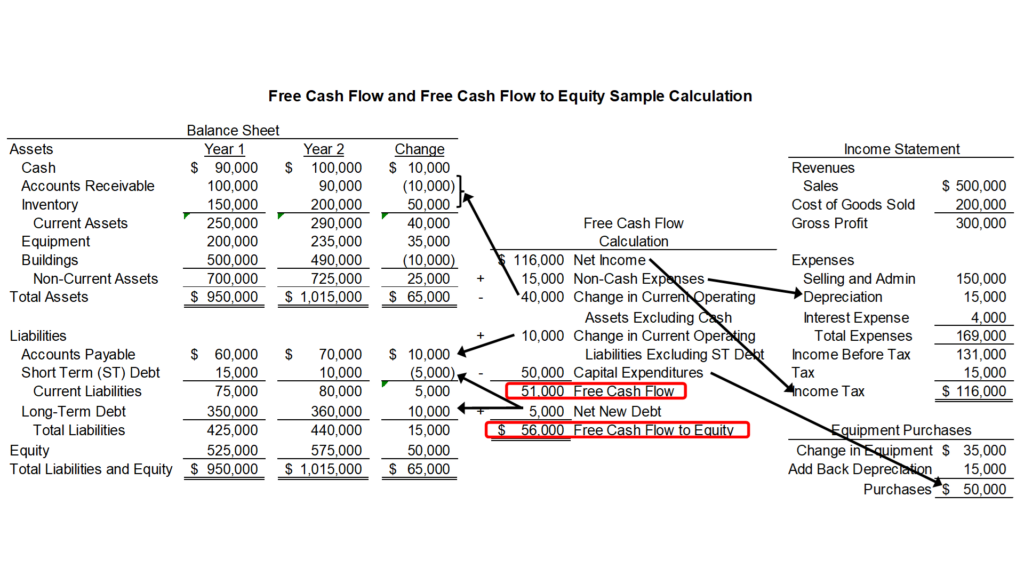
The Standard FCFF Calculation
The most common starting point for calculating FCFF is Earnings Before Interest and Taxes (EBIT), which you'll find on the Income Statement. EBIT is ideal because, as its name implies, it's a measure of profit before interest payments, meaning it hasn't been reduced by payments to debt holders yet. It represents the profitability available to all capital providers.
The standard formula is:
Let's break this down piece by piece.
Free Cash Flow to Firm (FCFF) | Formula + Calculator
To begin, let's solidify our understanding of this formula and the logic behind each component. This article from Wall Street Prep offers a concise and clear breakdown of the calculation.
Please read the section titled FCFF Formula. As you read, focus on understanding the reasoning for each of the four main steps: Starting with NOPAT: Why we begin with tax-effected EBIT. Adding back D&A: The role of non-cash expenses. Subtracting the Change in NWC: How operational assets and liabilities impact cash. Subtracting CapEx: Accounting for reinvestment in long-term assets.
As you just read, each part of the formula serves a specific purpose in transforming an accounting profit number into a true cash flow figure.
-
Net Operating Profit After Tax (NOPAT):
EBIT * (1 - Tax Rate). This is our starting point. It's the hypothetical after-tax profit the company would generate if it had zero debt. We tax the operating profit to account for the government's claim, which must be paid in cash. -
Add back Depreciation & Amortization (D&A): D&A is a non-cash expense. It was subtracted on the Income Statement to calculate EBIT (which lowered the company's tax bill—a real cash benefit), but no cash actually left the building. We add it back to reverse this non-cash deduction.
-
Subtract Change in Net Working Capital (NWC): NWC is roughly
(Current Assets - Cash) - (Current Liabilities - Short-Term Debt). It measures the cash tied up in day-to-day operations. If a company's inventory or accounts receivable are growing faster than its accounts payable, it's using cash to fund that growth. An increase in NWC is a cash outflow, so we subtract it. A decrease is a cash inflow. -
Subtract Capital Expenditures (CapEx): This represents cash spent on long-term assets like machinery, buildings, and equipment. This is the primary reinvestment to sustain and grow the business. You can find this number in the Cash Flow from Investing section of the Cash Flow Statement.
Seeing It in Action: A Real-World Example
Theory is one thing, but applying it to actual financial statements is where the skill is developed. Let's trace the numbers for a real company.
Unlevered Free Cash Flow: Formulas, Calculations, and ...
Now, let's observe this calculation in practice. The following article applies the FCFF rules to the financial statements of Steel Dynamics, an industrial company.
Read the section titled Example for Steel Dynamics. As you go through it, trace the numbers back to the provided snippets of the company's Income Statement and Cash Flow Statement. Pay close attention to which items are included and, more importantly, which are ignored and why—for instance, Asset Impairment Charges (non-recurring), Net Interest Expense (related to debt investors only), and Stock-Based Compensation (a controversial non-cash item).
The Operator's Edge: Adjusting for Economic Reality
Following the standard formula is the baseline. The real edge comes from recognizing where accounting rules diverge from economic reality. An analyst who just plugs in the reported numbers will get a different—and often less accurate—valuation than one who digs deeper. Your IT background makes you well-suited to appreciate that the quality of the output depends entirely on the quality of the inputs.
Here are a few crucial adjustments that separate professional analysis from amateur work.
1. Stock-Based Compensation (SBC)
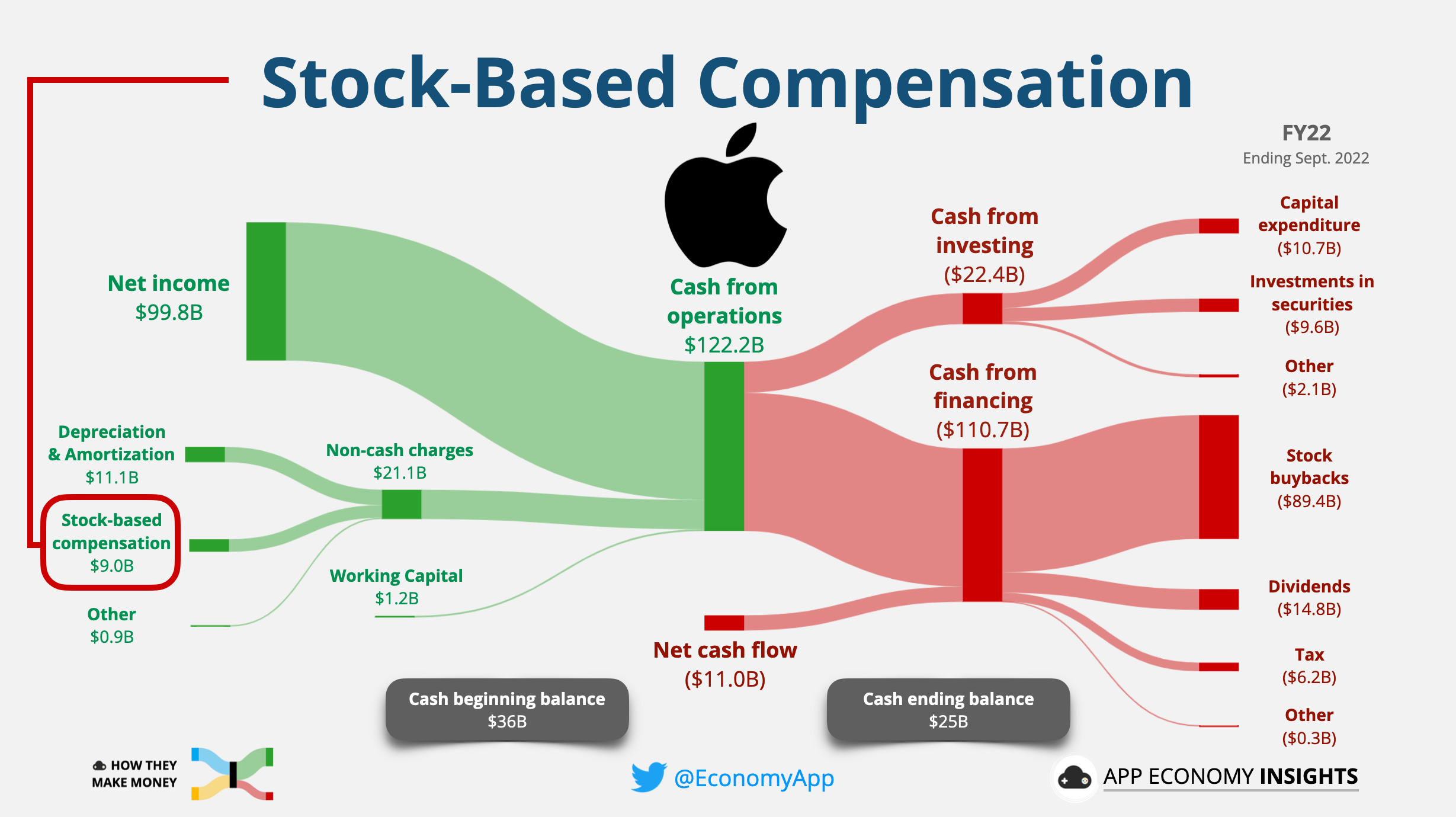
This is a major expense for many tech companies. It's a non-cash expense, so many analysts add it back to FCF just like D&A. However, this is a mistake. While SBC doesn't cost cash today, it dilutes existing shareholders by creating new shares. This is a real cost to the owners of the business. The professional approach is to not add back SBC, but to account for its dilutive effect by increasing the share count when you calculate the value per share.
2. Capitalizing R&D and Acquisitions
For a tech or pharmaceutical company, Research & Development (R&D) is its most important investment in future growth. Yet, accounting rules require it to be expensed immediately, not treated as a capital investment. This distorts reality by understating both the company's reinvestment and its true asset base.
Similarly, when a company like Disney buys another company like Fox, it's a massive capital expenditure. Yet, it's often handled separately and not included in standard CapEx.
A sophisticated analyst corrects for this.
Session 8: Free Cash Flows to Firm and Equity
Professor Aswath Damodaran, a world-renowned valuation expert, provides a masterclass on how to adjust accounting figures to better reflect economic reality. This is how you develop the "smell test" you're aiming for—by learning to spot where the numbers on the page don't tell the whole story.
First, watch his segment on capitalizing R&D. Listen carefully to his argument for why R&D is fundamentally a capital expense, and how treating it as such radically changes our perception of a tech company's profitability and reinvestment. Next, watch his discussion on expanding the definition of net capital expenditure to include acquisitions. This is a critical adjustment for analyzing companies that grow by buying their competitors.
By capitalizing items like R&D and acquisitions, you are not necessarily increasing or decreasing the final FCFF number. Instead, you are correctly re-categorizing the cash flows. The R&D expense is moved from being an operating expense to a capital expenditure. This gives you a much more realistic view of the company's true operating margin and how much it is genuinely reinvesting for growth. This is a fundamental part of building a solid valuation.
Conclusion
In this lesson, you've moved from the abstract concept of "cash flows" to the concrete calculation of Free Cash Flow to the Firm. You've learned the standard formula and, more importantly, the logic behind each adjustment. This process is about converting accounting profit into the economic reality of cash generation.
Key Takeaways:
- FCFF is the Goal: It represents the total cash generated by a company's core operations that is available to all of its capital providers, both equity and debt holders.
- The Formula is a Bridge: The FCFF formula,
NOPAT + D&A - Change in NWC - CapEx, is a logical bridge from accounting profit (EBIT) to real, unlevered cash flow. - Each Piece has a Purpose: We add back non-cash charges (like D&A) and subtract real cash investments (like CapEx and increases in NWC).
- Look Beyond the Obvious: A superior analysis involves adjusting the standard accounting inputs for items like R&D and acquisitions to get a truer picture of a company's economic engine.
We have now defined and calculated the CF in our valuation equation. The next logical question is: what is the appropriate discount rate, r, to apply to these cash flows? A company is financed by a mix of debt and equity, each with its own cost and risk. In our next lesson, we will learn how to combine these into a single, powerful discount rate: the Weighted Average Cost of Capital (WACC).