Introduction
In our last lesson, we focused on defense—building a forensic toolkit to spot the red flags a company might try to hide within its own financial statements. We learned to trust cash flow over reported profits and to identify the signs of accounting shenanigans. This is a crucial survival skill.
Today, we shift our focus from what the company says about itself to what other supposedly informed players are saying and, more importantly, doing. We'll tackle two key sources of external signals: sell-side analysts and corporate insiders. Your objective is to understand why the public narratives from analysts often lag reality and how to analyze insider trading patterns to separate routine noise from genuinely meaningful signals. This lesson moves you from being a passive consumer of market information to an active decoder of it, a critical step in developing the "operator's instinct" you're aiming for.
Part 1: Deconstructing the Sell-Side Analyst Game
When you're new to the market, it’s tempting to look to Wall Street analysts for guidance. They work for major banks, publish detailed reports, and issue confident "Buy," "Hold," or "Sell" ratings with precise price targets. The problem is, their advice is often compromised, late, or both.
Take a look at the analyst ratings for a well-known, heavily-followed stock like Tesla.
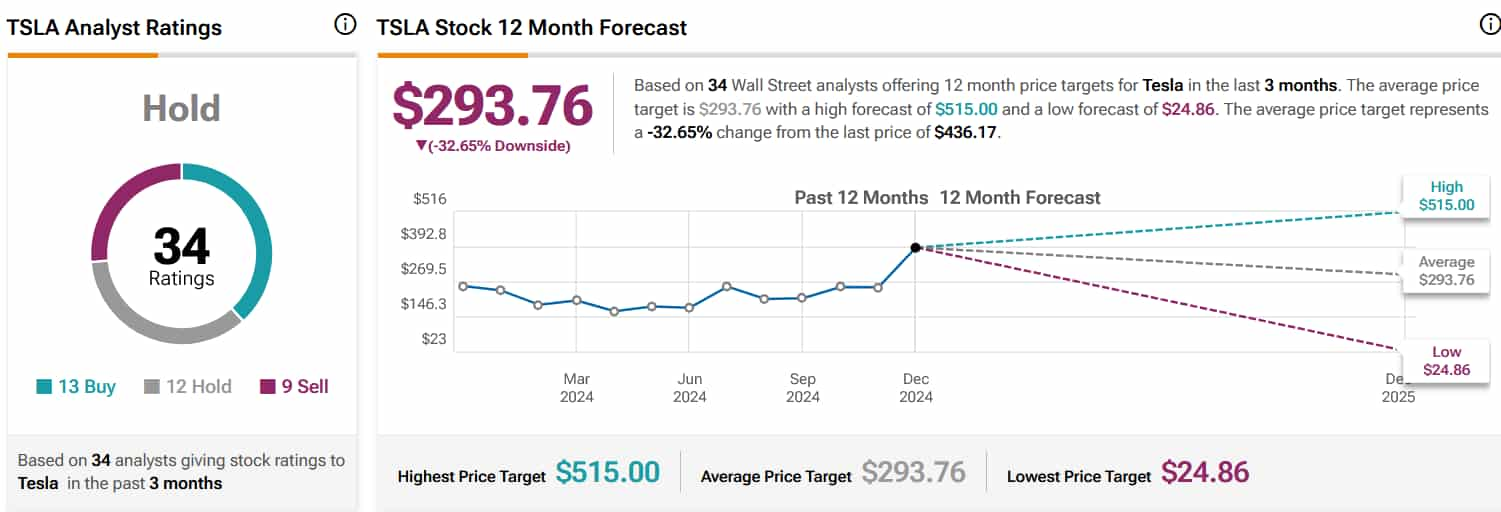
This level of disagreement among "experts" is your first clue that something is wrong with the game. To understand why, you must first understand the business model of sell-side research. It is not, as most retail traders believe, to generate alpha for the public.
The TRUTH about Equity Research that the non-pros don't know
This video from a former industry professional gives a brutally honest breakdown of what sell-side equity research is really about. It's the kind of unfiltered "market combat" insight that is far more valuable than any textbook definition.
Watch the section discussing the real value proposition of the profession, starting from "what value does the profession really add?". The speaker makes a critical point: "The profession is not in the business of generating alpha." Instead, the primary value-adds are: Saving time for buy-siders: Summarizing earnings calls and industry data. Providing corporate access: Arranging meetings between company management and institutional clients. Promoting the issuer: The "dark side," which involves supporting the investment banking division's efforts to win lucrative IPO and M&A deals. This structural conflict of interest is the root cause of why public analyst narratives are so often flawed.
Say "Buy," Whisper "Sell"
The core conflict is that an analyst serves two very different sets of clients: the general public, from whom the firm earns trading commissions, and their institutional clients (hedge funds, mutual funds), who pay substantial fees for privileged access and information. This leads to a behavior pattern where the public message and the private message diverge.
This isn't just a theory; it's a documented phenomenon. A famous example is Henry Blodget, a star analyst during the dot-com bubble, who publicly touted tech stocks while privately calling them "dogs" in emails. This dynamic is more formally known as "say-buy/whisper-sell."
[PDF] Do Sell-Side Analysts Say “Buy” While Whispering “Sell”? - NBER
This research paper formally investigates the "say-buy/whisper-sell" behavior. While academic, its findings are pure operational intelligence. It confirms that analysts systematically provide more accurate, and sometimes contradictory, information to their paying clients.
Your goal here is to grasp the core mechanism, not get bogged down in academic jargon. Start with the abstract and the first few paragraphs of the introduction. This will give you the complete overview of the concept and the famous Blodget example. Next, read the section that describes the performance difference between stocks privately favored and disfavored by funds, despite all having public "buy" ratings. Focus on the core finding and the subsequent paragraph. The key result is that among stocks analysts publicly recommend as "buys," those that their connected funds actually buy ("fund-buy") dramatically outperform those that their connected funds sell ("fund-sell"). This is hard evidence of information asymmetry. Finally, read the "Discussion" and "Conclusion" sections. They summarize why public recommendations have low information content and why legal attempts to fix this have failed—because the underlying business model remains unchanged.
The key takeaway is this: Treat analyst reports as a source for understanding the consensus narrative, the basic business model, and industry data. But treat their price targets and ratings with extreme skepticism. They are often lagging indicators designed to generate activity, not to provide you with a genuine edge.
Part 2: Decoding Insider Trading Signals
While analysts are telling stories, corporate insiders—CEOs, CFOs, and directors—are placing bets with their own money. This is a much purer signal, but it's also buried in noise. Insiders sell for many reasons: to diversify, to pay taxes, to buy a house. Most sales are uninformative. They generally buy for only one reason: they believe the stock is going up.
However, even buying can be noisy. The key is to separate routine transactions from opportunistic ones. Look at this chart comparing two hypothetical companies.

The Routine vs. Opportunistic Framework
Researchers have developed a simple but powerful framework to systematically separate the signal from the noise in insider trades. They classify insiders as "routine" or "opportunistic" based on their historical trading patterns.
[PDF] Decoding Inside Information Lauren Cohen, Christopher Malloy, and ...
This landmark paper by Cohen, Malloy, and Pomorski established the "routine vs. opportunistic" framework. It's the intellectual foundation for how sophisticated traders analyze insider data.
Focus on the logic of their approach and the significance of their findings. Read the abstract and the "Moonburst" example in the introduction. This perfectly illustrates the concept: one insider trades predictably every month (routine), while the other (the CFO) trades selectively before major news (opportunistic). Next, understand their simple methodology in the section titled "Our empirical strategy." They define a routine trader as someone who has traded in the same calendar month for several years in a row. Everyone else is opportunistic. Finally, grasp the main result. Read the first paragraph of Section III and the Conclusion. The findings are stark: a portfolio based on opportunistic trades generates significant abnormal returns, while a portfolio based on routine trades generates zero. All the predictive power is in the opportunistic trades.
An Operator's Playbook for Insider Analysis
Knowing the theory is good, but you need an operational process. How do you apply this framework in real-time to find actionable signals?
3 Steps to Profit from Insider Trading... Legally!
This video provides a practical, step-by-step guide to filtering and analyzing insider trading data. This is your playbook for turning raw data into a potential edge.
Watch the entire video, paying close attention to the three-step process. Filter for Signal (The Filter): The first step is to cut through the noise. The two most powerful filters are: Cluster Buys: Look for multiple insiders buying around the same time. This indicates internal consensus. Significant Size: Filter for trades that are large in absolute terms (e.g., >$500,000) to eliminate trivial purchases. Evaluate the Quality (The Evaluation): Not all filtered trades are equal. You must add context. Look for Spikes: Is the recent buying activity a standout spike compared to the last few years? Or is it just business as usual? Check the Percentage Change: A $1 million purchase from a billionaire who already owns $500 million of the stock is noise (a tiny percentage increase). A $200,000 purchase from a CEO that doubles their position is a massive signal. This is a critical point that trips up most amateurs. Consider the Source: Trades from the CEO and CFO are typically most informative. However, also check for hedge funds or activist investors who may have board seats and deep knowledge. Connect to a Catalyst (The Deep Dive): A strong insider signal is necessary but not sufficient. You must connect it to a potential reason. Check the Chart: Is the stock breaking out? Is it forming a base at a long-term low? The price action provides context. Do Your Homework: What's going on with the company? Is a major product launch imminent? Are results from a critical drug trial pending? The insider buying is often in anticipation of a specific event that will force the market to re-evaluate the stock.
This three-step process—Filter, Evaluate, Connect—transforms insider trading analysis from a random search into a systematic hunt for high-probability signals.
Conclusion
Today, you've learned to critically evaluate two major sources of market information. You've seen that sell-side analyst narratives are structurally compromised and often lag reality, while insider trading, when properly filtered, can provide a powerful leading signal. Applying these skills will significantly sharpen your ability to distinguish hype from substance.
Key Takeaways:
- Analysts Follow, They Don't Lead: The business model of sell-side research incentivizes optimistic, lagging, and publicly vague analysis. Use their reports for facts and consensus views, not for alpha.
- Insiders Vote with Their Wallets: Their actions speak louder than any analyst's words.
- Noise vs. Signal is Everything: Most insider activity is noise (diversification, tax planning). The edge comes from separating routine trades from opportunistic ones.
- Your Insider Playbook: Filter for cluster buys and significant size. Evaluate the quality by looking for historical spikes and large percentage increases in holdings. Connect the signal to a potential catalyst.
In our next and final lesson for this module, we will learn how to synthesize everything—your understanding of the business, financial statements, red flags, and external signals—into a coherent Investment Thesis. This is the ultimate skill of an analyst: forming a clear, defensible argument for why a stock represents a compelling opportunity.