Introduction
In our last session, we drew a clear line between gambling and professional strategy, establishing that operators play an "infinite game" where survival is paramount. We framed hedging not as a play to win, but as a deliberate cost incurred to stay in the game. Today, we put that theory into practice by constructing the most fundamental hedging tool in an investor's arsenal: the protective put.
This strategy is the literal embodiment of portfolio insurance. It's for when you have high conviction in a stock for the long term but want to surgically remove the risk of a catastrophic short-term decline. By the end of this lesson, you will be able to construct a protective put, calculate its precise risk and reward profile, and understand the trade-offs involved in buying this protection.
What is a Protective Put?
At its core, a protective put strategy is brutally simple: you own shares of a stock, and you buy a put option on that same stock. The goal isn't speculation; it's protection.
Protective Put Guide [Setup, Entry, Adjustments, Exit] - Option Alpha
The team at Option Alpha provides a great analogy for this strategy.
Read the overview section. Think of it exactly like car insurance: you pay a recurring premium, hope you never need to use it, but have the peace of mind that you're protected from a disastrous event.
This combination is also known as a "married put" because the stock and the put option are joined to create a single strategic position. You are fundamentally bullish on the stock but want to define your maximum possible loss.
Constructing the Hedge
Let's assume you own 100 shares of a company, let's call it XYZ, which you bought at ₹1000 per share. You believe in its long-term story, but you're wary of a potential market correction in the next month or two. Here’s how you construct the protective put.
- Own the Asset: You have your 100 shares of
XYZ. - Buy Insurance: You purchase one put option contract (which corresponds to 100 shares).
The critical decisions here are which put option to buy, specifically its strike price and expiration date.
- Strike Price (K): This determines the price at which you have the right to sell your shares. It sets the "floor" for your stock's value.
- An at-the-money (ATM) put (e.g., strike of ₹1000) offers immediate protection but is more expensive.
- An out-of-the-money (OTM) put (e.g., strike of ₹950) is cheaper but only starts providing significant protection after the stock has already fallen by a certain amount.
- Expiration Date: This determines how long your "insurance policy" lasts.
- Longer-dated options provide protection for a longer period but are more expensive due to higher time value (extrinsic value).
- Shorter-dated options are cheaper, but their time value decays much faster (higher theta), and the protection is brief.
For practical hedging, a common professional approach is to balance cost and protection.
Mastering Tail Risk Hedging with Options & Volatility
This article from SparkCo AI outlines some best practices for hedging.
Read the sections on put selection and parameters. Notice the recommendation to use put options with 30-45 days to expiration that are approximately 5% out-of-the-money. This is a solid, actionable rule of thumb for creating a cost-effective hedge.
Applying this to our XYZ example: with the stock at ₹1000, a 5% OTM put would have a strike price of ₹950. We would look for an expiration date about 30-45 days out.
The Payoff Profile: Deconstructing the Strategy
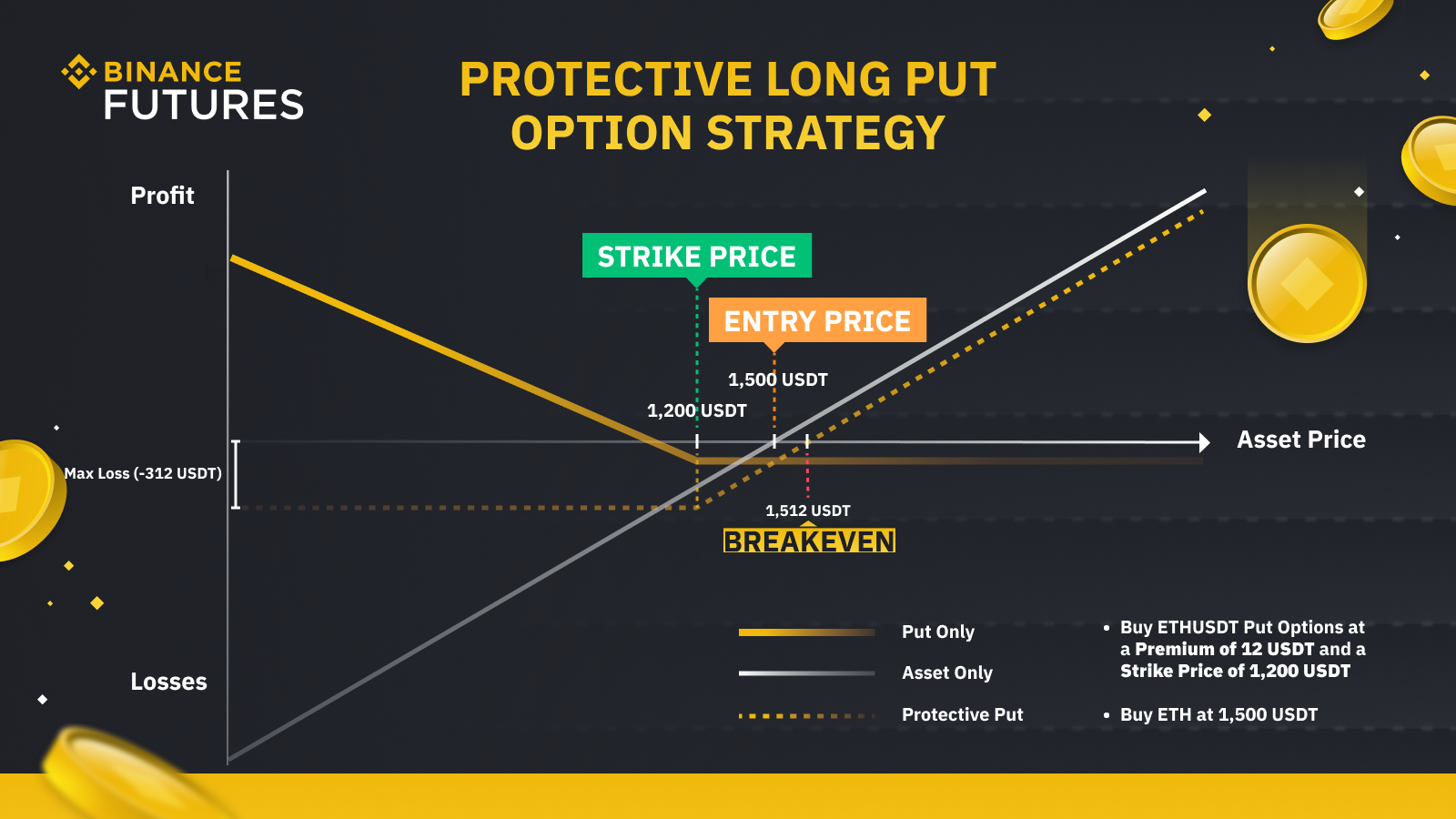
The power of this strategy becomes clear when you visualize its payoff diagram. The final profile is a composite of the two positions you hold: long stock and long put.
Let's watch a concise breakdown of how these components merge. The presenter uses Excel, which should resonate with your quantitative background, to build the profit/loss profile from first principles.
Protective Puts Explained | Option Strategy Basics
This video by Ryan O'Connell, CFA, FRM, provides an excellent step-by-step construction of the protective put payoff.
Watch the video from the beginning until the end at the conclusion. Pay close attention to how he first models the profit/loss for the stock alone, then the put alone, and finally combines them. This clearly demonstrates how the put option creates a floor under your potential losses.
As the video shows, the combined position has a unique payoff structure:

Calculating the Numbers
Let's use our XYZ example to formalize the calculations.
- Stock Purchase Price: ₹1000
- Put Strike Price: ₹950
- Put Premium Paid: ₹20 per share (a total of ₹2000 for one contract)
-
Maximum Loss: This is the entire point of the strategy. Your loss is capped. If
XYZgoes to ₹500, or even to zero, your loss is fixed. You have the right to sell your shares at ₹950.Your absolute maximum loss is defined at ₹30 per share, or ₹3000 on your 100-share position, no matter how far the stock falls.
-
Breakeven Point: This is the price the stock must reach for you to recover the cost of your insurance.
XYZstock needs to rise to ₹1020 at expiration just for you to break even. This highlights the "cost drag" of the hedge. -
Maximum Profit: The profit potential is theoretically unlimited, just like owning the stock, but it's reduced by the premium you paid for the put.
The Operator's Perspective: Trade-Offs and Management
A protective put is not a free lunch. As an operator, you must think of it as a business expense with clear trade-offs.
The Cost of Insurance
The premium you pay is a guaranteed cost. If the stock rallies, stays flat, or drops only slightly, the put option will expire worthless. You will have "lost" the premium. This is not a failed trade; it's the cost of the insurance you didn't end up needing. Like the "infinite game" concept, you paid a small price to guarantee you'd survive a catastrophe.
Advanced Hedging: The "Costless" Collar
What if you want the protection without the premium drag? Professionals often finance the purchase of a protective put by simultaneously selling an out-of-the-money call option. This creates a collar. The premium received from selling the call offsets the cost of buying the put. The trade-off? You cap your upside potential at the strike price of the call you sold.
How to Protect Your Stock Investments CHEAPLY
This video from projectoption introduces the collar as a more efficient way to hedge.
Watch the section from here. You don't need to master the collar today, but understand the logic: you fund your downside protection by selling away some of your upside potential. It's a key tool for more advanced risk management.
Managing the Position
What do you do as the stock price moves and time passes?
Protective Put Guide [Setup, Entry, Adjustments, Exit] - Option Alpha
Let's return to the Option Alpha guide for some practical management tips.
Read the sections on adjusting and rolling a protective put. The key idea is that the hedge is not static. If the stock rallies significantly, you can "roll" your put up to a higher strike price to protect your unrealized gains. This is an active risk management process.
Conclusion
You have now learned to construct and analyze a protective put, the foundational strategy for hedging a stock position. This isn't a tool for generating alpha; it's a weapon for eliminating risk.
Key Takeaways:
- Structure: A protective put is simply Long Stock + Long Put. It's an insurance policy against a price decline.
- Payoff: The strategy transforms the stock's unlimited downside risk into a fixed, calculated maximum loss. The price for this protection is the option premium, which creates a drag on upside performance.
- Key Decisions: The effectiveness and cost of the hedge depend entirely on your choice of the put's strike price and expiration date.
- Operator's Mindset: The premium is a business expense paid to ensure survival. You don't hope for a crash to make the put profitable; you hope the stock rises and the put expires worthless, meaning your insurance wasn't needed.
In our previous lessons, we discussed Vega and the impact of volatility on option prices. In the next lesson, we will explore Implied Volatility and Volatility Trading. Understanding this is critical because implied volatility directly determines the cost of your insurance. Buying protection is cheap when fear (IV) is low and expensive when fear is high. Mastering this relationship is key to hedging efficiently.