Hello! Welcome back.
In our last lesson, you practiced reacting to situations spontaneously with short, expressive phrases. That was about capturing immediate, emotional responses. Today, we're going to build on that by tackling something more structured: the process of making a decision. Moving from an instant reaction to a reasoned thought process is a major step toward thinking fluently in English.
By the end of this lesson, you will be able to think through and verbalize a simple decision-making process from start to finish, using a clear framework and natural-sounding English. This skill is not only essential for everyday life but is also a critical part of your professional role in HR, where explaining your reasoning is a daily task.
Part 1: The Habit of Small Decisions
The journey to thinking in English begins with small, consistent steps. Before we dive into complex decisions, let's start with the simple choices you make every day. The goal is to make these minor thought processes happen in English, not Hindi.
The following short video explains this powerful habit.
Learn to think in English in 8 minutes !
This clip from the "Learn English with StoriLing" channel will show you how to start making small daily decisions in English.
Watch the section from this timestamp. Notice how the speaker applies this idea to simple choices, like choosing a drink or a shirt.
Think about a small decision you made this morning, like choosing your breakfast or what to wear. Try to verbalize it now, just for yourself. For example: "Should I have tea or coffee? I'll have tea because it's more relaxing." This simple exercise starts training your brain to use English as its default tool for thinking.
Part 2: A Framework for Explaining Your Decisions
When you need to explain a more significant decision, having a structure can make you feel much more confident. It prevents you from getting lost in your thoughts and helps your listener follow your logic easily.
A fantastic tool for this is the STEP method. It breaks down the process into four clear parts. The next video will walk you through this method with excellent examples and natural phrases.
Explain a Decision in English Clearly | Leadership English Lesson
This video, "Explain a Decision in English Clearly" from the Speak Confident English channel, will be our main guide for this lesson. It introduces the STEP method.
We will go through this video section by section. For each step, focus on the key phrases you can use. First, watch the introduction to the STEP method from the beginning. This gives you an overview of the four parts. S - Set the scene (watch here): This is your introduction. You provide the background context. Key phrases: "I was faced with...", "The decision I had to make was...", "I was in a quandary" (a state of uncertainty). T - Tell your thought process (watch here): Here, you share what was going through your mind. This makes your explanation more relatable. Key phrases: "At first I hesitated because...", "I was on the fence about it" (undecided), "I needed to sleep on it" (take time to think), "I was of two minds" (pulled in two directions). E - Explain the options (watch here): You discuss the pros and cons you considered. This shows you were thoughtful. Key phrases: "I weighed the pros and cons," "The turning point was when...", "At the end of the day..." (ultimately), "It was a no-brainer" (an obvious choice). P - Present the decision (watch here): This is your conclusion, where you state your final choice clearly. Key phrases: "In the end, I decided to...", "Ultimately, I chose to...", "I took the plunge" (made a bold decision), "I trusted my gut" (followed my intuition).
The STEP method is your roadmap. By following it, you can turn a complicated set of thoughts into a clear, confident, and easy-to-follow explanation.
Part 3: Language for Thinking on Your Feet
In a real conversation, especially at work, you don't always have time to prepare. Sometimes you need to "think out loud." This can be intimidating, but there are phrases that can help you share your thoughts even when they are not perfectly formed.
Think Out Loud in English — Strategies for Introverts
This article from Speak Confident English offers excellent strategies for verbalizing your thoughts in real-time.
Please read two specific sections from this article: Start with Strategy #2, where you'll find the heading Preface Your Ideas. Focus on the phrases provided, like "I'm just thinking out loud here, but..." or "This is just a thought, but...". These are perfect for sharing an idea without pressure. Then, read Strategy #3, under the heading Invite Others to Share Their Mindscapes. The phrase "Let me think for a moment..." is a simple and effective way to signal that you are processing information.
Using these "prefacing" phrases signals to others that you are in the process of thinking, which buys you time and reduces the pressure to be perfect. This is a key skill for sounding natural and confident in meetings.
Part 4: Your Decision-Making Practice
Now it's time to put it all together. For each scenario below, take a few moments to think, and then speak your answer aloud. Use the STEP method as your guide and try to incorporate some of the new phrases you've learned.
Scenario 1: A Personal Choice
You're planning your weekend. You can either spend the day hiking outdoors or stay inside to watch a new movie series you're excited about. Verbalize your decision-making process.
(Example start: "Okay, so the decision I have to make is how to spend my Saturday. I'm a bit of two minds about it...")
Scenario 2: An HR Professional's Choice
Imagine you are at the "Decision" stage of the hiring process shown below. You have interviewed two good candidates for a Junior HR Executive role.
- Candidate A: Has 3 years of experience in a similar role but seemed less enthusiastic during the interview.
- Candidate B: Has only 1 year of experience but showed great energy, asked smart questions, and seems to be a quick learner.
Verbalize your thought process for deciding which candidate to recommend for the job.

(Example start: "I'm faced with choosing between Candidate A and Candidate B for the Junior HR role. At first, I was on the fence...")
Scenario 3: A Strategic HR Decision
Your company has a limited budget for employee wellness initiatives. You have to choose between two options:
- Providing a company-wide subscription to a mental health and meditation app.
- Offering subsidized memberships at a local gym.
Using the "Think, Empathize, Act" model as a guide, verbalize how you would think through this decision to choose the most beneficial program for the employees.
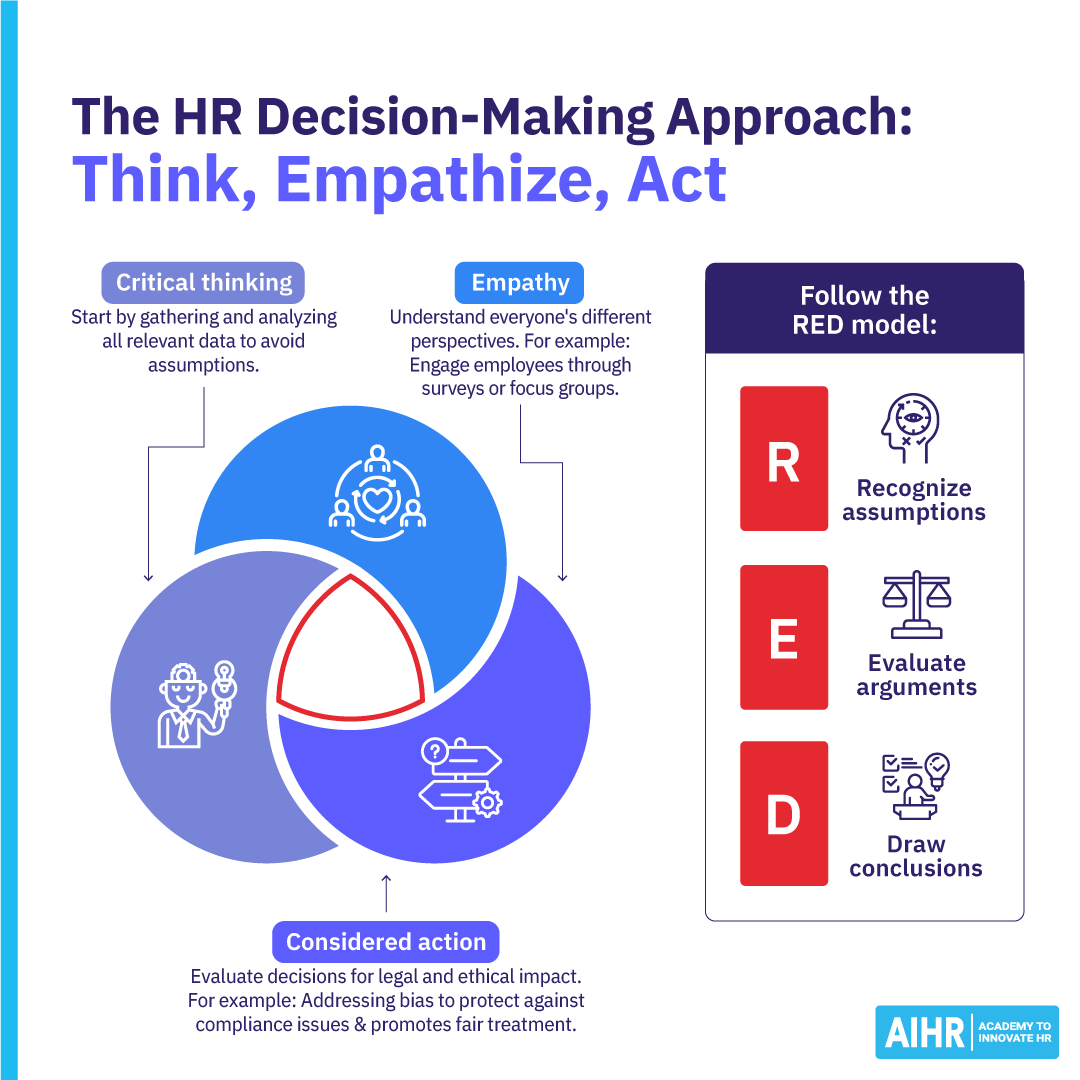
(Example start: "The decision I have to make is which wellness program to fund... I need to weigh the pros and cons of each. On one hand, the mental health app is accessible to everyone, including remote employees...")
Conclusion
Fantastic work today! You have learned how to move from a simple, instant reaction to a structured, verbalized thought process. This is a huge leap forward in your ability to think and communicate complex ideas in English.
Key Takeaways:
- Start Small: Begin the habit of thinking in English with small, daily decisions.
- Use a Framework: The STEP method (Set the scene, Tell your thought process, Explain the options, Present the decision) provides a clear and confident way to explain your choices.
- Think Out Loud: Use prefacing phrases like "I'm just thinking out loud..." to confidently share ideas that are still developing.
- Practice Makes Perfect: Applying these techniques to real-world scenarios, especially those from your HR career, will make them second nature.
Daily Practice Plan:
- Daily Decision: Each day, pick one small decision (e.g., what to eat for dinner, which task to do first) and verbalize your thought process in English using the STEP method.
- Record Yourself: Choose one of the practice scenarios from today and record yourself explaining your decision on your phone. Listen back to it. Don't worry about mistakes; just focus on your clarity and flow.
- Observe Others: When you watch a movie or TV show, pay attention when a character explains a decision they made. Can you identify the STEPs in their explanation?
You've built a crucial skill for both everyday conversation and your professional life. In our next lesson, we will use this ability to organize thoughts as we learn to summarize a short story or video clip in your own words in English.