Hello! It's great to see you again.
In our last lesson, we focused on describing the world around you, connecting your observations directly to English words. This was a vital step in breaking the habit of mental translation. You learned to see a scene and narrate it, moving your English from an internal process to an external one.
Today, we'll take that skill a step further. Instead of just describing a situation, you will learn to react to it. True fluency isn't just about stating facts; it's about engaging with information and expressing your feelings spontaneously. By the end of this lesson, you will be equipped with a range of short, natural phrases to react to everyday news and events, helping you sound more engaged, confident, and conversational in English.
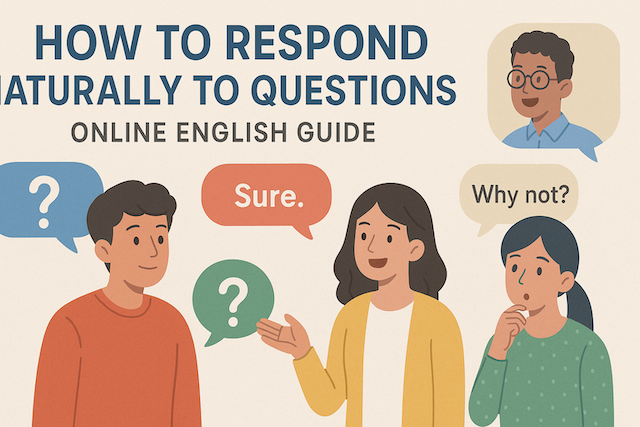
Part 1: The 'Emojis' of Spoken English
Think about how you use emojis in text messages. They quickly convey emotion—surprise, happiness, frustration—without needing a full sentence. In spoken English, we use short words called interjections or reaction words in the same way. Mastering these is your first step to reacting spontaneously.
The following video provides an excellent introduction to these powerful little words. It explains why they are essential for sounding natural and gives you a wide range of examples.
Be More Expressive in English Conversations | Reaction Words & Interjections
This video, "Be More Expressive in English Conversations" from the Speak Confident English channel, will be our foundation for understanding and using reaction words.
First, watch the introduction from the beginning of the lesson. Pay close attention to the idea of reaction words as "the emojis of spoken English." Next, watch the section on positive reactions from this timestamp. You'll learn words to express excitement (Woo-hoo!, Yay!), understanding (Ahhh), and relief (Phew). Finally, watch the section covering surprise from this part. Notice how words like Oh!, Eek!, and Whoa! can be used for different kinds of surprising news.
As the video explains, these words don't follow complex grammar rules. They are pure, instant reactions. Integrating them into your speech is a powerful way to start thinking and reacting directly in English.
Part 2: Reacting to Good and Bad News
Beyond single-word interjections, we often use short, common phrases to respond to news from friends, family, or colleagues. Knowing the right phrase for the right situation shows that you are listening and empathetic.
The British Council's "Responding to news" page has a short, practical video that demonstrates this perfectly.
Responding to news | LearnEnglish - British Council
This resource from the British Council website demonstrates clear, simple phrases for reacting to both good and bad news.
First, watch the video at the top of the page where Yuna reacts to Noelia's news. Then, review the list of useful phrases that Ana presents afterward. These are excellent, all-purpose reactions. Finally, complete the three interactive exercises on the page—Task 1, Task 2, and Task 3—to practice what you've just learned.
Phrases like "That's wonderful!" or "What a shame" are conversational building blocks. They allow you to participate in a conversation emotionally without needing to construct a complex sentence on the spot, which is excellent for building fluency and confidence.
Part 3: Building More Nuanced Reactions
Now that you have a grasp of basic interjections and phrases, let's explore more nuanced ways to express agreement, surprise, and sympathy. These will make your conversations feel richer and more authentic.
The next video, from the "English In Moments" channel, breaks down 25 essential reaction phrases that native speakers use constantly.
25 Essential English Reaction Phrases & Conversation Flow | Sound Like a Native | English In Moments
This video, "25 Essential English Reaction Phrases & Conversation Flow," will help you add more sophisticated and natural-sounding reactions to your toolkit.
Watch the section on agreement and understanding from this timestamp. Phrases like Exactly, I see what you mean, and Fair enough are incredibly useful, especially in professional settings like HR, where acknowledging someone's point of view is crucial. Next, watch the segment on surprise and disbelief from this part of the video. This expands on what you learned in Part 1 with phrases like No way!, Are you serious?, and That's crazy. Finally, focus on the section about empathy and sympathy from here. Phrases like Oh no, That's terrible, and That's tough are fundamental for showing emotional support and connection.
These phrases bridge the gap between understanding the words and understanding the emotion behind them. Using them correctly is a sign of advanced conversational skill.
Part 4: Your Spontaneous Reaction Practice
The only way to make these reactions automatic is to practice them. The goal here is speed—to say the first phrase that comes to mind without stopping to translate.
Read each scenario below and react aloud immediately with a phrase from this lesson. Don't overthink it!
- A colleague tells you: "I just got the promotion we were both competing for!"
- (Possible reactions: "Wow, congratulations!", "That's amazing!", "Good for you!")
- Your friend says: "I can't go to the movies tonight. I have to work late."
- (Possible reactions: "Oh, that's a shame.", "That's tough.", "Fair enough.")
- You hear on the news: "The final match was cancelled due to heavy rain."
- (Possible reactions: "Oh no!", "You're kidding!", "What a shame.")
- You're in a meeting and an employee says: "I find the new software very confusing to use."
- (Possible reactions: "I see what you mean.", "Hmm, let's talk about that.", "Right, right.")
- You try to open a file and see an error message.
- (Possible reactions: "Uh-oh.", "Argh!", "Oops.")
- A friend tells you: "I won a free trip to Goa!"
- (Possible reactions: "No way!", "Are you serious?!", "That's fantastic!")
Try to go through this list a few times, varying your response each time. This drill trains your brain to connect situations directly to English reactions.
Part 5: Vocabulary Boost: Idioms for Surprise
To continue building your advanced vocabulary, let's look at a few idioms related to surprise. Idioms are phrases where the meaning isn't obvious from the individual words. Using them correctly can make you sound very natural.

Let's focus on two from the image:
- Drop a bombshell: This means to announce very shocking or unexpected news. For example: "At the end of the meeting, my boss dropped a bombshell and announced she was resigning."
- Do a double take: This means to look again at someone or something because you are very surprised. For example: "I did a double take when I saw my old school friend working at my company."
We will cover idioms in more detail later in the course, but it's good to start getting familiar with them now.
Conclusion
In this lesson, you've moved beyond simply describing the world to actively reacting to it. This is a fundamental shift that brings you much closer to thinking and conversing fluently in English.
Key Takeaways:
- React Instantly: Use interjections (
Wow!,Phew,Uh-oh) as the "emojis" of spoken English to show immediate emotion. - Show You're Listening: Use short phrases like
That's wonderful!orWhat a shameto respond to news and show engagement. - Express Nuance: Employ phrases like
I see what you meanorThat's toughto show deeper understanding and empathy, which is invaluable in both social and professional life. - Practice Makes Permanent: The key is to react spontaneously, bypassing the translation step. Drills and active listening are your best tools.
Daily Practice Plan:
- Become a Reaction Spotter: When you watch movies or TV shows, listen for these reaction phrases. When you hear one, pause the video and repeat it, trying to match the speaker's tone.
- Narrate Your Reactions: As you go about your day, react to small things aloud. See a beautiful sunset? Say, "Wow, that's beautiful." Drop something? Say, "Oops!" Hear a siren? "Uh-oh, I wonder what's happening." This makes the practice a constant, low-pressure habit.
- Focus on a Few: As suggested in the "English In Moments" video, choose just 3-4 new phrases from this lesson. Write them down and make it your goal to use them (either in self-talk or real conversation) before the end of the day.
You have made great progress in training your brain to think more directly in English. In our next lesson, we will continue this journey by learning to think through and verbalize a simple decision-making process entirely in English, moving from instant reactions to structured, spontaneous thought.