A sustainable deficit begins with a decision about how much change is manageable, not with a calorie number taken from someone else’s plan. This module moves from estimating energy needs to making eating patterns that can support gradual weight loss. In this lesson, you will use a hypothetical adult’s maintenance estimate to choose a cautious starting point, then test that choice against hunger, nutrition, and everyday functioning. Allow about 35–40 minutes, including the video and reading.
A deficit is a starting hypothesis
A sustained energy deficit means taking in less energy than the body uses over time. That describes the condition for drawing on stored energy; it does not tell you the right size of deficit for a particular person. A maintenance estimate is uncertain, daily energy use varies, and a larger planned gap can make adequate eating and ordinary life harder.
The familiar advice to “cut 500 calories” illustrates the problem. For one adult, that might be a moderate change. For another with much lower estimated energy needs, it could remove a substantial share of their food. The same numerical cut is not the same practical experience.
First, keep the safety boundary in place. The example below concerns an adult for whom gradual weight loss is appropriate, who is eating adequately and has no condition requiring individualized care. Adolescence, pregnancy or breastfeeding, undernutrition, disordered-eating warning signs, and relevant medical conditions or medications can make self-directed restriction inappropriate or call for professional guidance. A calculation does not override those considerations.
HOW TO CALCULATE A CALORE DEFICIT OR SURPLUS | A DIETITIAN EXPLAINS
Watch “HOW TO CALCULATE A CALORE DEFICIT OR SURPLUS | A DIETITIAN EXPLAINS” by dietitian Katey Davidson RD for its explanation of uncertain maintenance estimates and the trade-off between a larger deficit and day-to-day well-being.
Start with estimate limitations, where the speaker explains why calculated energy needs are only approximations. Then watch modest changes for the discussion of fatigue, hunger, and combining manageable food and activity changes. Finish with the example showing a deficit calculated from estimated maintenance. Treat its percentages and activity-calorie figures as illustrations, not as promises about what an individual will burn or lose.
The video suggests a modest deficit because the aim is not merely to produce the largest shortfall on paper. It is to leave enough energy and food flexibility to keep the approach workable. Nor should “metabolic adaptation” be taken to mean that a deficit stops obeying energy balance. Energy needs and behavior can change, which makes a fixed prediction less dependable; a steeper cut may also become difficult to sustain.
Choosing a cautious number for one hypothetical adult
Consider an adult whose weight has been broadly stable and whose estimated maintenance intake is about 2,300–2,500 kcal per day under their current routine. These are invented figures for reasoning, not a prescription. Assume gradual weight loss is appropriate for this adult.
The midpoint, 2,400 kcal, is convenient for arithmetic, but it is not a measured fact. A cautious initial plan might aim for roughly 200 kcal below that midpoint, yielding an illustrative intake of about 2,200 kcal per day. This is around 8% of the midpoint estimate. Its appeal is not that 8% is a universal optimum; it is that this particular adult could try a relatively small change while preserving room for regular, varied meals.
Notice what uncertainty does to the calculation. If maintenance is actually near 2,300 kcal, an intake of 2,200 kcal represents a gap of only about 100 kcal. If maintenance is near 2,500 kcal, the gap is about 300 kcal. Neither result is a failure of the method. The estimate provides a starting hypothesis to assess, not a guaranteed rate of loss.
Now compare an automatic 600-kcal cut from the 2,400-kcal midpoint. It produces an illustrative intake of 1,800 kcal—about a quarter below that midpoint. For this hypothetical adult, that is a much more demanding first step. Without evidence that it is needed and well tolerated, choosing it simply because it might yield faster progress gives too little weight to hunger, food quality, and functioning.
These example numbers are deliberately specific so the reasoning is visible. In real life, “start conservatively” does not mean everyone should subtract 200 kcal, eat 2,200 kcal, or follow a fixed percentage. With a particularly uncertain maintenance estimate, a modest change in usual portions or habits may be more useful than trying to hit an exact intake number. Calorie tracking is optional, not a requirement for creating a deficit.
A viable deficit still has to support eating well
A smaller intake is not automatically a better eating pattern. Consider two plans that appear to create the same shortfall. One leaves the hypothetical adult eating regular meals with a useful variety of foods. The other routinely replaces a meal with very little food and leaves them preoccupied with hunger by late afternoon. Their arithmetic may look similar; their nutritional adequacy and sustainability do not.
NICE makes this distinction in its guidance: dietary changes should be individualized and flexible, while unduly restrictive or nutritionally unbalanced diets should not be used. Read the short passage below with that distinction in mind.
CG189 Full guideline (Appendix P)
Read the dietary-advice passage in NICE’s guideline material to separate the energy requirement for weight loss from the question of whether a proposed diet is balanced and workable.
In “Dietary advice,” under “Adults and children” and then “Adults,” use recommendations 1.2.4.26–1.2.4.29 on the printed pages 47–48. Begin where the text says dietary changes should be individualized, and stop after the sentence stating the main energy requirement for weight loss, before recommendation 1.2.4.30. Read dietary recommendations as one connected passage; focus on why meeting the energy condition alone is not enough to judge a plan.
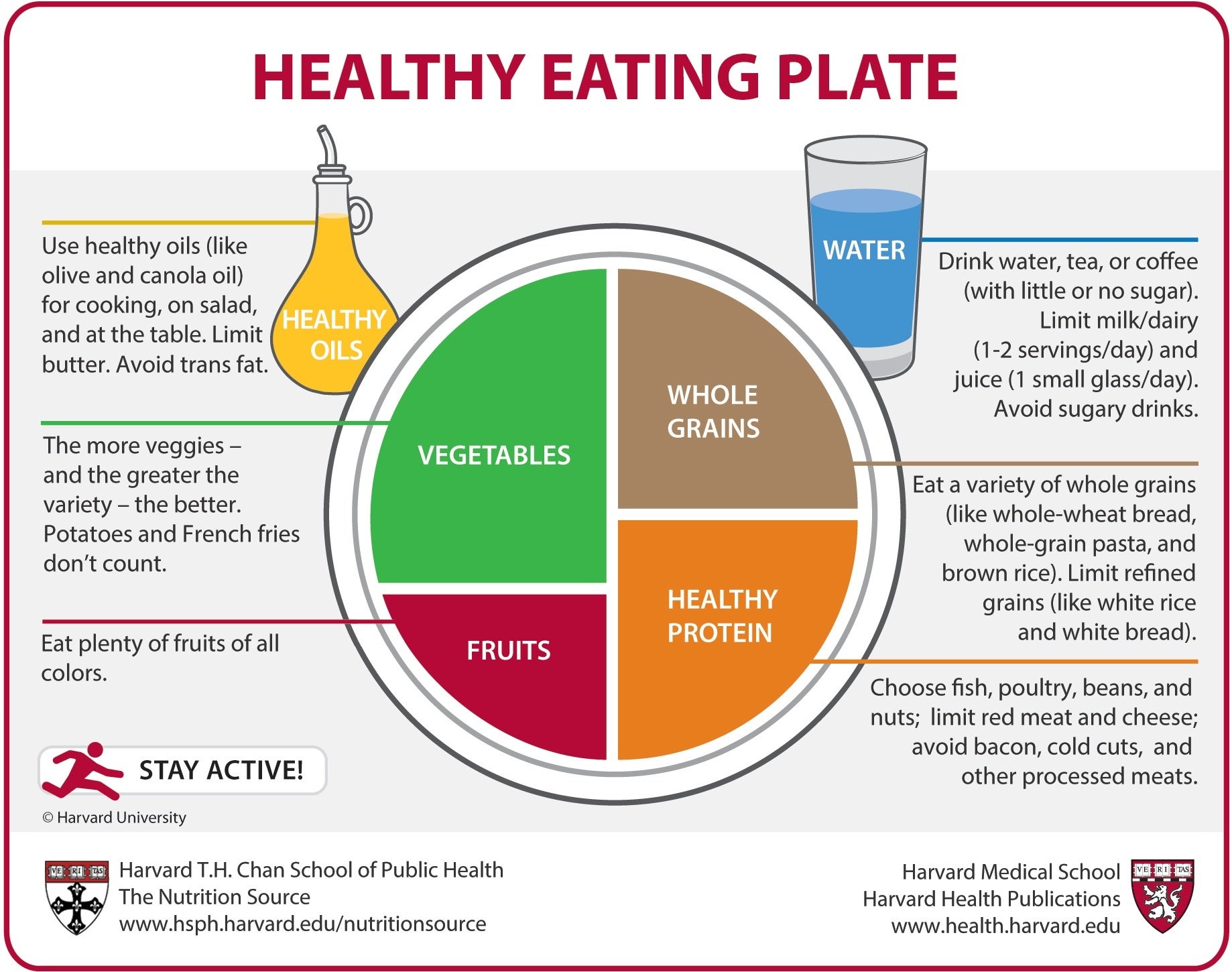
A quick way to check the shape of a plan is to look beyond calories. The Healthy Eating Plate image offers a visual reminder to leave space for vegetables and fruit, whole grains, protein-containing foods, and appropriate fats and drinks. It is not a calorie prescription or a rule that every meal must look exactly like the picture. Here it serves one purpose: a proposed deficit should still allow an adult to eat varied, substantial food.
Let functioning help judge the starting point
Because maintenance and response are uncertain, the initial choice needs feedback. Likely progress matters, but it is not the only criterion. Over the following weeks, the hypothetical adult would consider whether the change is compatible with:
- Manageable hunger: Some hunger before a meal can occur; persistent, intrusive hunger or constant thoughts about food suggest the plan may be too demanding.
- Adequate eating: There is still room for regular meals and varied foods, rather than repeatedly omitting food needed to get through the day.
- Everyday functioning: Energy for work, movement, concentration, sleep, and, where relevant, training remains reasonably intact.
- A workable relationship with food: The plan does not produce escalating anxiety, guilt, rigid rules, or distress around eating.
These are not hurdles to endure for the sake of a faster result. If the adult is exhausted, persistently hungry, or unable to eat adequately, the sensible response is to ease the restriction or return to maintenance—not to assume that discomfort proves the plan is effective. Concerning physical symptoms or disordered-eating signs call for appropriate professional support.
Conversely, a comfortable starting change may produce progress that is slower than a simple calculator predicts. That is compatible with a conservative approach. An estimated deficit is not a contract for a certain weekly weight change, and a single day’s scale reading cannot settle whether it is working. Later lessons will examine why energy needs change and how to interpret weight records without overreacting to short-term fluctuations.
Key takeaways
For an appropriate hypothetical adult, select a modest first change relative to plausible maintenance needs, not a universal calorie cut. Check that it leaves room for varied food and does not make hunger, concentration, sleep, or ordinary activity unmanageable. Treat both maintenance and the resulting deficit as estimates that can be reconsidered, rather than precise instructions to obey.
The next lesson turns this principle into food choices: how variety, fibre, protein-containing foods, and manageable portions can support fullness and nutritional adequacy without requiring calorie tracking.