Hello. In the previous lesson, a modest deficit was a starting hypothesis: it had to leave room for adequate food and manageable hunger. This lesson puts that idea into practice. You will see how to adjust an ordinary day of eating for variety, fibre, protein-containing foods, and comfortable portions—without counting calories or treating any food as forbidden. Allow about 35–40 minutes.
Build meals that do more than reduce intake
A smaller meal is not necessarily a more useful meal. If it leaves you hungry soon afterward or repeatedly displaces foods you need, it may be difficult to sustain. A better starting point is to keep satisfying meals and change their composition: add foods that bring fibre and nutrients, include a protein-containing food, and notice whether the amount served suits your appetite.
The NHS guide below offers practical options rather than one required menu.
Healthy eating when trying to lose weight - Better Health - NHS
Read the NHS Better Health guide for ways to make meals more filling and varied. Focus on the food choices, not on turning every suggestion into a rule.
In “How to eat healthier meals and snacks,” begin with the paragraph about how confusing food choices can feel. Read the meal guidance through the final “Fruit juice: limit your intake” item. Notice the different jobs done by vegetables, protein-containing foods, wholegrains, fats, and drinks.
The Healthy Eating Plate from the previous lesson is useful here as a visual guide. It makes room for vegetables and fruit, whole grains, protein-containing foods, and some healthy oil. Its proportions are not a demand to arrange every breakfast, sandwich, or bowl of soup into exact quarters.
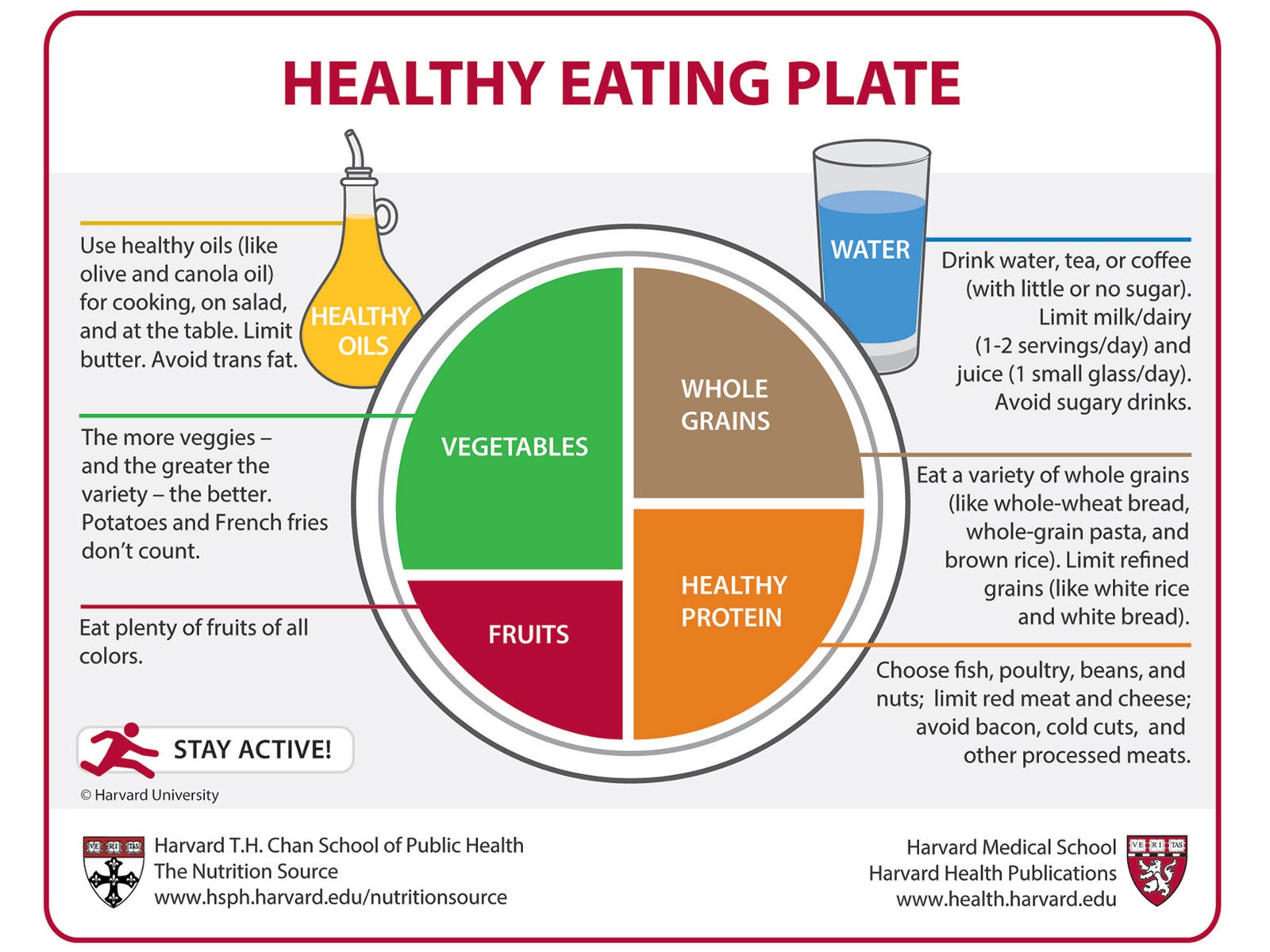
Fibre-rich foods such as vegetables, fruit, beans, and whole grains can add substance to a meal and help with fullness. Protein-containing choices—such as eggs, fish, tofu, yogurt, or lentils—offer another way to make meals satisfying. Neither works as a magic ingredient: a meal still needs enough food, and its ingredients need to fit the person eating it. Increase fibre gradually if a sudden change causes digestive discomfort.
Refit an ordinary day rather than replace it
Consider an illustrative day: sweetened cereal and juice for breakfast; a cheese sandwich with little produce for lunch; a snack eaten straight from its packet; and a large serving of pasta with sauce and few vegetables for dinner. There is nothing inherently wrong with cereal, cheese, snacks, or pasta. The useful observation is that this particular pattern offers few opportunities for produce, fibre, or varied protein-containing foods, while its portions may be easy to serve without noticing.
A short video shows how the same broad principles can take the form of different meals, rather than a single prescribed cuisine.
Mediterranean Diet for Beginners
Watch “Mediterranean Diet for Beginners” from Healthline for adaptable meal examples. Treat these as possibilities, not a diet you must adopt.
Watch meal examples for breakfast, lunch, dinner, and snacks, including options drawn from different kinds of cooking. Then skip to flexible approach for the point that this pattern does not require eliminating entire food groups.
Here is one possible revision of the illustrative day:
| Eating occasion | A workable change | What it adds or changes |
|---|---|---|
| Breakfast | Keep cereal if preferred, but try oats or a higher-fibre cereal with yogurt or fortified soy yogurt and berries. | Fruit and a higher-fibre grain add variety; the yogurt adds a protein-containing food. |
| Lunch | Keep the sandwich. Try wholegrain bread, add tomato or salad leaves, and choose a filling such as egg, hummus, tofu, or cheese. | The familiar meal gains produce and, depending on the filling, more fibre and protein. |
| Snack | If hungry, put a portion on a plate or in a bowl. Fruit with yogurt, or vegetables with hummus, is another option. | The portion becomes easier to notice; the alternative offers more than a quick bite alone. |
| Dinner | Keep the pasta. Mix vegetables into the sauce and add lentils, fish, or another preferred protein-containing food. Serve an amount of pasta that leaves the meal satisfying. | The dish becomes more varied without removing its main ingredient. |
These are examples, not a complete meal plan. The right amounts depend on appetite, activity, health needs, and what else is eaten. Across several days, changing the kinds of produce, grains, and protein-containing foods helps cover more nutritional ground than relying on one supposedly perfect meal. Convenience foods, frozen vegetables, and familiar recipes can all be part of that approach.
Use portions as feedback, not as a test
Food variety and portion size solve different problems. Adding vegetables to pasta may make the meal more substantial and nutritious; pouring generous amounts of oil over it may also change its energy content considerably. Neither observation requires calorie counting. It means paying attention to what is added, what it replaces, and whether the finished meal satisfies you.
Healthy eating when trying to lose weight - Better Health - NHS
Return to the NHS Better Health guide for portion ideas that do not depend on a calorie app.
Find “Eat the right portion size,” below the recipe links. Start at its opening paragraph and read the portion ideas through “Focus on your meal.” Farther down, under “Put snacks into a bowl or onto a plate,” read the snack tip. Focus on ways to make a usual serving visible; weighing foods or refusing a second helping is not required.
For example, you might serve dinner in a bowl rather than eating from the cooking pot, include vegetables alongside the pasta, and use a spoon when adding oil instead of pouring without looking. After eating, you can still have more if you need it. A smaller plate is an optional cue, not a limit you must obey when you are hungry.
This also leaves room for enjoyable foods. A snack does not have to earn its place by being high in fibre or protein. The aim is a pattern that usually provides enough nourishment and remains manageable, not one that makes eating rigid. If changes lead to persistent hunger, anxiety about portions, or regularly skipped meals, ease the restriction rather than tightening the rules.
Key takeaways
You can improve an eating pattern without tracking calories: retain familiar meals, add a variety of produce and fibre-rich foods, include protein-containing choices, and serve portions you can notice and adjust. The plate image is a flexible guide to balance, not an exact template. Any change intended to support a modest deficit still needs to leave you adequately fed and able to function.
Next, the course examines why appetite and energy expenditure can change during weight loss, and why even a carefully chosen eating pattern does not guarantee a fixed rate of progress.