Hello! Welcome back to our course.
In our last lesson, we examined how hormones are made, packaged, and transported throughout the body. We saw how a hormone's chemical nature—whether it's a water-soluble peptide or a lipid-soluble steroid—determines its entire journey. Now, we'll explore the final chapter in a hormone's life: its removal from the body.
This lesson addresses the learning outcome: Describe the processes of hormone metabolism and clearance. We will investigate how the body terminates hormonal signals to prevent overstimulation and maintain a delicate balance. You will learn about the key organs involved, the biochemical strategies used to inactivate and eliminate different types of hormones, and the metrics used to measure the speed of this process. This is a critical step in understanding why certain hormone levels become dysregulated in conditions like PCOS.
1. The "Why" and "How Fast" of Hormone Clearance
A hormone's signal is not meant to last forever. Its concentration in the blood is determined by a balance between its secretion rate and its removal rate. This removal process is called clearance.
Two key concepts help us quantify this process:
- Metabolic Clearance Rate (MCR): This is a measure of the efficiency of hormone removal. It represents the volume of blood plasma completely cleared of the hormone per unit of time (e.g., mL/minute).
- Half-Life: This is the time it takes for the concentration of a hormone in the blood to decrease by half.
There is an inverse relationship between these two metrics: a hormone with a high MCR will have a very short half-life, while a hormone with a low MCR will persist in the circulation for much longer.
As we discussed in the previous lesson, this is directly related to how a hormone travels in the blood.
- Water-soluble hormones (peptides, catecholamines) travel freely and are exposed to degrading enzymes and filtration by the kidneys. They have a high MCR and a short half-life (seconds to minutes).
- Lipid-soluble hormones (steroids, thyroid hormones) are protected by transport proteins. This "bound" state acts as a reservoir and shields them from rapid breakdown. They have a low MCR and a long half-life (hours to days).
To explore these concepts in more detail, please review the following resource.
Endocrine System M111501302 Fall 2023
These slides from a presentation on Endocrine Physiology clearly define Metabolic Clearance Rate and provide an excellent table correlating it with half-life and protein binding for different hormones.
Please review slides 27 and 28. Slide 27 defines MCR and its formula. On slide 28, examine the table 'Correlation of Plasma Half-Life & Metabolic Clearance'. Note the dramatic differences between a highly protein-bound hormone like Thyroxine and a hormone with little binding like Insulin.
2. The "Where" of Hormone Clearance
The body has several primary sites and mechanisms for clearing hormones from the plasma. The specific route depends on the hormone's chemical properties.
The main pathways are:
- Metabolic destruction by tissues: Enzymes in the blood, liver, kidneys, and other tissues can break down hormones into inactive fragments.
- Excretion by the liver into the bile: The liver can chemically modify hormones and excrete them into the digestive tract via bile, where they are eventually eliminated in the feces. This is a major route for steroid hormones.
- Excretion by the kidneys into the urine: Water-soluble hormones and the water-soluble metabolites of steroid hormones are filtered from the blood by the kidneys and excreted in the urine.
- Degradation at the target cell: For some hormones, particularly peptide hormones, the hormone-receptor complex is taken into the target cell via endocytosis and degraded by cellular enzymes.
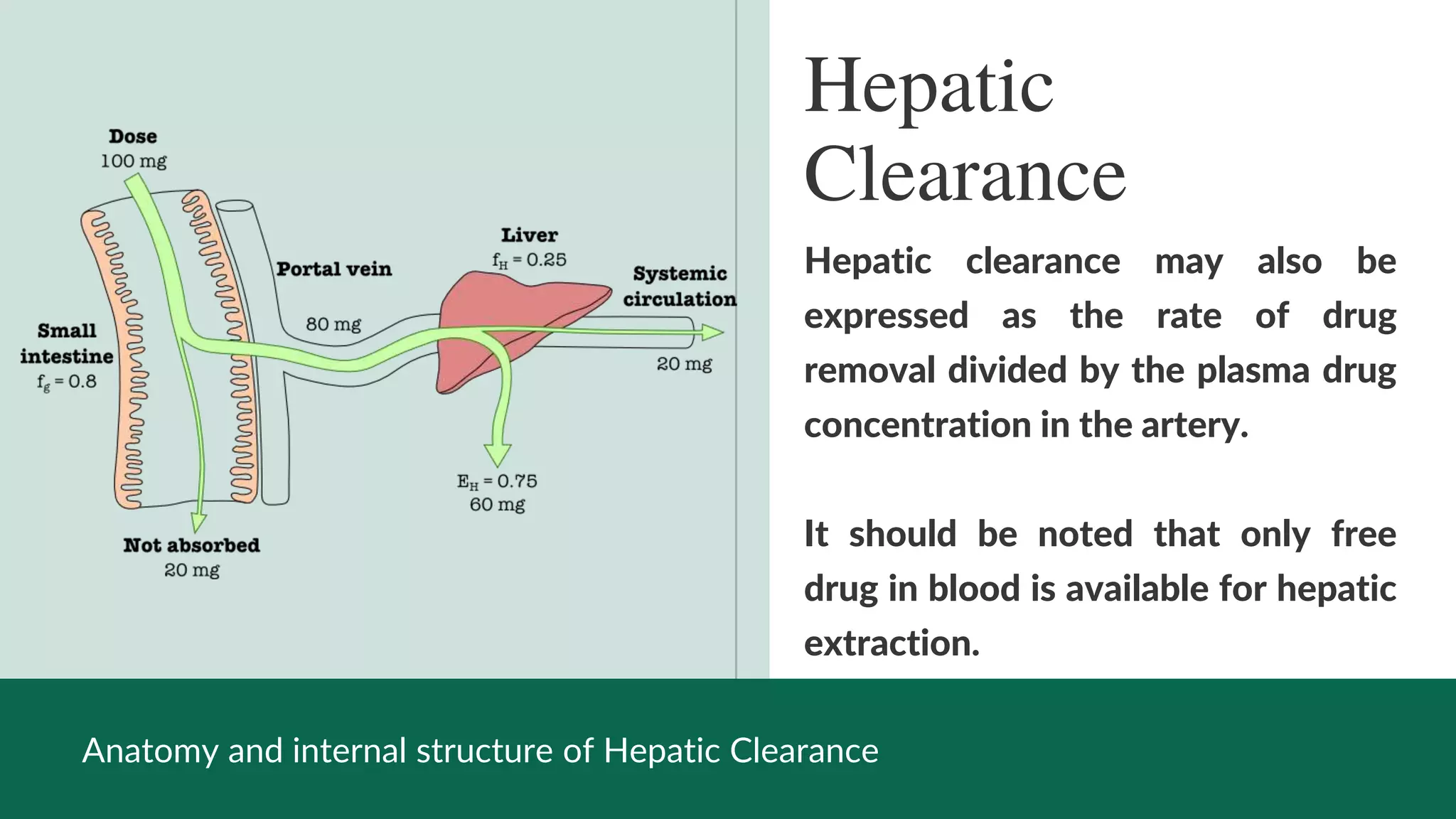
The liver is the central player in metabolizing hormones, particularly the lipid-soluble ones, to prepare them for excretion.
3. Mechanisms of Metabolism for Different Hormone Classes
Let's now look at the specific biochemical strategies the body uses to metabolize hormones, broken down by their chemical class.
A. Peptide and Catecholamine Hormones
These water-soluble hormones are cleared relatively simply and rapidly.
- Enzymatic Degradation: They are vulnerable to enzymes called peptidases and proteases found in the blood and tissues (especially the liver and kidneys) that chop them into inactive amino acid fragments.
- Excretion: Because they are water-soluble, both the intact hormones and their fragments can be easily filtered by the kidneys and excreted in the urine.
The metabolism of catecholamines (like epinephrine) is a classic example of rapid enzymatic inactivation.

B. Steroid Hormones: The Two-Phase System
Steroid hormones present a challenge for clearance. They are lipid-soluble, so they cannot be easily excreted in the watery environment of urine. The liver solves this problem with a sophisticated two-phase process designed to make them water-soluble.
Phase I Metabolism: Modification
The first step involves chemically modifying the steroid's core structure. This is done primarily by enzymes in the liver (often from the Cytochrome P450 family). These reactions typically inactivate the hormone and, more importantly, add or expose a "handle"—a reactive chemical group like a hydroxyl group (-OH)—that can be used in the next phase. Common Phase I reactions include:
- Reduction: Adding hydrogen atoms (e.g., converting a double bond to a single bond).
- Hydroxylation: Adding a hydroxyl (-OH) group.
Phase II Metabolism: Conjugation
In this step, the modified steroid is joined (conjugated) to a large, water-soluble molecule. This makes the entire complex polar and water-soluble, trapping it in the bloodstream and marking it for excretion by the kidneys. The two main conjugation reactions are:
- Glucuronidation: Attaching a molecule of glucuronic acid.
- Sulfation: Attaching a sulfate group.
Once conjugated, the now water-soluble and inactive steroid metabolite is efficiently filtered by the kidneys and removed in the urine.
This two-phase system is fundamental to understanding how the body manages androgens, estrogens, and other steroids, all of which are central to PCOS.
The following resource provides an in-depth look at this process. Given your goal of gaining deep academic knowledge, this paper is an excellent, though dense, resource. We will focus only on the core principles.
Human steroid biosynthesis, metabolism and excretion are ...
The research article 'Human steroid biosynthesis, metabolism and excretion' provides a detailed account of steroid metabolism. We will use it to understand the principles of Phase I and Phase II reactions.
Please read two specific parts of this article: The introductory paragraph of Section 3, 'Principles of steroid metabolism and excretion'. This introduces the concept of Phase 1 and Phase 2 reactions and their purpose. The introductory paragraph of Section 3.2, 'Phase 2 metabolism of steroids'. This section explains the role of conjugation reactions like sulfation and glucuronidation. Focus on the purpose of each phase, not on memorizing the names of specific enzymes or metabolites at this stage.
Test your understanding!
A patient is taking a medication that is known to significantly inhibit glucuronidation enzymes (a key Phase II reaction) in the liver. How might this affect the clearance of a steroid hormone like testosterone? What could be a potential clinical consequence?
Show answer
Inhibiting glucuronidation would severely impair the body's ability to make testosterone and its Phase I metabolites water-soluble. This would decrease their clearance rate from the body. As a result, the active hormone and its metabolites would accumulate in the bloodstream, leading to a prolonged and exaggerated androgenic effect. This could manifest clinically as worsening acne, hirsutism, or other signs of androgen excess.
Conclusion
In this lesson, we have completed our overview of a hormone's lifecycle by examining how it is metabolized and cleared from the body.
Key Takeaways:
- Hormone clearance is crucial for terminating signals and maintaining balance. It is quantified by Metabolic Clearance Rate (MCR) and half-life.
- The primary organs for clearance are the liver and kidneys.
- Water-soluble hormones (peptides, catecholamines) are cleared rapidly via enzymatic degradation and renal excretion.
- Lipid-soluble steroid hormones require a two-phase process in the liver to become water-soluble for excretion: Phase I (modification) followed by Phase II (conjugation) with molecules like glucuronic acid or sulfate.
Preview of the Next Lesson:
We now have a complete picture of a hormone's life: synthesis, transport, action, and clearance. But how does the body know when to secrete more of a hormone or when to stop? The answer lies in intricate regulatory circuits. In our next lesson, we will explore the principles of negative and positive feedback in endocrine regulation, the master control systems that keep our hormones in check.