In our last lesson, we practiced sharpening your senses to observe the world around you, gathering the raw material for descriptive writing. You learned how to perform a "sensory audit" and translate those details into prose that creates a specific mood. Now, we'll take that skill and turn it inward. What if the world you want to describe doesn't exist yet, outside of your own mind?
This lesson will teach you how to use guided visualization techniques to imagine story scenes in vivid detail before writing. Think of it as being the director of a film inside your head. Before you can describe an ancient, mysterious tomb or a fast-paced chase through a futuristic city, you need to be able to see it, hear it, and feel it yourself. This practice is fundamental to creating the rich, atmospheric worlds you're aiming for and is a technique many professional writers, and even athletes, use to prepare for peak performance.
The Mind's Eye as Your First Draft
Visualization for a writer is a form of focused, intentional daydreaming. It's the process of consciously building a scene, a character, or a setting in your imagination with as much sensory richness as possible. This isn't just about passively waiting for inspiration; it's an active method of creative problem-solving and world-building.
By running a scene through your mind first, you can explore possibilities, notice details, and understand the emotional core of the moment before you even type a single word. This mental "rehearsal" makes the actual writing process smoother and the final prose much more vivid.
5 Visualization Techniques to Help Your Writing Craft - WRITERS HELPING WRITERS®
This article from Writers Helping Writers introduces the concept of visualization and explains its power by drawing an excellent comparison to how athletes prepare.
Please read the introduction, from the beginning down to the heading "Story Visions." Pay close attention to the explanation of how visualization works for a swimmer. This principle is the same for you as a writer. Also, absorb the concept of Creative Visualization, where you imagine the desired outcome to train your brain for success.
Just as an elite football player visualizes the perfect free-kick—the curve of the ball, the sound of the net—you can visualize a scene to train your creative muscles. You're not just seeing the events; you're experiencing them from your character's point of view.
A Toolkit for Creative Visualization
So, how do you move from a blank mental screen to a fully realized scene? The key is to use specific triggers and frameworks to guide your imagination. You don't have to invent everything from scratch.
The following article offers a superb collection of exercises. We'll focus on a few key ones that you can start using immediately.
11 Exercises to Enhance Your Visual Thinking - Helping Writers Become Authors
This article from Helping Writers Become Authors provides a fantastic list of practical exercises for honing your "mind pictures."
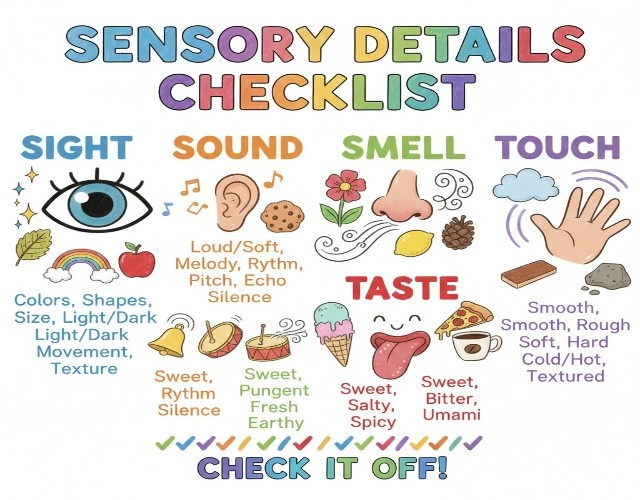
Please read the following three sections: "Dreamzoning": Read this section to understand the core practice of setting aside dedicated time for focused daydreaming about your story. "Using Music as a Starting Point": Read this technique. Since you're a fan of movies, you already know how a soundtrack can define the mood of a scene. You can use this to your advantage by picking a song that matches the emotion you want to create and letting your mind build the visuals. "Bringing in Other Senses": Read this crucial section. It directly connects to our previous lesson. As you visualize, consciously ask yourself: What does my character smell? What is the texture of the object in their hand? What do they taste in the air?
By combining these techniques, you create a powerful pre-writing ritual. You could, for instance, put on a piece of instrumental music that feels mysterious and tense, close your eyes, and begin to "dreamzone" a scene where your protagonist discovers a hidden passage. As the scene unfolds in your mind, you would intentionally layer in the other senses: the damp, earthy smell, the feel of cold stone, the sound of dripping water.
From Blurry Image to High-Definition Scene
Sometimes, the images in our minds can be vague or incomplete. Like a photograph that's out of focus, we might have a general idea of the scene but lack the sharp details. There are practical ways to train your mind to bring these images into focus.
How to Train Yourself to Visualize Anything (6 Simple Tips & Habits)
The presenter in this video, a competitive programmer, breaks down the skill of visualization in a very clear and logical way. He offers excellent long-term habits for improving your mental imagery.
Watch these two key segments for practical advice: Focus on What's Important: First, watch the tip about focusing your attention from this timestamp. You don't need to see the entire world at once. Start with one important object or character and let the rest of the scene build around it. Explore and Reflect: Next, watch the section on improving your mental images from this part of the video. The key idea is to "debug" your visualization. If an image is unclear, ask yourself why. Is it missing color? Texture? Light? Then, consciously add those missing details.
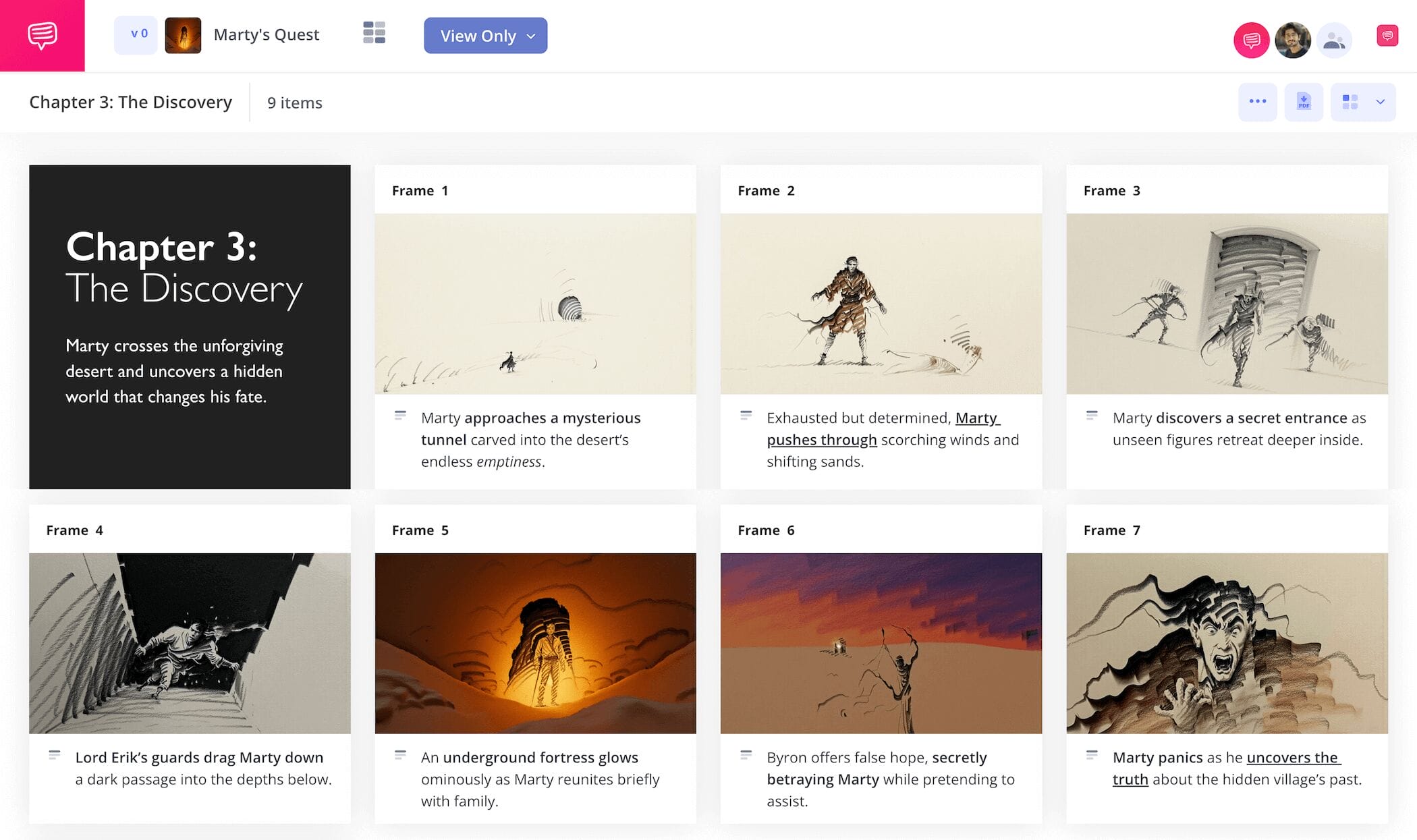
The output of a successful visualization session might look something like a storyboard for a film, where you have a clear sequence of key moments, actions, and reactions.
Practice: A Guided Visualization Session
Now it's time to put this into practice with a guided exercise. The following audio is a hypnosis session designed specifically to enhance visual imagination. While the term "hypnosis" might sound intense, think of it as a deep, guided meditation focused on creativity. It provides a structured way to train your brain to generate vivid imagery on command.
Hypnosis Increase Your Visual Imagination & Subconscious Creativity (1 Hour)
This guided session by Michael Sealey is an excellent tool for actively training your visual imagination. We will use specific, concrete exercises from it.
Please prepare for this exercise by following the setup instructions from the video's introduction: find a pleasing picture or photograph to use as a focal point. Once you are ready and relaxed, follow these three short exercises. The narrator will ask you to open your eyes to look at your chosen image, then close them to recall the details. Colors: From this point, follow the exercise focusing only on the colors in your image. Shapes: From this point, do the next exercise, this time focusing on shapes, lines, and dimensions. Clarity: From this point, complete the third exercise, focusing on the sharpness and clarity of the image. These initial exercises train your sensory memory. Now, for the final part of the practice, you will create images entirely from your imagination. Word Visualization: Skip ahead and listen from this section. The narrator will give you three simple words ("water," "key," "tree"). For each word, allow your mind to freely create associated images, colors, and shapes, just as the narrator suggests. Don't force it; just observe what your imagination provides.
This exercise provides a direct, step-by-step method for what we've discussed: starting with a reference, focusing on specific details, and then transitioning to pure imagination.
Conclusion
In this lesson, you have moved from observing the external world to building an internal one. You've learned that visualization is an active, trainable skill that serves as a powerful pre-writing tool, allowing you to direct the movie of your story in your mind before you commit it to the page.
Key Takeaways:
- Active Visualization: Think of visualization not as passive daydreaming, but as an intentional "dreamzoning" session where you build and explore your story's scenes.
- Use Triggers: Use prompts like music or images to kick-start your imagination and set the emotional tone for a scene.
- Go Beyond Sight: Build on the previous lesson by actively incorporating all five senses into your mental rehearsals to create a truly immersive experience.
- Practice and Refine: Train your mind's eye by starting with small details, "debugging" vague images by adding specifics, and using guided exercises to strengthen your ability to generate vivid mental pictures.
This lesson completes our initial module on the foundations of storytelling. You've explored the core elements of fiction, brainstormed ideas, and now have tools for both observing the real world and imagining new ones. In our next lesson, we will zoom out to look at the big picture. We'll describe the stages of the novel-writing process from initial idea to finished manuscript, giving you a roadmap for the entire journey ahead.