Welcome back. In our last lesson, we explored how a non-human character's unique biology and experience of time can create a perspective that is fundamentally alien to our own. We focused on how this "unreliability" stems naturally from their being, without any intent to deceive. Today, we turn our attention to narrators who are unreliable for very different reasons: their perception of reality is deliberately deceptive or fundamentally flawed.
This lesson directly addresses the learning outcome: to describe techniques for creating an unreliable narrator, such as deception or flawed perception. This is a powerful tool in a writer's arsenal, and mastering it is key to crafting the kind of mysteries, misdirection, and plot twists that you're interested in. We will explore what an unreliable narrator is, examine the different forms they can take, and break down the specific techniques you can use to create one effectively.
What is an Unreliable Narrator?
At its heart, an unreliable narrator is a character whose telling of the story cannot be taken at face value. As author Deb Caletti notes in "8 Tips to Writing Unreliable Narrators," every first-person narrator is unreliable to some degree. We all filter events through our own biases, memories, and emotions. However, what we're discussing today is the deliberate use of this concept as a literary device. You, the author, consciously create a gap between what the narrator says and what is actually happening.
This technique transforms reading from a passive experience into an active one. The reader becomes a detective, constantly questioning the narrative and searching for clues. This creates immense intrigue and tension, making the story far more engaging.
The Reedsy video "Writing Unreliable Narrators" offers a perfect analogy. Imagine the true story is sitting at the bottom of a pond.
- A reliable narrator is like clear water; you can see the story perfectly.
- An unreliable narrator makes the water murky. The goal is not to make it so opaque that the reader sees nothing, but just murky enough that they have to peer through the gloom, trying to discern the true shape of things below.
This video from the Reedsy channel provides a concise introduction to the concept and its function in storytelling.
Watch the following segments to grasp the core idea: First, watch the introduction here for a clear definition of the unreliable narrator. Next, watch the discussion on the function of this device here, which explains how it engages the reader. Finally, listen to the murky pond analogy. It's a fantastic mental model to keep in mind as you write.
The Spectrum of Unreliability: Why is Your Narrator Unreliable?
A narrator's unreliability isn't random; it stems from their core character. The why behind their untrustworthiness determines the entire flavor of the story. The article "How to Write an Unreliable Narrator" provides an excellent breakdown of the common archetypes.
How to Write an Unreliable Narrator : A Simple Guide for Writers
This guide from Jeanne Riel categorizes unreliable narrators into five distinct types based on their motivation.
Please read the section titled The 5 Main Types. As you read about each type—The Liar, The Madman, The Naif, The Puppet, and The Embellisher—think about how each could be used to create different effects in a story.
Let's connect these types to your goals:
- The Liar (like Amy Dunne in Gone Girl) is the engine of many great plot twists and mysteries.
- The Madman (like Patrick Bateman in American Psycho) is a direct path to writing the kind of psychopathic perspective you're interested in exploring.
- The Naif (like Scout in To Kill a Mockingbird) is a classic choice for stories with young protagonists, creating dramatic irony where the reader understands more than the character does.
This infographic provides a helpful visual summary, placing the "unreliable" type within the broader context of narrative roles.
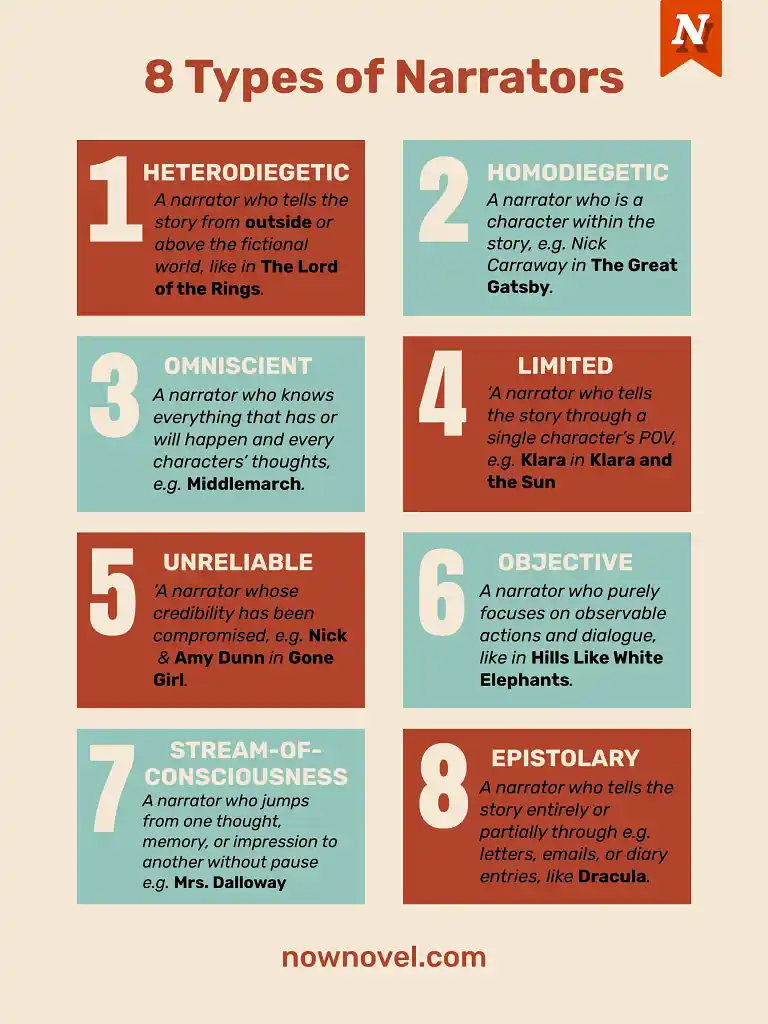
The Toolkit: How to Write an Unreliable Narrator
Now that we understand the "what" and "why," let's focus on the "how." Crafting a successful unreliable narrator requires a delicate balance of revealing and concealing information. It's a magic trick where you want the audience to be fooled, but also to appreciate the sleight of hand once it's revealed.
The following steps, based on the resources we've reviewed, provide a solid blueprint.
1. Show, Don't Tell the Unreliability
You can't simply state that your narrator is untrustworthy. You must prove it through their actions and words. Here are the key techniques:
- Contradictions: The narrator says one thing in Chapter 2 and the opposite in Chapter 10.
- Omissions and Memory Gaps: The narrator conveniently forgets key events, especially moments where they might be culpable. As Deb Caletti mentions in her article, this is a form of lying by omission.
- Discrepancy with Reality: The narrator's account of events is challenged by physical evidence (e.g., they describe a friendly chat, but another character finds a broken lamp) or by other characters.
Using secondary characters is one of the most powerful ways to expose your narrator's skewed perspective. A friend saying, "That's not how I remember it," can plant a potent seed of doubt in the reader's mind.
The video "How To Write An Unreliable Narrator" by Nour Zikra provides an excellent practical demonstration of this.
How To Write An Unreliable Narrator | Writing Advice
This video uses a running example of a narrator named "Tam Tam" to show how you can first build empathy and then slowly reveal the narrator's manipulative nature through her interactions with others.
Watch the section from this point, where the creator builds the character of Tam Tam, and then the following section from here, where she explains how secondary characters reveal the lie. Notice how the narrator's "good intentions" are reframed as manipulation once you get another perspective.
2. Plant Clues and Foreshadow
This is crucial. To avoid "cheating" the reader, you must leave a trail of breadcrumbs that hint at the truth. This makes the final reveal feel earned, not arbitrary. These clues can be:
- Subtle Contradictions: As mentioned above.
- Logical Gaps: The timeline doesn't add up, or a character couldn't have been where the narrator claims they were.
- Physical Evidence: The narrator claims to be happily married, but the reader glimpses divorce papers on a desk. They claim to be sober, but we see empty bottles under the bed.
- Odd Reactions: The narrator describes a traumatic event with a strange lack of emotion, or vice versa.
This technique ties directly into your interest in embedding puzzles and hidden messages for your readers. A well-placed clue rewards the attentive reader and makes the story satisfying to re-read.
3. Muddy the Motivations
A compelling unreliable narrator often has conflicting desires. They aren't pure evil or purely innocent. This complexity makes them feel real and keeps the reader guessing.
8 Tips to Writing Unreliable Narrators, by Deb Caletti | Wordherders
Author Deb Caletti explains how giving a narrator conflicting drives makes them unpredictable and unsettling.
In the article, read the section Muddy the motivations. The examples of Nora from The Woman Upstairs (is she intrigued or obsessed?) and Eva from We Need to Talk About Kevin (is she maternal or malicious?) perfectly illustrate this technique.
4. Keep it Believable
Even if your narrator is delusional or a compulsive liar, their narrative must have an internal logic. Their unreliability should stem from their character, not the needs of the plot. Avoid the pitfall of having them suddenly forget a key fact just to create a twist. The lies and distortions must be motivated by their fears, desires, or psychological state. As Deb Caletti concludes, "Finding the truth in the untruths will elevate your story."
Conclusion
Creating an unreliable narrator is one of the most sophisticated skills in a fiction writer's toolkit. It allows you to build suspense, craft stunning plot twists, and explore the complex, often contradictory, nature of human psychology. By choosing a reason for your character's unreliability and carefully weaving in clues and contradictions, you can lead your reader on a thrilling journey of discovery.
Key Takeaways:
- An unreliable narrator creates a gap between their story and the actual truth, turning the reader into a detective.
- Unreliability stems from a core character trait, whether it's deliberate deception (The Liar), a fractured worldview (The Madman), or innocence (The Naif).
- The primary technique is to "show, don't tell" the unreliability through contradictions, omissions, and the reactions of other characters.
- To play fair with the reader, you must plant clues and foreshadowing that hint at the truth, making the final reveal feel earned.
- Even the most untrustworthy narrator must have believable motivations and an internal logic to their worldview.
In our next lesson, you will put this theory into practice. Your task will be to write a short scene from the perspective of an unreliable narrator to create suspense or surprise. This exercise will challenge you to apply the techniques we've discussed today to actively manipulate the reader's perception.