Welcome back. In our last lesson, we ventured into the minds of characters with extreme moral frameworks, learning to portray fanatics and psychopaths with authenticity. The core principle was to act as the character's advocate, understanding their internal logic without judgment. Today, we push this skill to its ultimate conclusion, moving beyond the human experience entirely.
Your goal to write from diverse perspectives includes non-human entities like AIs, aliens, and fantasy creatures. This lesson is designed to equip you for that challenge, directly addressing the learning outcome: to design a coherent worldview and voice for a non-human character. We will break this process into two essential parts: first, building the character's unique worldview—how it perceives reality—and second, crafting the voice that communicates that reality to the reader.
Part 1: Building the Non-Human Worldview
To create a believable non-human, we can't just put a human mind into a strange body. We must build their consciousness from the ground up, starting with the most fundamental aspects of their existence.
The Foundation: Biology and Senses
How a being experiences the world is the bedrock of its worldview. Humans primarily navigate reality through five senses, but a non-human character might have a completely different sensory toolkit.
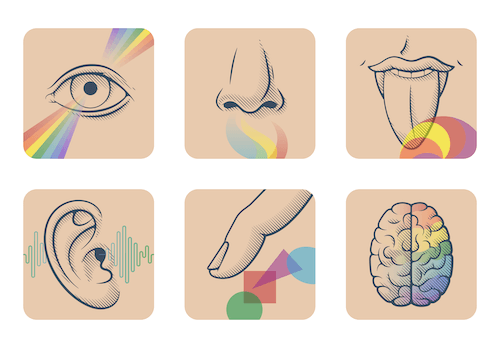
Consider a creature that "sees" through echolocation, perceives heat signatures, or senses electrical fields. Its entire conceptual framework would be different.
- A being that senses magnetic fields might navigate by an innate global map, finding human concepts of "getting lost" utterly baffling.
- A creature that communicates through pheromones might perceive conversations as lingering clouds of scent, where a lie has a literal, foul odour.
The Jericho Writers article, "How To Create Imaginary Creatures," suggests using nature as a starting point. Many animals in our own world possess abilities that feel alien to us.
How To Create Imaginary Creatures For Your Fantasy Novel – Jericho Writers
This article provides practical methods for creature design. We'll focus on how to generate the core concept.
Please read the section titled Use Nature To Inspire You. Notice how real-world examples, from deep-sea life to bats, can provide the spark for a unique biological makeup. This is your first building block.
The Architecture: Perception of Time and Emotion
A different lifespan radically alters one's perspective on everything from relationships to problem-solving. An insectoid character living for a few weeks would have a frantic, urgent worldview, while an ancient entity might perceive decades as fleeting moments.
The anime series Frieren: Beyond Journey's End offers a masterful exploration of this concept through its elven protagonist, who has lived for over a thousand years. The video essay "Frieren - Writing From an Alien Perspective" provides an excellent analysis.
Frieren - Writing From an Alien Perspective
This video dissects how Frieren's elven longevity creates a truly "alien" perspective, even though she looks human.
Watch these key segments to understand how a different experience of time shapes a character's mind. The Problem of the Alien Mind: Watch the introduction here, which sets up the difficulty of writing a truly non-human perspective and introduces Frieren as a case study. Time and Narrative Weight: See how Frieren's perception of time changes what she considers important. A 10-year adventure is "mere" to her, while a brief meteor shower with friends becomes a pivotal memory. Watch from this section. Problem-Solving: Her long life gives her a unique approach to challenges. Notice how she uses time itself as a weapon, sealing an enemy for 80 years while humanity develops a countermeasure. Watch this analysis here. Understanding Emotion: Frieren struggles to grasp the urgency and depth of human emotion. Her journey is about learning empathy by observing her mortal companions. Watch the discussion on her emotional development here. This serves as a powerful model for how a non-human character might slowly come to understand—or misunderstand—humanity.
Frieren's character shows that a non-human worldview isn't just about strange powers; it's about a fundamental difference in how life, relationships, and the passage of time are experienced.
The Purpose: Motivation and Origin
A creature without a goal is just a prop. To make them a character, they need a motivation. This doesn't have to be a complex human-like desire; it can be primal or programmatic.
- AI: Its motivation might be to solve a specific problem, to gather all available data, or to follow its core programming at all costs.
- Alien: Its motivation could be survival, colonization, or scientific observation.
- Fantasy Creature: Its purpose might be to protect its territory, serve a magical function, or simply to hunt.
Giving your creature an origin story and a clear role in its world makes it far more compelling.

The Jericho Writers article provides a fantastic checklist for solidifying these details.
How To Create Imaginary Creatures For Your Fantasy Novel – Jericho Writers
This article provides a structured way to think about your creature's role and characteristics.
First, read the point titled Give Your Monsters Motivation. Then, review the Monster Checklist that follows. Pay special attention to questions like "How intelligent is the creature?", "How old is the creature?", and "What are its strengths and weaknesses?". Answering these will help you build the internal logic we discussed in our last lesson.
Part 2: Crafting the Non-Human Voice
Once you understand how your character thinks, you can decide how it speaks. A non-human voice should be a direct expression of its unique worldview. The Bookfox video "8 Steps to Nail a Character Voice" offers an excellent set of tools that we can adapt for this purpose.
8 Steps to Nail a Character Voice (even for people totally unlike you)
This video provides eight practical techniques for creating a distinct character voice. We'll focus on the ones most useful for non-human characters.
Watch these two sections, which cover the most powerful techniques for our purposes. Metaphors and Similes: The most crucial tool. A character's comparisons are drawn from its sensory world. Watch the explanation from this section. An AI might say, "The logic is as flawed as a corrupted data packet." A creature living underground might describe fear as "the trembling before a cave-in." Syntax: This refers to word order and sentence structure. It's a subtle but powerful way to reveal a thought process. Watch the breakdown of syntax from this section. Think of Yoda's famous inverted sentences ("Powerful you have become"). An AI might speak in perfectly structured, passionless sentences, while a hive-mind entity might use collective pronouns ("We perceive the threat").
Other techniques from the video are also highly adaptable:
- Disfluencies (Speech Errors): A robot might have a verbal "glitch" or a repeating mechanical sound. An insectoid might communicate with clicks and whistles interspersed with words.
- Euphemisms (What they don't say): What is taboo or incomprehensible to your creature? An AI might refer to grief as a "period of reduced operational efficiency." A warrior race might have no word for "surrender," only for "strategic death."
By combining these worldview and voice elements, you create a character that is not just a human in a costume, but a truly distinct and memorable being.
Practice Exercise
Let's apply these concepts. Your task is to create the basic blueprint for a non-human character.
Scenario: This character has just encountered a human for the first time.
Your Task:
- Choose one character type: an ancient, tree-like being, a purely logical AI, or a short-lived, insectoid alien.
- Define its worldview by answering these three questions:
- What is its primary sense (e.g., vibrations in the ground, data streams, chemical trails)?
- How does it perceive time (cyclically with seasons, as pure data processing, in frantic short bursts)?
- What is its core motivation (to grow, to compute, to propagate)?
- Write a single line of internal thought or dialogue from this character's perspective as it observes the human. The line should reflect its unique worldview through its syntax or the metaphors it uses.
- Briefly explain your choices for the line of dialogue.
Example:
- Character Type: AI
- Worldview: Senses data streams; perceives time as processing cycles; motivated by acquiring new information.
- Line: "New mobile biological unit detected. Its chaotic thermal output and inefficient locomotion patterns are... anomalous. Processing."
- Explanation: I used formal, technical language ("mobile biological unit," "thermal output") and a syntax that feels like a system log to reflect the AI's data-driven mind.
Conclusion
Creating a non-human character is a profound exercise in imagination. It forces you to deconstruct what it means to be sentient and rebuild it on entirely new foundations. By starting with the fundamentals of biology, perception, and motivation, you can design a worldview that is both alien and internally consistent. Expressing that worldview through a carefully crafted voice—rich with unique metaphors, syntax, and vocabulary—is what will bring your creation to life on the page.
Key Takeaways:
- Build from the Ground Up: A coherent non-human worldview starts with its fundamental biology, sensory experience, and lifespan.
- Mind Defines Voice: The character's voice is an expression of its mind. Use metaphors, syntax, and word choice that reflect its unique perception of reality.
- Consistency is Key: Whether it's an AI, an elf, or a creature of your own design, its thoughts and actions must follow an internal logic, even if that logic is completely alien to a human.
In this lesson, we explored characters whose perception of the world is unintentionally different from our own. In our next lesson, we will delve into characters who deliberately manipulate that perception. We will learn to describe techniques for creating an unreliable narrator, such as deception or flawed perception, building on the idea that every point of view, human or not, has its own inherent biases.