Welcome back! In our last lesson, we explored how to control the pacing within a scene by varying sentence length and descriptive detail. You learned to use prose like a film director uses a camera, speeding up for action and slowing down for atmosphere and emotion.
Today, we're zooming out from the individual scene to look at how scenes work together to form one of the most critical parts of your novel: the opening chapter. This lesson will show you how to structure an opening chapter to introduce the protagonist, establish the setting, and initiate the central conflict. The first chapter is your handshake with the reader. It’s your single best chance to grab their attention and convince them that your story is worth their time. The principles we'll cover are the foundation of the gripping openings you've enjoyed in books like Harry Potter and The Young Bond series.
The Three Foundational Pillars of a First Chapter
Your first chapter has three crucial jobs to do. If it accomplishes these, you'll have a reader who is hooked and eager for more. These three tasks are the "what," "who," and "why" of your story's beginning:
- Introduce the Protagonist: Make the reader meet and care about your main character.
- Establish the Setting: Ground the reader in the story's world, tone, and genre.
- Initiate the Central Conflict: Give the reader a compelling reason to keep turning pages.
Let's break down how to accomplish each of these goals.
Pillar 1: Introduce Your Protagonist
Before a reader can care about your plot, they need to care about the person it's happening to. Your first task is to introduce a protagonist the reader can connect with. This doesn't mean they have to be a flawless hero; in fact, flaws make them more relatable.
The key is to make them compelling. An excellent article from "The Young Writer" blog breaks down several techniques for doing this effectively.
How To Write A First Chapter That Hooks Readers
This article uses The Hunger Games as a running example to illustrate the core components of a great opening chapter. We'll focus on its advice for character and goal introduction.
Please read the sections Introduce the Protagonist and the following section on goals. Pay close attention to these three key ideas: Showing the protagonist in their "element" (like Katniss hunting). The "save the cat" technique for building sympathy. Giving the character both an overarching goal and a smaller, immediate scene goal.
As the article highlights, a proactive protagonist with a clear goal is immediately more engaging than a passive one who just lets things happen to them. By showing Katniss hunting to provide for her family, Suzanne Collins immediately establishes her competence, her core motivation (protecting Prim), and the harsh reality of her world, all without needing to state it directly. This is the "show, don't tell" principle in action, which we've discussed before.
Pillar 2: Establish the Setting and Atmosphere
The second pillar is to ground your reader. They need to know where and when they are. But setting is more than a backdrop; it's also about establishing the story's tone, genre, and atmosphere—something you're particularly interested in crafting. Are we in a gritty, rain-slicked cyberpunk city? A whimsical magic school? A historically accurate medieval court? The first chapter must provide these coordinates.
A common mistake is "info-dumping," where the writer dumps paragraphs of exposition about the world's history or geography. The key is to weave details in naturally, letting the reader discover the world through the protagonist's senses and actions.
How to Write the Perfect First Chapter | The Ultimate ...
This checklist from Kingdom Pen offers a very clear and practical breakdown for setting the stage in your opening.
Please read the first three points in the "SET THE STAGE" section: Orient Your Reader and Set the Tone, and Establish the Genre. Notice how it advises using word choice, dialogue, and even the weather to establish the mood.
The article wisely points out that the tone of your first chapter should be an accurate promise of the story to come. If you open with a dark, tragic scene but the rest of the book is a lighthearted comedy, you'll give your reader tonal whiplash and break their trust.
A word of caution, especially for fantasy and sci-fi: avoid overwhelming the reader with too much world-building at once.
First Chapter Mistakes New Fantasy Writers Make
In his video on common first-chapter mistakes, author Jed Herne discusses the problem of "world-building overload."
Watch the final segment from 20:52 to 21:44. His advice is to focus on just one interesting aspect of your world in the opening. The Lord of the Rings, for example, doesn't start with the history of Middle-earth; it starts with the history of Hobbits. This keeps the focus tight and manageable.
Pillar 3: Initiate the Central Conflict
You've introduced a compelling character in an intriguing world. Now, you must disrupt it. The central conflict is the engine of your plot. It's the event that shatters the protagonist's "normal" and launches them on their journey. In traditional story structure, this is often called the inciting incident.
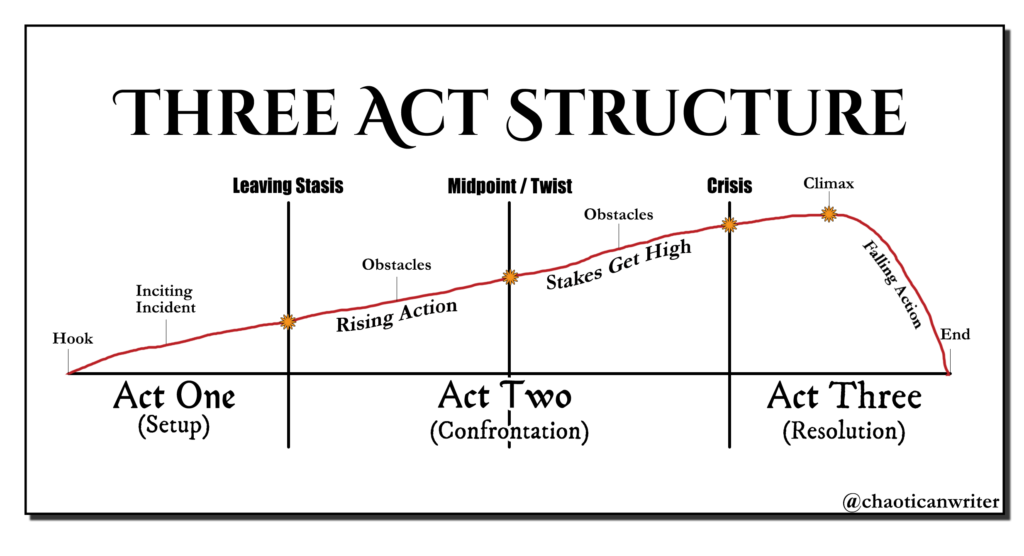
The first chapter is the ideal place for this event to occur. It doesn't have to be a literal explosion, but it must be a point of no return. It's the moment Harry Potter receives his letter from Hogwarts, or Katniss Everdeen's sister is chosen at the Reaping.
How To Write A First Chapter That Hooks Readers
Let's return to "The Young Writer" article for its straightforward explanation of introducing conflict.
Please read section 6, Introduce the Conflict. The definition is simple but powerful: conflict is when a character wants something and something stands in their way. The Reaping directly threatens Katniss's goal of protecting her family.
Starting your story on "the day everything changes" is a powerful way to avoid a slow, meandering opening.
First Chapter Mistakes New Fantasy Writers Make
Jed Herne's video also has a great section on why you should usually start your story at the moment of disruption.
Watch from 11:35 to 12:34. As he argues, starting on the day of change immediately creates promises and sets the story in motion, earning the reader's trust that you're going to take them on an interesting journey.
There are many ways to kick off the conflict. You don't have to start with a big action scene (which can be ineffective without character investment). You could start with a critical decision, a mysterious phone call, or an unsettling discovery.
9 First Chapter Strategies that make Readers OBSESSED
The video "9 First Chapter Strategies" from the Bookfox channel offers several creative ways to initiate conflict and hook the reader.
First, watch the strategy of starting with a decision. Notice how the single line from The Underground Railroad ("the first time Caesar approached Cora about running North, she said no") immediately establishes theme, tension, and character conflict. Next, watch the strategy of starting with a mystery. An unanswered question is a powerful hook that gets the reader's mind working, making them an active participant in the story.
The First Chapter as a Promise
Ultimately, you can think of your first chapter as a promise—or a contract—with your reader. By the end of it, you have promised them:
- Who the story is about (your protagonist).
- What kind of world it takes place in (setting, tone, genre).
- What the core struggle will be (the central conflict).
Failing to establish these elements, or establishing them in a way that's inconsistent with the rest of the book, leads to "false promises" that can alienate a reader.
First Chapter Mistakes New Fantasy Writers Make
We'll conclude with one last clip from Jed Herne's video, which perfectly summarizes this idea of the first chapter as a promise.
Watch the segment on False Promises. He identifies three key mistakes: getting the reader invested in the wrong character, creating the wrong tone, and failing to set up the main conflict. This is a great summary of why our three pillars are so critical.
Conclusion
Structuring an opening chapter can feel daunting, but by focusing on these three foundational pillars, you can approach the task with confidence. Your goal is not to tell the reader everything at once, but to give them just enough to get them invested. Introduce a character they can root for, place them in a world that feels alive, and then, disrupt that world with a problem that makes the reader ask, "What happens next?"
Key Takeaways:
- A strong opening chapter must accomplish three core tasks: introduce the protagonist, establish the setting, and initiate the central conflict.
- Introduce your protagonist by showing them in their element and giving them a clear goal. Make the reader care.
- Establish the setting by weaving in sensory details that create a specific tone and atmosphere, but avoid info-dumping.
- Initiate the conflict by starting on "the day everything changes." This is the inciting incident that launches the plot.
- Think of your first chapter as a promise to the reader about the character, world, and conflict of your story. Keep that promise consistent.
In our next lesson, we'll build on this foundation. We will discuss how to arrange scenes into chapters throughout your novel to control narrative momentum, manage reveals, and create smooth transitions, keeping your reader hooked from the opening pages to the very end.