Hello! In our last lesson, we focused on how to end scenes effectively, using everything from high-stakes cliffhangers to quiet, reflective moments to control the narrative momentum between scenes. We learned that the ending of one scene is the engine for the next.
Today, we're going to zoom in from the structure of the scene to the very texture of the prose within it. This lesson tackles a fundamental skill of sentence-level craft: how to control pacing within a scene by varying sentence length and descriptive detail. Think of yourself as a film director. You don't just decide what happens in a shot; you decide if it's a frantic, shaky-cam close-up or a long, slow pan across a landscape. Your prose is your camera and your editing suite, and learning to control it gives you precise command over the reader's experience.
This skill is absolutely vital for the kinds of stories you enjoy—the action-packed, mysterious narratives of Harry Potter or Young Bond. The difference between a heart-pounding chase scene and a sluggish one often comes down to the rhythm of the sentences.
The Heartbeat of Your Story
At its core, pacing is the rhythm of your story, the speed at which you deliver information and action to the reader. It’s not just about making things happen "fast" or "slow." It's about manipulating the reader's experience of time to create a specific emotional effect. You might dilate time, stretching a few seconds across a full page to build suspense, or you might compress it, covering weeks in a single sentence.
The most fundamental tools you have for this are sentence length and the amount of detail you provide.
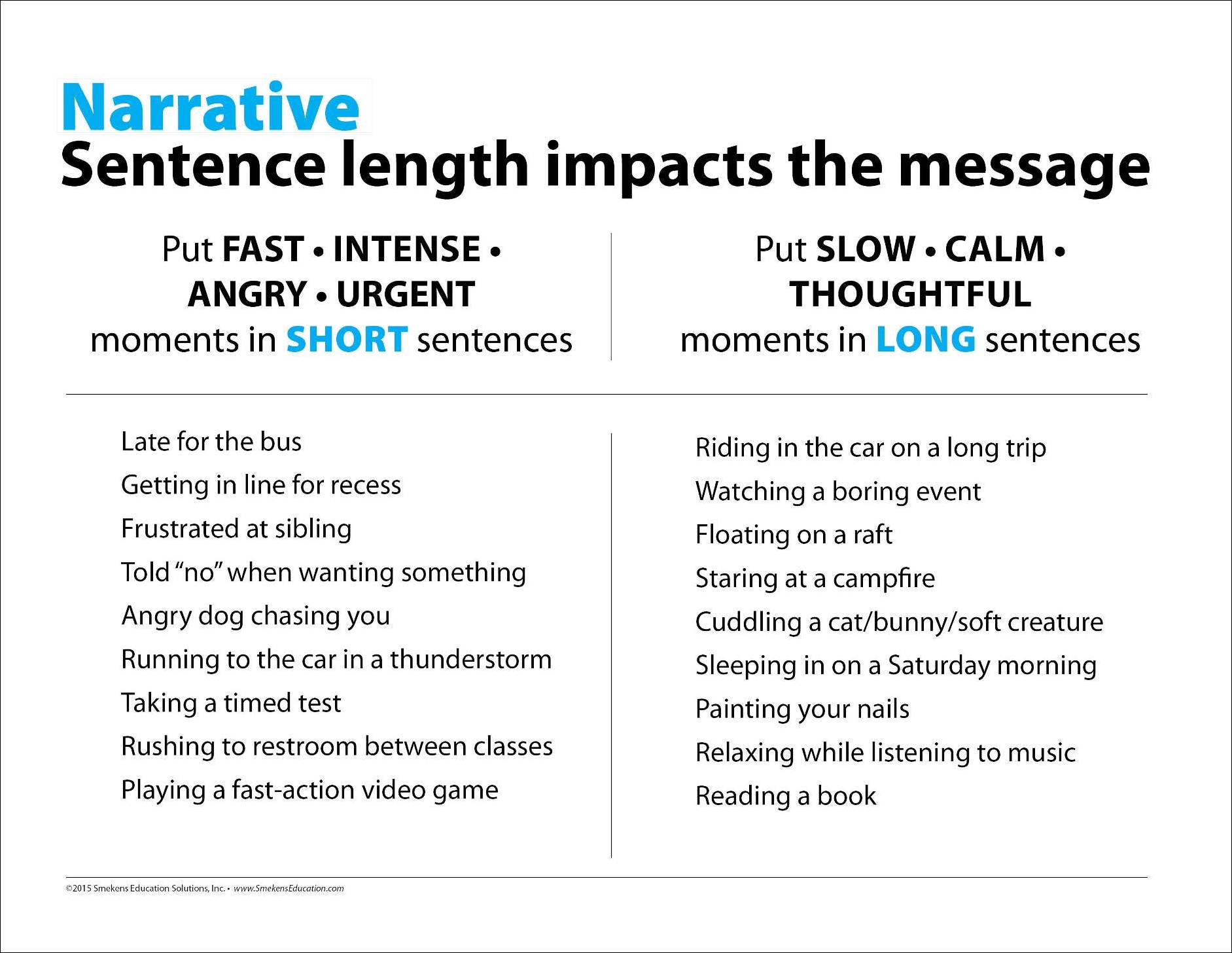
This simple rule is the bedrock of pacing. Short, declarative sentences feel urgent and immediate. Longer, more complex sentences with multiple clauses invite contemplation and create a sense of flow.
The Writer's Toolkit: Accelerators and Brakes
To gain conscious control over your pacing, it's useful to think of your writing techniques as a set of accelerators and brakes. Let's break down how to use them.
How To Control Pacing In Your Story
The article "How To Control Pacing In Your Story" from BubbleCow provides an excellent, practical list of these tools. It clearly separates techniques for acceleration and deceleration.
Please read the entire section titled Techniques to Speed Up vs. Slow Down. Pay close attention to the "before and after" examples at the end, which demonstrate how the same moment can be rendered with drastically different pacing.
Let's dig into these techniques with some more examples.
Accelerators: How to Speed Things Up
When you want the reader's heart to race—during a fight, a chase, or a sudden escape—you need to press the accelerator.
- Short, Punchy Sentences: Keep your sentences direct and focused, often following a simple subject-verb-object structure. This creates a staccato rhythm that mimics a rapid heartbeat.
- Action-Focused Verbs: Use strong, active verbs that convey energy. "He sprinted" is faster than "He was running quickly."
- Sparse, Concrete Detail: In a fast scene, the character's focus narrows. Your description should too. Only mention the details that have immediate impact or are essential to understanding the action.
Let's watch a video that shows this in action. The first part demonstrates a perfectly paced fight scene.
The Secret to Strong PACING (it's actually really simple)
In this video, "The Secret to Strong PACING," author Abbie Emmons breaks down pacing with clear examples. We'll start with her analysis of a fast-paced scene.
Watch from 02:55 to 04:34. Notice how the prose is a rapid sequence of "action, action, action." There's no time spent on deep introspection or lyrical description. Then, pay close attention as she rewrites the same scene with slow pacing from 04:34 to 06:15 to demonstrate why it doesn't work for a fight. The long sentences and excessive detail kill the urgency.
As you saw, adding long sentences and detailed descriptions to the fight scene felt like watching it in slow motion. The tension evaporated. This is the "Sentence Slog" in action—when prose mechanics work against the scene's emotional goal.
Brakes: How to Slow Things Down
Conversely, when you want the reader to linger on a moment—to absorb a powerful emotion, savor a mysterious atmosphere, or process a critical decision—you need to apply the brakes.
- Long, Complex Sentences: Use clauses and subordinate phrases to create flowing, lyrical sentences. This encourages the reader to slow down and absorb the information.
- Rich, Sensory Detail: This is where you bring the world to life. Describe sights, sounds, smells, and textures to immerse the reader in the character's experience and build mood.
- Expanded Interiority: Give the reader deep access to the character's thoughts, feelings, and memories. This creates emotional depth and allows for reflection.
Now, let's see how these techniques create an effective slow-paced scene.
The Secret to Strong PACING (it's actually really simple)
We'll continue with the same video from Abbie Emmons, this time looking at an example of slow pacing that works beautifully.
Watch the segment from 06:33 to 09:09. The character is searching an island for a missing person. Notice how the long sentences, descriptions of the landscape, and internal monologue all work together to emphasize her exhaustion, anxiety, and the slow passage of time. The pacing perfectly matches the character's emotional state.
This is where you can build the mysterious and atmospheric settings you're interested in. The slow pace gives you the space to describe the "dark gray sea" or the way the sun "skips orange flares" across the waves, making the setting a mirror for the character's internal state.
The Art of Variation
Mastering pacing isn't about choosing one speed and sticking to it. It's about creating a dynamic rhythm by varying your sentence and paragraph lengths. A story written entirely in short, choppy sentences becomes exhausting (the "Staccato Trap"), while one written entirely in long, meandering sentences can become boring.
The power lies in the contrast. A single short sentence, placed after several long ones, can land with the force of a punchline or a gut punch.
How to Use Sentence and Word Counts to Improve Story Pacing
This article from Atmosphere Press explains why variation is so important and what happens when writers fall into monotonous patterns.
Start by reading the sections What Good Pacing Feels Like and Common Pacing Problems. These introduce the concepts of the "Sentence Slog" and "Staccato Trap." Then, read the section The Science Behind Sentence Rhythm. It explains that our brains crave novelty, and varying sentence length creates that interest, guiding the reader's experience like a piece of music.
A Practical Exercise: The Read-Aloud Test
How can you tell if your pacing is working? One of the most effective methods is simply to read your writing aloud.
When you read aloud, you can't skim. You're forced to experience your prose at the speed it's written.
- If you find yourself running out of breath in the middle of a sentence, it's probably too long and complex.
- If you're reading a fast-paced action scene and it sounds plodding or halting, you likely need to shorten your sentences and trim unnecessary words.
- If you're reading a quiet, emotional scene and it sounds clipped and robotic, you may need to lengthen your sentences and add more descriptive or internal detail.
Your ear is an incredibly sensitive tool for detecting awkward rhythm and monotonous pacing. Trust it.
Conclusion
You now have the fundamental tools to take command of your story's rhythm at the most granular level. Pacing is not an abstract concept; it is a direct result of concrete choices you make about sentence length, verb strength, and descriptive detail. By consciously applying these accelerators and brakes, you can guide your reader's emotional journey with precision, making action scenes feel breathless and emotional moments resonate with depth.
Key Takeaways:
- Pacing controls the reader's experience of time. It is a tool for creating emotional impact.
- Short sentences and sparse detail accelerate the pace. Use them for action, high tension, and urgency.
- Long sentences and rich detail slow the pace. Use them for reflection, emotional depth, and building atmosphere.
- Variation is crucial. The interplay between fast and slow passages creates a compelling rhythm that keeps the reader engaged.
- Read your work aloud. Your ear is the best judge of whether your pacing feels natural and effective.
In our next lesson, we will zoom out again. We will look at how to structure an opening chapter by arranging scenes to introduce your protagonist, establish the setting, and kick off the central conflict, setting the pace for the entire novel.