In our last lesson, we constructed the skeleton of your story: a solid plot outline with a clear beginning, middle, and end, defined by key turning points. This structure provides the essential backbone for your narrative. Now, we will begin to add the flesh, muscle, and sinew that bring a story to life.
Today's focus is on how to design subplots that reinforce and enrich the main plot and theme. If the main plot is your story's spine, subplots are the intricate systems that connect to it, giving it depth, strength, and complexity. They are not mere detours; they are essential for creating a rich, layered narrative world that feels expansive and real.
The Purpose of a Subplot
Before we discuss how to build a subplot, it's crucial to understand why we use them. A novel with only a single plotline can feel thin and one-dimensional. Subplots are the tools you use to build a more robust and engaging experience for the reader.
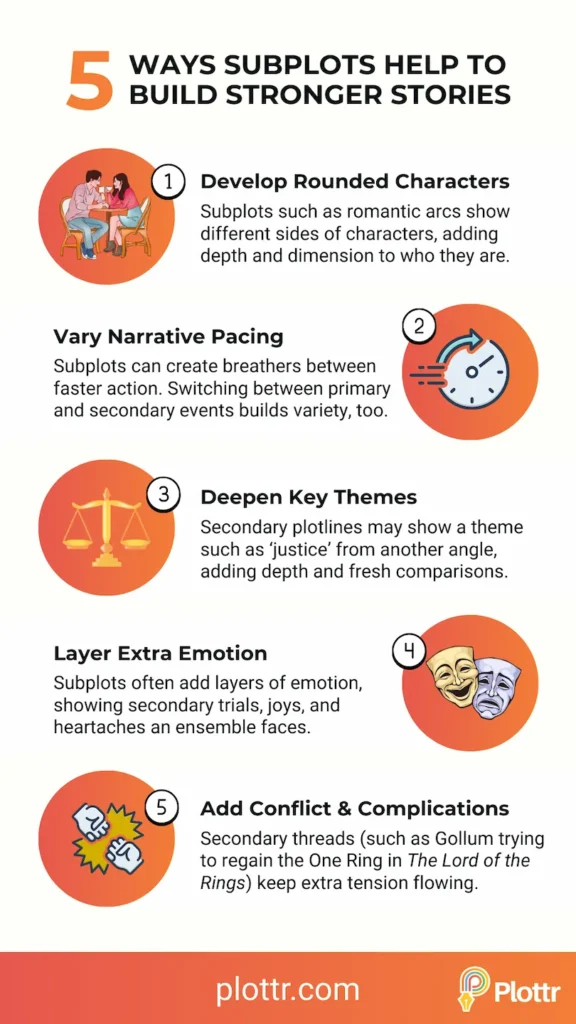
However, there's a significant difference between a meaningful subplot and simple "filler." A subplot that doesn't connect to the main story can cause the narrative to drag, making readers lose interest.
How to Write a Subplot That Connects to Your Main Plot (2026) | River
The article "How to Write a Subplot" from River Editor starts by clearly identifying the problem we want to avoid: filler.
Read the section What Makes a Subplot Feel Like Filler?, including the list of "Invalid purposes." This will help you develop a critical eye for what makes a subplot weak, so you can focus on making yours strong.
The Golden Rule: It's All About the Protagonist
The single most important principle of subplot design is that all subplots must, in some way, impact the protagonist or the main conflict. Even when a subplot scene doesn't feature your main character, the reader's mind is always asking, "How will this affect them? When will they find out?"
Your protagonist is the lens through which the reader experiences the story. They are the yardstick against which all events are measured for importance.
HOW TO DO SUBPLOTS - THE RIGHT WAY
In this video, author Abbie Emmons explains why subplots are fundamentally about characters and how they must connect back to the main story.
First, watch her explanation of why subplots are about character transformation, not just events, from "it is not plot it is a character". Then, watch the crucial section where she explains the 'yardstick' principle, from "one question you have to ask yourself".
As Abbie Emmons emphasizes, a subplot that exists in a vacuum, with no bearing on the protagonist's journey, is a story that readers will struggle to care about. This is why a subplot about the villain's plan feels compelling—we know it will eventually collide with the hero's world. The same principle must apply to all your other subplots, whether they involve a romance, a friendship, or a personal mystery.
The Three Pillars of Connection
So, how do you ensure your subplots are meaningfully connected to your main plot? There are three primary methods. The strongest subplots often use a combination of at least two.
-
Thematic Connection: The subplot explores the same central theme or question as the main plot, but from a different angle. It can either echo the theme by showing a similar struggle with a different outcome, or contradict it by presenting a contrasting viewpoint, which adds irony and complexity. For example, if your main plot's theme is "courage in the face of tyranny," a subplot might feature a character who chooses cowardice, highlighting the stakes and difficulty of the protagonist's choice.
-
Causal Connection: This is the most direct link. Events in the subplot cause consequences in the main plot, and vice versa. They are mechanically interlocked. For example, in a romance subplot, the protagonist's new relationship might make them a target for the villain (subplot affects main plot). Conversely, a failure in the main plot might cause a rift in that same relationship (main plot affects subplot).
-
Structural Connection: The subplot's emotional and narrative beats are synchronized with the main plot's structure. When the main plot escalates, the subplot escalates. When the protagonist faces their "All is Lost" moment in the main plot, they also face a crisis in the subplot. This creates a powerful sense of unity and mounting pressure, as all aspects of the protagonist's life build toward a single, story-defining climax. The collision of these plotlines, as Brandon McNulty explains in his video, is what creates "fireworks."
This next reading provides detailed explanations and excellent examples for each of these connection methods.
How to Write a Subplot That Connects to Your Main Plot (2026) | River
This article from River Editor breaks down the purposes and connection methods for subplots with great clarity.
First, read the section "The Purpose Test." This gives you a menu of valid functions your subplot can perform. Next, read the detailed breakdown of the three connection methods under the heading "Three Ways to Connect Subplot to Main Plot." Pay close attention to the examples from Harry Potter and The Hunger Games. Finally, browse the section "Subplot Types and How to Connect Each." This provides specific connection strategies for common subplots, such as romance, mentorship, and mystery, which you've expressed interest in.
Visualizing the Weave
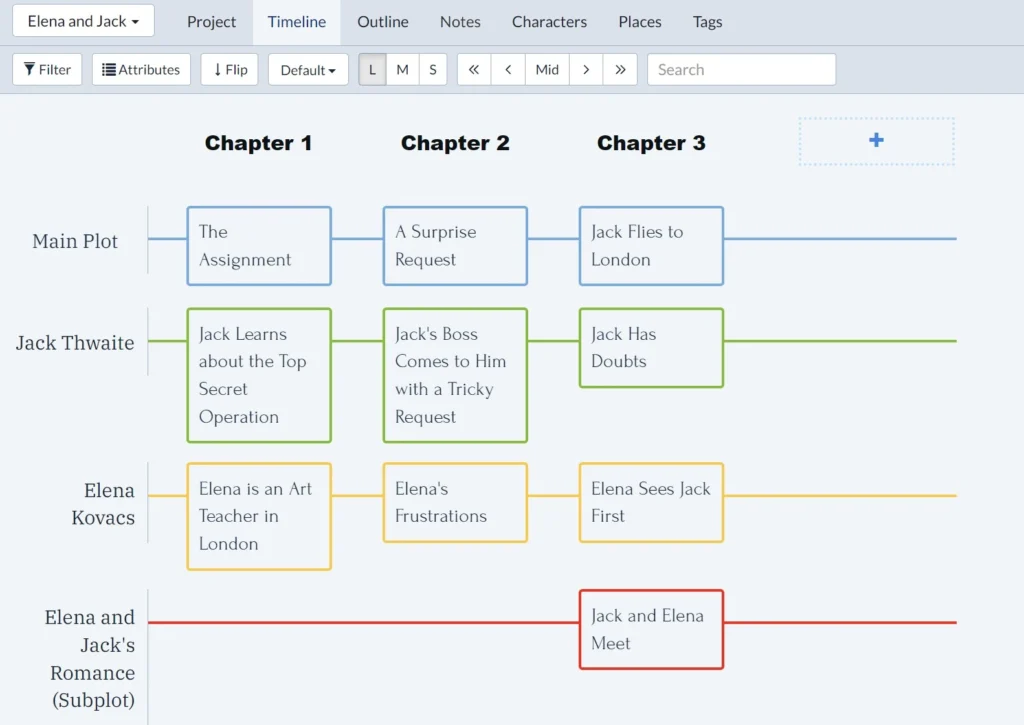
A good way to conceptualize this is to see the main plot and subplots as different colored threads running in parallel. At key moments, they cross over and weave together, creating a strong, intricate tapestry. A tool like Plottr, which you may encounter as you explore writing software, helps visualize this structure.
Exercise: Design a Subplot for Your Story
It's time to apply these concepts. Take the main plot outline you created in the previous lesson. You are going to design one major subplot that will run alongside it.
Follow these steps in your notebook or a document.
-
Define the Purpose: Look back at the "Valid purposes for subplots" list from the River Editor article. What is the primary job of this subplot? Is it to develop your protagonist's character arc? To complicate the main plot? To explore the theme? Write down its main function.
-
Choose a Character and Brainstorm: Select a secondary character from your story idea to be the focus of this subplot. If you don't have one, create one now. Answer these two questions from Savannah Gilbo's article to guide your thinking:
- Can this character represent an aspect of my story's theme? (Thematic Connection)
- Can this character contribute to the central conflict? (Causal Connection)
-
Outline with the CRAI Method: Now, formalize your idea using Abbie Emmons's C.R.A.I. framework. This ensures the subplot is anchored to the protagonist.
- Character: The name of the subplot's central character.
- Role: Their relationship to the protagonist (e.g., mentor, rival, love interest, estranged sibling). This defines the inherent connection.
- Agenda: What does this character want within the subplot? What is their goal?
- Impact: How will this character's agenda and the events of their subplot directly affect the protagonist and the main plot? Be specific. Think about the "fireworks" moment where the plots collide.
-
Select a Primary Connection Method: Choose which of the three methods (Thematic, Causal, Structural) will be your primary way of integrating this subplot. Write a sentence explaining how you'll use it.
- Example (Causal): "This is a causal connection. My protagonist's mentor has a research subplot, and his discovery at the midpoint will give the protagonist the tool she needs to defeat the antagonist."
- Example (Thematic): "This is a thematic connection. While my protagonist learns to trust his team, his best friend's subplot will show him getting betrayed, reinforcing the story's theme about the risks and rewards of vulnerability."
Take about 15-20 minutes for this exercise. The goal is not to write the entire subplot, but to design its blueprint and ensure it is fundamentally woven into the fabric of your main story.
Conclusion
Today, you've learned that subplots are far more than side stories; they are a critical component of a novel's architecture. A well-designed subplot adds layers of meaning, emotion, and complexity, transforming a simple sequence of events into a rich and resonant narrative.
Key Takeaways:
- Subplots must serve the main story by performing a clear function, such as developing character, complicating the plot, or exploring theme.
- A subplot that could be removed without affecting the main plot is likely "filler" and should be revised or cut.
- The golden rule is that all subplots must ultimately impact the protagonist, who is the reader's "yardstick" for importance.
- You can weave subplots into the main story using thematic, causal, and structural connections.
In our next lesson, we will zoom in on the engine that drives both plots and subplots: conflict. We will define and develop story scenarios that demonstrate the main types of conflict (internal and external), giving you the tools to create the tension that keeps readers turning the page.