Introduction
Welcome to the next lesson in our journey through professional swimwear construction. In our previous session, we engineered a solution for the classic Bollywood "rainfall sequence" by designing pockets for removable, high-performance foam cups. We established a testing protocol to validate our design choices, ensuring the garment maintained its shape and function when wet. Now, we will focus on the layer that sits closest to the skin and forms the foundation of the garment's comfort and integrity: the swimwear lining.
This lesson is dedicated to the art and science of lining a bikini top. While seemingly a simple inner layer, the lining is a critical component that dictates a garment's opacity, comfort, durability, and overall professional finish. We will explore why lining is non-negotiable in professional swimwear, what materials to choose by analyzing their technical specifications, and how to implement different lining strategies. By the end of this lesson, you will be able to select and apply the appropriate lining to ensure your bikini top designs are comfortable, supportive, and perfectly opaque, even under the unforgiving glare of cinematic lighting.
The Fundamental Role of Swimwear Lining
A common question for designers new to swimwear is why a separate lining is necessary. Can't the main fashion fabric do the job on its own? The answer lies in the unique demands placed on swimwear, especially in a performance context. A lining serves multiple critical functions that a single layer of fabric often cannot.
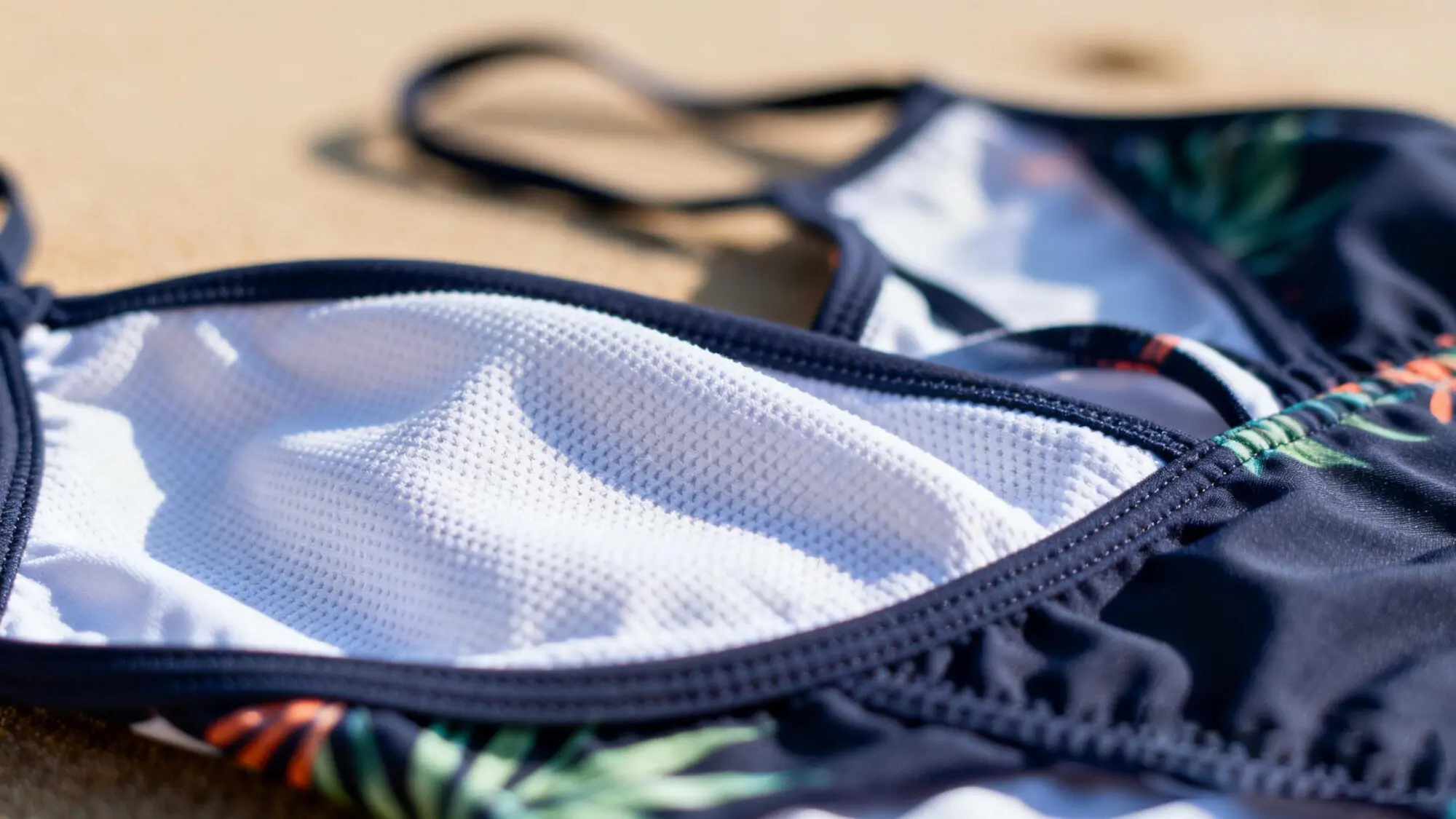
Let's explore the primary purposes of a lining. A comprehensive article from Sportek International, a supplier of technical fabrics, provides an excellent breakdown of why linings are so crucial in swimsuit construction.
Swimwear Lining Purpose – Why Linings Matter in Swimsuit Construction – Sportek International Inc.
This article explains the essential functions of swimwear lining. As you read, focus on how these functions translate to the demands of a Bollywood production.
First, read the introduction, starting from Why Linings Matter, to get a high-level overview. Then, proceed to the detailed bullet points under the next heading. Read through the five key functions, from the list of purposes. Pay particular attention to the points about preventing sheerness when wet and increasing comfort by creating a smooth layer against the skin.
As the article details, a lining is your primary defense against a garment becoming transparent when wet or stretched—a catastrophic failure on a film set. It also provides a smooth, comfortable barrier between the performer's skin and the garment's internal seams. For your work, this means an actress can wear a heavily embellished or intricately seamed top for hours without chafing or discomfort, allowing her to focus entirely on her performance. Furthermore, the lining adds a layer of stability, helping the garment retain its intended shape and extending its lifespan through repeated takes and cleanings.
Material Science: Selecting the Right Lining
Once you've established the need for a lining, the next step is a technical one: selecting the right material. This is not a place for guesswork. Your choice will directly impact the final garment's performance. Given your background in experimental design, you'll appreciate that this is a process of evaluating quantitative specifications to achieve a desired outcome.
The two main contenders for swimwear lining are Nylon-Spandex Tricot and Polyester-Spandex Interlock.
- Nylon-Spandex blends are known for their exceptionally soft feel and quick-drying properties, making them a premium choice for comfort.
- Polyester-Spandex blends offer superior chlorine resistance, making them highly durable for repeated use in swimming pools.
Beyond the fiber content, you must consider the fabric's technical specifications.
Swimwear Lining Purpose – Why Linings Matter in Swimsuit Construction – Sportek International Inc.
This next reading dives into the specifics of lining materials and their performance metrics.
First, read the section on Common Lining Materials to familiarize yourself with the main types. Next, carefully study the section titled Key Fabric Performance Specs. This is the most critical part of your material selection process. Focus on understanding the trade-offs associated with: Weight (GSM): How it affects opacity vs. bulk. Stretch & Recovery: The importance of matching the lining's stretch percentage to the outer fabric. Breathability & Drying Time: Essential for performer comfort during long shoots.
A crucial takeaway here is the principle of matching stretch. If your outer fashion fabric has 75% four-way stretch, using a lining with only 50% two-way stretch will cause problems. The lining will restrict the garment's movement, potentially causing seams to pop or the outer fabric to bubble and distort. The lining and shell must work together as a single, cohesive system.
The Cinematic Lighting Test
In Bollywood, a garment isn't just worn; it's lit. Intense studio lights or bright outdoor sun can reveal a fabric's lack of opacity in an instant. The article "Best Fabric Finishes for Stage Costumes" provides a simple but effective field test to prevent this.
Best Fabric Finishes for Stage Costumes That Perform Under Lights
This article offers practical advice for costume design. We're interested in a specific checklist item for preventing wardrobe malfunctions.
In the "Checklist: Choosing a Stage Costume Fabric Finish," locate the point titled No Wardrobe Malfunctions. The "flashlight test" described here is an invaluable, low-tech way to simulate high-intensity lighting and check for transparency before you even cut your fabric.
This simple test should become a standard step in your material validation process. By stretching a fabric swatch over your hand and shining a bright light through it, you can quickly determine if a single layer is sufficient or if a lining is required.
Construction Strategies: Full, Partial, and Self-Lining
With your materials selected and tested, the final consideration is the construction method. How you apply the lining is a design choice that balances aesthetics, function, and efficiency. The most common methods for a bikini top are:
-
Front Lining: This is the standard for most bikini tops. Only the front cup pieces are lined, providing opacity and comfort where it's most needed. The back ties or band may remain unlined to maximize stretch and reduce bulk.
-
Full Lining: Both the front and back pieces of the bikini top are lined. This is necessary for light-colored or white garments to ensure total opacity. It also creates a very clean, high-end finish on the inside and is the foundation for creating reversible swimwear. The construction process is identical to the "bagging out" method we used for reversible tops in the previous module.
-
Self-Lining: This is a specific type of full lining where the outer fashion fabric is also used as the lining. This guarantees a perfect match in stretch and color and provides excellent opacity. However, it can create a thicker, bulkier garment and is more expensive. It is best reserved for high-end reversible designs or when the outer fabric is exceptionally lightweight.
The Sportek article provides further detail on these techniques.
Swimwear Lining Purpose – Why Linings Matter in Swimsuit Construction – Sportek International Inc.
This reading covers the practical application and potential pitfalls of lining.
First, read the subsection Stitching & Sewing to understand the importance of stretch stitches and matching stretch direction. Next, review the common mistakes to avoid, particularly these key points. Finally, explore the discussion on Self-Lining to understand the pros and cons of this advanced technique.
Case Study: Engineering a White Bikini Top for a Rain Song
Let's synthesize these concepts with a classic Bollywood scenario. You are commissioned to design a white bikini top for a pivotal rain-and-dance sequence. The director wants a clean, minimalist aesthetic, but has stressed that the garment must remain 100% opaque when wet and under bright cinematic lights.
Here is how you can approach this using a systematic, test-driven methodology:
1. Problem Definition:
The primary goal is to achieve complete opacity and shape retention in a white bikini top under wet conditions and intense lighting. Failure is defined as any degree of transparency, sagging, or distortion.
2. Factor Analysis (Material Selection):
- Outer Fabric: A high-quality white Nylon/Spandex blend (e.g., 190 GSM, 75% 4-way stretch).
- Lining Fabric (The Experimental Variable):
- Option A (Standard): White swimwear lining (e.g., 100 GSM Nylon Tricot).
- Option B (Nude): Nude-colored swimwear lining (e.g., 110 GSM Nylon Tricot). Nude is often better than white for preventing show-through under light colors.
- Option C (Self-Lined): A second layer of the 190 GSM white outer fabric.
3. Experimental Protocol:
- Create three identical sample swatches, each consisting of the outer fabric layered with one of the lining options.
- Dry Test: Perform the "flashlight test" on all three swatches, stretching them to simulate wear. Record observations on transparency.
- Wet Test: Submerge all three swatches in water, wring gently, and repeat the flashlight test. Record observations, paying close attention to which combination best masks the "shadow" of your hand behind it.
- Analysis: Compare your results. Option A might show some transparency when wet. Option B will likely perform better, as the nude color helps break up the light transmission. Option C will probably offer the best opacity but will also be the thickest.
4. Design Decision:
Based on the experiment, you can make an evidence-based recommendation. You might conclude that the nude lining (Option B) offers the best balance of opacity and minimal bulk. For a design that requires absolute certainty, you might choose to self-line the garment (Option C), but you would need to communicate to the director that this would result in a slightly heavier and less delicate garment. This analytical approach moves your design process from simple sewing to true garment engineering.
Conclusion
In this lesson, we have established that swimwear lining is not an optional extra but a cornerstone of professional garment construction. It is the key to ensuring opacity, comfort, and durability in your designs. By treating material selection as a technical exercise and evaluating specifications like GSM, stretch, and recovery, you can make informed choices that stand up to the rigors of a film set.
Key Takeaways:
- Core Functions: Lining provides crucial modesty (especially when wet), comfort against seams, structural support, and extends the life of the garment.
- Material Analysis: The choice between materials like Nylon-Spandex and Polyester-Spandex, and the evaluation of specs like GSM and stretch percentage, are critical engineering decisions.
- The Flashlight Test: This simple, practical test is an essential quality assurance step to prevent transparency under bright cinematic lighting.
- Construction Strategies: You can choose between full, partial, or self-lining methods to balance opacity, comfort, and design aesthetics.
- Systematic Approach: Applying an experimental mindset to test fabric combinations ensures your final design will perform flawlessly under demanding conditions.
Next Lesson Preview
Having mastered the internal components of a bikini—from removable cups to performance linings—we are now ready to zoom out and analyze the garment as a complete system under stress. In our next lesson, we will begin the "Quality Assurance and Stress Testing" module. You will learn to identify key stress vectors and potential failure points by analyzing high-impact acrobatic choreography, setting the stage for designing robust testing protocols for your finished garments.