Welcome back. In our previous lesson, we explored the atmospheric qualities of Japanese aesthetics, focusing on yūgen (mysterious depth), shizukesa (inhabited stillness), and komorebi (dappled light). We saw how beauty is often found in what is suggested, quiet, or partially obscured. Today, we turn our attention from the feeling of atmosphere to the structure that creates it.
This lesson will address two of the most fundamental principles in Japanese art and thought: ma (the meaningful pause or interval) and yohaku no bi (the beauty of empty space). These concepts are not about absence or nothingness; they are about the powerful potential held within pauses and empty spaces to shape rhythm, invite participation, and create profound meaning. Understanding these principles is key to appreciating why suggestion and omission are often more powerful than explicit statement in Japanese narrative and poetry.
Ma (間): The Meaningful Interval
The concept of ma is one of the most versatile in the Japanese aesthetic vocabulary. It refers to the interval or space between things, but it is never considered empty. Instead, ma is an active, meaningful "in-between" that connects and defines the objects, sounds, or events it separates. It is both a spatial and a temporal concept. Think of the silence between musical notes that creates rhythm, or the physical space between two people in a room that defines their relationship.
Given your background in statistics and operations research, you are already familiar with the importance of intervals. In a time series, the period between data points is not empty; it's where change occurs. In queueing theory, the time between arrivals is a critical variable that dictates the entire system's behavior. Ma operates on a similar principle in art: the interval is not a void, but a dynamic and essential component of the whole.
To build a foundational understanding of ma, we will start with an in-depth article from the Kyoto Journal that explores its etymology and various applications.
MA: Place, Space, Void – Kyoto Journal
This article by Gunter Nitschke provides a comprehensive exploration of ma, from its architectural origins to its use in the arts. It is a fantastic resource for grasping the concept's depth and breadth.
Please read the following sections: Start with the introduction to understand the character's evocative origin: "moonlight streaming through a chink in the entranceway." Next, read the section "Ma: The Four-Dimensional Realm." This part is crucial for understanding how Japanese thought integrates time and space, where time (jikan) is literally conceived as "time-place." Finally, read the section "Ma: The Realm of Art." Focus on how ma is described in calligraphy, painting, and especially the performing arts like Noh theater, where the pause or the "non-action" is as important as the action itself.
As the article illustrates, ma is a principle of dynamic balance. In Noh theater, the master Zeami wrote, "What [the actor] does not do is of interest." This "doing nothing" is ma. It is a charged stillness that allows tension to build and emotions to resonate.
The following video offers a more contemplative, visual summary of ma and introduces its close relative, yohaku no bi.
Japanese Ways of Seeing Space: Ma, Yohaku no Bi, and Subtraction
This video from the channel Dans Le Gris elegantly visualizes the concepts of space in Japanese aesthetics.
Watch the segment on Ma from the definition of Ma. Notice how it's described not as emptiness, but as the interval that gives everything else its meaning and vitality.
In storytelling, ma often manifests as moments where the narrative slows or even stops, allowing a scene or feeling to be fully absorbed. This technique, sometimes called "savoring the moment," is a hallmark of many Japanese films, anime, and novels. It's not about advancing the plot, but about deepening the experience.
A famous example is the bus stop scene in Hayao Miyazaki's film My Neighbor Totoro.
Japanese Storytelling Part 1: Savoring the Moment, A Study of Ma, and Mono no Aware
The channel StoryDive provides an excellent analysis of "savoring the moment" in Japanese media. The example from My Neighbor Totoro is a perfect illustration of a temporal ma.
Watch the analysis of the bus stop scene from "this classic scene." The narrator points out how the long, quiet pauses—showing rain falling, Totoro scratching—don't advance the plot but are essential for creating the scene's unique, immersive atmosphere. This is ma in action.
Yohaku no Bi (余白の美): The Beauty of Empty Space
If ma is the interval, yohaku no bi is the beauty of the blank space itself. It translates to "the beauty of extra white" and refers to the value of unpainted, unwritten, or unspoken areas in a work of art. This is not "dead space"; it is a living element that invites the viewer's or reader's imagination to participate in completing the work.
While related, ma and yohaku no bi are distinct. Ma is the structural pause or interval that creates rhythm and relationship. Yohaku is the aesthetic appreciation for the blankness, the margin, the unsaid.
The Dans Le Gris video you watched earlier provides a very clear distinction.
Japanese Ways of Seeing Space: Ma, Yohaku no Bi, and Subtraction
Let's return to the same video to understand the specific beauty of yohaku.
Watch the section that defines and illustrates Yohaku no Bi. Pay close attention to how it's differentiated from ma and the Western concept of "negative space." Yohaku is not just background; it's a co-equal subject.
The quintessential visual representation of yohaku no bi can be found in sumi-e (ink wash painting).
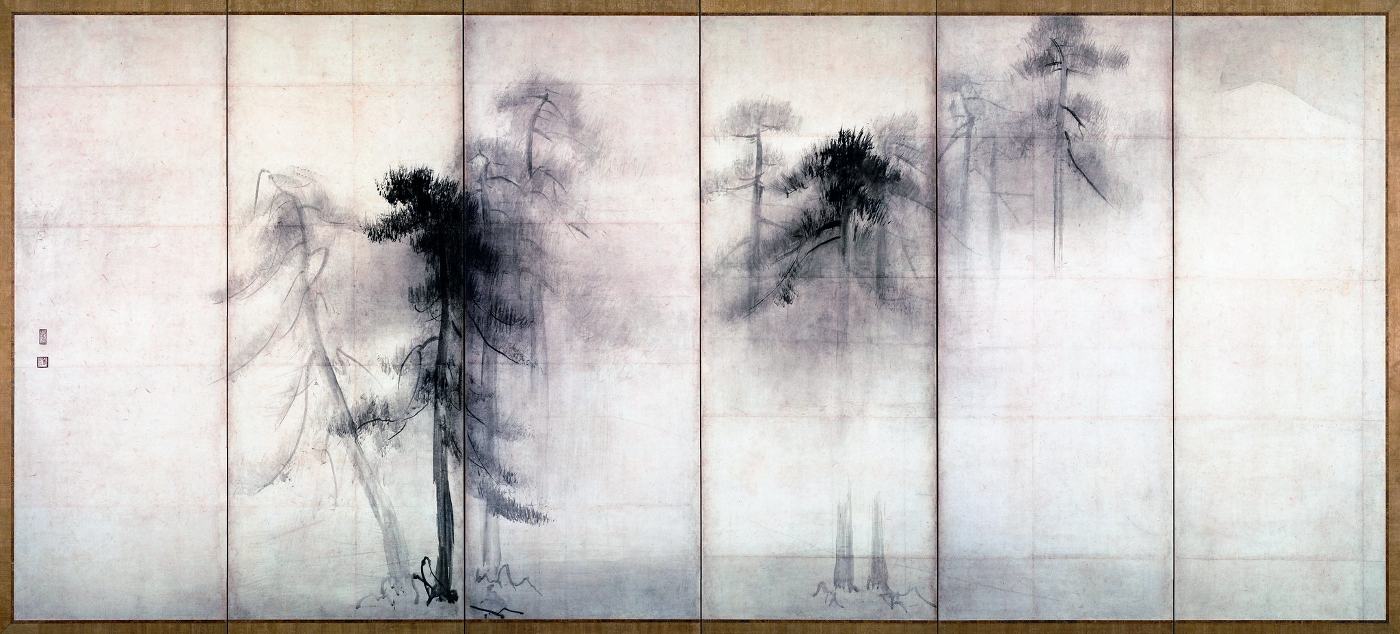
This principle has a strong resonance with your hobby of lingerie design. The aesthetic power of a garment lies not just in the fabric and form, but in the "negative space" it creates—the skin it reveals and frames. That "empty" space is not passive; it becomes an active, vital part of the overall design, drawing the eye and shaping the silhouette. In the same way, yohaku asks the viewer to appreciate the unpainted paper as an essential element of the composition.
In literature, yohaku is the art of omission. It’s the story told in the gaps, the emotions conveyed by what characters don't say. This is where you, as a reader, are invited to become a co-creator of meaning. Haiku is the ultimate expression of this principle.
The following article explains how yohaku, or negative space, functions in haiku to create resonance.
New to Haiku: Negative Space — Some Thoughts on Ma - The Haiku Foundation
This article from The Haiku Foundation offers a practical look at how "empty space" works in poetry. Although it uses the term ma more broadly, its focus is squarely on the principle of yohaku.
Read the first three parts of the article: Begin with the introduction, from the opening paragraph to the definition of ma, which connects the concept to Sumi-e painting. Continue through "How Do We Shape ma?", which explains how this space functions as the poem's "breathing room." Finally, and most importantly, study the practical examples of haiku with too much, too little, and just the right amount of negative space. This section provides a concrete demonstration of yohaku in action.
The examples of "too much" and "too little" ma clearly show that yohaku is not simply about leaving things out. It's a deliberate, skillful act of subtraction that maximizes suggestive power. This is precisely the mechanism behind the atmospheric dread in the works of Poe or Lovecraft you admire—their horror is potent because it leaves the most terrifying aspects to the reader's imagination, dwelling in the narrative's empty spaces.
Conclusion
In this lesson, we have explored the structural aesthetics of Japanese art, moving from the atmospheric qualities of yūgen and shizukesa to the principles that give them form.
Key Takeaways:
- Ma is the meaningful interval—in both time and space—that is not a void but an active connector that shapes rhythm and relationships. It is the pause in music, the silence in conversation, the moment of stillness in a narrative.
- Yohaku no bi is the beauty of empty space, the aesthetic appreciation for what is left unsaid, unpainted, or unwritten. It transforms the audience from passive observers into active participants who complete the work with their own imagination.
- Together, these principles champion suggestion over statement and subtlety over spectacle. They teach that what is absent can be as powerful, if not more so, than what is present.
These concepts are the architecture of suggestion. They are how Japanese Gothic creates dread, how Zen poetry achieves profundity, and how the novels we will read create their deep emotional resonance.
In our next lesson, we will shift from these abstract aesthetic principles to a vibrant historical context. We will define ukiyo (the floating world), exploring the culture of pleasure, entertainment, and transient beauty that emerged in Edo-period Japan and became a major theme in its art and literature.