Welcome back. In our last lesson, we examined ma and yohaku no bi, the powerful aesthetic principles that use space, silence, and omission to create meaning. We saw how the interval and the empty space are not voids, but active participants in art. Today, we transition from the abstract structure of aesthetics to a specific, vibrant cultural and artistic movement that arose from a unique moment in Japanese history.
This lesson focuses on the concept of ukiyo (浮世), the "floating world." We will explore its origins during the Edo period (1603–1867) and understand its significance as a complex, multifaceted response to the Buddhist idea of life's transience. You will see how a new urban class, constrained by a rigid social structure, cultivated a world of fleeting pleasures and how this ethos was captured in some of Japan's most iconic art and literature.
From a World of Sorrow to a Floating World
The term ukiyo contains a fascinating duality within its history. To understand it, we must first look at its origins in Buddhist thought.
What is UKIYO-E in Japanese art? | Hiroshige's "Plum Estate, Kameido"
This brief video from the channel ARTSQ provides a clear and concise introduction to the term's evolution.
Please watch the opening segment, from the beginning of the explanation to the end of the quote by Asai Ryōi. Pay close attention to the shift in meaning from the Buddhist context to the Edo period adaptation.
As the video explains, the original term, written with different characters (憂世), meant "a world of sorrow," referencing the Buddhist belief in the impermanent, suffering-filled nature of earthly existence. During the peace and prosperity of the Edo period, a clever play on words occurred. The sound remained the same, but the characters changed to 浮世, meaning "the floating world."
This was not a rejection of the idea of impermanence, but an ironic embrace of it. The writer Asai Ryōi, in his 1661 novel Tales of the Floating World (Ukiyo Monogatari), famously defined this new spirit:
"...living only for the moment, turning our full attention to the pleasures of the moon, the snow, the cherry blossoms and the maple leaves; singing songs, drinking wine, diverting ourselves in just floating, floating; caring not a whit for the pauperism staring us in the face, refusing to be disheartened, like a gourd floating along with the river current: this is what we call ukiyo."
This philosophy—to find meaning in hedonism and style precisely because life is fleeting—became the cultural engine of a new era.
The Social Context of the Floating World
This shift in worldview didn't happen in a vacuum. It was a direct result of the unique social and political structure of the Tokugawa Shogunate.
The Pursuit of Pleasure: How the Floating World Defined Edo Japan | TheCollector
This article from TheCollector provides an excellent overview of the historical conditions that gave rise to ukiyo.
Please read the following sections: Begin with the section "Fleeting Pleasure in Edo Japan." This explains the rigid social hierarchy and how the rising merchant class (chōnin), wealthy but socially subordinate, sought an outlet for their ambitions. Continue to the next section, "The Flourishing Red-Light District of Yoshiwara." This describes the government-licensed pleasure quarters, which became the physical epicenters of the floating world—self-contained cities where money, not birth, dictated status.
As you read, consider the system dynamics at play. The Tokugawa government created a long period of peace and a rigid four-class system (samurai, peasants, artisans, merchants). This stability inadvertently fueled the rise of a wealthy merchant class who, despite their economic power, were at the bottom of the social ladder. The licensed pleasure districts, like Yoshiwara in Edo (modern-day Tokyo), became contained zones where these social rules were inverted. Here, a samurai might have to indebt himself to a merchant to afford the company of a high-ranking courtesan. This environment, dedicated to theater, poetry, fashion, and sensual pleasure, was the crucible of ukiyo culture.
Capturing the Moment: Ukiyo-e and Ukiyo-zōshi
The culture of the floating world generated its own distinct art forms, designed to capture its style, celebrities, and ethos. The most famous of these is ukiyo-e (浮世絵), or "pictures of the floating world." These mass-produced woodblock prints were the popular media of their day, depicting everything from glamorous courtesans and famous kabuki actors to historical tales and breathtaking landscapes.
While many prints focused on the human world of pleasure, others depicted the awesome and indifferent power of nature, reminding viewers of the larger forces that dwarf human endeavors. The most famous of these is Hokusai's The Great Wave.
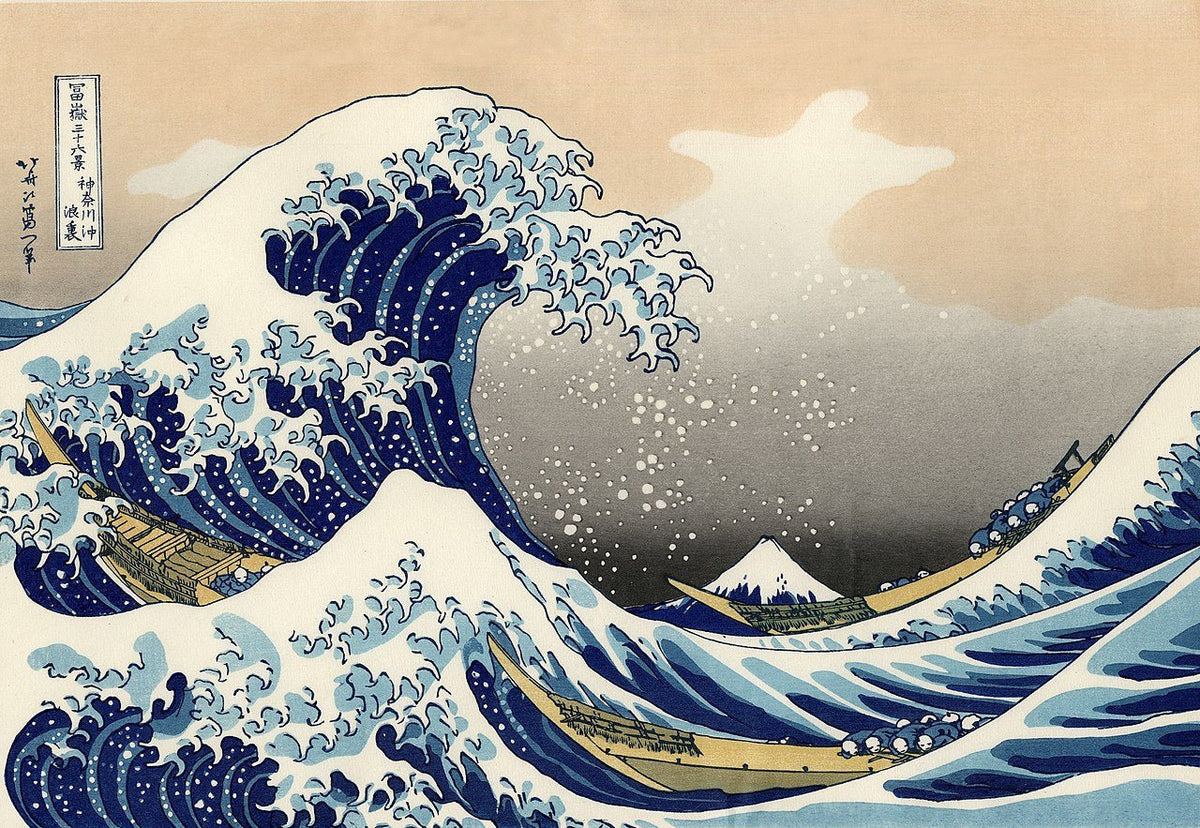
This aesthetic also found its voice in literature. A new genre of popular fiction called ukiyo-zōshi (浮世草子), or "tales of the floating world," emerged to tell the stories of this urban class.
Ihara Saikaku - World History Encyclopedia
This article from the World History Encyclopedia introduces the master of this literary genre, Ihara Saikaku, and defines his work.
Read the section titled "Saikaku’s First Novel." Focus on the definition of ukiyo-zōshi and how Saikaku's novels captured contemporary life, pleasure, and the exploits of the merchant class in a way that was new and exciting for readers.
Ihara Saikaku's stories, like Life of an Amorous Man, were the literary equivalent of ukiyo-e prints. They chronicled the lives, loves, and financial adventures of the chōnin, celebrating their pursuit of pleasure with wit and realism. We will look at Saikaku's work more closely in the next module, as he is the quintessential author of the Edo period's floating world culture.
The Philosophy of the Floating World
So, was ukiyo simply escapist hedonism? A deeper look suggests a more complex philosophy, one that might resonate with the darker, more existential themes you appreciate in writers like Kafka or Poe. It is a response to an awareness of suffering, not a denial of it.
Philosophy of AESTHETICS: The Floating World of Ukiyo-e
This video by Michael Saba, "Philosophy of AESTHETICS: The Floating World of Ukiyo-e," offers a brilliant analysis of the deeper meaning behind the aesthetic.
Please watch these key segments: First, watch from the historical context to understand how the pleasure districts of Edo gave birth to the "vision of a world unmoored from the physical." Next, and most importantly, watch the section on the implicit critique. This part explains how ukiyo-e confronts the audience with the fleeting nature of pleasure, connecting it to the Buddhist concept of dukkha (suffering from attachment). Finally, watch the fascinating connection to modern aesthetics like vaporwave and cyberpunk. This highlights how the theme of finding refuge in a beautiful but ephemeral and ultimately melancholy fantasy world is a recurring human response.
The video makes a crucial point: ukiyo is "reality as seen through a veil of fantasy." It contains an inherent sadness. The feverish pursuit of pleasure is shadowed by the knowledge that it cannot last. The beauty is inseparable from its own decay. This is not the cosmic horror of Lovecraft, but a distinctly human and aestheticized melancholy. The response to the void is not dread, but a kind of performance—to live beautifully and intensely within the transient moment.
Conclusion
In this lesson, we have explored the vibrant culture of the ukiyo, the Japanese "floating world." We have seen how it was more than just a synonym for the pleasure quarters of the Edo period; it was a complete aesthetic and philosophical response to life's inherent impermanence.
Key Takeaways:
- Ukiyo represents a pivotal shift in Japanese thought, transforming the Buddhist "world of sorrow" into a "floating world" of fleeting pleasure.
- It arose from the specific historical context of Edo Japan: a long peace, a rigid social structure, and the rise of a wealthy merchant class who created their own cultural sphere.
- This ethos was expressed vividly in the visual art of ukiyo-e (pictures of the floating world) and the popular literature of ukiyo-zōshi (tales of the floating world).
- Beneath the surface of hedonism lies a profound acknowledgment of transience. The ukiyo is a beautiful, melancholic fantasy, an attempt to find meaning and beauty in the moment, precisely because the moment is all we have.
With this lesson, we conclude our initial survey of the foundational concepts in the Japanese aesthetic lexicon. You now have a toolbox of ideas—from the pathos of mono no aware to the active stillness of ma and the stylish melancholy of ukiyo—to bring to the literature itself.
In our next lesson, we will begin our chronological journey. We will step back in time to the Heian period (794–1185) to encounter what is often considered the world's first novel, Murasaki Shikibu's The Tale of Genji, and explore its masterful expression of aristocratic elegance and sorrow.