Welcome back. In our previous lesson, we examined how the new coalition reality constrains the BJP's centralizing legislative agenda, forcing major projects like 'One Nation, One Election' and a national Uniform Civil Code into a "deep freeze." We saw how allies like the TDP and JD(U) can act as an ideological veto from within the government.
This lesson concludes our first module by shifting focus from the constraints on the central government to the proactive strategies of key regional parties. The 2024 election did not merely weaken the ruling party; it fundamentally re-energized India's federal structure, empowering a diverse set of regional actors. Today, we will analyze how these parties—both inside and outside the ruling coalition—are strategically navigating this new, more contested balance of power. We will explore the "insider" bargaining of the TDP and JD(U), the "outsider" resistance of the TMC and DMK, and the remarkable social engineering of the Samajwadi Party.
The New Playbook: Navigating a Contested Centre
The decade from 2014 to 2024 was marked by a highly centralized model of governance, often described as the "PMO-led" government, where the Prime Minister's Office was the undisputed locus of power. The 2024 verdict has punctured this model. Regional parties, long relegated to the periphery of national decision-making, now find themselves as pivotal players. Their strategies are not uniform; they are tailored to their unique political positions and regional contexts.

We can broadly categorize their approaches into three distinct models: the insider bargainers, the outside challengers, and the social coalition builders.
Strategy 1: The Insider Bargainers (TDP & JD-U)
For the BJP's crucial allies, the Telugu Desam Party (TDP) and Janata Dal (United) (JD-U), the strategy is one of calculated leverage from within. As we saw in the previous lesson, they are using their position to extract significant financial packages for their states and to veto ideologically divisive legislation. However, their strategic calculus is more complex than simple opposition. Their ability to bargain is paradoxically tied to their dependence on the alliance itself.
To grasp this nuance, it's helpful to understand the concept of "lock-in effects" in coalition politics.
Eswaran Sridharan on the 2024 Elections and India's Unique ...
In this interview with the Center for the Advanced Study of India (CASI), political scientist Eswaran Sridharan explains the structural reasons that keep NDA allies bound to the coalition, creating a complex dynamic of both leverage and dependence.
Please read the section where Sridharan answers the question, "Do you see a lock-in being in place?". Focus on his argument about why a party like Nitish Kumar's JD(U) is "locked-in." Its main opponent in its home state of Bihar is the RJD, a key member of the opposition INDIA alliance. Pulling down the BJP-led central government would directly strengthen its primary state-level rival.
This "lock-in" effect means that while Naidu and Kumar are "kingmakers," they are not entirely free agents. Their primary political battles are fought at the state level against parties now aligned with the national opposition. This provides the BJP with a degree of stability.
However, the allies are acutely aware that the BJP has historically expanded at the expense of its partners. To counter this, their strategy includes building "insurance policies" into the coalition structure.
Election 2024 takeaways: Past 'peak Modi', INDIA cohesion, too ...
Rohan Venkat's newsletter, India Inside Out, provides a sharp analysis of the post-election power dynamics, including the sophisticated maneuvering of the BJP's allies.
In the article, find the section under the heading "Which model?" and read about the "insurance" the allies are reportedly seeking. Notice the demand for the Speaker's post. The Speaker has discretionary power in implementing the anti-defection law, which could be crucial in preventing any future attempts by a larger party to split its smaller coalition partners.
The strategy of the insider bargainers is thus a sophisticated balancing act:
- Maximize transactional gains for their states.
- Veto ideologically unpalatable policies that could harm their regional vote banks.
- Remain locked into the alliance due to state-level political compulsions.
- Build institutional safeguards (like the Speaker's post) to protect themselves from being weakened in the long run.
Strategy 2: The Outside Challengers (TMC & DMK)
For powerful regional parties in the opposition, like the Trinamool Congress (TMC) in West Bengal and the Dravida Munnetra Kazhagam (DMK) in Tamil Nadu, the 2024 results have opened up new avenues for resistance and assertion. Their strategy operates on two fronts: challenging the government in Parliament and reasserting states' rights through constitutional and legal means.
With the opposition's numbers swelling to 234 and the appointment of a Leader of the Opposition for the first time in a decade, Parliament has been re-energized as a forum for accountability. Parties like the TMC and DMK, with 29 and 22 MPs respectively, are now a formidable part of a bloc that can scrutinize legislation, force debates, and shape the political narrative more effectively.
Beyond Parliament, these parties have a long history of employing a strategy of constitutional federalism. They frequently challenge the central government's actions in the Supreme Court, particularly on issues concerning:
- Financial Devolution: Disputing the distribution of tax revenues between the Centre and states.
- The Governor's Role: Contesting the actions of centrally-appointed Governors who are seen as interfering in the functioning of elected state governments.
- Central Agency "Overreach": Filing petitions against what they allege is the politically motivated use of agencies like the Enforcement Directorate (ED) and the Central Bureau of Investigation (CBI).
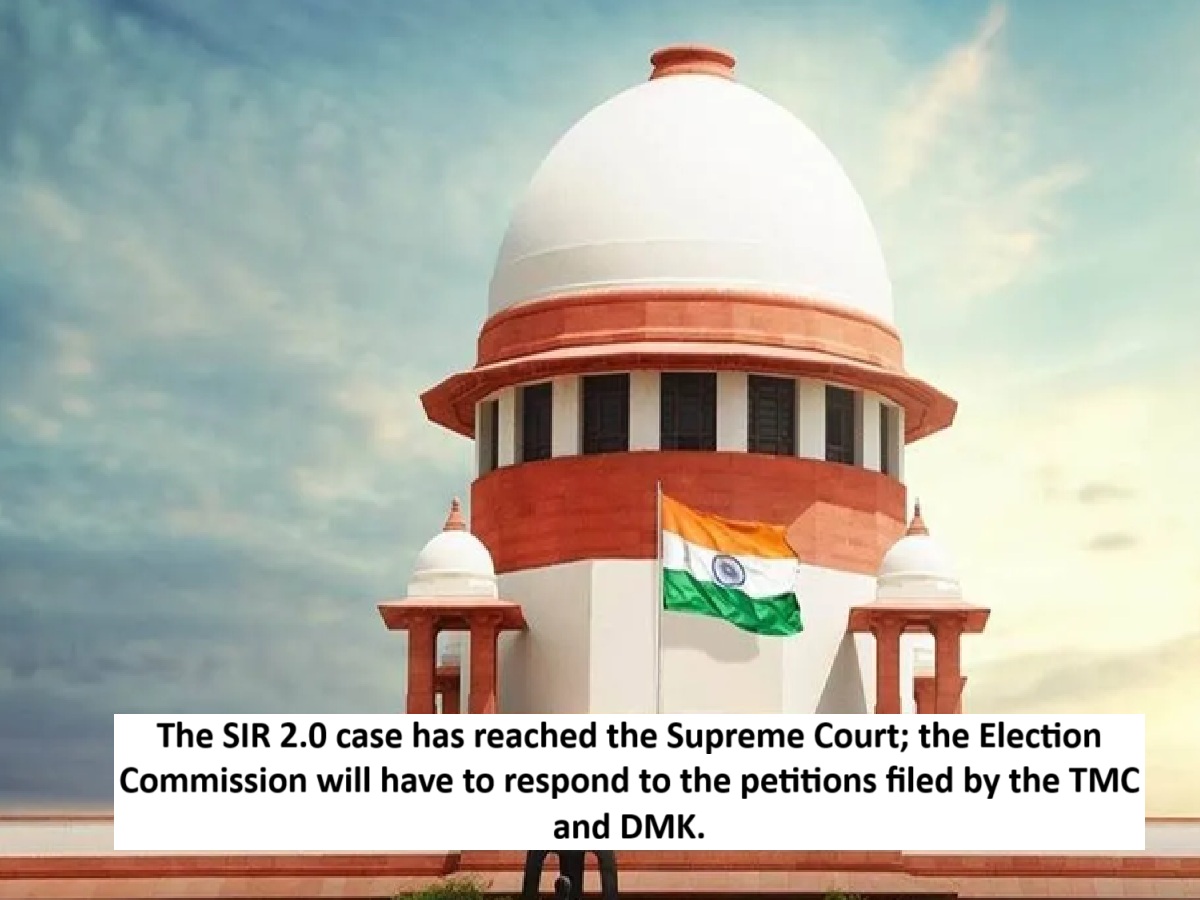
However, the unity of the opposition INDIA alliance, which is central to this strategy, is not absolute. While united against the BJP at the national level, many of its constituents are direct rivals in state politics.
Eswaran Sridharan on the 2024 Elections and India's Unique ...
Let's return to the Sridharan interview to understand the structural fragilities within the opposition alliance.
Read the final section of the interview, beginning with the question "What should we be keeping an eye out for...". Sridharan points out that in states like West Bengal (TMC vs. Congress/Left) and Punjab/Delhi (AAP vs. Congress), the INDIA bloc partners are competitors. This creates inherent tensions that the BJP could exploit.
The strategy of the outside challengers, therefore, is to project a united front nationally while managing deep-seated regional rivalries, using both parliamentary and judicial platforms to champion federalism and resist centralization.
Strategy 3: The Social Engineer (Samajwadi Party)
Perhaps the most significant story of the 2024 election was the Samajwadi Party's (SP) performance in Uttar Pradesh, the BJP's political fortress. The SP's strategy was not just about opposition; it was about fundamentally re-engineering the social coalitions that underpin politics in the Hindi heartland.
Under its leader Akhilesh Yadav, the SP successfully deployed the "PDA" formula—an acronym for Pichde (Backward Classes), Dalit (formerly "untouchables"), and Alpsankhyak (Minorities). This was a conscious revival and expansion of the "Mandal" politics of the 1990s, which was based on the political mobilization of Other Backward Classes (OBCs).
Election 2024 takeaways: Past 'peak Modi', INDIA cohesion, too ...
Rohan Venkat's article eloquently captures this strategic shift in Uttar Pradesh.
Read the section titled "'Normal' politics." It explains how the SP's PDA strategy, by including Dalits in an expanded Mandal coalition and giving them representation even in unreserved seats, successfully overpowered the BJP's Hindu nationalist appeal. The SP's victory in Ayodhya, the very heart of the BJP's Ram Mandir movement, with a Dalit candidate, epitomizes the success of this strategy.
The SP's strategy demonstrates a third path for regional parties: directly challenging the BJP's dominant social narrative by forging an alternative, broad-based coalition around issues of social justice and representation. This approach moves beyond mere transactional politics or constitutional resistance and reshapes the very foundations of electoral competition.
Conclusion
The 2024 election has ushered in a new era of competitive federalism, where regional parties are no longer passive recipients of central directives but are active, strategic players shaping the national political landscape. We have analyzed three distinct models of engagement that have emerged.
Key Takeaways:
- Insider Bargainers (TDP, JD-U): These NDA allies pursue a dual strategy of securing state-specific benefits while using their "locked-in leverage" to veto the BJP's core ideological agenda and build institutional safeguards for their own survival.
- Outside Challengers (TMC, DMK): Key INDIA bloc parties are leveraging their increased parliamentary strength and employing a strategy of "constitutional federalism," using the judiciary to defend states' rights, even as they navigate internal rivalries.
- Social Engineers (SP): The Samajwadi Party has demonstrated a powerful strategy of building an alternative social coalition (PDA) to directly counter the BJP's majoritarian appeal in its own heartland.
Together, these varied strategies signal a definitive return to a multi-polar political system where power is more diffuse, and negotiation and contestation, rather than central command, will define the governance of India.
This lesson concludes our module on the 2024 mandate. We have dissected the election results, analyzed the drivers of voter sentiment, and examined the new coalition dynamics from multiple perspectives. In the next module, we will turn our attention to the opposition itself, tracing the remarkable revival of the INDIA bloc and the political transformation of its most prominent face, Rahul Gandhi.