Welcome back. In our last lesson, we concluded our exploration of the 2024 mandate by analyzing the diverse strategies regional parties are employing to navigate India's re-energized federal landscape. We saw how parties both inside and outside the ruling coalition are leveraging their newfound influence, from the insider bargaining of the TDP to the social engineering of the Samajwadi Party.
Today, we begin a new module by zooming out from individual state players to examine the collective opposition. This lesson will trace the strategic evolution of the Indian National Developmental Inclusive Alliance, or INDIA. We will analyze how this coalition moved from a theoretical necessity, born from the electoral weakness of a fragmented opposition, through a difficult formation process, to its surprisingly potent performance in the 2024 elections. Our goal is to understand the strategic thinking, internal frictions, and core messaging that defined this significant political development.
The Strategic Imperative: Why Unity Became Essential
The political landscape preceding the 2024 election was defined by the BJP's overwhelming dominance, particularly in direct contests against a divided opposition. The 2019 Lok Sabha election results provided a stark quantitative illustration of this challenge. To understand the strategic problem the opposition needed to solve, it's essential to look at the numbers that made the case for unity so compelling.
Opposition Unity Health Check: An Analysis Of PM Modi's 2024 Challengers | Left, Right & Centre
This segment from an NDTV analysis, produced in mid-2023 before the election, provides a crucial "health check" of the opposition's standing. It uses 2019 data to break down the electoral mathematics that made a united front a strategic necessity.
Please watch the analysis of the 2019 head-to-head contests. Pay close attention to the three key comparisons presented: BJP vs. Congress, which shows the Congress party's extremely low strike rate in direct contests. BJP vs. non-Congress parties, which demonstrates that regional parties fared better, but were still at a significant disadvantage. Congress vs. non-BJP parties, highlighting the 71 seats where opposition parties were competing against each other, effectively dividing the anti-BJP vote.
The data from this analysis reveals a clear strategic diagnosis. The Congress was not competitive on its own in the Hindi heartland, regional parties were more effective but still insufficient, and infighting was rampant. This led to a three-pronged challenge for any viable opposition strategy:
- The Congress had to dramatically improve its strike rate in over 190 direct-contest seats.
- Strong regional parties had to consolidate and improve their own performance.
- Crucially, they had to stop fighting each other and form effective one-on-one contests against the BJP wherever possible.
This was the daunting mathematical and political reality that catalyzed the formation of a new, broader opposition alliance.
Formation and Frictions: The Rocky Road to an Alliance
Responding to this strategic imperative, leaders from over two dozen opposition parties met in July 2023 to formally launch the Indian National Developmental Inclusive Alliance (INDIA). The name itself was a strategic move, an attempt to claim the mantle of nationalism often monopolized by the BJP.
Retrospective Analysis of the 2024 Indian Elections
This policy paper from the Policy Center for the New South provides a concise overview of the INDIA coalition's formation, its stated purpose, and the initial challenges it faced.
Please read the section titled "Indian National Developmental Inclusive Alliance (INDIA)." Focus on the alliance's stated primary goal and the early setbacks it encountered, such as the departure of Nitish Kumar's JD(U).
As the reading highlights, the alliance was formed not around a detailed common policy program, but around a single, unifying objective: to "safeguard democracy and the constitution" from what they argued was a threat posed by the Modi government.
However, translating this shared goal into a functional electoral machine was fraught with difficulty. The alliance was a complex patchwork of parties with deep-seated historical rivalries and competing regional ambitions.
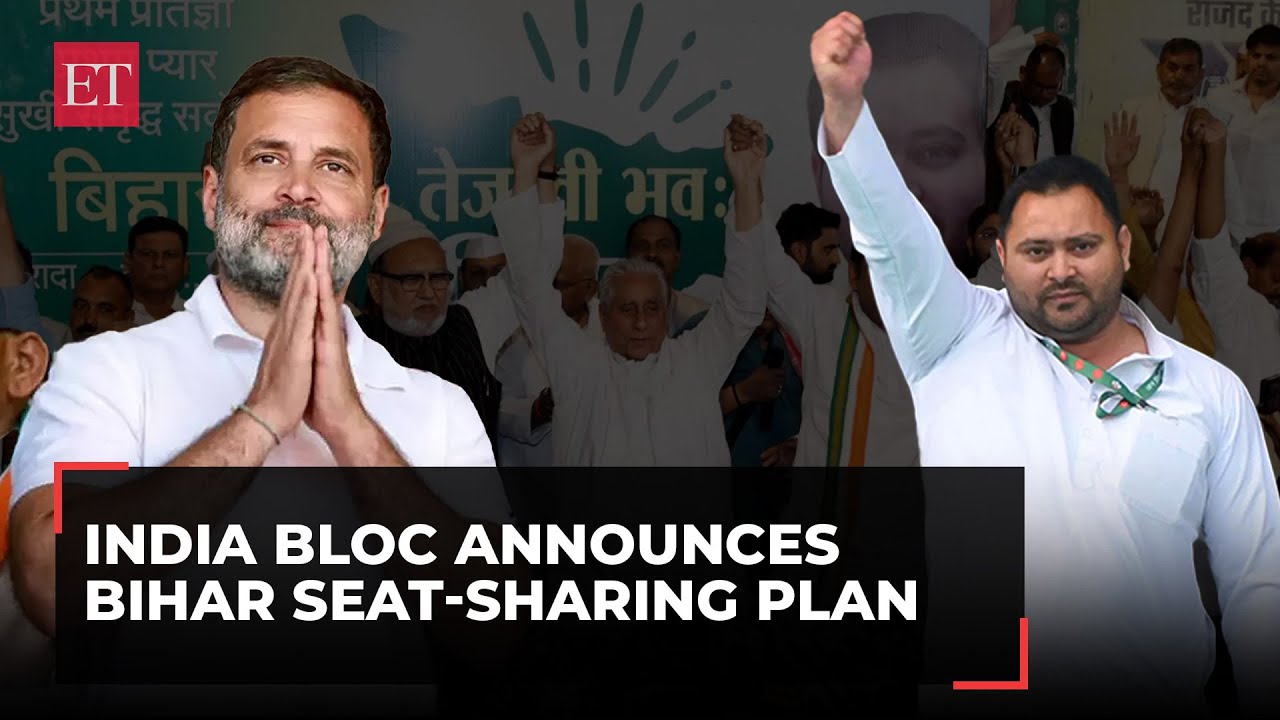
The challenge was not just about sharing seats, but about reconciling decades of political competition. The NDTV analysis you watched earlier identified several key flashpoints.
Opposition Unity Health Check: An Analysis Of PM Modi's 2024 Challengers | Left, Right & Centre
Let's return to the NDTV "Opposition Unity Health Check" to understand the specific structural frictions within the nascent alliance.
First, watch the segment identifying the "tricky triumvirate"—Arvind Kejriwal (AAP), Mamata Banerjee (TMC), and K. Chandrashekar Rao (BRS)—whose regional dominance and history of rivalry with the Congress posed significant hurdles. Then, watch the preceding discussion on West Bengal, which illustrates precisely why a leader like Mamata Banerjee, with a 48% vote share in her state, would be reluctant to cede ground to a weakened Congress and Left.
These state-specific scenarios underscore the fundamental tension at the heart of the INDIA alliance's evolution. National unity required regional leaders to make sacrifices that often conflicted with their state-level political interests. The process was a continuous, often messy negotiation between the national imperative to defeat the BJP and the local compulsion to remain dominant. Despite these frictions and the high-profile defection of Nitish Kumar, the alliance largely held together, driven by what many leaders described as an "existential" need.
Crafting a Narrative: "Save the Constitution"
With a fragile unity in place, the alliance's next strategic task was to craft a compelling narrative that could counter the BJP's formidable messaging machine, which was built around the personality of Prime Minister Modi and the promise of development and Hindu cultural pride.
The INDIA bloc found its unifying theme in the Constitution.
India's 18th Lok Sabha General Elections, 2024: A Study of Electoral ...
This academic paper analyzes the key campaign themes of the 2024 election. It explains how the opposition effectively weaponized the idea of constitutional protection.
Please read the two subsections under "Election Campaign." First, read the summary of the key slogans. Then, focus on the section titled "Save Constitution." Note how the opposition linked the BJP's slogan of "Abki Baar, 400 Paar" (This time, past 400 seats) to an alleged plot to change the Constitution and end reservations for SC, ST, and OBC communities.
This "Save the Constitution" campaign proved to be a masterstroke. It was a simple, powerful message that resonated deeply, particularly among Dalit and OBC voters who feared the loss of affirmative action policies. Rahul Gandhi and other leaders were frequently seen holding up a copy of the Constitution at rallies, turning the document into a potent political symbol. This narrative was complemented by the Congress party's manifesto, the Nyay Patra ("Justice Paper"), which promised a caste census and the removal of the 50% cap on reservations, directly appealing to the social justice platform that anchored the alliance.
This campaign did not emerge from a vacuum. It was built on the groundwork laid by Rahul Gandhi's extensive cross-country marches, the Bharat Jodo Yatra and the Bharat Jodo Nyay Yatra, which had already begun to shift public perception and energize the Congress party's base.
From Strategy to Seats: The 2024 Verdict
The ultimate test of the INDIA alliance's strategic evolution was the election itself. The bloc succeeded in transforming a contest that was widely predicted to be a BJP landslide into a fiercely fought battle.
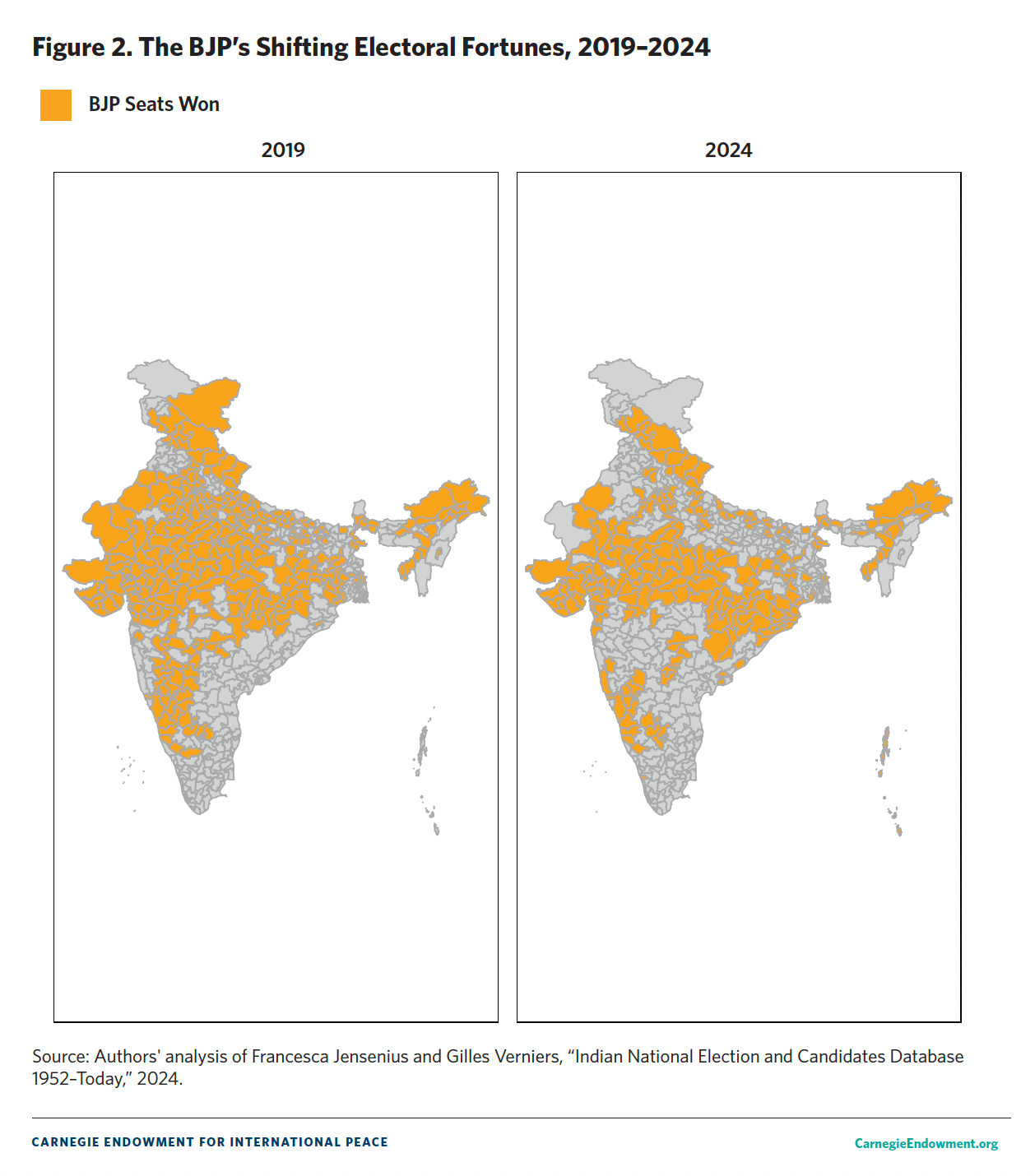
The final numbers confirmed the opposition's resurgence. While the BJP-led NDA secured a third term with 293 seats, the BJP itself fell short of a majority at 240 seats. The INDIA alliance, in contrast, put up a formidable performance.
India's 18th Lok Sabha General Elections, 2024: A Study of Electoral ...
Let's return to the election analysis paper for a detailed look at the final results.
Read the section titled "Fractured Verdict," paying attention to the final seat counts for the BJP and the NDA. Then, read the paragraphs detailing the performance of the Congress and its key allies, particularly the Samajwadi Party. You can also review the comprehensive Table 1 to see the seat distribution among all major parties.
The results demonstrated a significant turnaround:
- The INDIA bloc collectively won 234 seats.
- The Indian National Congress nearly doubled its tally from 52 in 2019 to 99 seats.
- The Samajwadi Party, in a stunning performance in Uttar Pradesh, surged from 5 seats to 37 seats.
- Other key partners like the TMC (29 seats) and DMK (22 seats) held their ground, contributing crucial numbers to the alliance's total.
The strategy of forming one-on-one contests and unifying around a core message had paid significant dividends, successfully checking the BJP's dominance and bringing coalition politics back to the center of Indian governance.
Conclusion
The evolution of the INDIA alliance is a story of strategic adaptation. It began as a pragmatic response to a clear mathematical problem: the electoral weakness of a fragmented opposition. Its formation was a difficult, non-linear process marked by historical baggage and competing ambitions. Yet, it coalesced around a powerful narrative—the defense of the Constitution—that resonated with a significant section of the electorate. The 2024 results validated this strategy, transforming the political landscape and demonstrating that a united, ideologically coherent opposition could effectively challenge the BJP's hegemony.
Key Takeaways:
- The INDIA alliance was born from the strategic necessity of avoiding the vote-splitting that plagued the opposition in 2019.
- Its formation was a complex negotiation, balancing the national goal of unity against the regional compulsions of its diverse member parties.
- The "Save the Constitution" narrative provided a unifying ideological anchor that effectively countered the BJP's campaign and mobilized key voter blocs.
- The 2024 election performance, where the bloc secured 234 seats and pushed the BJP below the majority mark, was a direct result of this strategic evolution.
In this lesson, we have focused on the collective journey of the alliance. In our next lesson, we will delve deeper into the personal and political transformation of the man at the center of this revival: Rahul Gandhi. We will analyze the impact of his Bharat Jodo Yatras and evaluate the factors that contributed to the rehabilitation of his political image, culminating in his appointment as the Leader of the Opposition.