Welcome back. In our previous lesson, we established the new political reality following the 2024 election: the BJP’s dependence on its coalition partners, primarily the TDP and JD(U). We explored two competing perspectives on this dynamic—one where allies act as a powerful ideological check, and another where their influence is largely transactional, limited to securing state-specific benefits.
Today, we will put those theories to the test. This lesson moves from the abstract concept of "leverage" to its concrete application. We will assess how the compulsions of coalition governance directly constrain the BJP's ability to pursue two of its most significant and long-standing legislative ambitions: the 'One Nation, One Election' proposal and the Uniform Civil Code. By examining these cases, you will be able to form a more nuanced judgment on the true extent of the allies' power and the likely policy trajectory of the Modi 3.0 government.
The Agenda Meets the Arithmetic
For years, 'One Nation, One Election' (ONOE) and a Uniform Civil Code (UCC) have been central pillars of the BJP's platform. They represent a vision of a more centralized, uniform, and administratively streamlined India. ONOE aims to synchronize Lok Sabha and state assembly elections, while the UCC seeks to replace diverse personal laws based on religion with a single common code for all citizens.
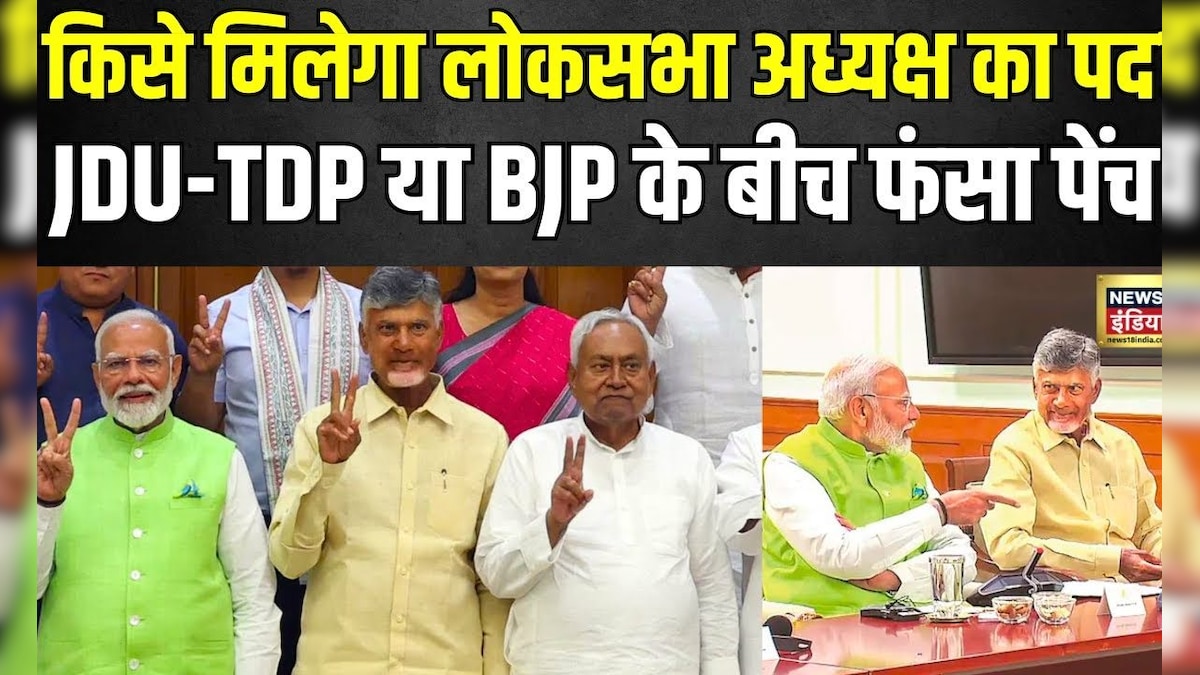
During the BJP's majority-led governments (2014-2024), these were seen as ambitious but achievable goals. However, the 2024 verdict, which denied the BJP a majority of its own, has fundamentally altered the calculus. Both ONOE and a national UCC would require significant constitutional amendments and, just as importantly, a broad political consensus that the BJP can no longer manufacture on its own. The party must now navigate the interests and ideologies of its partners, who may not share its enthusiasm for these projects.
Case Study 1: 'One Nation, One Election' (ONOE)
The idea behind ONOE is to hold simultaneous elections for the central and state governments to reduce expenditure, minimize the impact of the Model Code of Conduct on governance, and allow governments to focus on policy rather than constant electioneering. While the arguments for efficiency are clear, the proposal faces immense constitutional and political hurdles. It would require amending the constitution and finding a mechanism to synchronize the terms of all state assemblies, some of which might need to be dissolved prematurely.
For the BJP's regional allies, this proposal is not just a procedural reform; it is a potential threat to their political existence and to India's federal structure.
New Modi-NDA coalition: What won’t change, what will or will be reviewed—economy, defence, policies
To understand why ONOE is a non-starter in a coalition era, let's turn to an analysis by Shekhar Gupta of ThePrint. He provides a blunt assessment of which policies are now "dead in the water."
Watch the segment from 00:16:05 to 00:17:05. Pay close attention to his reasoning for why ONOE is "now over." He directly links it to the self-interest of coalition partners like Chandrababu Naidu, whose own hard-won five-year state mandate would be compromised.
As the video makes clear, the core constraint is political self-preservation. Regional parties like the TDP and JD(U) derive their power from state-level politics and distinct electoral cycles. They campaign on regional issues and often define themselves in contrast to national parties. Forcing simultaneous elections could subordinate regional concerns to national narratives, favouring the party with the most prominent national leader and message—in this case, the BJP. Agreeing to ONOE would be asking allies to voluntarily weaken their own political standing, a concession they are highly unlikely to make.
This constraint is detailed further in a post-election analysis from Frontline magazine.
2024 Lok Sabha Election: The results have shown that Indian voters ...
This article explains precisely why the BJP's pet projects are now on hold.
Read the section titled "Rude shock," which directly states that with the BJP dependent on Naidu and Nitish, plans like ONOE will likely be sent into "deep freeze." Notice how it frames this as a direct consequence of the allies' differing political DNA—they are not "Hindutva fellow travellers."
The case of ONOE provides strong evidence for the "allies as a powerful check" narrative. The constraint is not merely transactional; it is fundamental to the federal balance of power and the political survival of regional parties.
Case Study 2: The Uniform Civil Code (UCC)
The UCC is an even more ideologically charged issue. Enshrined as a "Directive Principle" in Article 44 of the Constitution, it has been a core BJP promise, framed as a tool for national integration and gender justice. The BJP has already taken steps in this direction, such as banning instant 'Triple Talaq' and promoting a state-level UCC in Uttarakhand. However, a nationwide UCC faces stiff opposition from minority communities who see it as an infringement on their religious freedom and cultural identity.
Here, too, the BJP's allies serve as a major roadblock, but for a more complex set of reasons.
-
Secular Posturing and Vote-Bank Politics: Both the TDP and JD(U) have historically relied on Muslim votes in their respective states. They cultivate a more "secular" image compared to the BJP. Supporting a national UCC would alienate this crucial vote bank and undermine their political brand. The Frontline article you just consulted makes this point explicitly, as does the policy paper from the Policy Center for the New South. It notes that due to the allies' secular ideologies and reliance on Muslim and OBC vote banks, the UCC will "now likely be deferred."
-
Protecting Regional and Cultural Autonomy: The opposition to the UCC goes beyond the TDP and JD(U). Many of the BJP's other NDA partners, especially in the Northeast, have unique customary laws that they fear a UCC would erase. Their resistance is not about secularism versus majoritarianism, but about protecting their distinct cultural and legal traditions.
NDA Partners Oppose BJP’s Push for Uniform Civil Code | Modi Government | BJP Alliance | North East
This video from The Wire, although from before the 2024 election, provides an excellent overview of the deep-seated opposition to the UCC from within the NDA coalition itself. This resistance has only become more potent now that these allies are indispensable.
Watch the first two segments of the video: From 00:00:46 to 02:29, you will hear specific objections from the NPP in Meghalaya (a matrilineal society), the NDPP in Nagaland (citing protections under Article 371A), and the MNF in Mizoram. From 02:59 to 04:24, the report covers opposition from other allies like the AIADMK in Tamil Nadu. Focus on how the objections are framed not just in religious terms, but in terms of protecting unique cultural practices and constitutional guarantees of autonomy.
The widespread opposition within the NDA makes a nationwide UCC politically unfeasible. While the BJP might still encourage states it governs to enact their own versions, the grand project of a single national code is effectively on hold. This is a clear demonstration of how coalition dharma now forces the BJP to accommodate a pluralism it might otherwise have sought to homogenize.
Re-evaluating the 'Transactional' Narrative
Does this mean the transactional narrative we discussed in the last lesson is incorrect? Not entirely. It is clear that allies are simultaneously pursuing state-specific demands. The Frontline article highlights that Naidu is pushing for Special Category Status for Andhra Pradesh, while Nitish Kumar is demanding a financial package for Bihar.
The crucial insight is that these two dynamics—ideological veto and transactional bargaining—are not mutually exclusive. The allies are using their newfound leverage to do both:
- They are blocking policies that threaten their core political identity and federal autonomy (ONOE, UCC).
- They are extracting material benefits for their states (financial packages, cabinet berths).
On issues as fundamental as ONOE and UCC, it appears the price of compliance is too high to be bought with a simple financial deal. The political cost of alienating their own voters and weakening their regional power base is a more powerful deterrent than any package from the Centre could be an incentive. On these specific agenda items, the "powerful check" model holds firm.
Conclusion
Our examination of 'One Nation, One Election' and the Uniform Civil Code reveals the tangible constraints imposed by coalition politics on the BJP's core agenda. The 2024 mandate did not just reduce the BJP's numbers; it empowered a diverse set of regional interests that now act as a significant moderating force.
Key Takeaways:
- Ideological Veto Power: On centralizing policies like ONOE and UCC, the BJP’s key allies (TDP, JD-U) and other NDA partners act as a direct veto. Their opposition is not easily negotiable.
- Federalism as a Fault Line: Resistance to ONOE is primarily driven by the desire of regional parties to protect their political autonomy and the federal structure of India.
- Pluralism as a Barrier: Opposition to a national UCC comes from multiple fronts: the secular positioning of parties like TDP and JD(U), and the desire of allies in the Northeast and elsewhere to protect their unique customary and religious laws.
- Dual-Track Leverage: Allies are simultaneously blocking ideologically contentious legislation while bargaining for state-specific financial and political concessions. The two are not mutually exclusive.
The return to coalition politics has, for now, forced a shift from a top-down, centralized policy-making style to one that requires negotiation, consultation, and compromise.
In our next and final lesson of this module, we will broaden our lens. Having seen how coalition partners constrain the central government, we will now analyze the proactive strategies that regional parties across the political spectrum—including those in the opposition like the TMC and DMK—are employing to navigate and shape this new, more decentralized balance of power in Indian federalism.