Welcome back to our study of the Manipur crisis. In the last lesson, we scrutinized the actions and inactions of the state and central governments, concluding that their collective failure to restore order created a profound security vacuum. The state police had fractured along ethnic lines, and central interventions were seen as too little, too late, and politically compromised.
This lesson directly addresses the consequence of that vacuum, fulfilling our next learning objective: to explain the role of armed groups and the breakdown of the Suspension of Operations (SoO) agreements in escalating the conflict. We will examine how, with the state's authority in tatters, various non-state actors stepped in to fill the void. This created a new, dangerous dynamic where organized armed groups, not just civilian mobs, became the primary drivers of violence. Your preference for layered analysis will be key as we distinguish between different types of armed groups and unpack the complex failure of the SoO peace framework.
The Security Vacuum and the Proliferation of Arms
When the state fails to protect its citizens, citizens often take up arms to protect themselves. This is precisely what happened in Manipur. The initial wave of violence saw the looting of over 4,000 weapons and half a million rounds of ammunition from state armouries, primarily in the Meitei-dominated Imphal valley. This massive influx of sophisticated weaponry transformed the conflict from spontaneous riots into a low-intensity armed confrontation.
In this environment, several types of armed groups emerged or resurged, becoming central players in the conflict's escalation.
1. Meitei Armed Groups: A Two-Pronged Resurgence
On the Meitei side, the armed response was twofold, involving both the revival of old insurgent outfits and the dramatic rise of new, radical militias.
-
Resurgent Insurgent Groups: For decades, Meitei insurgent groups like the United National Liberation Front (UNLF), which fight for a sovereign Manipur, had been weakened by Indian counter-insurgency operations. However, the ethnic conflict provided them with a new lease on life. They found fertile ground for recruitment among a Meitei population that felt its identity was under siege. Security officials noted a significant increase in the cadres of these groups, who brought battlefield experience to the conflict.
-
Radical Militias: Perhaps the most significant development was the empowerment of two Meitei "socio-cultural" organizations, Arambai Tenggol and Meitei Leepun. Previously on the fringes, they transformed into powerful, heavily armed militias. Flush with looted weapons and enjoying popular support, they became the vanguard of the Meitei offensive. Arambai Tenggol, in particular, grew to command immense influence, not just on the battlefield but in the political arena.
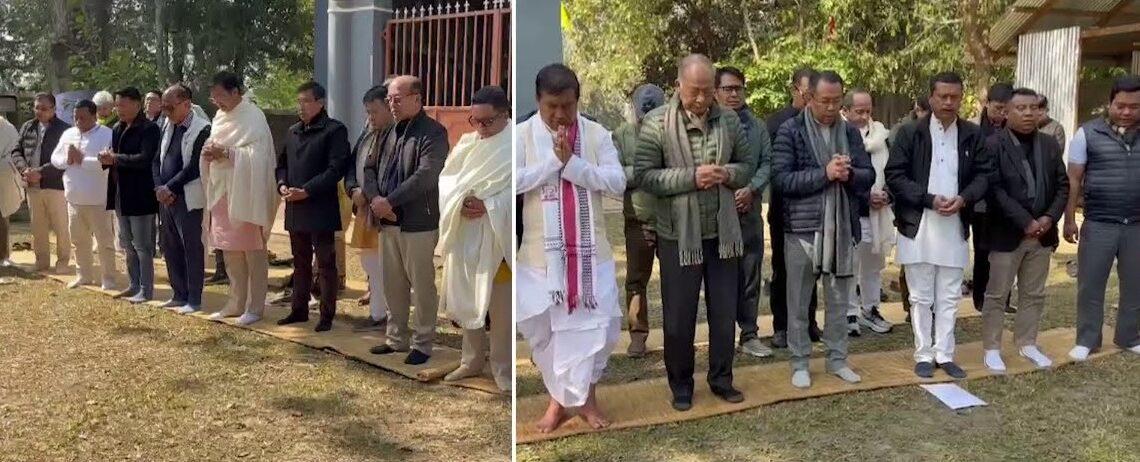
The International Crisis Group has detailed how these various groups now operate, adding layers of complexity to the security landscape.
Finding a Way Out of Festering Conflict in India's Manipur
This report from the International Crisis Group provides a clear overview of the militant and militia groups on both sides.
Please read the sections titled "A. Militant Groups" and "B. New Organisations in the Conflict". As you read, focus on these key points: The description of how Meitei militant groups, particularly the UNLF, found fertile ground for recruitment and rapidly expanded their numbers. The analysis of how Meitei militias like Arambai Tenggol, originally socio-cultural bodies, armed themselves and joined forces with established militants. The role of both militants and militias in training village defence volunteers, which further militarized the conflict at the grassroots level. The evolution of Kuki-Zo village defence forces, who initially used crude weapons but have since acquired a more sophisticated arsenal.
2. Kuki-Zo Armed Groups and the Breakdown of the SoO
On the Kuki-Zo side, the security situation is dominated by pre-existing militant groups operating under a fragile peace agreement, alongside newly formed village defence forces.
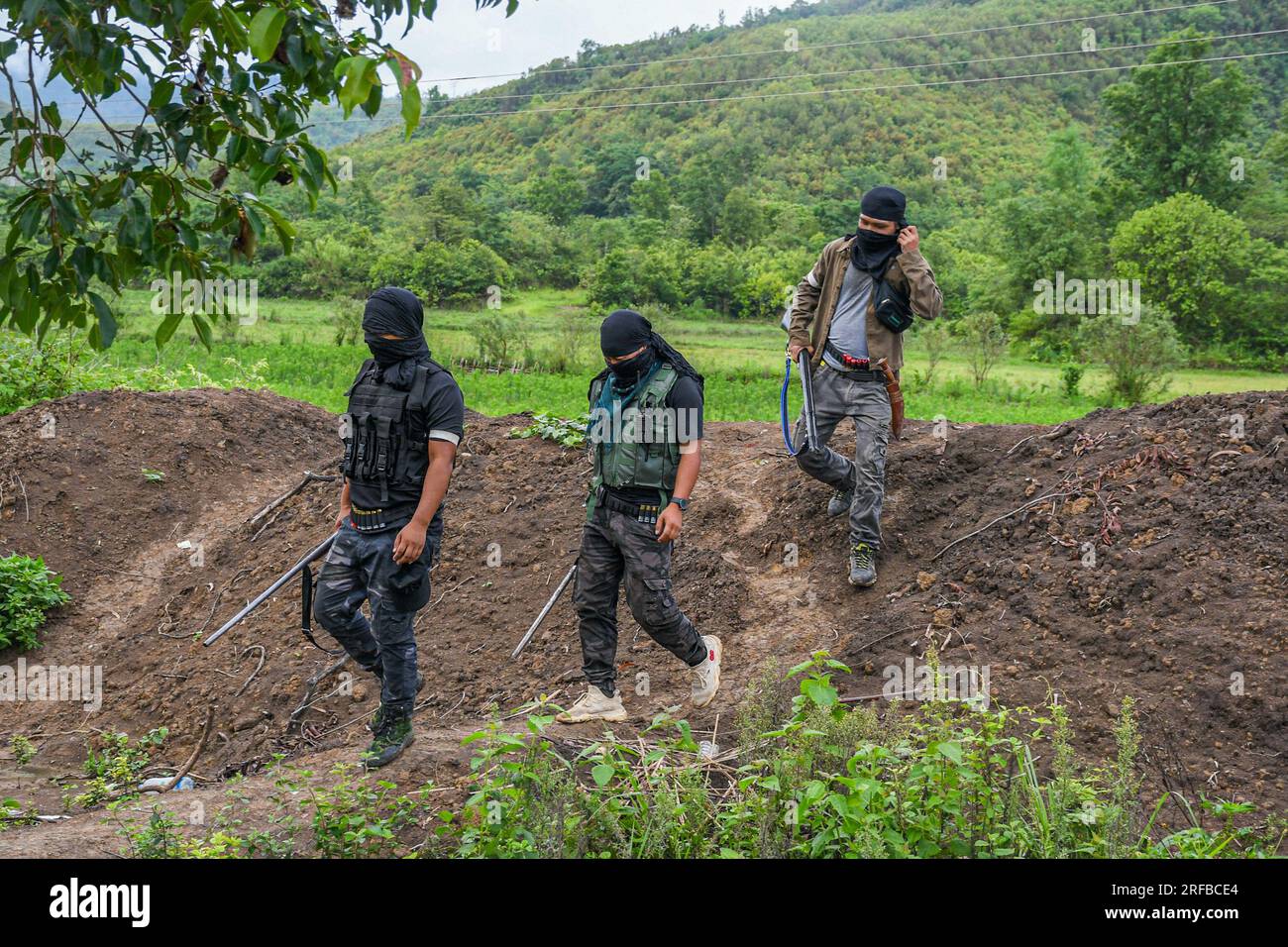
To understand their role, we must first understand the Suspension of Operations (SoO) agreement.
MANIPUR | An Escalating Ethnic Conflict?
This video from Prof James Ker-Lindsay's channel provides a concise historical background on the Kuki armed movement and the establishment of the SoO agreement.
Please watch these two segments: Kuki Militancy and the SoO: This part explains the emergence of Kuki militant groups and the basic terms of the 2008 SoO agreement, where militants were confined to designated camps with their weapons secured. The Breakdown: This clip pinpoints the Manipur government's March 2023 announcement that it would not renew the SoO agreement, a key trigger for the crisis.
The SoO agreement, signed in 2008 between the central government, the state government, and 25 Kuki-Zo militant groups, was a cornerstone of the region's fragile peace. It was a classic counter-insurgency confidence-building measure: the militants would halt operations and stay in designated camps under monitoring, and in return, the government would not launch operations against them, creating space for political dialogue.
The 2023 violence shattered this framework.
The SoO: A Framework in Collapse
The breakdown of the SoO agreement was not a single event, but a process that both fueled and was fueled by the escalating violence. Your interest in analyzing competing narratives is crucial here, as both sides offer different accounts of this collapse.
-
The Meitei/State Government Narrative: The Biren Singh government and Meitei civil society groups consistently argued that Kuki-Zo militants were violating the SoO's ground rules. They alleged that SoO cadres were leaving their designated camps with their weapons to orchestrate attacks, engage in the drug trade, and foment unrest. Based on this narrative, the state government unilaterally withdrew from the agreement in March 2023. This pressure continued until the central government allowed the agreement to formally lapse without renewal in February 2024.
-
The Kuki-Zo Narrative: The Kuki-Zo leadership and community argue that the state government's withdrawal was a politically motivated, bad-faith action designed to delegitimize their political aspirations and leave them defenceless. They contend that the state, led by a partisan Chief Minister, was never serious about the peace process and used alleged violations as a pretext to abandon the agreement, effectively declaring war on the Kuki-Zo community.
The reality on the ground is that the SoO framework proved incapable of withstanding the pressures of a full-blown ethnic conflict. The article "The State in Manipur Is Drifting..." from the Imphal Review of Arts and Politics provides a sharp analysis of this failure.
The State in Manipur Is Drifting from Shaping Outcomes to ...
This analytical piece explores the deep contradictions in the SoO framework that were exposed by the conflict.
Please read the following sections: "The SoO Framework and Its Contradictions": Focus on how the article describes the SoO as originally an "insurgency-management tool" that became untenable in an active ethnic conflict. Note the questions it raises about the enforcement of SoO rules. "Complicity, Constraint, or Strategic Ambiguity?": This section delves into the perception of state complicity. It argues that the government's reluctance to act decisively against alleged SoO violations might reflect a "strategic ambiguity"—an attempt to keep the groups engaged in a peace process, even at the cost of immediate security. This is a nuanced argument that speaks directly to your preference for analyzing complex political motivations.
The current status of the SoO is one of limbo. The central government is reportedly trying to review the ground rules and renegotiate terms, a process fraught with difficulty.
Manipur : Centre reviewing ground rules of the SoO pact with Kuki insurgent groups | News9
This NEWS9 Live report discusses the central government's ongoing review of the SoO pact and the competing pressures it faces.
Watch these key segments of the discussion: The Central Government's Review: This introduces the central government's reassessment of the SoO rules, including the proposal to relocate camps away from the valley. From Self-Governance to Separate Administration: The video explains how Kuki insurgent groups, who had previously agreed to a self-governance model, have now hardened their stance to demand a separate administration. The 'Middle Road' Solution: An analyst explains the proposal to move the camps deeper into the hills as a "middle road" to appease Meitei demands without completely abrogating the pact, which could have wider geopolitical consequences.
The breakdown of the SoO agreement was a critical accelerator of the conflict. For the Meitei, it confirmed their suspicions of Kuki-Zo aggression and justified their own militarization. For the Kuki-Zo, it was the ultimate betrayal by the state, cementing their belief that only their own armed groups could ensure their survival and forcing them to double down on their demand for a separate administration, completely detached from Imphal's authority.
Conclusion
In this lesson, we have moved from the failure of government institutions to the rise of non-state armed actors who filled the resulting security vacuum.
Here are the key takeaways:
- Proliferation of Armed Groups: The conflict is characterized by a diverse array of armed actors. On the Meitei side, these include resurgent valley-based insurgent groups (like the UNLF) and powerful new ethno-nationalist militias (Arambai Tenggol). On the Kuki-Zo side, they include existing militant groups once under the SoO framework and newly formed village defence forces.
- Breakdown of the SoO Agreement: The Suspension of Operations agreement, a key pillar of regional peace for 15 years, collapsed under the strain of the conflict.
- A Vicious Cycle: Accusations of SoO violations by Kuki militants became a justification for the state government to abandon the pact and for Meitei militias to arm themselves. In turn, the state's withdrawal from the SoO was seen by the Kuki-Zo as a declaration of hostility, reinforcing their reliance on their own armed groups for survival.
- Escalation of Violence: The involvement of these organized, well-armed, and often battle-hardened groups transformed the conflict from inter-communal rioting into a sustained, low-intensity civil war, making de-escalation and reconciliation exponentially more difficult.
The presence of these armed groups cannot be understood in a vacuum. Many narratives, particularly from the state government and Meitei groups, link their existence and funding to illicit cross-border activities. In our next lesson, we will evaluate the argument that the conflict is exacerbated by the cross-border drug economy and the complex geopolitics spilling over from the civil war in neighbouring Myanmar.