Introduction
In our last module, we examined how the political and administrative complexities surrounding the Assam NRC led to the functional shelving of a nationwide NRC and the CAA's implementation through the subtle maneuver of indefinitely postponing the 2021 Census. We saw how a bureaucratic delay can serve a major political purpose.
This week, we transition from the politics of citizenship to the politics of secrecy and surveillance. We will explore the Pegasus controversy, a scandal that raises fundamental questions about privacy, dissent, and the limits of state power in a digital age. In this first lesson, we will focus on establishing the foundational facts of the case. Our goal is to explain the core allegations: what Pegasus spyware is, how it works, and most importantly, the specific categories of individuals in India who were allegedly targeted.
What is Pegasus? The Anatomy of a Digital Weapon
The entire controversy revolves around a single, highly sophisticated piece of technology. Pegasus is not a common virus or malware; it is classified as a cyber-weapon. To understand the allegations, we must first understand the tool itself.
Pegasus is a spyware developed by the Israeli cyber-arms firm, NSO Group. The company has consistently maintained that it sells this technology exclusively to vetted government agencies for the express purpose of fighting terrorism and serious crime. This "governments-only" client list is central to the entire controversy.
The video below from BYJU'S IAS provides an excellent, non-political overview of the spyware's technical capabilities and the nature of the threat it poses.
Explained: Pegasus Spyware & State Surveillance | UPSC/IAS 2021
This educational video breaks down the technical aspects of the Pegasus spyware. It clearly explains what it is, who makes it, and its powerful capabilities, including the notorious 'zero-click' attack method.
Please watch the following segments: Start with the explanation of what Pegasus is, focusing on its origin (NSO Group) and its intended clientele (vetted governments). Next, watch the segment on its methodology, particularly the evolution from spear-phishing to 'zero-click' attacks. This is crucial for understanding how it can infect a device without any user interaction. Finally, understand the full capabilities of the spyware once a phone is infected. Pay close attention to the fact that it can not only extract data but also potentially plant information on a device.
As the video explains, a 'zero-click' exploit is what makes Pegasus exceptionally insidious. Unlike traditional hacking that might require you to click a malicious link or download a file, a zero-click attack can infect a phone without the user doing anything at all—sometimes via something as simple as a missed call or a specially crafted message that leaves no notification.
Once installed, Pegasus grants the attacker complete control over the device. It essentially turns a person's smartphone into a 24/7 surveillance device in their pocket. This infographic from the BBC, based on the Pegasus Project's findings, visually summarizes its functions.

The spyware can access encrypted chats, record conversations, track locations, and turn on the camera and microphone without the user's knowledge. This absolute access is what elevates the allegations from a simple case of phone tapping to a profound breach of privacy.
The Pegasus Project: Uncovering the Allegations
The story broke in July 2021 through the "Pegasus Project," a collaborative investigation by 17 media organizations, including The Wire in India, coordinated by the French non-profit Forbidden Stories, with technical assistance from Amnesty International's Security Lab.
The investigation was based on a leaked list of over 50,000 phone numbers from around the world, believed to be potential targets of surveillance by clients of the NSO Group. The journalists then conducted a painstaking process: they identified the individuals associated with these numbers and, where possible, performed digital forensic analysis on their phones to find traces of the Pegasus spyware. This is how the link between the list and actual surveillance was established.
The Core Allegation: A Pattern of Targeting in India
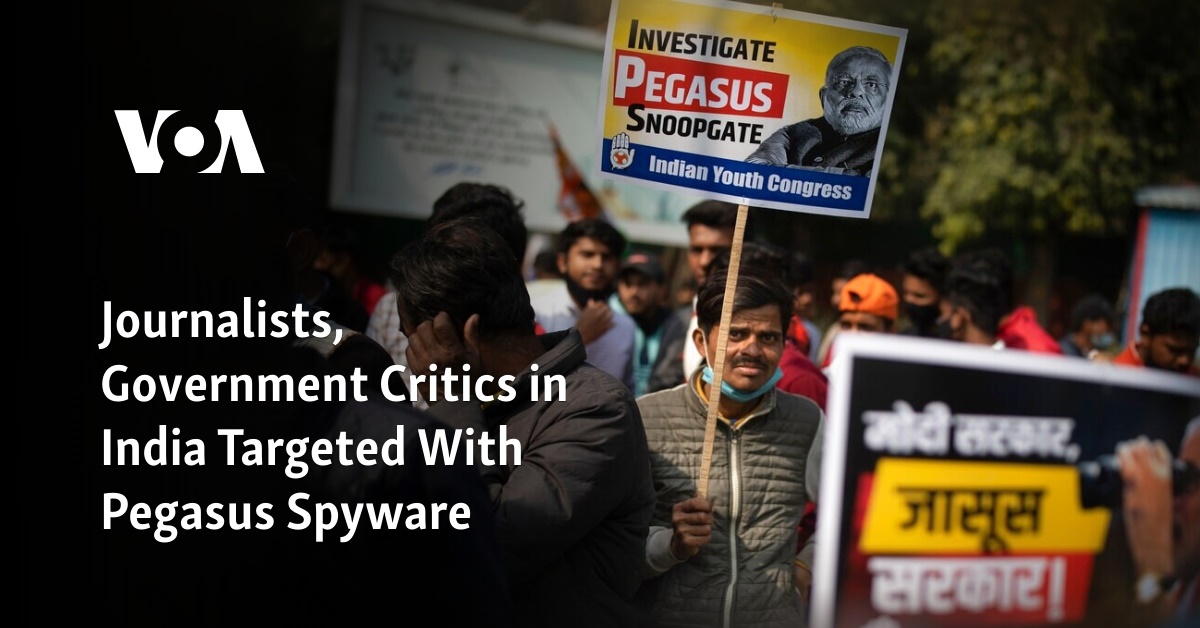
The leaked database reportedly contained over 300 verified Indian numbers, leading to the core allegation: that an Indian government agency had procured and used Pegasus to spy on a wide range of its own citizens. The controversy was not just about the act of surveillance, but who was being watched. The list of targets did not appear to be limited to terrorists or criminals; instead, it included a cross-section of individuals who could be perceived as critics or political opponents of the government.
To understand the scope, it is essential to examine the categories of people who were allegedly targeted. The Wikipedia page for the Pegasus Project revelations in India provides a comprehensive list.
Pegasus Project revelations in India - Wikipedia
This resource offers a well-sourced and detailed compilation of the prominent Indian individuals whose numbers were allegedly on the surveillance list.
Please read the introductory paragraphs to get an overview. Then, review the detailed "List of alleged targets" to familiarize yourself with the specific names and their roles. As you read, mentally group them into categories: politicians, journalists, activists, etc.
As you saw, the list is extensive. The targets were not random citizens. An analysis of the list, as detailed by media reports at the time, revealed a clear pattern. The following video from HW News English connects the dots between the identity of the targets and their activities at the time their numbers appeared on the list.
Pegasus Snooping List: The "Chronology" In The Targets and Modi Govt's Watergate Moment
This news analysis provides crucial context by linking the alleged targeting of individuals to specific political events and their professional work, suggesting a motive beyond national security.
Watch the following segments to understand the alleged "chronology" of the targeting: Targeting of journalists and officials: Note the connection between journalists like Rohini Singh and Sushant Singh and their reporting on the Rafale deal and business affairs of powerful figures. Also, focus on the case of Election Commissioner Ashok Lavasa, who was allegedly targeted after his dissent note concerning the Prime Minister. Targeting of strategists and judiciary-related persons: This section highlights the alleged surveillance of political strategist Prashant Kishor during a key election and, most strikingly, the targeting of a Supreme Court staffer who had accused a then-sitting Chief Justice of India of sexual harassment.
Synthesizing these investigative findings, we can group the alleged targets into several distinct and politically significant categories:
- Political Opposition: Leading figures like Rahul Gandhi, his aides, and other opposition politicians from parties like the TMC and JD(S).
- Journalists: At least 40 journalists, many of whom were known for investigative reporting critical of the government on topics like the Rafale defense deal, crony capitalism, and the functioning of the CBI.
- Constitutional Functionaries: Ashok Lavasa, an Election Commissioner, was allegedly placed on the list weeks after he was the sole member of the three-person commission to rule that the Prime Minister had violated the model code of conduct during the 2019 election campaign.
- Activists and Dissidents: Activists and scholars accused in the Bhima Koregaon case, such as Stan Swamy and Rona Wilson, were found to have been targeted. Digital forensics later suggested evidence may have been planted on their devices.
- The Judiciary: The female Supreme Court employee who accused former Chief Justice Ranjan Gogoi of sexual harassment, along with 11 of her family members, were selected as potential targets days after she made her complaint.
- Government Insiders: Even sitting cabinet ministers, including Ashwini Vaishnaw (who, in an ironic twist, was in charge of the IT ministry that had to respond to the allegations) and Prahlad Singh Patel, were on the list.
- Security Establishment: The former head of the CBI, Alok Verma, was allegedly targeted after he was unceremoniously removed from his post in 2018.
This targeting pattern led to the central accusation of the Pegasus Project: that a powerful government tool, meant for fighting terror, was potentially repurposed for domestic political surveillance against opponents, critics, and inconvenient figures.
Conclusion
In this lesson, we have laid the groundwork for understanding the Pegasus controversy by focusing on the core allegations. We have established what Pegasus is, how it functions as a potent tool of surveillance, and the process through which the allegations came to light.
The key takeaways are:
- Pegasus: A military-grade 'zero-click' spyware developed by Israel's NSO Group and sold exclusively to vetted governments. It allows for complete, covert control of a target's smartphone.
- The Pegasus Project: A global investigative journalism effort that analyzed a leaked list of 50,000 phone numbers, including over 300 from India, believed to be potential surveillance targets.
- The Core Allegation: The targets in India were not limited to national security threats but included a broad spectrum of individuals: opposition politicians, journalists, a dissenting election commissioner, activists, and even government ministers, suggesting the spyware may have been used for political purposes.
Now that we have established the "what" and the "who" of the allegations, our next lesson will delve into the "so what." We will analyze the profound constitutional implications of such state-sponsored surveillance on the fundamental right to privacy, freedom of the press, and the health of democratic dissent. We will also begin to examine the government's official response to these explosive claims.