Introduction
In our previous lesson, we built a solid foundation by exploring the legal basis of the Waqf system in India, focusing on the framework established by the Waqf Act of 1995. We defined what Waqf is, traced its legislative evolution, and identified the key administrative bodies like State Waqf Boards and Waqf Tribunals.
Now, we shift from the letter of the law to its real-world implementation and the controversies that have emerged. This lesson directly addresses the core of the political debate by focusing on your learning outcome: to analyze the long-standing criticisms of Waqf board management, including allegations of corruption and encroachment, which form the basis for reform calls. We will investigate the systemic, structural, and specific criticisms that have fueled the demand for the Waqf (Amendment) Bill.
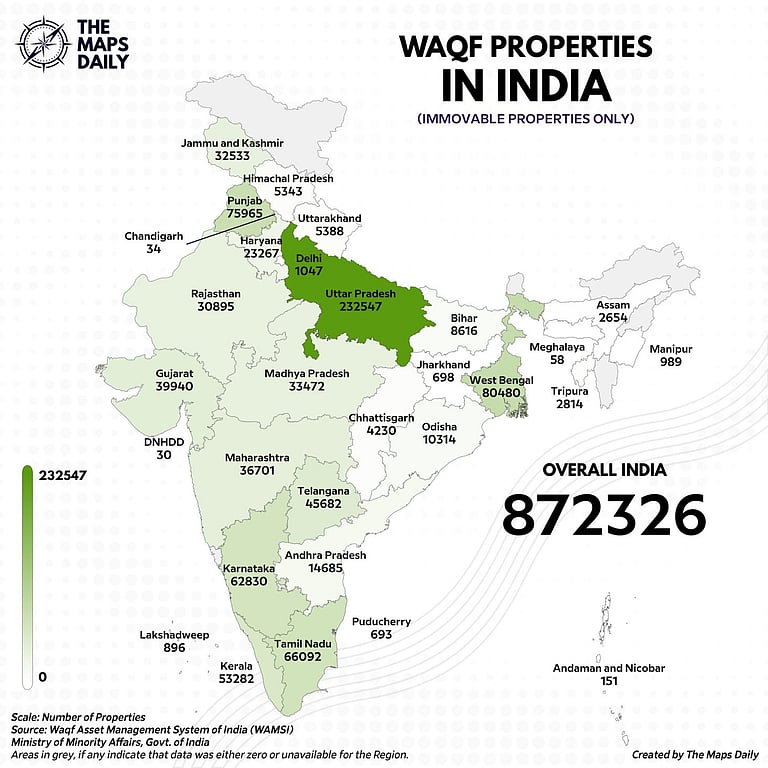
To begin, it is important to grasp the scale of the properties we are discussing. Waqf boards collectively represent the third-largest landholder in India, after the Defence Ministry and Indian Railways.
Systemic Criticisms: Mismanagement and Lost Potential
One of the most persistent and well-documented criticisms of the Waqf system is not about malice, but about profound mismanagement and inefficiency. The landmark Sachar Committee Report of 2006, which studied the social, economic, and educational status of Indian Muslims, dedicated significant attention to this issue. It provided an authoritative voice to what many had observed for years: Waqf properties were failing to fulfill their primary charitable purpose due to poor administration.
The core of this systemic criticism revolves around a massive disconnect between the potential value of Waqf assets and the actual revenue they generate for community welfare.
[PDF] The-Waqf-Land-Reality.pdf
This research paper provides a sharp analysis of the economic and administrative failures within the Waqf system, drawing heavily on the Sachar Committee's findings.
Please read the section titled "REASONING BEHIND PROPOSING AMENDMENTS". Focus on the paragraphs that describe the findings of the Sachar Committee regarding the gap between market value and revenue, and the mention of bureaucratic problems. Next, move to the "ANALYSIS" section. Read the paragraph that begins "The Sachar Committee Report suggests". This puts a staggering figure on the lost potential, a central point in the argument for reform.
As the paper highlights, the Sachar Committee estimated that if properly managed, Waqf properties could generate an annual return of ₹12,000 crores, against the paltry ₹200 crores (approximately) being collected at the time. This isn't just a numerical gap; it represents a significant loss of potential resources for education, healthcare, and poverty alleviation within the Muslim community. The critics argue that this underperformance is a direct result of:
- Bureaucratic Inefficiency: Slow-moving, unaccountable administrative processes.
- Underutilization: Prime properties left vacant or leased for negligible sums.
- Lack of Professional Management: Boards often lack the expertise to manage vast real estate portfolios effectively.
The Drishti IAS video provides a concise summary of these foundational criticisms.
Waqf (Amendment) Bill 2024 | Waqf Act 1995 | Lok Sabha | InNews | Drishti IAS English
This video provides a summary of the issues surrounding the Waqf Act.
Please watch the segment from 11:08 to 11:45. The speaker clearly articulates the key criticisms leveled against the 1995 Act, namely the lack of transparency, accountability, and proper, corruption-free administration.
Structural Flaws of the Legal Framework
Beyond administrative incompetence, critics argue that the Waqf Act of 1995 itself, especially after being amended in 2013 under the UPA-II government, contained structural flaws that enabled misuse and overreach. These legal provisions form a more sophisticated line of critique that you will find central to the debate.
Shekhar Gupta, in an episode of ThePrint's "Cut The Clutter," explains these structural issues clearly. He argues that these amendments gave what he terms "very sweeping powers" to the Waqf boards.
The waqf question: How Modi-led NDA is changing the law & why 2013 amendments are back in focus
This video explains the specific legal provisions that critics argue are problematic.
Watch the segment from 10:45 to 15:06. As you watch, focus on these four key structural criticisms of the law as it stood after the 2013 amendments: The power of a Waqf Board to unilaterally declare almost any property as Waqf property. The limited avenue for appeal, which was a Waqf Tribunal whose decision was final, barring civil court jurisdiction. The composition of the Boards and Tribunals, which led to arguments about their jurisdiction over non-Muslims. The exemption from the Limitation Act of 1963, allowing Waqf boards to lay claim to properties after decades or even centuries, while aggrieved parties had only one year to file an objection.
These structural points are crucial. They form the basis of the argument that the problem isn't just a few "bad apples" but a legal framework that creates an imbalance of power, lacks conventional checks and balances, and is prone to being exploited.
A Pattern of Allegations: Corruption and Encroachment
The systemic and structural issues have been amplified by a long and steady stream of specific, high-profile allegations of corruption and encroachment across the country. These stories, covered extensively in the media and documented in various reports, provide the political ammunition for the reformist argument.
An extensive compilation of such instances gives a sense of the patterns of alleged misconduct. While these are allegations and reported cases—many of which have been subject to legal proceedings—they illustrate the nature of the criticisms.
List Of Instances Of Corruption And Misappropriation Surrounding ...
This article serves as a repository of alleged scams and mismanagement related to Waqf boards across various Indian states. It is a prime example of the evidence marshaled by those calling for reform.
Please browse through this lengthy list to get a sense of the scope and variety of allegations. You don't need to memorize every case. Instead, focus on identifying the recurring types of allegations. Pay particular attention to the detailed sections on: Delhi: Note the allegations concerning the Lutyens land transfer and the recruitment and money laundering scams involving AAP MLA Amanatullah Khan. Karnataka: Focus on the Anwar Manippady Committee Report, which alleged a massive, politically connected land scam, and the controversy over the Datta Peetha Shrine. Tamil Nadu: Read about the claim over an entire Hindu-majority village, Thiruchendurai. This is a classic example cited by critics. Uttar Pradesh: Note the allegations of misappropriation by caretakers (mutawallis) and the board's controversial claim over public spaces like the Chandrashekhar Azad Park. As you read, observe the common themes: illegal sale or lease of properties, collusion between board members and politicians, recruitment irregularities, and, most controversially, the aggressive claiming of private, government, or other communities' religious properties.
The allegations fall into two broad categories:
- Corruption and Internal Mismanagement: This includes everything from officials soliciting bribes and engaging in recruitment scams to mutawallis illegally selling or leasing prime land for personal gain. The examples from Delhi, Maharashtra, and Punjab are illustrative. The sheer financial loss is a key criticism, as highlighted by ThePrint video's reference to the Sachar Committee's findings on Delhi's properties.
The waqf question: How Modi-led NDA is changing the law & why 2013 amendments are back in focus
This short segment reinforces the financial mismanagement point with specific figures.
Watch from 19:38 to 20:26, where the video cites the Sachar Committee's report on the huge valuation of Delhi Waqf properties versus their very low income, which is a classic symptom of mismanagement.
-
Encroachment by Waqf Boards: This is perhaps the most politically explosive criticism. Due to the structural powers discussed earlier (especially the exemption from the Limitation Act), there have been numerous cases where Waqf boards have laid claim to land that has been privately owned for generations, or even to land belonging to the government or other religious communities.
The case of the Tamil Nadu village is a prime example. Other instances, such as the claims over islands in Gujarat or the Allahabad High Court's own land, were so audacious that they were struck down decisively by the judiciary.
The waqf question: How Modi-led NDA is changing the law & why 2013 amendments are back in focus
ThePrint's video provides more examples of this alleged overreach.
Watch the segment from 25:55 to 27:12, which details claims made on a municipal building, the islands of Bet Dwarka, and the case of a farmer in Tamil Nadu unable to sell his land because the entire village was claimed as Waqf. These examples fuel the public perception that the law was being misused.
Conclusion
In this lesson, we have moved beyond the legal text of the Waqf Act to analyze the potent criticisms that have driven the political demand for its amendment. These criticisms are not monolithic but are built on three interconnected pillars: systemic failure, structural legal flaws, and a pattern of specific, high-profile allegations.
Key Takeaways:
- Systemic Mismanagement: As authoritatively documented by the Sachar Committee Report, Waqf boards have been widely criticized for inefficiency and failing to manage their vast properties effectively, resulting in a colossal loss of potential revenue meant for community welfare.
- Structural Flaws: Critics argue the 1995 Act, especially after its 2013 amendment, created a legal framework with insufficient checks and balances. Its provisions granted sweeping powers to declare property as Waqf, limited legal recourse for others, and provided an exemption from the statute of limitations, enabling potential misuse.
- Widespread Allegations: The narrative for reform has been fueled by a consistent stream of allegations across India. These range from internal corruption, financial scams, and illegal land sales to the highly controversial practice of Waqf boards encroaching upon or laying claim to private, government, and other religious properties.
Preview of the Next Lesson:
Having established the legal framework (Lesson 1) and dissected the criticisms that form the basis for reform (Lesson 2), we are now perfectly positioned for our next lesson. We will describe the key provisions of the proposed Waqf (Amendment) Bill and analyze how each provision attempts to directly address the specific issues of mismanagement, structural imbalance, corruption, and encroachment that we have discussed today.