In the last lesson, we examined the post-election frictions testing the INDIA bloc's unity, highlighting how state-level rivalries and coordination failures challenge the coalition's cohesion. We concluded by noting that despite these challenges, the opposition's improved performance culminated in Rahul Gandhi assuming the formal, institutional role of Leader of the Opposition (LoP).
This lesson pivots from the informal dynamics of alliance management to the formal powers and significance of that very role. After a decade without an officially recognized LoP in the Lok Sabha, the position's revival is a major development in Indian parliamentary politics. We will explore precisely what this role entails, moving beyond the personality of its current occupant to understand its legal foundations, political purpose, and concrete functions as a check on executive power.
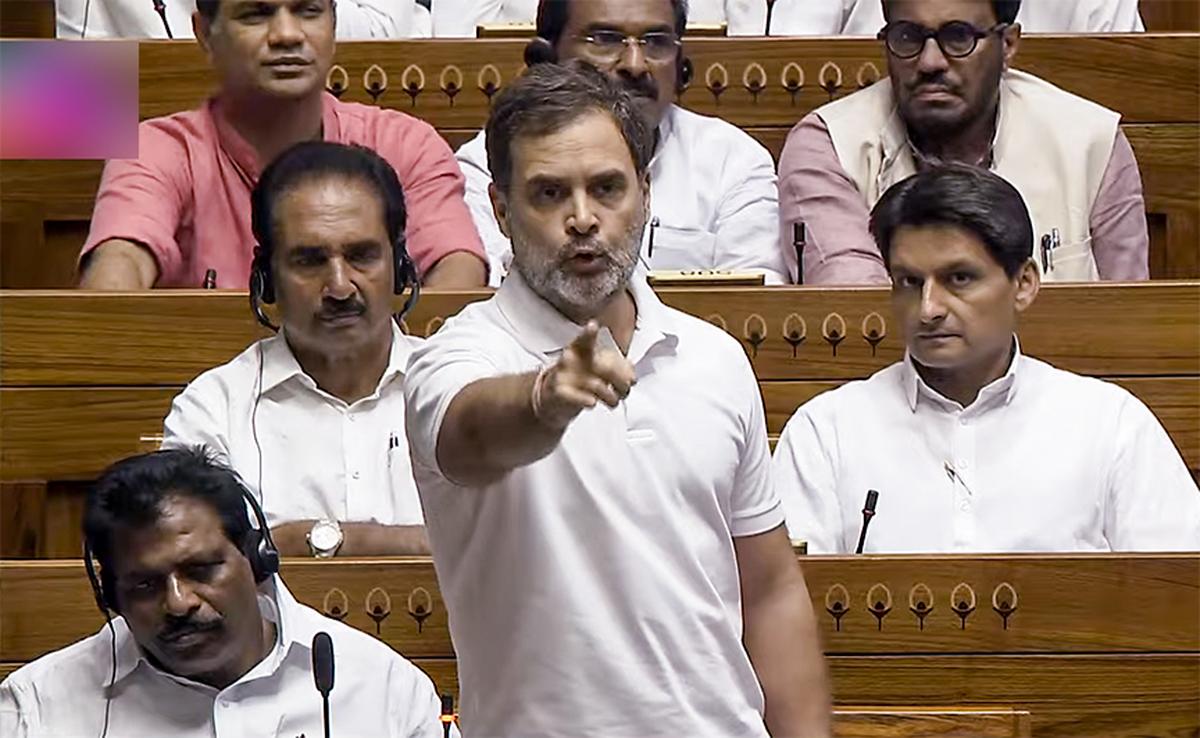
The Legal and Constitutional Status of the LoP
A common misconception is that the Leader of the Opposition is a post defined by the Constitution of India. It is not. The role is a product of parliamentary convention, given a formal legal identity much later. This distinction is crucial: it is a statutory post, not a constitutional one.
To understand this, let's watch a brief overview that clarifies its legal origins and the perquisites associated with the office, which are equivalent to those of a Union Cabinet Minister.
Leader of the Opposition | Role of LoP | Rahul Gandhi | Lok Sabha | UPSC | Drishti IAS English
This video from Drishti IAS English provides a concise explanation of the LoP's legal status.
Please watch the segment from the discussion of the 1977 Act. Pay attention to the distinction between a constitutional and statutory post, the name of the Act that governs the office, and the equivalence of the LoP's status to that of a Cabinet Minister.
As the video explains, the office is defined by the Salary and Allowances of Leaders of Opposition in Parliament Act, 1977. This Act provides a clear definition: the LoP is the leader of the party in opposition to the Government "having the greatest numerical strength" and recognized as such by the Speaker of the Lok Sabha (or the Chairman of the Rajya Sabha).
However, recognition isn't automatic. It is governed by a long-standing convention known as the "Mavalankar Rule," named after the first Lok Sabha Speaker, G.V. Mavalankar. This rule stipulates that to be recognized as the main opposition party, a party must have a strength of at least 10% of the total members of the House. For the Lok Sabha, with its strength of 543, this means a party needs at least 55 MPs.
This 10% rule is why the 16th (2014-2019) and 17th (2019-2024) Lok Sabhas had no official LoP. In both elections, the largest opposition party, the Indian National Congress, fell short of the 55-seat mark. The following clip from India Today quickly recaps this recent history.
Rahul Gandhi To Have These Powers As Leader Of Opposition In Lok Sabha | Parliament Special Session
This report explains the 10% rule and why the Congress party could not secure the LoP post in the previous two Lok Sabhas.
Watch the short introductory segment from the beginning, which details the numerical threshold and the Congress party's performance in the 2014, 2019, and 2024 elections.
With 99 seats in 2024, the Congress party comfortably cleared this threshold, paving the way for Rahul Gandhi's appointment and the restoration of this key parliamentary office.
Political Significance: The 'Shadow Prime Minister'
Beyond the legal definitions, the Leader of the Opposition holds immense political and symbolic importance. In the Westminster parliamentary tradition, from which India's system is derived, the opposition is not merely a group of critics; it is conceptualized as a "government-in-waiting." The LoP is therefore often referred to as the 'shadow Prime Minister', heading a 'shadow cabinet' that scrutinizes the work of the incumbent government and stands ready to take over if the government falls.
The role embodies a fundamental democratic principle: the minority must have its say, while the majority has its way. The opposition's duty is to oppose, critique, and hold the government accountable, ensuring that governance is conducted openly and not by fiat. This adversarial relationship is not an impediment to democracy but its very lifeblood.
A document from the Rajya Sabha Secretariat explains this philosophy eloquently.
[PDF] role of the leader of the house, leader of the opposition and whips
This official publication provides a deep, conceptual understanding of the opposition's role in a parliamentary system.
Please read the first three paragraphs of the chapter titled LEADER OF THE OPPOSITION. As you read, focus on the core ideas: The opposition as an "alternative Government." The duty of the opposition "is to oppose" as a check on corruption and defective administration. The idea that both government and opposition function through mutual agreement and forbearance—the majority agrees the minority should criticize.
This concept of a constructive, institutionalized opposition is the cornerstone of the LoP's significance. They are not just a critic but the leader of the principal alternative to the current government, giving a focus and a voice to dissenting opinions within the highest legislative forum.
The infographic below provides a neat summary of the LoP's status and significance.

Powers and Functions: A Check on Executive Appointments
The LoP's role extends beyond parliamentary debate into concrete functions that serve as a crucial check on the executive's power. Perhaps the most significant of these is the LoP's mandated presence on several high-powered selection committees that appoint the heads of key independent bodies.
These are not ceremonial roles. The LoP's participation is meant to ensure a degree of cross-party consensus and prevent purely partisan appointments to positions that are supposed to be neutral and uphold the rule of law.
This includes selection committees for:
- The Central Vigilance Commissioner (CVC) and Vigilance Commissioners, who investigate corruption in the central government.
- The Director of the Central Bureau of Investigation (CBI), the country's premier investigative agency.
- The Chairperson and members of the Lokpal, the anti-corruption ombudsman.
- The Chief Information Commissioner (CIC) and Information Commissioners, who oversee the implementation of the Right to Information Act.
- The Chairperson and members of the National Human Rights Commission (NHRC).
The following article from the Constitutional Law Society provides a good overview of this crucial function.
The Mavalankar Rule: The Selection of the Leader of Opposition
This article clearly outlines the LoP's role in various statutory selection committees.
Please read the section that begins with the sentence "The Leader of Opposition plays an important role...". Note the list of Acts that mandate the LoP's inclusion in these committees.
The absence of an LoP for ten years meant that for many key appointments, the government-prescribed procedure was to include the leader of the single largest opposition party instead. While this maintained the form of an opposition presence, the formal authority and status of a recognized LoP in these deliberations is arguably stronger.
In addition to these selection committees, the LoP plays a vital role within Parliament itself, most notably through their membership in key parliamentary committees, such as the Public Accounts Committee (PAC), Joint Parliamentary Committees (JPCs), and others that scrutinize government spending and policy.
Conclusion
In this lesson, we have dissected the role of the Leader of the Opposition, moving from its statutory origins to its profound political significance. Let's summarize the key takeaways:
- Statutory, Not Constitutional: The LoP is not mentioned in the Constitution. The office is formally defined and empowered by the Salary and Allowances of Leaders of Opposition in Parliament Act, 1977.
- The 10% Rule: Recognition as LoP requires leading the largest opposition party that has secured at least 10% of the total seats in the Lok Sabha, a convention known as the "Mavalankar Rule."
- A 'Shadow Prime Minister': The LoP embodies the democratic principle of a "government-in-waiting," providing a focal point for opposition and ensuring that alternative policies are presented and debated.
- A Check on Executive Power: The LoP's most tangible power lies in their mandated membership on high-powered selection committees for heads of key independent institutions like the CBI, CVC, and Lokpal, ensuring a measure of bipartisan oversight on crucial appointments.
With our analysis of the 2024 election mandate and the revival of a structured opposition complete, we will now shift our focus in the next module. We will delve into one of the most severe internal security and humanitarian challenges facing India today: the ethnic conflict in Manipur. This will require us to understand a complex history of ethnic tensions and critically analyze the response of both the state and central governments to the crisis.