Introduction
Welcome back. In our last lesson, we dissected Buridan's Paradox, the state of decision paralysis that occurs when we're faced with two equally attractive options. We established three key strategies to break such a deadlock: the Lexicographic Rule, the use of Arbitrary Rules, and Context Manipulation through decoys. We illustrated these with a scenario in a "Vee" relationship.
Today, we will move from theory to direct application in your domain of expertise: lingerie design. Our learning outcome is to apply Buridan's Paradox to resolve a design choice deadlock between two equally promising bra concepts. You'll act as the lead designer, using the frameworks from our last lesson to make a decisive and justifiable choice, ensuring a project doesn't stall due to indecision.
1. The Design Deadlock: The Sculptor vs. The Illusionist
Imagine your lingerie brand is on the verge of launching a new flagship cleavage-enhancing bra. After months of development, the design team is deadlocked. Two final prototypes have emerged, both testing exceptionally well in focus groups, with similar production costs and equally strong market forecasts. The launch deadline for the upcoming season is approaching, and every day of indecision increases the risk of missing the window.
The team is paralyzed, a real-world example of the problem illustrated by Buridan's Paradox.
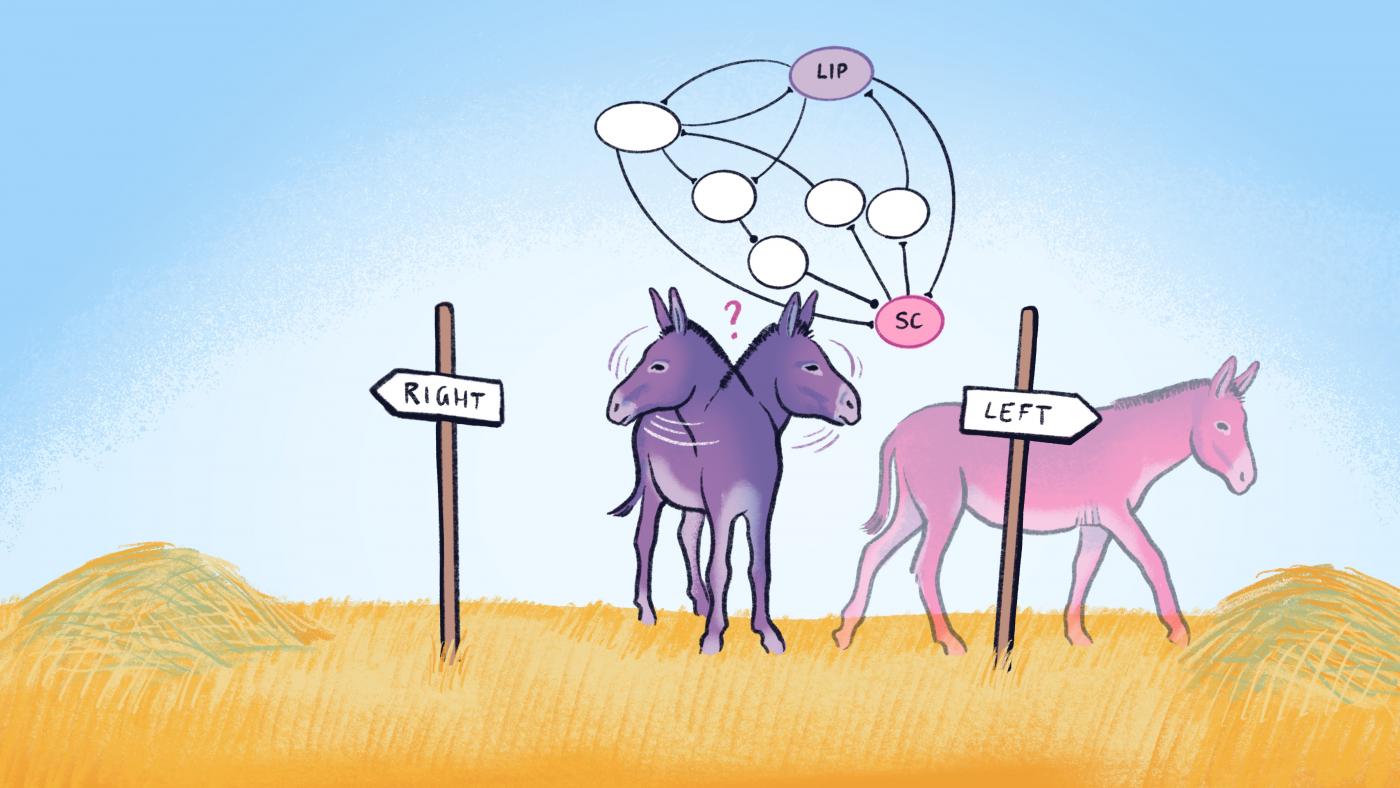
Here are the two concepts on the table:
Concept A: "The Sculptor"
- Mechanism: Uses advanced, heat-responsive memory foam cups combined with a novel, flexible underwire system.
- Effect: Delivers dramatic, rounded lift and a pronounced cleavage effect. The shape is bold and perfectly smooth under clothing.
- Strengths: Unparalleled comfort for the level of lift provided; it molds to the body throughout the day. The aesthetic is modern and minimalist.
- Focus Group Feedback: "Incredibly comfortable, I forgot I was wearing a push-up." "Gives me a shape I can't get with any other bra."
Concept B: "The Illusionist"
- Mechanism: Employs a system of adjustable, crisscrossing inner straps and strategically placed light padding.
- Effect: Creates a "push-in" cleavage effect that looks very natural. It gathers breast tissue from the sides for a centralized swell.
- Strengths: Highly versatile. The straps can be reconfigured for different necklines (e.g., standard, halter, racerback). The aesthetic is more intricate and lacy.
- Focus Group Feedback: "I can finally wear a cleavage bra with my tricky tops." "It looks so natural and feels less like I'm 'engineering' the effect."
The team is split. Both bras fulfill the brief. Both are commercially viable. A choice must be made. Let's apply our tie-breaking criteria.
2. Applying the Tie-Breaking Criteria to the Design Choice
As we discussed, the key is to shift from asking "Which is better?" to "What is a justifiable reason to choose one now?"
Criterion 1: The Lexicographic Rule
This rule requires you to stop comparing the bras as a whole and instead force a decision based on a hierarchy of attributes. As the lead designer, you must define the single most important strategic goal for this specific product launch.
Let's articulate the core attributes and consider how your priorities would break the tie.
| Attribute | Potential Importance | "The Sculptor" Score (1-5) | "The Illusionist" Score (1-5) |
|---|---|---|---|
| Max Lift & Volume | ? | 5 | 4 |
| Versatility | ? | 2 | 5 |
| All-Day Comfort | ? | 5 | 4 |
| Aesthetic Uniqueness | ? | 4 (Modern Minimalist) | 5 (Intricate & Adjustable) |
| Natural Appearance | ? | 3 | 5 |
Your Turn (Mental Exercise):
- If your brand's primary goal is to capture the "special occasion" market where dramatic effect trumps all else, which attribute would you rank as most important? The choice becomes clear.
- If your strategic goal is to create a new "daily driver" for women who want enhancement and adaptability for work and social life, which attribute becomes paramount? The decision flips.
By explicitly ranking the importance of Versatility vs. Max Lift & Volume, the deadlock is broken. The Lexicographic Rule provides a rational, strategy-based justification for the decision. For instance, declaring "For this season, our brand is focusing on multi-wear functionality" makes "The Illusionist" the logical choice.
Criterion 2: The Arbitrary Rule (Systematic Symmetry-Breaking)
What if, even after a lexicographic analysis, the strategic goals are perfectly balanced? Or perhaps the team cannot agree on the primary attribute. The cost of delay is now the biggest factor. This is where an arbitrary—but systematic—rule becomes essential. A simple coin flip feels unprofessional; a systematic rule provides a defensible process.
Here are some systematic rules applicable to this design scenario:
- Launch Sequencing: The decision is not "A versus B," but "A then B." You decide: "We will launch The Sculptor for the Fall/Winter collection, targeting the holiday season's demand for dramatic evening wear. We will launch The Illusionist for the Spring/Summer collection to align with lighter clothing and varied necklines." This commits to both ideas, breaks the paralysis, and aligns each product with a logical market context.
- Portfolio Balancing: You review the brand's current product line.
- If your collection is already full of versatile, multi-way bras, choosing The Sculptor fills a gap for a high-impact, specialist product.
- If your collection is dominated by molded, smooth-cup bras, choosing The Illusionist adds valuable aesthetic and functional diversity. The rule is: "Choose the option that most diversifies our existing portfolio."
- Design Lead's Prerogative: In some organizational structures, the rule is simply that a designated leader makes the final call when the team is deadlocked. The justification is the process itself: "The team presented two equally strong options, and per our process, the Design Lead made the final tie-breaking decision to ensure we met our deadline."
Criterion 3: Context Manipulation (The Decoy Effect)
This is a more subtle psychological strategy. You can break the tie by introducing a third option that reframes the choice between A and B.
-
Asymmetric Dominance: Imagine you introduce a quick, third prototype: "The Sculptor Lite." It's identical to The Sculptor but uses a lower-grade, less responsive foam. It's noticeably less comfortable and provides a less impressive shape. Now, when the team compares the options, The Sculptor (A) is not just being compared to The Illusionist (B). It is also being compared to its clearly inferior version (A-). This comparison provides a new, compelling reason to choose The Sculptor: it is the premium, high-quality version of its type. This might be enough to tip the scales in its favor over The Illusionist.
-
Extremeness Aversion: Suppose you frame The Sculptor as the "maximum effect" option and The Illusionist as the "maximum versatility" option. They are two poles. You could introduce a new concept, "The Contraption," which is an even more extreme version of versatility—a complex system of 15 straps and pads that can be configured in 10 ways but is difficult to use. Next to this new extreme, The Illusionist no longer looks like an extreme choice; it looks like the reasonable, balanced "versatile" option. This reframing can make it feel like a safer, more central choice.
3. Your Decision
Now, you must resolve the deadlock. The goal is not to find the one "correct" answer, but to make a justifiable decision using one of these frameworks to move the project forward.
Consider the scenario again. You have two excellent, equally promising designs. The season's launch window is closing.
Which tie-breaking criterion do you find most appropriate for this situation, and what would your final decision be? Take a moment to formulate your justification. For example:
- "I am applying the Lexicographic Rule. Our brand's strategic priority this year is to increase daily wear purchases, making All-Day Comfort the most important attribute. Therefore, my decision is The Sculptor."
- "Both concepts are too strong to abandon. I am using the Arbitrary Rule of Launch Sequencing. We will proceed with The Illusionist for the Spring/Summer launch, as its versatility matches the season, and fast-track The Sculptor for Fall/Winter."
By articulating your reasoning this way, you resolve the paradox and provide clear, confident leadership.
Conclusion
In this lesson, we moved Buridan's Paradox from a philosophical thought experiment to a practical business problem. We took a high-stakes design deadlock and successfully applied the tie-breaking frameworks from our previous lesson to resolve it.
Key Takeaways:
- Decision deadlocks between equally good options are common in creative and business fields.
- The key to resolution is to shift from comparing value to generating a reason for the choice.
- The Lexicographic Rule forces prioritization of attributes.
- Systematic Arbitrary Rules (like sequencing or portfolio balance) are powerful tools for breaking ties when delay is the greatest risk.
- Context Manipulation can psychologically reframe the choice to make one option more compelling.
Next Lesson Preview:
Having explored paradoxes of individual choice, we will now shift our focus to paradoxes that emerge from the interactions between people. In our next lesson, we will begin exploring the paradoxes of interpersonal dynamics by analysing the Hedgehog's Paradox, which deals with the fundamental tension between the need for intimacy and the need for personal space in relationships. This will bring us back to your interest in relationship structures and set the stage for our next module.