Hello! Welcome back to our module on Advanced Meta Ads strategy.
In our last lesson on retargeting, we saw how different campaign goals required different approaches. For our direct-response campaign targeting booking abandoners, a Sales objective was implied. For our "nurture" campaign, we used an Awareness objective to maximize exposure at a low cost. This highlights a critical decision you must make for every campaign you create.
Today, we'll dive deep into that decision-making process. This lesson focuses on the learning outcome: Distinguish between and select appropriate campaign objectives (Awareness, Traffic, Engagement, Leads, Sales). Choosing your campaign objective is the single most important instruction you give to Meta's powerful algorithm. It tells Meta what success looks like for your campaign, which in turn dictates who sees your ads and what action they are optimized to take.
1. The Campaign Objective: Your Instruction to the Algorithm
Before you even think about audiences or ad creative, you must define your goal. In Meta Ads Manager, this is called the "Campaign Objective." This choice determines how the algorithm finds users, how it delivers your ads, and how it measures your results.
As you have some experience running ads, you might have seen Meta's interface evolve. They've recently simplified their objectives into a framework called Outcome-Driven Ad Experiences (ODAX) to better align with real business goals.

When you create a new campaign, you'll be prompted to choose one of these goals.
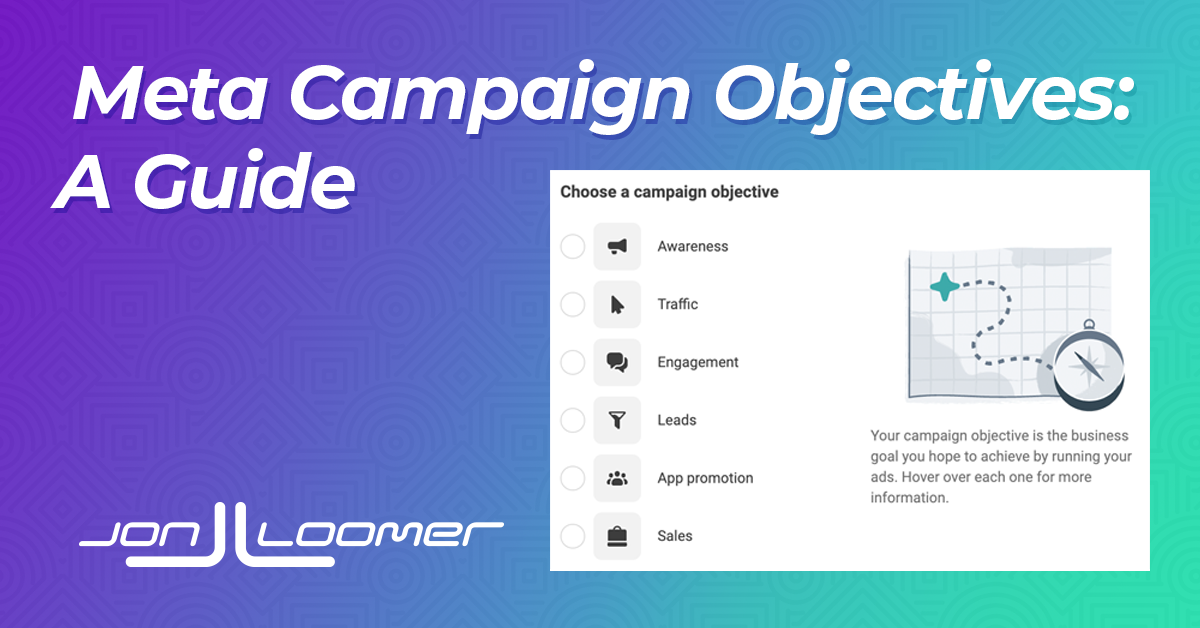
Let's explore what each of these objectives does and, most importantly, when you should use them for your hotel.
2. A Breakdown of the Core Campaign Objectives for a Hotel
Choosing the wrong objective is one of the most common and costly mistakes in Meta advertising. If you tell Meta you want "Traffic" when you really want bookings, the algorithm will find people who love to click links but may have no intention of ever making a purchase.
To understand this better, let's explore an article written specifically for the hospitality industry. It breaks down each objective with relevant hotel examples.
Meta Conversion Goals for Hotels
The article 'Meta Conversion Goals for Hotels' from O'Rourke Hospitality provides an excellent, hotel-specific overview of each campaign objective. It will help us connect these technical choices to tangible business goals like promoting events or driving direct bookings.
Please read the section titled 'How to Optimize Meta Conversion Goals'. As you read, pay close attention to the hotel-specific examples provided for each objective (Awareness, Traffic, Engagement, Leads, and Sales). We'll skip 'App Promotion' for now.
Building on that article, let's create a clear reference guide. For a deeper, more technical understanding, the following table summarizes what Meta's algorithm is specifically optimizing for with each choice.
Meta Ads optimization: strategies, tools, and tactics [2025]
For a concise, technical summary, the 'Meta Ads Objectives Overview' table in this article from Birch is extremely useful. It clearly states what Meta optimizes for with each objective.
Focus on the table under the heading 'Meta Ads Objectives Overview'. Compare what you just read in the hotel article with the technical optimizations listed here.
Let's synthesize this information into a practical guide for your hotel:
Awareness
- What it does: Shows your ad to the maximum number of people within your audience who are most likely to remember it.
- Meta optimizes for: Reach (unique people who see your ad) and Ad Recall Lift.
- Hotel Use Cases:
- Announcing the grand opening of your hotel.
- Promoting a major event you're hosting, like a food festival or a New Year's Eve party.
- Running the "nurture" retargeting campaign we discussed in the last lesson, to stay top-of-mind with a warm audience.
Traffic
- What it does: Sends people to a destination, like your website.
- Meta optimizes for: Link Clicks or Landing Page Views.
- Hotel Use Cases:
- Driving potential guests to a new page on your website detailing a brand-new amenity, like a rooftop pool or spa.
- Promoting a blog post you wrote, such as "Your Guide to a Weekend Getaway in [Your City]".
- Caution: Use this sparingly if your goal is bookings. It optimizes for clicks, not conversions.
Engagement
- What it does: Gets more people to see and interact with your post or page.
- Meta optimizes for: Post reactions (likes, comments, shares), page likes, or event responses.
- Hotel Use Cases:
- Building social proof on a key post by running a contest or giveaway.
- Promoting a Facebook Event for a workshop or special dinner at your hotel's restaurant.
- Getting more views on a beautiful hotel tour video to build interest.
Leads
- What it does: Collects information from people interested in your business.
- Meta optimizes for: Form submissions (on-platform or on-website), messages, or calls.
- Hotel Use Cases: This is highly relevant for high-value, long-sales-cycle services.
- Generating inquiries for wedding packages.
- Finding companies interested in booking corporate retreats or conferences.
- Building a newsletter list by offering a downloadable guide (e.g., "The Ultimate Wedding Planning Checklist").
Sales
- What it does: Finds people likely to purchase your product or service. This is your primary objective for driving direct bookings.
- Meta optimizes for: Conversions (like the
Purchaseevent from your Meta Pixel). - Hotel Use Cases:
- The default choice for direct booking campaigns.
- Promoting a special offer, like a "Stay 3 nights, get the 4th free" deal.
- Retargeting booking abandoners with a "Complete your booking" message.
3. Mapping Objectives to the Hotel Customer Journey
Remember the marketing funnel we discussed in our very first lesson? The campaign objectives align directly with it.
- Awareness Stage: Use the Awareness objective to introduce your hotel to new audiences.
- Consideration Stage: Use Traffic to bring people to your site to learn more, or Engagement to build trust and social proof. The Leads objective also fits here for high-consideration services like weddings.
- Booking (Conversion) Stage: This is where the Sales objective is king. It's laser-focused on finding users who are ready to book a room.
- Post-Stay (Loyalty) Stage: You could use a Sales campaign to retarget past guests with a special "welcome back" offer or an Engagement campaign to foster a community around your brand.
Test your understanding!
Your hotel wants to increase bookings for its premium suites during the off-season. You've created a special package that includes dinner and spa credits. You plan to target a cold Lookalike Audience of your past high-value guests.
Which campaign objective is most appropriate, and why?
Show answer
The Sales objective is the most appropriate choice. Your primary business goal is to generate direct bookings (purchases), not just clicks or engagement. By choosing Sales, you instruct Meta's algorithm to find people within your Lookalike Audience who are most likely to complete the booking process on your website, maximizing your Return on Ad Spend (ROAS).
4. Practical Selection and Measurement
Now that you know the why, let's look at the how. The following video provides a quick demonstration of selecting an objective in Ads Manager and introduces a key related concept: Cost Per Result.
How to Run Meta Ads For Beginners (Meta Ads Tutorial 2025)
Let's watch a couple of short clips from the 'How to Run Meta Ads For Beginners' video by Hostinger Academy. The first shows the simple step of choosing an objective, and the second explains how that choice defines your primary performance metric.
Please watch these two segments: Selecting the Objective (07:34 - 08:08): See how to choose your objective after clicking 'Create'. Understanding Cost Per Result (21:10 - 21:51): Pay attention to the explanation of CPR. This metric tells you how much you're paying for the specific outcome your campaign is optimized for.
The concept of Cost Per Result (CPR) is critical. The "Result" is whatever your objective is.
- For a Traffic campaign, your result is a
Link Click. Your CPR is your Cost Per Click. - For a Leads campaign, your result is a
Lead. Your CPR is your Cost Per Lead. - For a Sales campaign, your result is a
Purchase. Your CPR is your Cost Per Purchase (or CPA - Cost Per Acquisition).
By aligning your objective with your business goal, you ensure that the primary metric Meta reports on (CPR) is one that actually matters to your hotel's bottom line.
Conclusion
You've now learned the strategic importance behind what might seem like a simple click in Ads Manager. Your campaign objective is the foundation of your entire ad strategy.
Key Takeaways:
- The campaign objective is your primary instruction to Meta's algorithm, defining what success looks like.
- Each objective (Awareness, Traffic, Engagement, Leads, Sales) optimizes for a different user action and aligns with a different stage of the customer journey.
- For a hotel, the Sales objective is the go-to for driving direct bookings, while the Leads objective is crucial for high-value services like weddings and corporate events.
- Choosing the right objective ensures your key performance metric, Cost Per Result (CPR), reflects a meaningful business outcome.
What's Next?
Choosing your objective is the first major decision at the campaign level. The next critical choice is how you manage your budget. In our next lesson, we will apply budget optimization strategies using Campaign Budget Optimization (CBO) and Ad Set Budget Optimization (ABO). We'll explore the pros and cons of each and when to use them to effectively scale your campaigns.