Welcome to the fourth lesson of our course. In our previous session, we established a robust framework for formulating a brand's positioning by defining its target audience, competitive frame of reference, and point of differentiation. You learned how to assemble these pillars into a powerful positioning statement, the North Star for all brand activities.
Today, we will dive deeper into analyzing the competitive frame of reference with a crucial visual tool: the positioning map. While the last lesson was about defining your strategic intent, this one is about understanding the reality of the marketplace you intend to enter. Our objective is to learn how to construct and interpret a positioning map to analyze the competitive landscape of a fashion market, enabling you to spot strategic opportunities and threats.
1. Visualizing the Competitive Landscape
A positioning map, also known as a perceptual map or market map, is a simple yet powerful tool. It's a two-dimensional chart that visually plots how different brands in a market are perceived by consumers based on two key attributes. Its primary purpose is to move beyond a simple list of competitors and create a visual 'map' of the market territory. This allows you to see, at a glance, where competition is fierce and, more importantly, where there might be unoccupied space for a new brand to thrive.
To begin, let's get a clear definition and see a quick example in action.
How To Make A Perceptual Map (Positioning Strategy Examples)
The video "How To Make A Perceptual Map" from Brand Master Academy provides a concise introduction to what these maps are and why they are so valuable for strategists.
Please watch the first three short segments: The definition of a perceptual map. The strategic purpose of using one. A fashion example using the classic axes of price and quality.
As the video explains, this tool transforms abstract market data into a clear visual that helps you understand your competitors and define the best approach for your own brand.
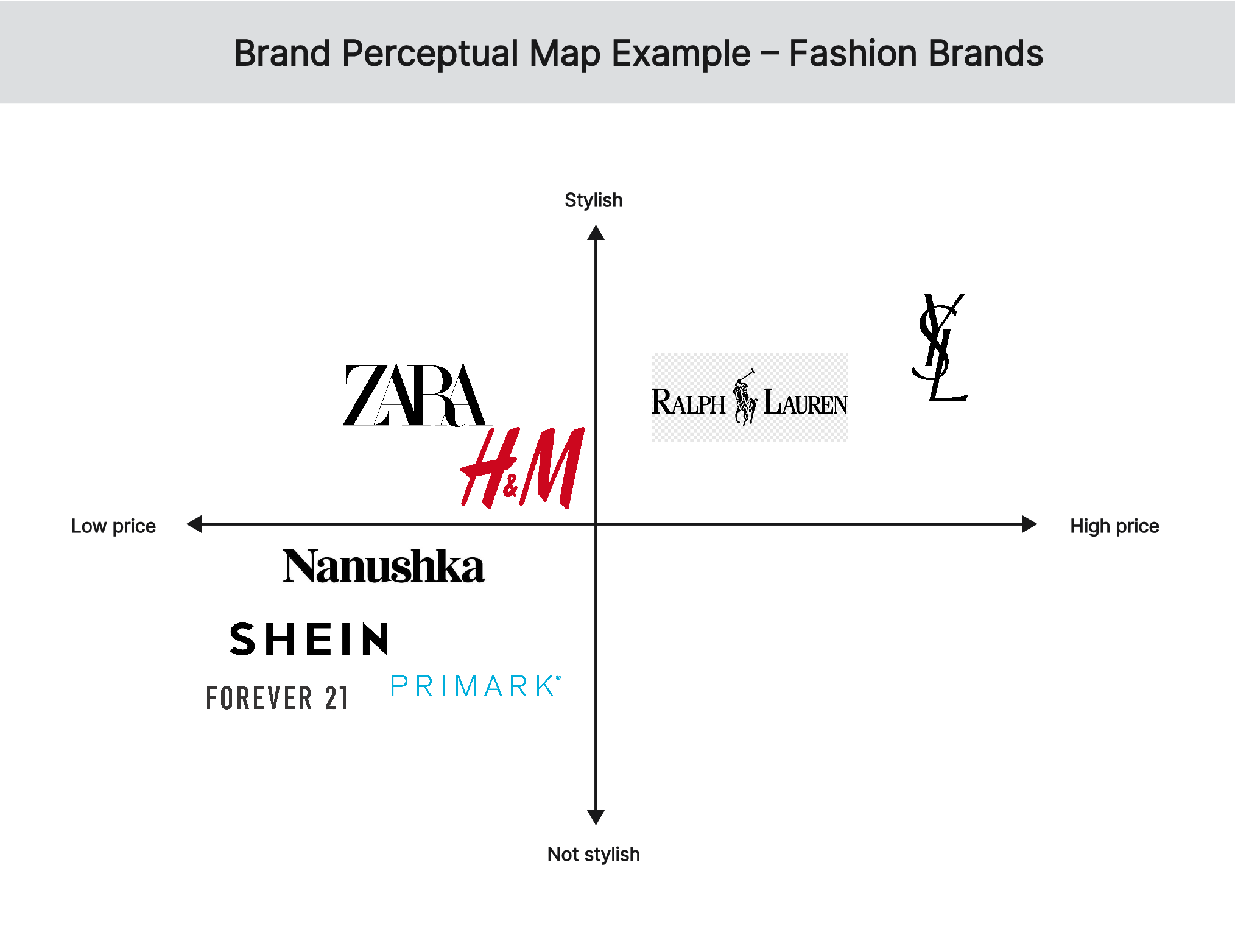
2. How to Construct a Positioning Map
Creating an insightful map involves more than just drawing two lines. It's a strategic process. We can break it down into three key steps.
Step 1: Choose Your Axes (The Attributes)
This is the most critical step, as the choice of axes determines the insights you will uncover. The axes must represent attributes that are significant factors in the consumer's decision-making process. While 'Price' and 'Quality' are common starting points, the most valuable maps often use more nuanced and creative variables.
The following article from Sup de Luxe is tailored specifically to the luxury and fashion industries and offers excellent guidance on selecting meaningful criteria.
Luxury Competitive Mapping: Understanding and Refining Your ...
This article provides a sophisticated perspective on mapping within the luxury context, which is highly relevant to your goals.
Please read the sections titled "Defining a Competitive Mapping in the Luxury Industry" and "Principles and Usefulness," paying close attention to the part on "Choosing the Right Axes."
As the article highlights, the right axes are never standard; they are tailored to the market. For fashion, you could explore axes such as:
- Classic/Timeless vs. Trendy/Contemporary
- Minimalist vs. Maximalist
- Mass Market vs. Niche/Exclusive
- Heritage-based vs. Innovative
- Ethical/Sustainable vs. Conventional Production
Your background in design gives you a distinct advantage here. You can identify subtle but important aesthetic or philosophical dimensions that define a brand's space in the market. Choosing your axes is, in itself, a creative and strategic act.
Step 2: Identify and Score Your Competitors
Once you've chosen your axes, the next step is to select a relevant set of competitors and plot them on the map. This shouldn't be based purely on your own opinion but should reflect the market's perception. In a professional setting, this step involves market research, analyzing customer reviews, and studying competitors' communications.
For our purposes, you can rely on your industry knowledge to make educated assessments. For each competitor, you would score them on a scale for each axis (e.g., from 1 to 10 on 'Price' and 1 to 10 on 'Creativity').
Step 3: Plot and Analyze the Map
With your scores, you can now plot each brand onto the 2x2 grid. The final, and most important, part of this step is the analysis. You are not just creating a picture; you are looking for strategic insights.
- Look for Clusters: Where are the brands grouped together? This indicates a crowded market space where competition is intense and differentiation is difficult.
- Look for White Space: Are there any empty areas on the map? These gaps might represent an unmet consumer need or a unique positioning opportunity that no one is claiming.
- Analyze Your Position: If you were to place your own brand (or a hypothetical one) on the map, where would it land? Is it in a crowded cluster or an open space? Does its position align with its strategic goals?
Sometimes, there's a significant gap between where a brand wants to be, where it actually is, and where customers perceive it to be. Visualizing this is a powerful use of positioning maps.

3. Positioning Maps in the Fashion World: Case Studies
To see how these maps work in practice, let's examine some specific examples from the fashion and luxury sectors. The Sup de Luxe article provides several excellent case studies.
Luxury Competitive Mapping: Understanding and Refining Your ...
Let's return to the Sup de Luxe article to see these principles applied.
Read the sections "Strategic Use by Luxury Brands" and "Sector Case Studies." Focus on the examples for: Fashion – Price vs. Creativity: Note how this map distinguishes brands like Zara, Balenciaga, and Chanel. Jewelry – Awareness vs. Exclusivity: This explores a fascinating tension in the luxury market.
These case studies demonstrate how a simple 2x2 grid can reveal complex market dynamics and help a brand define its "expressive terrain." As a creative director, understanding this terrain is essential before you begin to build a brand's visual and narrative world.
4. A Practical Exercise
Now it's your turn to apply this tool. Let's engage in a thought exercise.
Imagine you are the creative director for a new, hypothetical fashion brand. Your brand's mission is to create timeless, minimalist womenswear using highly sustainable materials and ethical production methods.
- Choose Your Axes: Based on this brand concept, what would be two powerful axes for a positioning map? (e.g., "Minimalist vs. Ornate" on one axis, and "Level of Sustainability" on the other? Or perhaps "Price Point" vs. "Timelessness"?)
- Select Competitors: List 5-7 brands that would be in your competitive frame of reference. Think of brands that range across your chosen spectra (e.g., The Row, Everlane, COS, Cuyana, Stella McCartney, Gabriela Hearst).
- Sketch and Plot: On a piece of paper, draw your map. Based on your knowledge, place each competitor brand where you think they belong.
- Identify Your Opportunity: Look at your completed map. Where does your hypothetical brand fit? Is there a clear "white space" for a brand that is, for instance, highly minimalist, highly sustainable, and at an accessible-luxury price point?
This exercise is a direct application of what brand strategists do to find a viable market position. It forces you to think critically about the landscape before making creative decisions.
Conclusion
In this lesson, we have added a vital analytical tool to your strategic toolkit. You've learned that a positioning map is more than just a chart—it's a way to visualize a market's structure, understand competitive pressures, and identify strategic opportunities.
Here are the key takeaways:
- Positioning maps provide a visual representation of the competitive landscape based on key consumer perception attributes.
- The most crucial step is choosing meaningful axes that reflect how customers in a specific market (like fashion) make decisions.
- The goal of analysis is to identify clusters (high competition) and white spaces (potential opportunities).
- For a brand, it's critical to understand any gaps between its desired, actual, and perceived positions.
In our next and final lesson of this module, we will synthesize what we've learned about brand purpose (from Lesson 2) and market positioning (from Lessons 3 and 4). We will evaluate the coherence between a brand's stated mission and its actual position in the market, using a real-world case study.