Welcome to the third lesson in our journey to build your expertise in creative direction. In our last session, we mapped out the essential hierarchy that connects a brand's soul to its public face, flowing from the Brand Platform (the 'why'), through Brand Strategy (the 'how'), to Brand Identity (the 'what').
Today, we will zoom in on the most critical component of brand strategy: positioning. This is where you make the tough, strategic choices that determine how your brand will compete and win. Our goal is to equip you with a systematic method to formulate a brand's positioning by defining its target audience, its competitive frame of reference, and its crucial point of differentiation. By the end of this lesson, you'll be able to construct a formal positioning statement, the strategic blueprint for all your creative work.
1. The Anatomy of Brand Positioning
In the previous lesson, we defined positioning as the act of defining how you are different from your competitors for a specific target audience. At its core, it is the art and science of claiming a clear, unique, and valuable space in your customer's mind.
To give us a robust framework for this process, we will rely heavily on the concepts presented in an article from Beloved Brands. It provides a clear, step-by-step methodology that aligns perfectly with your goal of understanding the "why" behind brand strategy.
Brand Positioning: Complete Guide + 20 Examples (2026)
This article provides an excellent, structured approach to developing a brand positioning statement. It breaks the concept down into clear, manageable parts.
Please read the first two sections, "What is Brand Positioning?" and "The Four Zones: Where Brands Win, Lose, and Waste Millions." As you read, focus on: The four critical elements of a positioning statement. The "Four Zones" model, which visualizes where your brand should compete.
The article introduces a simple but powerful template for a positioning statement:
For [consumer target], [brand] is the [competitive frame] that [main benefit] because [reasons to believe].
Let's break this down:
- Consumer Target: The specific group of people you aim to serve.
- Competitive Frame: The category or context in which your brand competes. This tells the consumer how to classify you.
- Main Benefit / Point of Differentiation: The single most compelling promise you make to your target audience that your competitors cannot match. This is your key to winning.
- Reasons to Believe (RTBs): The proof points that make your benefit claim credible.
This Venn diagram provides a great visual summary of how these elements intersect to find the ideal positioning for a brand.

Your task as a strategist is to find that "Ideal" sweet spot. The "Four Zones" model you just read about gives you a mental map to identify this winning territory.
2. Defining the Three Pillars of Positioning
Now, let's explore how to define each of the core components of your positioning statement.
A. The Target Audience: Beyond Demographics
The first and most common mistake in branding is trying to appeal to everyone. Effective positioning begins with a focused, disciplined choice about who you will serve. As you read in the Beloved Brands article, this requires moving beyond simple demographics (age, gender, income) into the much richer territory of psychographics, needs, and consumer tensions.
Brand Positioning: Complete Guide + 20 Examples (2026)
Let's continue with the same article.
Read the sections "The Brand Positioning Process: From Features to Feelings" and "STEP 1: Define Your Consumer Target (Not “Everyone”)." Pay close attention to the example "Consumer Target Profile" for Gray's Cookies. Notice how it describes a person with real motivations and internal conflicts.
As the article demonstrates, a well-defined target audience profile brings a specific person to life. For a fashion brand, you might describe their attitude towards style, their shopping habits, the role clothing plays in their life, and the tension between their desire for self-expression and their budget or practical needs.
A powerful aspect of this is also being explicit about who your brand is not for. This focus sharpens your message and attracts the right people more powerfully.
B. The Competitive Frame of Reference: Setting the Stage
Your brand doesn't exist in a vacuum. The competitive frame of reference defines the market you're in and the alternatives your target audience will consider. By understanding what competitors are doing, you can identify opportunities to be different.
The following video uses the outdoor brand Arc'teryx as an excellent case study to show how analyzing the competition can reveal market gaps.
Brand Positioning: Make Your Brand Stand Out (FREE Guide!)
This video from HubSpot Marketing, "Brand Positioning: Make Your Brand Stand Out," offers a clear, practical take on competitive analysis.
Watch the segment from learning from competition. Notice how Arc'teryx differentiated itself not just on product quality, but also on its production process and its iterative, substance-over-style design philosophy.
A practical tool for this analysis is a positioning map. This is a visual chart that plots brands in a given market against two key attributes, such as price and quality, or "classic" vs. "trendy."
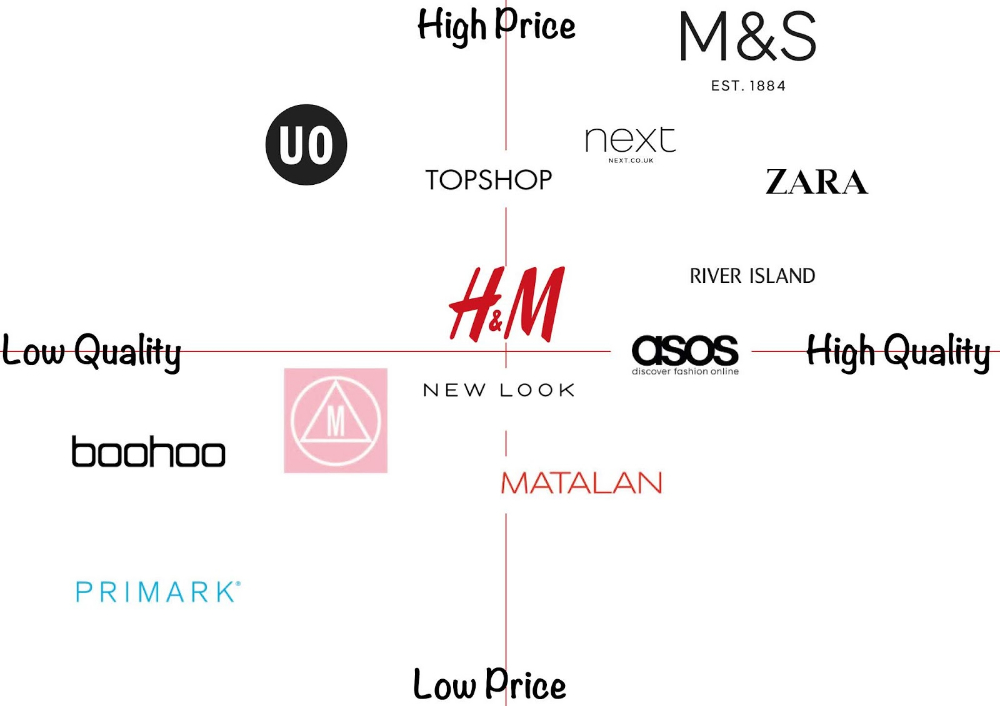
By mapping out your competitors, you can literally see where the crowded spaces are and, more importantly, where the open opportunities lie. We will dedicate our next lesson to constructing these maps.
C. The Point of Differentiation: Finding Your Unique Value
This is the heart of your positioning. What is the unique value you offer that your target audience deeply desires and your competitors cannot easily replicate? Simply having a good product isn't enough; you must translate your product's features into meaningful benefits for the consumer.
The most powerful tool for this is the Consumer Benefits Ladder. It helps you "climb" from what your product is (a feature) to what the customer gets (a functional benefit) and, ultimately, how it makes them feel (an emotional benefit).
Brand Positioning: Complete Guide + 20 Examples (2026)
Let's return to the Beloved Brands article one more time for this crucial tool.
Please read the section "STEP 2: Build Your Consumer Benefits Ladder." Study the diagram and the example carefully. This is the intellectual engine that turns product attributes into powerful brand promises.
Your background in design gives you a deep appreciation for materials, construction, and aesthetics. The benefits ladder is the strategic link that connects those tangible features to the intangible feelings—like confidence, belonging, or self-expression—that truly drive brand loyalty.
But how do you find a unique point of differentiation in a crowded market? This requires creative thinking.
The Brand Positioning Workbook (Differentiation Strategies w/ Ulli Appelbaum)
In this video, "The Brand Positioning Workbook," brand strategist Ulli Appelbaum shares a powerful creative technique for finding differentiation.
Watch the segment from a practical tool. His idea of listing all the category conventions and then systematically "breaking" them is a fantastic exercise for a creative mind. It forces you to challenge the status quo and find fresh angles.
3. Assembling the Positioning Statement
Once you have defined the three pillars, you can assemble them into the formal positioning statement we introduced earlier. It serves as your internal North Star, ensuring that every marketing campaign, product design, and social media post is delivering the same, consistent message.
Brand Positioning: Complete Guide + 20 Examples (2026)
To see how it all comes together, please read the final example in the Beloved Brands article.
Read the section "The Complete Brand Positioning Statement: Gray's Cookies." Notice how it clearly states the target, frame, benefit, and reasons to believe in a single, powerful paragraph.
As you develop your positioning, it's also vital to be aware of common mistakes. An obsessive focus on what customers say they want can often lead to generic benefits that all your competitors are also chasing.
The Brand Positioning Workbook (Differentiation Strategies w/ Ulli Appelbaum)
Let's hear from Ulli Appelbaum again on what to avoid.
Watch from common mistakes. Pay attention to his point about the "obsessive focus on what the consumer wants" leading to generic claims and his Dyson example, which shows how to reframe a generic benefit ("it sucks dust") in a unique way ("it never loses suction").
Conclusion
In this lesson, we moved from the abstract concept of strategy to the concrete task of formulating a brand's position. You now have a systematic framework for defining where to play and how to win.
Here are your key takeaways:
- Brand positioning is about owning a unique and valuable space in the mind of a specific consumer.
- A strong positioning statement is built on four elements: Consumer Target, Competitive Frame, Main Benefit (or Point of Differentiation), and Reasons to Believe.
- Defining a target audience means going deep into their psychographics and motivations, not just demographics.
- The point of differentiation is most powerful when it connects a product feature to both a functional and an emotional benefit, a process clarified by the Consumer Benefits Ladder.
- Creative techniques, like breaking category conventions, are essential for discovering a truly unique position.
In our next lesson, we will put this knowledge into practice. You will learn how to construct a positioning map to analyze the competitive landscape of a given fashion market, a key skill for any creative director.