Hello! Welcome to our final lesson in this module on the awakening and elimination routine.
In our previous lessons, we explored the importance of timely elimination, the consequences of suppressing natural urges (vega dharana), and, most critically, the contraindications for forcing elimination (pravahana) or improperly arresting it (stambhana) in pathological states like Atisara and Grahani. You learned that the core of clinical wisdom is to correctly assess the stage (avastha) of a disease, especially the presence of ama, before intervening.
Today, we transition from "what not to do" to building a proactive, positive framework. Our focus is to fulfill the learning outcome: Design an integrated morning plan to regulate apana vayu and agni for common elimination issues. We will synthesize our knowledge to create a practical, sequential, and customizable morning routine that establishes a physiological environment conducive to healthy elimination.
This isn't about finding a quick fix for constipation; it's about designing a daily practice that harmonizes the body's fundamental forces of digestion and downward movement.
1. The Core Principles: Harmonizing Agni and Apana Vayu
Before we build the plan, let's briefly revisit our two main targets: Agni and Apana Vayu.
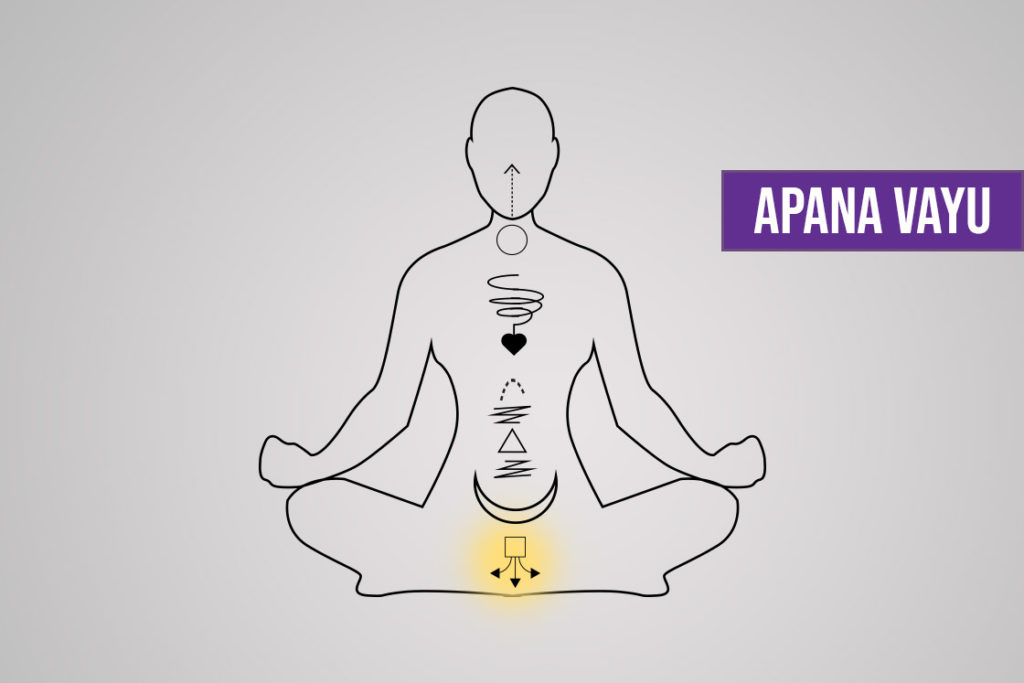
- Apana Vayu: As you know, this is one of the five subtypes of Vata dosha. Its primary location is the pelvic region, and its main direction of flow is downwards. It governs urination, defecation, flatulence, menstruation, and ejaculation. Any disruption in its function—often caused by cold, dry, irregular, or suppressive lifestyle factors—directly leads to elimination problems.
- Agni: The metabolic fire, seated primarily in the grahani (duodenum/small intestine), is responsible for digestion, absorption, and transformation. A balanced Agni ensures complete digestion, preventing the formation of ama (metabolic toxins). A weak or irregular Agni is the root cause of most elimination issues, as undigested food obstructs the channels (srotorodha) and deranges Vayu.
Our integrated morning plan is designed to achieve two goals simultaneously:
- Kindle Agni: To ensure proper digestion from the start of the day.
- Facilitate Apana Vayu: To encourage its natural, downward, and unobstructed flow.
2. The Integrated Morning Framework
A successful morning plan is not a single action but a sequence of coordinated practices. Here is a framework we will follow:
- Usha Paana (Morning Hydration): Gently waking up the system.
- Mala Tyaga (Elimination): Using posture and awareness to aid elimination.
- Vyayama (Therapeutic Movement): Using specific movements to massage the abdomen and stimulate the colon.
- Ahara (Supportive Diet): Choosing a breakfast that reinforces the work done.
We will now detail each step and, most importantly, discuss how to customize it for common clinical scenarios.
3. Step-by-Step Guide to a Regulated Morning
Step 1: Usha Paana (Morning Hydration & Stimulation)
Upon waking, the first act should be to hydrate and gently stimulate the digestive tract. This practice, known as Usha Paana, lubricates the channels, helps soften stool, and provides a gentle impetus for peristalsis.
An Ayurvedic Approach to Constipation
The article 'An Ayurvedic Approach to Constipation' explains the simple yet profound impact of this first step.
Please read the subsection titled 'Practical and holistic lifestyle practices to prevent constipation.' Focus on the points 'Warm Water in the Morning' and 'Herbal Teas.'
While warm water is a universal starting point, we can refine this for specific doshic imbalances, a crucial step for clinical personalization.
100% FIX YOUR GUT- Bloating, Constipation, Weight loss| Dr. Alka Vijayan on BODY TO BEIING- SHLLOKA
Dr. Alka Vijayan, in her video on gut health, provides excellent dosha-specific recommendations for morning drinks. This is a great example of applying foundational principles to individual needs.
Please watch the following segments to understand the personalization: For Vata: Watch from 09:46 to 10:10. She recommends warm water with cumin seeds. For Pitta: Watch from 18:43 to 19:35. She suggests fennel or crushed coriander seed infused water at room temperature. For Kapha: Watch from 24:25 to 24:45. She advises dry ginger or carom-infused water.
Summary of Morning Drinks:
- Vata Predominance (constipation, dryness, bloating): Warm water with a pinch of cumin seeds. This is warming and carminative (vata-anulomana).
- Pitta Predominance (acidity, inflammation, loose stools): Room-temperature water infused with cooling herbs like fennel or coriander seeds. This pacifies heat without extinguishing Agni.
- Kapha Predominance (sluggishness, mucus, heaviness): Hot water with a slice of fresh ginger, dry ginger (shunthi), or carom seeds (ajwain). This is stimulating and clears mucus.
Step 2: Aiding Apana Vayu with Posture and Movement
After hydration, the next step is to create the physical conditions for easy evacuation.
Posture during Elimination:
Modern toilets, while convenient, create a 90-degree angle at the hips, which can kink the rectum and hinder complete evacuation. This forces straining (pravahana), which vitiates Apana Vayu. The natural squatting posture is ideal.
In the video LINK, Dr. Vijayan explains this clearly from 01:00:28 to 01:02:40. She highlights how squatting aligns the colon and discusses the practical solution of using a commode stool to mimic the Malasana (Garland Pose) position. This is a critical piece of advice for patients with chronic constipation.
Therapeutic Yoga Asanas:
Specific yoga postures performed in the morning can act as a powerful therapy to regulate Apana Vayu and massage the abdominal organs.
Ayurvedic Morning Flow for Constipation Relief
The article 'Ayurvedic Morning Flow for Constipation Relief' provides a simple, effective sequence of postures to perform after your morning water.
Please read the sections 'Step One: Malasana — The Deep Squat,' 'Step Two: Kati Chakrasana — The Waist Twist,' and 'Step Three: Tiryaka Bhujangasana — Twisting Cobra.' Note the Ayurvedic explanation for how each pose works—Malasana for Apana Vata, and the twists for massaging digestive organs.
The key asanas for this purpose are:
- Malasana (Garland Pose): Directly encourages the downward movement of Apana Vayu.
- Pawanmuktasana (Wind-Relieving Pose): Massages the ascending, transverse, and descending colon, helping to release trapped gas.
- Kati Chakrasana (Waist Twisting Pose): A gentle twist that "wrings out" the abdominal organs, stimulating Agni and peristalsis.
- Tiryaka Bhujangasana (Twisting Cobra Pose): Applies gentle pressure on the abdomen and stimulates organs like the liver and intestines.
4. Designing a Plan: Clinical Scenarios
Now, let's integrate these steps into plans for two common patient profiles.
Scenario 1: Vata-Predominant Elimination Issues
- Patient Profile: A 40-year-old software engineer complaining of chronic constipation with dry, hard-to-pass stools, bloating, gas, and anxiety. Their appetite is irregular (Vishama Agni).
- Integrated Morning Plan:
- Usha Paana: Upon waking, slowly sip a large glass of warm water with 1/4 tsp cumin seeds. If constipation is severe, a teaspoon of ghee or castor oil can be added to milk at bedtime the previous night (as per video LINK, 01:31:30).
- Yoga Flow: Perform a gentle sequence: 5 rounds of Kati Chakrasana, followed by holding Pawanmuktasana for 30 seconds on each side, and finishing by sitting in Malasana for 1-2 minutes.
- Mala Tyaga: Attempt bowel evacuation only when the urge is felt. Use a commode stool to elevate the feet and create a squatting-like posture. Practice calm breathing, do not strain.
- Breakfast: Wait for true hunger. Have a warm, moist, and grounding breakfast. The video LINK (at 11:00) suggests options like rice-based roti with yogurt (raita) or cooked dalia. The key is to avoid dry, cold foods like cereal with cold milk or untoasted bread.
Scenario 2: Kapha-Predominant Elimination Issues
- Patient Profile: A 55-year-old homemaker with a tendency for weight gain, reports feeling sluggish in the morning, with a low appetite (Manda Agni), and a feeling of incomplete evacuation with sticky stools.
- Integrated Morning Plan:
- Usha Paana: Sip a glass of hot water with a slice of fresh ginger or 1/4 tsp of dry ginger powder (shunthi) to kindle Agni and clear channels.
- Yoga Flow: Perform a more dynamic sequence. 10-15 rounds of Kati Chakrasana, followed by 3 rounds of Tiryaka Bhujangasana. You could also introduce Kapalabhati Pranayama (as mentioned in resource LINK, section 5) to strongly stimulate Agni.
- Mala Tyaga: Attempt bowel evacuation. Given the Kapha sluggishness, the urge may not be strong, but the routine helps establish a pattern.
- Breakfast: Postpone breakfast until 10 or 11 AM, when Agni is naturally stronger. The meal should be light, warm, and slightly dry. Video LINK (at 25:10) suggests options like millet rotis or even starting the day with salads (for a strong Kapha person), which is unconventional but aims to counteract the heavy/oily qualities.
Test your understanding!
A 30-year-old female patient presents with classic signs of Pitta-Vata imbalance. She experiences high stress, which leads to irregular bowel habits—sometimes loose and urgent (Pitta), other times constipated and gassy (Vata). She also suffers from mild hyperacidity.
Based on the principles learned, design a balanced integrated morning plan for her. Justify each component.
Show answer
A balanced plan for a Pitta-Vata individual must pacify both doshas without aggravating either.
-
Usha Paana: Room temperature water infused overnight with 1/4 tsp fennel seeds and 1/4 tsp cumin seeds.
- Justification: Fennel is cooling and pacifies Pitta, preventing acidity. Cumin is carminative and pacifies Vata, relieving gas. Using room temperature water avoids aggravating Pitta (with hot water) or Vata (with cold water).
-
Yoga Flow: Gentle and calming movements. Start with a slow Surya Namaskar, followed by Pawanmuktasana and Malasana. Avoid overly heating or fast-paced exercises. Nadi Shodhana Pranayama (Alternate Nostril Breathing) would be excellent to calm the mind and balance both doshas.
- Justification: The goal is to regulate Apana Vayu without generating excess heat. The calming nature of the practice addresses the stress component that triggers both the Pitta and Vata symptoms.
-
Mala Tyaga: Use a commode stool. Focus on relaxing the abdomen rather than forcing anything.
- Justification: This supports the anatomical function of elimination and reduces the need for straining, which can aggravate both Vata (constipation) and Pitta (leading to inflammation, like fissures or hemorrhoids).
-
Breakfast: A breakfast that is both grounding for Vata and not overly heating for Pitta. Cooked oatmeal with soaked raisins and a spoonful of ghee, or a rice vermicelli upma with cooling vegetables.
- Justification: The warm, cooked nature pacifies Vata. The choice of ingredients (oats, rice, ghee, raisins) is nourishing without being overly spicy or acidic, thus pacifying Pitta.
Conclusion
Today, we have built a comprehensive and clinically applicable morning routine designed to restore and maintain digestive health. You have moved beyond isolated recommendations to creating an integrated sequence of practices that work in synergy.
Key Takeaways:
- Integration is Key: A successful morning plan combines hydration, posture, movement, and diet into a cohesive flow.
- Regulation over Forcing: The goal is always to create a supportive environment for Agni and Apana Vayu to function naturally, not to force an outcome with harsh laxatives or straining.
- Personalization is Essential: The universal framework must be customized based on the patient's prakriti, vikriti (especially the state of their Agni and dominant dosha), and specific complaint.
- Consistency is the Therapy: The true power of this Dincharya practice lies in its consistent daily application, which gradually re-establishes the body's natural rhythms.
This lesson concludes our module on the awakening and elimination routine. You are now equipped with the knowledge to guide patients on when to wake, how to manage elimination urges correctly, what to avoid in specific disease states, and how to build a proactive morning plan.
In our next module, "Comprehensive Oral Hygiene (Mukha Shuddhi)," we will proceed to the next step in the classical Dincharya. After attending to the body's primary eliminative function, we turn our attention to cleansing the gateways of perception and digestion, starting with the oral cavity.