Hello. In our last lesson, we examined the social "blueprint" of 19th-century Russia, mapping out the rigid class pyramid and the seismic shifts caused by the Emancipation of the serfs. We saw how the Karamazov family’s conflicts are rooted in this world of decaying nobility, a disenfranchised peasantry, and a new, radical intelligentsia.
Now, we move from the social edifice to the spiritual one. To understand the world of The Brothers Karamazov, one must understand the Russian Orthodox Church, which was not merely an institution but the very soul of the nation. This lesson explores the spiritual landscape that shapes the novel's deepest questions. We will examine the unique character of Russian Orthodoxy and focus on the pivotal institution of the startsy—the spiritual elders. This will provide the essential context for the character you have just met, Father Zosima, and the monastery that serves as the novel's moral and spiritual anchor.
1. The Spiritual Architecture: Russian Orthodoxy
Before we can understand the role of a figure like Zosima, we must first grasp the foundational beliefs of the faith he represents. Russian Orthodoxy has a distinct character, a unique "theological blueprint" that differs significantly from the Western Christian traditions you might be more familiar with. It emphasizes mystery, mercy, and the primacy of the heart over pure reason.
This worldview is powerfully articulated in the works of Dostoevsky himself. To get a feel for this spiritual atmosphere, let's watch a video that explores the Russian conception of God, drawing examples from another of Dostoevsky's masterpieces, Crime and Punishment.
Civilization #53: Dostoevsky and the Soul of Russia
This lecture from the Predictive History channel, titled "Dostoevsky and the Soul of Russia," provides a brilliant analysis of the Orthodox worldview that underpins Dostoevsky's work.
Please watch two key segments: Start with the analysis of the character Marmeladov from Crime and Punishment at Dostoevsky's understanding of God. This section vividly illustrates the Orthodox emphasis on a God who is profoundly merciful, who understands human weakness, and who forgives those who have "loved much," even in their sinfulness. Continue directly to the next section, the summary of differences between Protestant, Catholic, and Orthodox Christianity. This provides a very clear, if simplified, framework for understanding the unique position of Orthodoxy.
As you saw, the Orthodox worldview presented here is not one of strict rules and logical proofs, but one of immense compassion for human fallibility. Key tenets include:
- A Focus on the Heart: Knowledge of the heart, with all its contradictions and mysteries, is valued above purely rational understanding.
- A Merciful God: God is not a stern judge demanding perfection, but a loving father who understands human suffering and whose capacity for forgiveness is boundless.
- Fatalism and Hope: There's a sense that humans are "born to sin" and cannot save themselves, but this is coupled with the profound hope that God's grace will ultimately redeem everyone.
This spiritual framework is the foundation upon which The Brothers Karamazov is built. It is the source of the novel's deep psychological insights and its exploration of suffering as a path to redemption.
2. The Starets: A Living Icon of Faith
Within the grand structure of the Orthodox Church, a unique and powerful tradition flourished in 19th-century Russia: starchestvo, or eldership. The starets (plural: startsy) was a figure of immense spiritual authority, but one whose power came not from an official position in the church hierarchy, but from personal holiness and wisdom.
A starets was a spiritual architect for the soul. People from all walks of life—from peasants to aristocrats like Dostoevsky himself—would travel great distances to seek their guidance on everything from spiritual struggles to mundane family problems.
This article provides a comprehensive overview of the institution of the starets. It explains their origins, their theological basis, and their practical role in Russian life.
Please read the first two sections of the article: Begin with the introductory text, from the first paragraph, which gives a full definition and historical overview. Then, read the section on the theological foundation, starting from the second paragraph. Focus on how a starets's authority is charismatic and prophetic, distinct from the formal authority of a priest. Pay attention to the concept of diakrisis (discernment of spirits).
To summarize and bring this concept to life, the following short video explains how Father Zosima embodies this role within the novel.
In this clip from the Young Heretics channel, the speaker introduces Father Zosima and explains the function of the starets.
Watch the first part of the video, from the beginning until the speaker's explanation of the starets as a witness to a different form of Christianity, one that stands in contrast to mere bureaucracy and hierarchy.
So, the starets is not just a monk; he is a spiritual master, a "living icon" whose authority is earned through ascetic struggle and recognized by the people. He is the heart of the faith made manifest, a guide who can see into the souls of others and offer healing. This is precisely the role that Father Zosima plays for Alyosha and for the many troubled souls who flock to his cell.
3. Optina Pustyn: A Spiritual and Architectural Haven
The tradition of the startsy reached its zenith in the 19th century at a specific, real-world location: the Optina Pustyn monastery. This monastery, located about 250 kilometers south of Moscow, was the epicenter of Russia's spiritual revival and the direct inspiration for the monastery in The Brothers Karamazov.
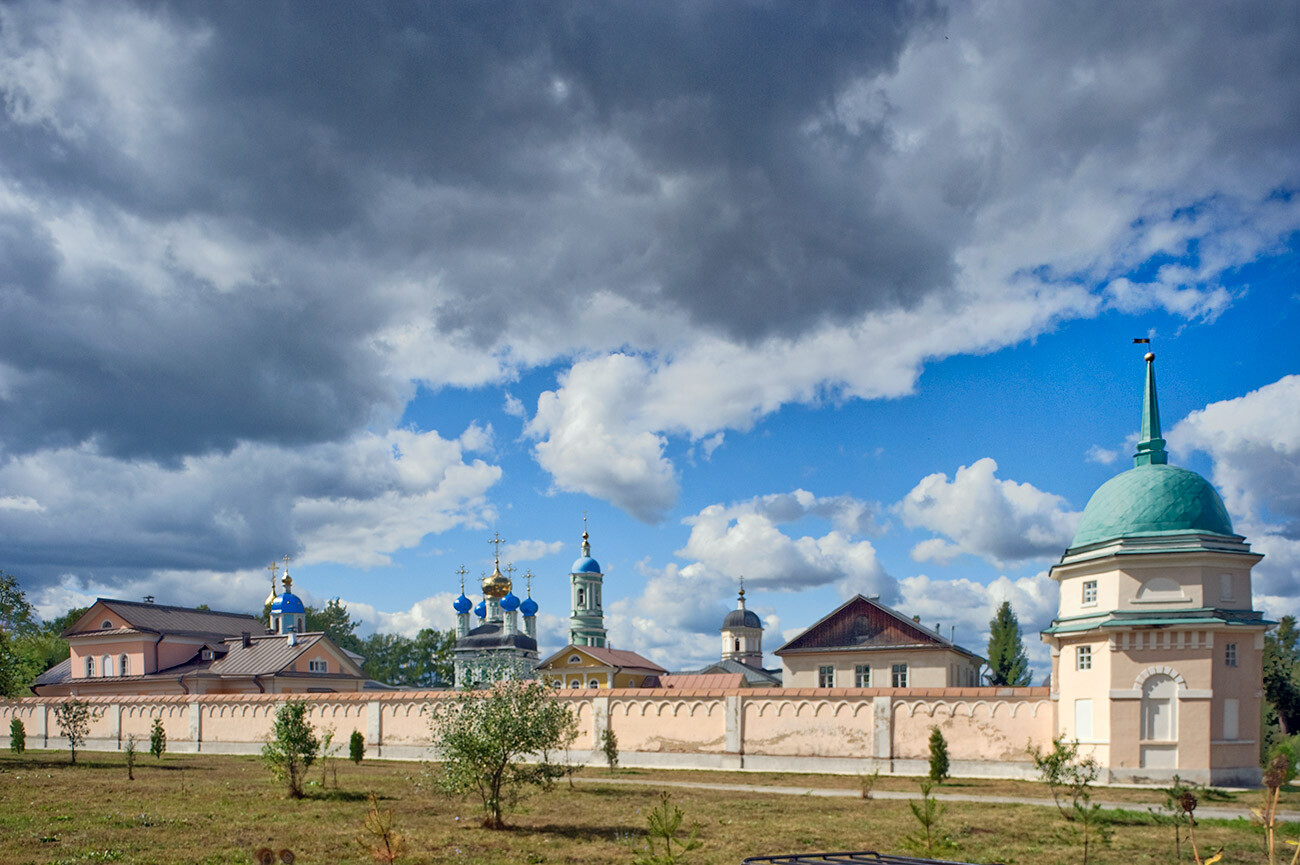
Dostoevsky didn't just imagine this world; he visited it. In 1878, grieving the death of his young son, also named Alyosha, Dostoevsky made a pilgrimage to Optina Pustyn with the philosopher Vladimir Solovyov. There, he met the most famous starets of the era, Elder Ambrose. This encounter had a profound impact on him and directly shaped the character of Father Zosima.
The architecture of the monastery itself is significant. The elders lived in a special, more secluded area known as a skete—a small hermitage dedicated to stricter spiritual observance.
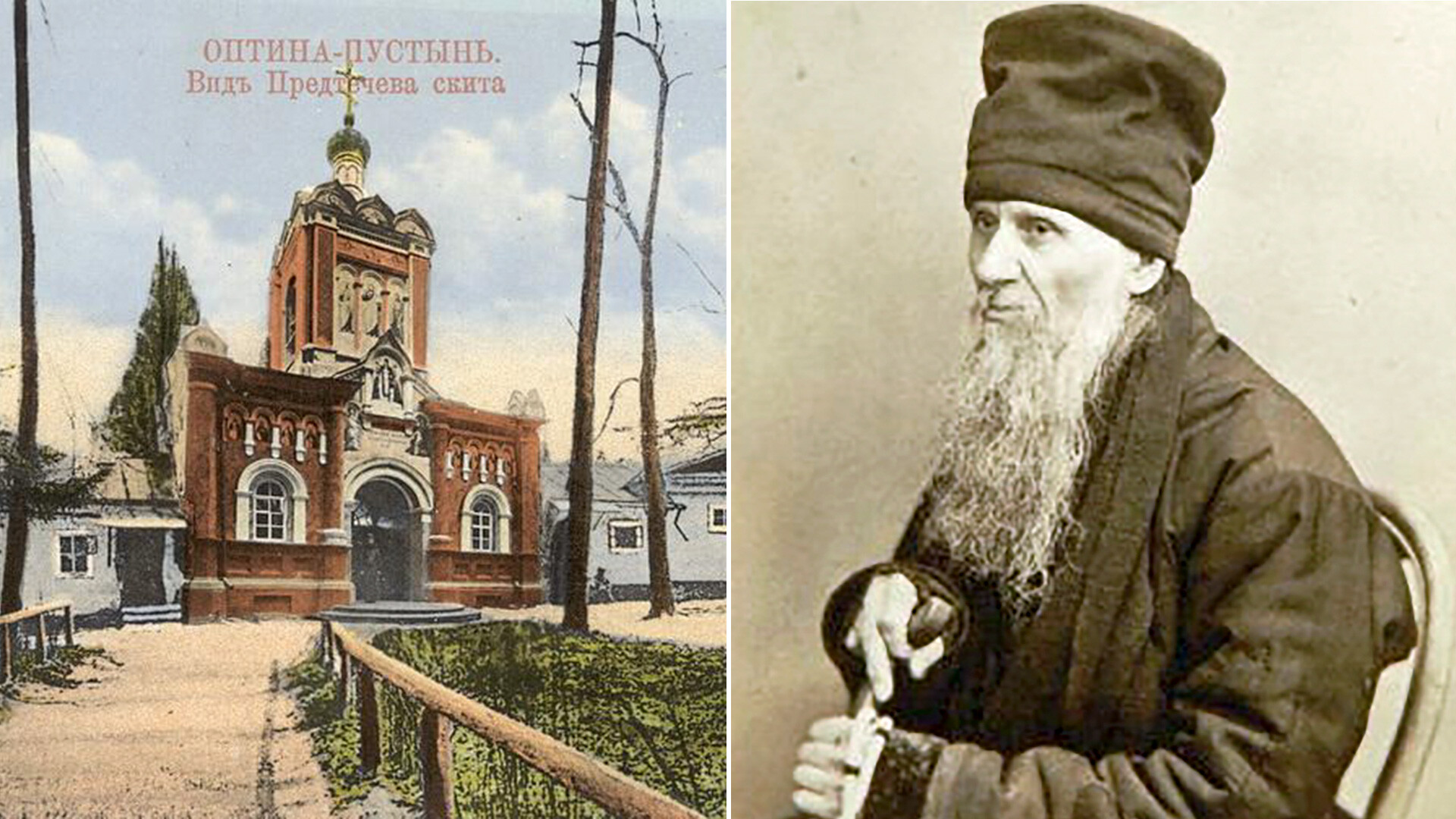
Let's turn to an article that specifically discusses the architecture of Optina Pustyn and its connection to Dostoevsky.
This article by historian William Brumfield connects the physical place of Optina Pustyn with its spiritual significance and its most famous visitors.
Please read two sections from the article: Find the paragraph that begins "Of special significance...". This part explains the function of the skete and how the startsy came to be associated with it. Notice how the physical separation of the skete mirrors its distinct spiritual purpose. Next, read the section detailing Dostoevsky's visit, starting from the paragraph "The Optina Pustyn Monastery attracted...". This is a crucial piece of biographical context that directly links the author's personal tragedy and spiritual search to the creation of Father Zosima.
The account of Dostoevsky's visit is remarkable. His personal grief, his conversation with Elder Ambrose, and the consolation he received are all poured into the novel. The scene in Book 2, "A Lady of Little Faith," where Zosima comforts a woman who has lost her child, is a direct fictionalization of Dostoevsky's own experience. The architecture of the monastery and the living presence of the starets provided the raw material for one of literature's most profound spiritual portraits.
Conclusion
In this lesson, we have moved beyond the social structure to explore the spiritual architecture of Dostoevsky's Russia. We have seen how the unique worldview of Russian Orthodoxy and the institution of the startsy form the very bedrock of The Brothers Karamazov.
Here are the key takeaways:
- Russian Orthodoxy provides the novel's spiritual atmosphere, emphasizing a merciful God, the primacy of the heart, and the redemptive power of suffering and love.
- The starets is a charismatic spiritual guide whose authority comes from wisdom and holiness, not official rank. They serve as confessors, healers, and "architects of the soul."
- Optina Pustyn was the real-world center of this tradition and the direct model for the monastery in the novel. Its physical layout, with the secluded skete for the elders, reflected its spiritual function.
- Father Zosima is the literary embodiment of the ideal starets, a character profoundly shaped by Dostoevsky's own visit to Optina Pustyn and his meeting with Elder Ambrose.
You now have the context to understand the immense significance of Father Zosima and the monastery not just as characters and settings, but as the spiritual center of the novel—the force of faith that stands against the forces of chaos and doubt.
In our next lesson, we will turn to the intellectual battlefield of 19th-century Russia. We will distinguish between the Westernizer and Slavophile movements, two competing visions for Russia's future that fuel the ideological debates at the heart of the novel.