Welcome to the next step in our exploration of the world behind The Brothers Karamazov. In our last lesson, we examined the spiritual architecture of 19th-century Russia, focusing on the distinct character of Orthodox Christianity and the pivotal role of the startsy, or elders. This gave us the context for Father Zosima, the moral heart of the novel.
Now, we shift from the church to the salon, from the monastery to the university. Just as Russia was defining its spiritual identity, it was also locked in a fierce intellectual battle over its national soul and its future. This lesson will explore that battle, distinguishing between the two great competing ideologies of the era: Westernism and Slavophilism. Understanding this debate is like having a key to the novel's most profound arguments, as the clashes between the Karamazov brothers and their circle are a dramatic staging of this national conflict.
The Great Divide: Two Visions for Russia
The central question haunting the 19th-century Russian mind was: what is Russia? Is it a backward European nation that must race to catch up with the West, or is it a unique civilization with its own path and destiny? This question arose forcefully after the reforms of Tsar Peter the Great in the 18th century, who had aggressively "opened a window to the West," importing European technology, bureaucracy, and culture.
By the 1840s, this question had split the Russian intelligentsia—the educated class—into two fiercely opposed camps.

To grasp the fundamentals of this divide, let's turn to an article that lays out the core positions of each movement.
What Americans Today Can Learn from the Russian Past
This article from VoegelinView provides a concise introduction to the historical origins of the Westernizer-Slavophile debate.
Please read the first two paragraphs, starting from the beginning of the article. Focus on the definitions provided for the Westernizers and Slavophiles and their differing views on the peasantry.
As the reading makes clear, the two groups had fundamentally different blueprints for Russia's future:
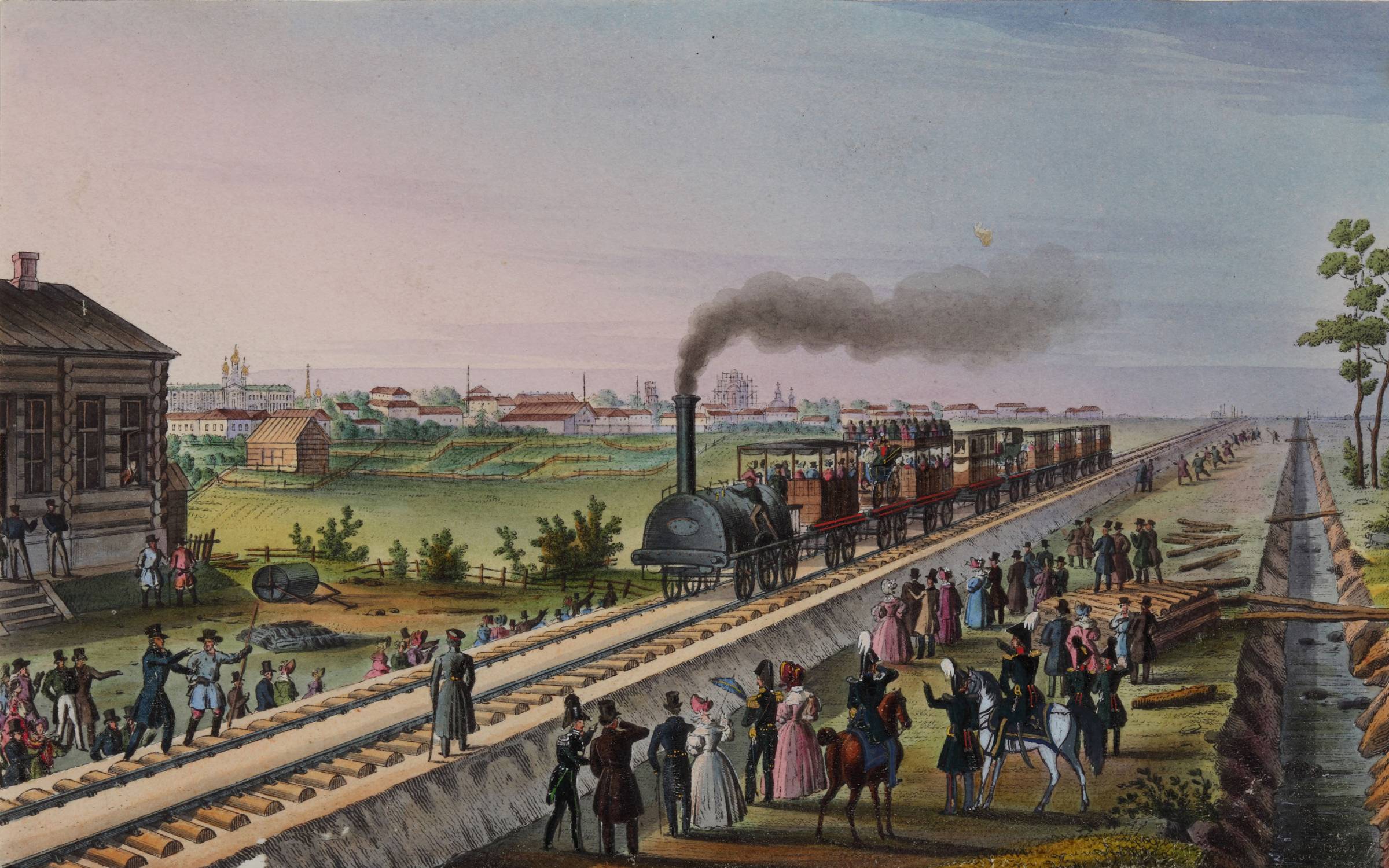
- The Westernizers were liberals who believed Russia's salvation lay in adopting the model of Western Europe. They championed science, rationalism, individual rights, and constitutional government. They saw Russia's traditional institutions—autocracy, the Orthodox Church, the peasant commune—as sources of backwardness. The arrival of Western technology, like the railway, was a symbol of the progress they advocated.
- The Slavophiles were conservatives and romantics who argued that Russia's strength came from its unique, non-European traditions. They believed the West was spiritually bankrupt—consumed by materialism, individualism, and a soulless legalism. Russia's mission, they argued, was not to imitate Europe but to offer it a new path to salvation through the purity of Orthodox Christianity and the communal spirit of the Russian people.
This was not simply a debate between modernizers and traditionalists. As another text clarifies, both sides were universalists; they just had different visions of the universal good.
The Religious and Political Thought of Russian Slavophiles
This academic article offers a more precise definition of the two movements, clarifying their philosophical underpinnings.
Read the first two paragraphs of the article. Pay attention to the distinction between "uncritical and critical modernization" and the two competing forms of "universalism."
The Slavophile Vision: Sobornost and the Russian Soul
To truly understand the Slavophile position—and by extension, the worldview of Dostoevsky—we must explore their core concepts. Their philosophy was not just a political program but a complete theological and social vision.
At the heart of Slavophile thought was the concept of sobornost. This Russian word is difficult to translate, but it means something like "organic togetherness" or "spiritual community." It describes a form of unity based not on laws or contracts, but on freely given love and shared faith. The Slavophiles saw sobornost as the essence of the Orthodox Church, contrasting it with what they viewed as:
- Catholicism: Unity without freedom (enforced by the authority of the Pope).
- Protestantism: Freedom without unity (leading to individualism and fragmentation).
For the Slavophiles, Orthodoxy alone preserved the perfect balance. This idea was paired with tselnost, or "integral knowledge." This is the belief that truth is not grasped by reason alone, but by the whole person—mind and heart, logic and faith, working in harmony. This was a direct rebuttal to the West's emphasis on scientific rationalism.
Let's dive deeper into these foundational ideas.
The Religious and Political Thought of Russian Slavophiles
This next section of the same article unpacks the key theological concepts of the Slavophiles.
Please read the section titled "ORGANIC TOGETHERNESS AND INTEGRAL KNOWLEDGE." You can find it by searching for that heading. Focus on understanding the definitions of sobornost and tselnost, and how the Slavophiles used these ideas to critique both Catholicism and Protestantism as "two sides of the same coin."
As you can see, the Slavophile project was deeply ambitious. They believed that the Russian peasant, living in his village commune (obshchina) and guided by his Orthodox faith, preserved a more profound truth than all the philosophers and scientists of Europe.
The Debate in The Brothers Karamazov
Dostoevsky masterfully weaves this great intellectual debate into the very fabric of his novel. The Karamazov family itself is a microcosm of a divided Russia.
- Ivan Karamazov is the quintessential Western man. His powerful intellect, his "Euclidean" mind, and his demand for rational justice are all products of the European Enlightenment. His rebellion against God is based on a logical argument about suffering, and his "Grand Inquisitor" poem critiques Christianity from a rationalist, humanist perspective.
- Father Zosima and Alyosha represent the Slavophile ideal. Zosima's teachings are a direct counter to Ivan's logic. He preaches "active love," the wisdom of the heart, universal responsibility (sobornost), and the spiritual potential of the Russian people. His philosophy is not argued; it is lived. Alyosha becomes the heir to this tradition, tasked with carrying it out into the world.
Dostoevsky, however, was no simple propagandist. While his sympathies lay firmly with the Slavophile vision, he was a sharp-eyed realist who refused to idealize Russia.
What Americans Today Can Learn from the Russian Past
Returning to the first article, we can now see how Dostoevsky stages this debate in the novel and where his own nuanced position lies.
Please read the section titled "The Slavophiles and Dostoevsky." Pay close attention to how the article connects Ivan's ideas to European values. Crucially, notice how it also points out Dostoevsky's realistic and often critical portrayal of the peasantry, even as he champions their spiritual potential through Zosima's teachings.
Dostoevsky’s genius lies in his ability to give both sides their strongest possible voice. He presents Ivan's rational arguments so powerfully that they seem unanswerable. Yet, he answers them not with a better argument, but with the living example of Zosima and Alyosha. The battle is not just between ideas, but between two ways of being: one rooted in the isolated, analytical mind, and the other in the loving, interconnected community.
The video lecture we previously watched touches upon this distinction, identifying the focus on the "human heart" as a core element of Russian civilization, a view championed by Dostoevsky and the Slavophiles against the Western emphasis on reason.
Civilization #53: Dostoevsky and the Soul of Russia
This clip from the "Dostoevsky and the Soul of Russia" lecture explicitly frames Russian romantic literature as a reaction against the European Enlightenment.
Please watch the final segment, from the lecturer's conclusion. He states directly that Dostoevsky is arguing against Westernization and for a return to an "Orthodox civilization."
Conclusion
In this lesson, we have mapped the great intellectual fault line of 19th-century Russia. We've seen how the nation was torn between two powerful, competing visions for its identity and future.
Here are the key distinctions to remember:
- Westernizers advocated for Russia's modernization along European lines, emphasizing reason, science, and individualism. They saw Russia's traditions as obstacles to be overcome.
- Slavophiles argued for Russia's unique, spiritual path, grounded in Orthodox faith and the concept of sobornost (spiritual community). They saw Western materialism and rationalism as a corrupting influence.
- In The Brothers Karamazov, this debate is personified in the conflict between Ivan (the Westernizer heir) and Zosima/Alyosha (the Slavophile ideal).
- Dostoevsky sided with the Slavophiles but maintained a realist's eye, acknowledging the flaws of the Russian people even as he located the nation's spiritual hope within them.
This intellectual context is essential. The arguments that rage within and between the characters are not just personal quarrels; they are echoes of a national crisis of identity. The fate of the Karamazovs is tied to the fate of Russia itself.
In our next lesson, we will examine the radical ideologies that grew out of the Westernizing movement: atheism, nihilism, and materialism. These ideas provide the explosive fuel for the novel's central crime and Ivan's eventual collapse.