Hello! Welcome to the first lesson of Module 3.
In our last session, we covered the crucial step of funding your Binance account with fiat currency. You're now set up and ready for the next stage: entering the crypto market. This lesson is the bridge between having money in your account and actually making your first trade.
Today, we'll tackle the language of the market. By the end of this lesson, you will be able to explain what a trading pair is (e.g., BTC/USDT) and how to find one on Binance. This is a fundamental concept that you'll use every single time you trade.
What is a Trading Pair?
Think about exchanging currency for a trip abroad. If you're going from the US to Europe, you exchange US Dollars (USD) for Euros (EUR). The exchange rate might be shown as EUR/USD. In crypto, the concept is identical. A trading pair tells you which two assets can be exchanged for one another on the market.
Every trading pair has two parts:
- Base Currency: The first currency in the pair. This is the asset you want to buy or sell.
- Quote Currency: The second currency in the pair. This is the asset you use to price the base currency.
Let's take the most common trading pair in the crypto world: BTC/USDT.
- BTC (Bitcoin) is the base currency.
- USDT (Tether) is the quote currency.
When you look at the BTC/USDT pair, the price shown is how many USDT it costs to buy 1 BTC.
- If you buy in the BTC/USDT market, you are spending USDT to acquire BTC.
- If you sell in the BTC/USDT market, you are selling your BTC to receive USDT.
The following short video provides a great introduction to this idea and explains why a stablecoin like USDT is so commonly used.
BINANCE BASICS LESSON 3 - Trade Pairs
Let's watch a clip from Idaho Crypto Group's "BINANCE BASICS LESSON 3 - Trade Pairs" to see this concept in action.
Watch from 00:27 to 01:56, and then from 05:12 to 05:29. Focus on how the video explains the BTC/USDT pair and the simple rule for understanding which coin you're buying and which you're using to pay.
To put it simply, as you just heard: the first coin is what you are buying/selling, and the second coin is what you are using to measure its value and make the transaction.
The Different Types of Trading Pairs
On Binance, you'll see thousands of pairs. They generally fall into three categories. Understanding them helps you choose the right market for your needs.
What Are Crypto Trading Pairs? How I Choose the Right Ones for My Strategy
This article from the Binance community provides a clear breakdown of the different types of trading pairs. It will help you understand why you see pairs against BTC, USDT, and your local currency.
Read the section titled 'Types of Trading Pairs'. It starts just after the currency exchange analogy and ends before 'How to Choose the Right Trading Pairs'.
As you just read, the main types are:
- Crypto-to-Stablecoin (e.g., ETH/USDT, SOL/FDUSD): This is the most common type for beginners. You trade a cryptocurrency against a stable asset pegged to a fiat currency like the US dollar. This is what you'll likely use if you deposited USD, which was converted to a stablecoin.
- Crypto-to-Fiat (e.g., BTC/EUR, ETH/GBP): Here, you trade crypto directly against a traditional government-issued currency. If you deposited Euros or British Pounds, for instance, you can use these pairs to buy crypto directly.
- Crypto-to-Crypto (e.g., ADA/BTC, BNB/ETH): This involves trading one cryptocurrency directly for another. This is more common for traders looking to move their investments between different crypto assets without cashing out to fiat or stablecoins.
How to Find Trading Pairs on Binance
Now for the practical part: finding the specific market you want to trade in. The Binance interface might seem busy at first, but it's easy once you know where to look.
1. On the Binance Website
First, log in and navigate to the trading interface by clicking Trade > Spot at the top of the page. You will land on a screen with charts and numbers, likely for the BTC/USDT pair by default.
On the right side of the screen, you will see a list of other markets. You can browse through different tabs to see pairs quoted in BTC, USDT, and other coins.
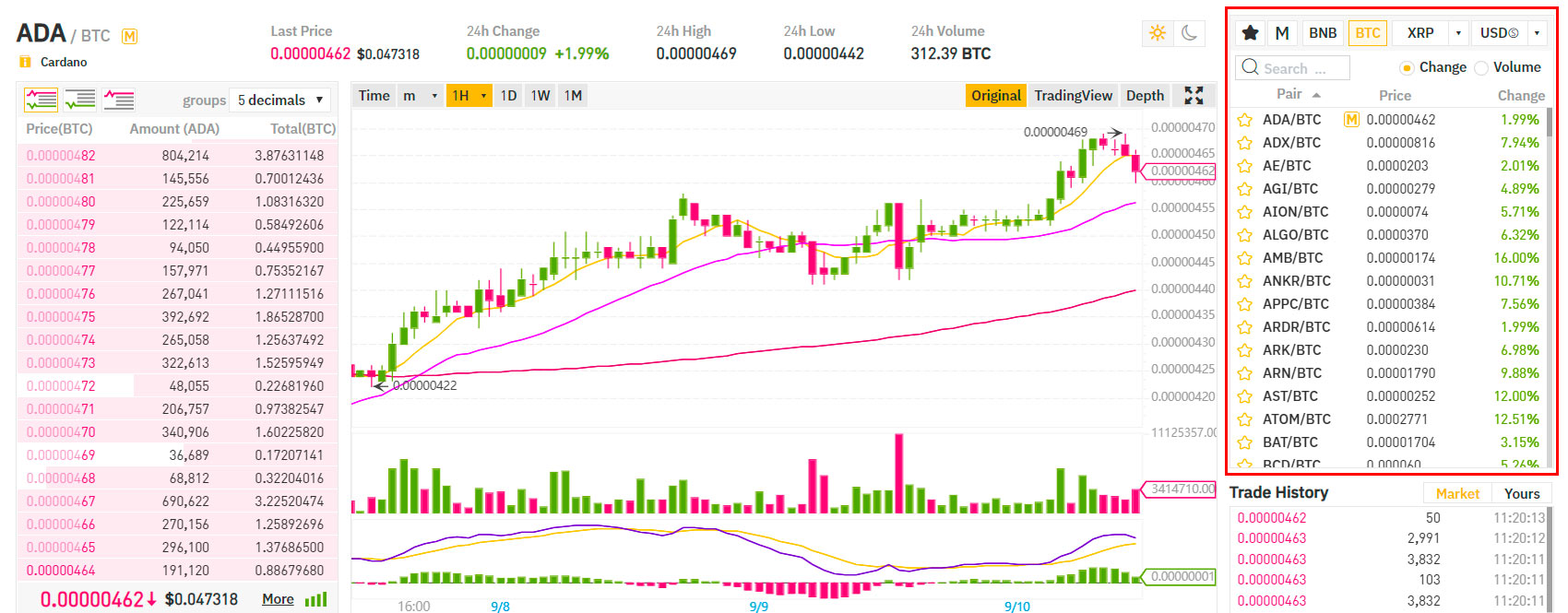
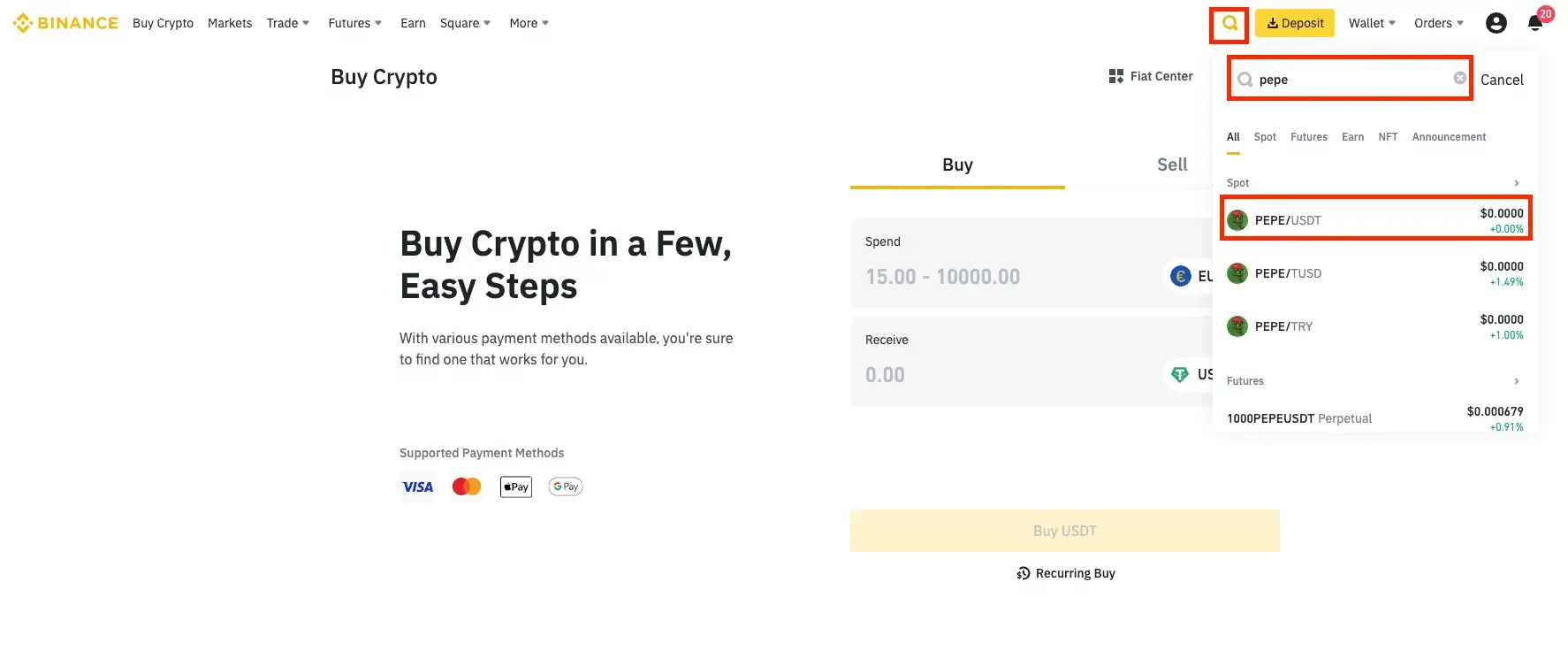
However, the fastest way to find a pair is by using the search function.
HOW TO SPOT TRADE ON BINANCE (BINANCE TUTORIALS FOR BEGINNERS)
This short clip from Crypto Giant demonstrates the most efficient way to find a pair using the search bar.
Watch from 02:32 to 02:59. Notice how you can type the name of a coin to see all its available pairs, or type the full pair to find it directly.
As the video showed, you simply need to find the search bar on the trading page (usually near the list of pairs) and type in the symbol of the cryptocurrency you're interested in.
2. On the Binance Mobile App
The process is very similar on the mobile app.
- Open the app and tap Trades at the bottom of the screen.
- At the top-left of the trade screen, you will see the current trading pair (e.g., BTC/USDT).
- Tap on this pair. A new screen will open with a search bar and a list of all available pairs.
- Use the search bar to find the asset you want to trade, just like on the website.
Your Turn: A Practical Exercise
To make sure you're comfortable with this, let's do a quick check. Log in to your Binance account (on web or mobile) and find the following:
- You have deposited Euros (EUR) and want to buy Ethereum (ETH). What is the exact name of the trading pair you would search for?
- You believe a coin called Solana (SOL) will perform well against Bitcoin (BTC). What trading pair would you use to trade your BTC for SOL?
- Search for the cryptocurrency Cardano (ADA). List two different stablecoin pairs available for trading it.
Take a moment to find these on the platform. This will build the muscle memory you need for when you're ready to place a real trade.
Conclusion
Great work! You now understand one of the most fundamental building blocks of trading. This knowledge is essential for navigating the market and ensuring you are buying or selling exactly what you intend to.
Key Takeaways:
- A trading pair (e.g., BTC/USDT) shows two assets that can be exchanged.
- The base currency (first) is what you buy or sell. The quote currency (second) is what its price is measured in.
- Pairs can be against stablecoins (BTC/USDT), fiat currencies (BTC/EUR), or other cryptocurrencies (ETH/BTC).
- The most efficient way to find a pair on Binance is by using the search function on the Spot Trading page.
What's Next?
You can now find the market you want to trade in. But what do all the numbers on the screen mean? In our next lesson, we will demystify the trading interface by learning to interpret the bid price, ask price, and the order book. This will show you how the market price is set in real-time and how you fit into that picture.