Welcome back! In our last lesson, we demystified the key metrics like ROAS and CPA that tell you whether your marketing is actually profitable. Understanding those numbers is essential, but they're the result of the choices you make upstream. The very first strategic choice is deciding where to spend your time and money.
With a dozen marketing channels all vying for your attention, it's easy to feel overwhelmed and spread your efforts too thin. This lesson will bring clarity and focus. We will identify which digital marketing channels are most relevant and effective for a new e-commerce business like your fitness equipment store. By the end, you'll have a clear, prioritized list of where to begin.
This is the final lesson in our foundational module. It bridges the "what" and "why" of digital marketing with the "how" and "where" of execution, setting you up perfectly for the hands-on work in the modules to come.
The Strategic Process of Channel Selection
Choosing your marketing channels isn't about guesswork; it's a deliberate process. You need to align your business goals and your understanding of your audience with the channels you select, and then test, analyze, and adapt as you gather data.
This image provides a great high-level overview of this strategic loop.
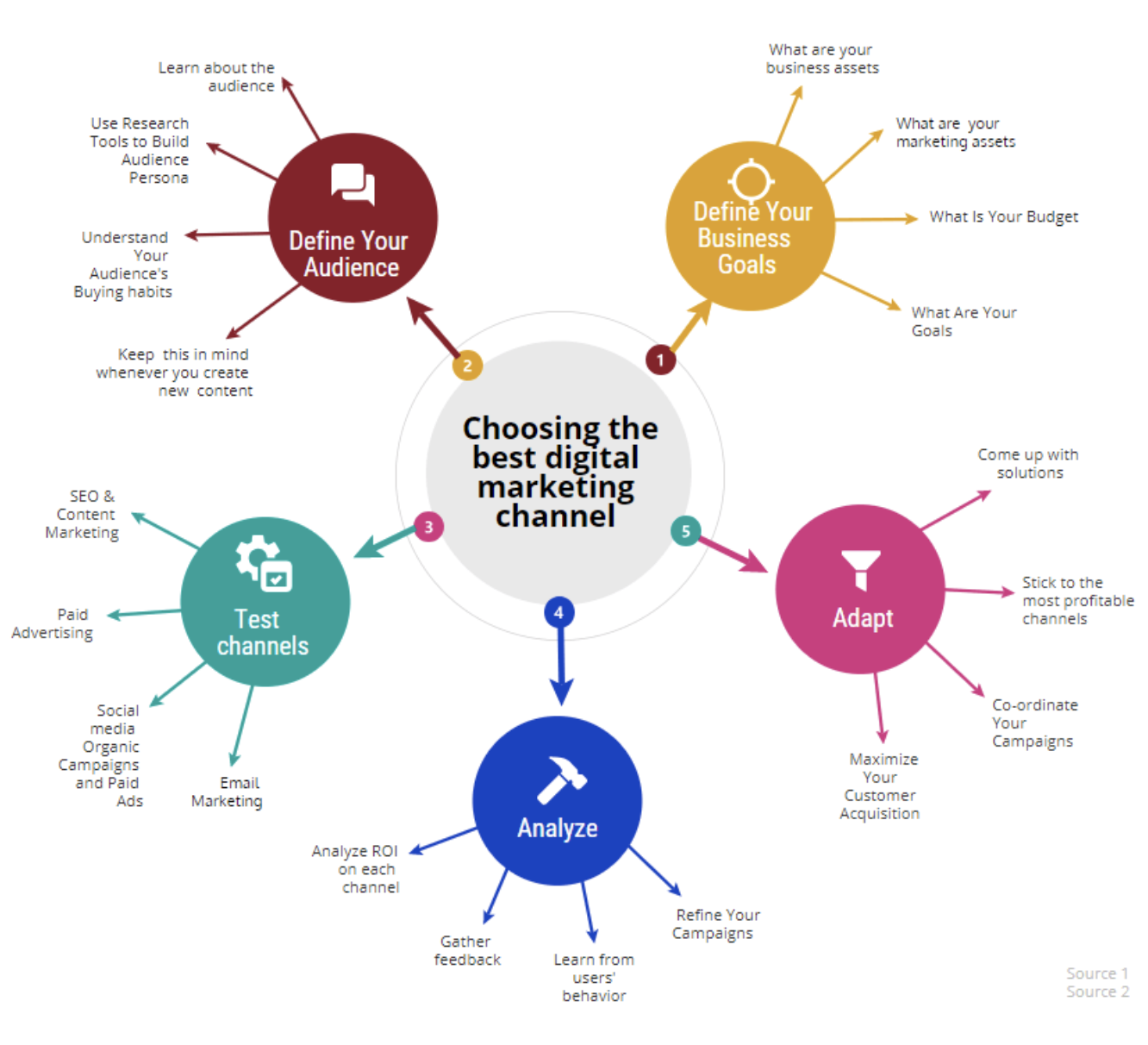
Today, we'll focus on making that initial, informed choice of which channels to test first.
The "Big Three" Channels for a New E-commerce Store
When you're just starting, you can't afford to be on every platform. You need to focus on channels that deliver the best return for a new product-based business. Experts often point to a core set of channels that capture customers who are ready to buy and help you build a long-term, profitable business.
The following reading directly answers the question of where a new store should focus its energy.
A Modern Marketing Strategy for Ecommerce Growth
This article from Rebus Advertising provides clear, no-nonsense advice for new e-commerce brands.
Please read the section titled "What Are the Best Marketing Channels for a New Store?". Pay close attention to the three channels recommended and the reasoning behind each.
As the article makes clear, the consensus for a new e-commerce store revolves around three key areas:
- Search Engine Optimization (SEO): This is your long-term strategy. By optimizing your site for search terms like "adjustable dumbbells for small apartments," you attract "free" traffic from people who are actively looking for the products you sell. It takes time, but it builds a sustainable asset.
- Google Shopping Ads: This is your tool for immediate, high-intent traffic. When someone searches for a product you sell, your ad with an image and price can appear right at the top of the results. It's one of the most direct ways to get in front of customers at the exact moment they're ready to make a purchase.
- Email Marketing: This is the only channel you truly own. While you "rent" space on Google and social media, your email list is a direct line to your most engaged customers. It's incredibly powerful for promoting sales, sharing new content, and driving repeat purchases with an extremely high return on investment.
The Modern Dropshipping Playbook: Start with Organic, Win with Content
The "Big Three" are essential, but for a brand-new dropshipping store with a limited budget, there's a crucial first step that many people miss: product and marketing validation. It's risky to spend money on Google Ads if you're not sure your product resonates with people or if you don't know which marketing angles work.
The modern, low-risk approach is to start with organic marketing to generate your first wave of attention and sales before you invest in paid ads. This strategy is perfectly suited for a dropshipping business.
The Last Shopify Dropshipping Guide You'll Ever Watch...
This video from e-commerce expert Nathan Nazareth offers a brutally honest and practical take on what it takes to succeed in dropshipping today. He explains why starting with organic marketing is a non-negotiable step.
Please watch the section where he outlines the "organic marketing" four-step process. He explains why you should avoid paid ads at the very beginning and how to use platforms like TikTok and Instagram Reels to build momentum without spending a dollar. Focus on the strategy from the four-step process.
This "organic first" strategy is your secret weapon. For your fitness equipment store, this could mean:
- Ordering a sample of your best-selling product.
- Creating short videos showcasing its unique features, how it solves a common problem (e.g., "how to get a full workout without leaving home"), or even just an unboxing.
- Posting these videos consistently on TikTok and Instagram Reels using trending sounds and relevant hashtags like #homegym #fitnessmotivation #tiktokmademebuyit.
This approach allows you to test your product's appeal and different marketing angles for free. The data and profits from your first organic sales then fuel a much smarter, more effective paid advertising strategy later on.
A Framework for Making Your Choice
So, you have a core set of recommended channels: SEO, Google Ads, Email, and Organic Social Media (TikTok/Instagram). Where do you start? The right answer depends on your specific situation.
The Bullseye Framework is a great way to visualize this process of prioritizing channels. You start by brainstorming possibilities (Outer Ring), then test the most promising ones (Middle Ring), and finally focus your resources on what is proven to work (Inner Core).

To decide which channels to move into your "promising" ring for initial testing, you can ask yourself a few simple questions.
Best Digital Marketing Channels for Beginners (explained)
This guide from Wave Connect offers a simple but powerful decision-making framework for entrepreneurs.
Scroll to the section titled "How to Choose the Right Channel for Your Business" and read the three key questions to ask yourself.
Let's apply this framework to your new store:
- How fast do you need results? Organic Social and SEO are slower, compounding channels. Google Ads can bring results faster, but at a cost.
- Do you have more money or more time? If you have more time, starting with Organic Social and SEO makes the most sense. If you have a budget you're willing to test, Google Ads can be added.
- Where are your customers? People looking for fitness solutions are definitely searching on Google. They are also heavily active on visual platforms like Instagram and TikTok, seeking inspiration and workout ideas.
For a new dropshipping store, the path is clear: start with the channels that require more time than money. This means prioritizing Organic Social Media to validate your product and Email Marketing to capture leads from day one. As you generate your first sales, you can reinvest profits into Google Shopping Ads for faster, targeted growth, all while working on your long-term SEO strategy.
Conclusion
You've now completed the foundational module of this course! You've learned what digital marketing is, how the funnel works, how to measure success, and now, where to focus your initial efforts.
Here are the key takeaways from this lesson:
- Focus is key. Don't try to be on every channel. For a new e-commerce store, a few core channels are all you need.
- The "Big Three" for e-commerce are SEO, Google Shopping Ads, and Email Marketing. They capture high-intent customers and build long-term value.
- The smartest, lowest-risk strategy for a new dropshipper is to start with Organic Social Media (TikTok/Instagram) to test your product and marketing angles before spending on ads.
- Use a simple framework—considering your time, budget, and audience location—to prioritize which channels you tackle first.
In our next lesson, we will begin Module 2, "Defining Your Customer and Market." We'll take the first and most important step in that process: creating a buyer persona. Understanding exactly who you're selling to is the key to making every channel you just learned about more effective.