Welcome to the final lesson of our course. We've journeyed from the foundational principles of movement and focus to the specific techniques for building strength and managing distractions. In our last lesson, you learned to create a workout log, a tool for capturing the raw data of your training. This log is your objective record of the stress you apply to your body.
Today, we will build the system that uses this data. This lesson is the capstone of the course, where we will integrate training, nutrition, study, and rest into a single, cohesive framework. Your background in chemical engineering has trained you to design, monitor, and optimize complex systems. We will now apply that same thinking to the most important system you will ever manage: your own life. The goal is not to create a rigid, minute-by-minute schedule, but to design a flexible, personalized template that guides your week, ensuring that all your goals receive the attention they need to flourish.
The Architecture of an Effective Week
Before building the template itself, we must understand the principles that make it work. A well-designed week is not about cramming more activities in; it's about arranging them intelligently to work with your body's natural rhythms, not against them.
For a scientific perspective on this, the Huberman Lab provides an excellent overview of how to structure your day around biological signals.
Building Your Daily Routine - Huberman Lab
This resource from Huberman Lab explains how to align your daily activities with your internal biological clocks for optimal performance.
Please read the first four main sections of the article. Start with the introduction, then continue through the sections on Circadian Rhythm, Meal Timing, and Exercise Timing. As you read, focus on these key engineering-like principles: Input Timing: How the timing of inputs like light, food, and exercise acts as a control signal for your body's systems (circadian rhythm). Operating Cycles: The concept of 90-minute ultradian cycles for focused work. System States: How different activities (high-intensity exercise vs. a walk) are better suited for different times of the day to either increase alertness or promote recovery.
These principles form the "governing equations" for our weekly design. Waking at a consistent time, getting morning sunlight, timing your meals, and placing workouts strategically are not just "healthy habits"; they are control levers for optimizing your energy and focus.
The Building Blocks of Your Template
With the guiding principles established, we can define the core components that your weekly template will organize. A balanced week accommodates several distinct types of activities. The "How I Structure My Days for Deep Work" illustration provides a great visual model for this kind of time blocking.

Your weekly template should account for these key blocks:
- Deep Work: Focused, uninterrupted blocks for your most demanding chemical engineering coursework. This is where real academic progress happens.
- Shallow Work: Administrative tasks like answering emails, planning, or organizing notes. Batching these together prevents them from fragmenting your day.
- Training: Your scheduled push, pull, and legs workouts, as designed in the previous lessons.
- Nutrition: Time for meal preparation and eating. Planning this reduces decision fatigue and ensures you meet your nutritional targets.
- Recovery & Leisure: This includes your sleep schedule, active recovery (like walking), hobbies (writing, illustration), and social time. This is non-negotiable for long-term sustainability.
Constructing Your Integrated Template in Excel
Now, let's move to the practical application: building the template. Given your technical background, a spreadsheet (like Excel or Google Sheets) is an ideal tool. It's infinitely customizable, data-driven, and you have complete ownership over it—no subscriptions or rigid app interfaces.
The following guide from Setgraph provides a step-by-step process for creating a workout template, but we will adapt its principles to build our comprehensive weekly lifestyle template.
Workout Schedule Template Excel: Free Downloads + ... - Setgraph
This article provides a fantastic, detailed guide on how to build and customize a workout schedule in Excel. We'll use its methods to create a broader life-planning tool.
First, read the section How to Create a Template (Steps 1-5). This covers the basic mechanics of setting up a sheet, using data validation, and adding formulas. Next, focus on the organizational structure in the section Creating Multiple Sheets. This is key to keeping your template clean and functional. Finally, read the section on Nutrition Integration to see how to expand the template beyond just exercise.
Your Action Plan: Build the Workbook
Open a new spreadsheet and create the following sheets, as inspired by the resource:
Dashboard: This will be your main weekly view. Create a grid with days of the week as columns (Monday-Sunday) and time blocks as rows (e.g., in 1-hour increments from 6:00 AM to 11:00 PM).Workout Log: Copy or move the workout log you designed in the previous lesson into this sheet. This is your database of executed training sessions.Meal Planner: A simple sheet to list meal ideas, recipes, and a grocery list, helping you with your nutritional goals from Module 4.Priorities: A space for your daily Top-3 priorities, as we discussed in Module 2.
On your Dashboard sheet, start blocking out your ideal week. Use the principles from the Huberman article and the blocks we defined. For example:
- Mon/Wed/Fri 7:00 AM: Wake, Hydrate, Sunlight (15 min)
- Mon/Wed/Fri 9:00 AM - 12:00 PM: Deep Work Block 1 (e.g., Thermodynamics problem set)
- Mon 12:30 PM - 1:30 PM: Training (Push Day)
- Mon 1:30 PM: Post-Workout Meal
- Mon 3:00 PM - 5:00 PM: Deep Work Block 2 (e.g., Transport Phenomena reading)
Fill in your classes, training sessions, dedicated meal times, and at least 8 hours for sleep. Be realistic. The goal is to create a default plan, a starting point for your week.
Making the System Work: Flexibility and Consistency
A plan is useless if it's too brittle to survive contact with reality. Your preference for a "go with the flow" approach is valid; the key is to flow with intention. This is where we bring in strategies for habit formation and distraction management.
This video offers excellent, practical advice on how to manage your time without being dogmatic.
I’m begging you to manage your time
The video "I’m begging you to manage your time" from PCFGSTUDY offers powerful, non-preachy strategies for making a plan stick.
Watch these key segments: Setting Clear Goals: This explains how to define what you'll do within a time block (e.g., "Write 500 words for report" instead of just "Work on project"). Fitting Study In: Shows how to use small, in-between moments effectively. Eliminating Distractions: Provides practical techniques to manage your phone and other distractions during your deep work blocks. Personalization: This reinforces that the best system is one you customize and adjust for yourself.
To build consistency, you can use habit stacking, where you anchor a new habit to an existing one.
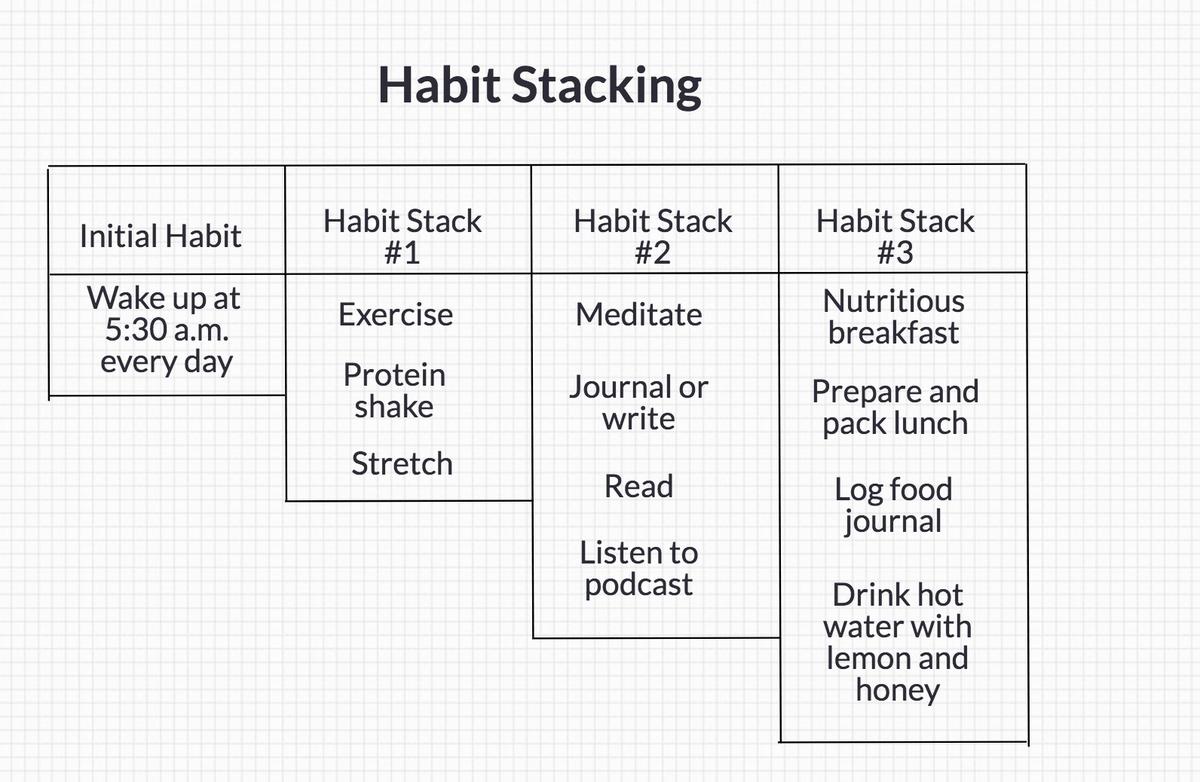
Use this principle in your weekly template. Plan your workout immediately after a class, or plan a 15-minute walk for sunlight immediately after waking up. This creates a logical flow and reduces the mental energy needed to start.
Conclusion
This lesson has provided you with the principles and tools to design a personalized weekly operating system. You are no longer just reacting to the day; you are architecting it.
Key Takeaways:
- Integrate, Don't Isolate: Your weekly template is a tool to ensure training, nutrition, study, and rest work together, not compete for resources.
- Plan with Principles: Structure your day around your natural biological rhythms (circadian and ultradian) to maximize energy and focus.
- Use a Flexible Framework: A spreadsheet template provides a powerful, customizable structure that you control. It's a map, not a cage.
- Plan Your Week, Win Your Day: Use your template to set a weekly game plan (e.g., on Sunday evening). Then, use daily priorities and time blocks to execute it, adjusting as needed.
This is the end of the formal lessons, but it is the beginning of a lifelong process of application and refinement. You now have a complete toolkit to build the body and life you want. Continue to use your workout log to gather data, use your weekly template to guide your actions, and always remain curious. Adjust the system based on the results you get. You have the analytical mind to do this effectively. Good luck.