Introduction
Welcome back! In our last lesson, we explored the "what" of fusion design by describing how Indian textiles and color palettes are adapted for Western bikini silhouettes. We covered techniques like digital printing to mimic traditional fabrics and analyzed innovative hybrid garments like the Bikini Sari.
Today, we shift our focus from the "what" to the "who." This lesson addresses the learning outcome: to analyze the role of prominent Bollywood costume designers in pioneering fusion swimwear. We will examine the careers and methodologies of two of the most influential figures in Bollywood fashion: Manish Malhotra and Anaita Shroff Adajania. Understanding their distinct approaches—one as a heritage-focused designer, the other as a trend-setting stylist—is crucial for your goal of building a design repertoire. It will reveal how different creative philosophies can lead to pioneering work in fusion style.
1. The Designer as Storyteller: Manish Malhotra
Manish Malhotra is one of the most celebrated names in Indian fashion. He is largely credited with transforming Bollywood costume design from a secondary element into an integral part of character development and storytelling. His work established that clothing on screen could not only define a character but also set major fashion trends for a generation.
To understand his impact, let's start by reading about his revolutionary approach.
How Manish Malhotra Redefined Bollywood's Styling - Teen Vogue
This article from Teen Vogue, 'How Manish Malhotra Redefined Bollywood's Styling,' details his career and design philosophy. It provides excellent insight into how he changed the industry.
Please read the introduction and the following section, which begins 'While this vision shone through...'. Focus on Malhotra's initial philosophy of reading the script to understand the character and how this led to creating iconic, trend-setting looks.
As the article explains, Malhotra's key innovation was his insistence on integrating costume design with the narrative. Before him, clothing choices were often generic. He pioneered a character-driven approach, where every outfit was a deliberate choice to express a character's personality, background, and emotional arc.
While he is most famous for his bridal and traditional wear, his philosophy of modernizing Indian aesthetics is central to fusion design. He doesn't just copy the past; he reimagines it. Let's look at how his love for Indian heritage informs his work.
How Manish Malhotra Redefined Bollywood's Styling - Teen Vogue
Let's continue with the same Teen Vogue article to explore Malhotra's inspirations and his views on evolving fashion.
Now, read the sections starting with 'Despite styling choices being deeply rooted...' and 'Whether he is seeking to dress a generation...'. Pay attention to his commitment to reviving traditional crafts like 'chikankari' and his belief in finding the balance between heritage and evolution.
Malhotra's role as a pioneer in fusion, therefore, comes from his ability to:
- Revive Heritage: He actively works with artisans to bring age-old crafts like chikankari (a traditional embroidery style) into his contemporary collections.
- Modernize Silhouettes: He applies these traditional crafts and motifs to modern silhouettes, making them relevant and desirable for a global audience.
- Balance Tradition and Trend: He successfully navigates the "gray area" between cultural preservation and ever-changing fashion, creating pieces that feel both timelessly Indian and fashion-forward.
His approach is that of a heritage modernizer, starting with a deep respect for Indian craft and reinterpreting it for the present day.
2. The Stylist as Curator: Anaita Shroff Adajania
Where Manish Malhotra's approach is rooted in designing from scratch, Anaita Shroff Adajania represents a different, yet equally influential, model: the stylist as a curator. She is considered one of India's first and most powerful fashion stylists, who pioneered a new way of creating looks for films by sourcing and combining garments from designers all over the world.
Let's watch a short interview where she explains the "newness" she brought to Bollywood styling.
Secrets of Being a Style Guru: The Accidental Influencer- Anaita Shroff Adajania: EP4 | WYLD
In this clip from her interview with WYLD, 'Secrets of Being a Style Guru,' Anaita Shroff Adajania discusses how she established the role of the stylist in an industry previously dominated by designers.
Watch the introduction (00:37-01:38) to understand her influential status, and then the section from 04:26 to 05:33 where she explains how film styling changed from designers making everything to stylists curating looks.
Adajania's method is about creating a visual narrative through curation. She acts as a creative director, pulling from local designers, international brands, and even custom-made pieces to assemble a look that perfectly captures a specific mood or "vibe."
This approach is particularly effective for swimwear, where a single piece can create an iconic movie moment. A recent example of her work is the much-talked-about bikini look for Kiara Advani in the upcoming film 'War 2'.
War 2: What All Went Behind Kiara Advani's Bikini Look? Stylist ...
This article from News18, 'War 2: What All Went Behind Kiara Advani's Bikini Look?', provides a fantastic breakdown of Adajania's thought process for creating a modern, impactful bikini look.
Read the article, focusing on the quotes from Anaita. Note the specific elements she chose—the unusual color, the simple cut, the 'bikini charms,' and the metallic sheen—and her rationale for combining them.
Adajania's role as a pioneer in fusion swimwear comes from her ability to:
- Synthesize Influences: She masterfully blends different aesthetic concepts, like the "unapologetic glamour of the disco era" with a "fresh, sharp, and unmistakably Gen Z" feel, into one cohesive look.
- Innovate with Details: Her introduction of "bikini charms" is a perfect example of pioneering a new micro-trend. It’s a small detail that adds novelty and personality.
- Prioritize the 'Vibe': Her goal was to create a feeling of ease and confidence—"totally free in her body." The fusion here is conceptual, blending global trends and unique details to achieve a specific on-screen emotion.
Her approach is that of a global curator, sourcing and synthesizing disparate elements to create something entirely new and memorable.
3. Comparing the Pioneers
Manish Malhotra and Anaita Shroff Adajania represent two distinct paths to pioneering fusion fashion in Bollywood. Both have been instrumental, but their methodologies differ significantly. As a statistician, you'll appreciate organizing these differences into a clear comparative framework.
| Feature | Manish Malhotra (The Heritage Modernizer) | Anaita Shroff Adajania (The Global Curator) |
|---|---|---|
| Primary Role | Costume Designer | Fashion Stylist / Creative Director |
| Core Method | Designs garments from scratch, deeply rooted in script and character. | Curates and assembles looks from various local and global sources. |
| Source of Fusion | Modernizing traditional Indian crafts, textiles, and silhouettes. | Blending global trends, aesthetic concepts, and innovative details. |
| Starting Point | Indian heritage and craftsmanship. | The desired on-screen "vibe" or character mood. |
| Example of Output | A lehenga featuring revived chikankari embroidery for a modern bride. | A neon bikini with custom charms and a metallic finish for a "hot" scene. |
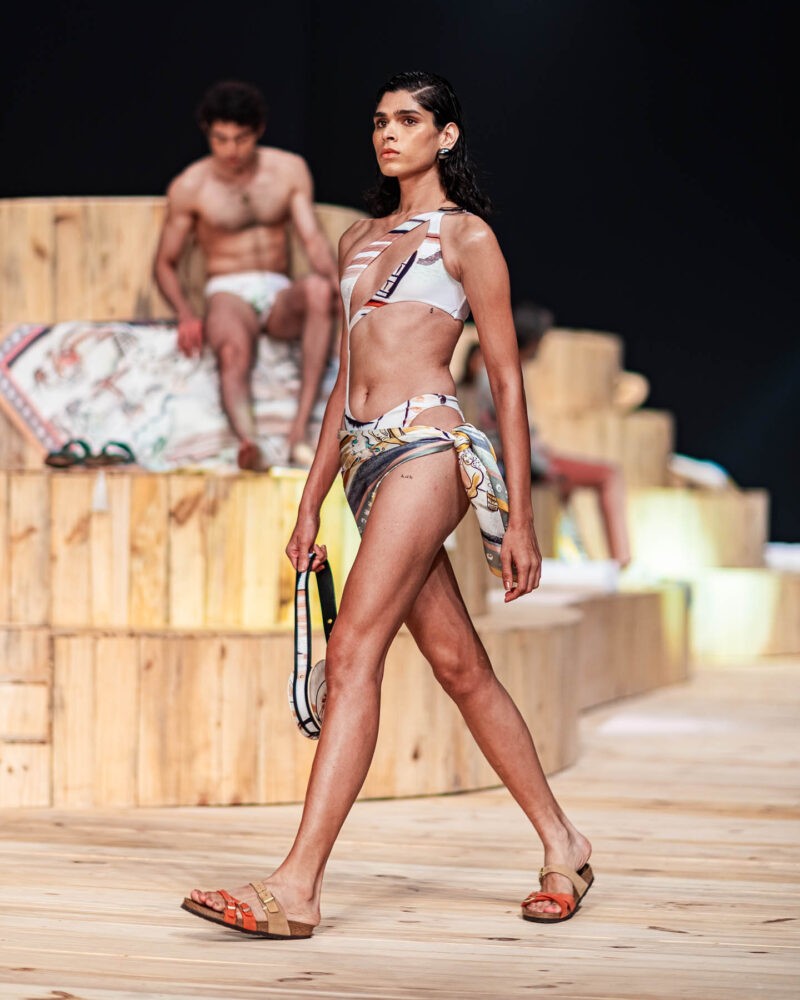
It's also worth noting a third type of pioneer: the niche innovator, exemplified by Shivan & Narresh, whom we discussed in the last lesson. They focus specifically on a product category (luxury swimwear) and pioneer fusion through structural innovation, like their iconic Bikini Sari. Their work often features clean, modern silhouettes combined with prints inspired by Indian art and nature, representing a high-fashion, design-led approach to fusion.
Conclusion
In this lesson, we analyzed the pivotal roles of prominent designers and stylists in shaping Bollywood's fusion swimwear landscape. We've seen that being a pioneer isn't just about one thing; it can mean breathing new life into heritage, masterfully curating global trends, or inventing entirely new garment forms.
Key Takeaways:
- Manish Malhotra pioneered a character-driven approach, fusing fashion with narrative. His contribution to fusion lies in modernizing and popularizing traditional Indian crafts for a contemporary audience.
- Anaita Shroff Adajania established the role of the stylist in Bollywood. Her pioneering work in fusion involves curating looks by synthesizing global trends, innovative details, and specific aesthetic "vibes" to create iconic moments.
- Pioneering fusion can take many forms: reinterpreting heritage (Malhotra), curating concepts (Adajania), or structural innovation (Shivan & Narresh).
Preview of the Next Lesson:
Having explored the "what" (textiles), the "how" (fusion methods), and the "who" (the pioneers), we are now perfectly equipped to analyze specific examples. In the next lesson, we will conduct our first case study for this module: Deconstructing a Bollywood bikini that heavily incorporates traditional Indian embellishments or embroidery. This will allow you to apply all the concepts we've discussed to a tangible on-screen look.