Hello! Welcome to the fourth lesson in our module on "Molecular Biology and Genetics."
In our previous lesson, we explored the world of epigenetics, discovering how environmental factors and lifestyle can add chemical "tags" to our DNA that modify gene expression without changing the DNA sequence itself. We saw this as a potential molecular explanation for how Ayurvedic principles of diet and routine influence health.
Today, we shift our focus from the expression of genes to the DNA sequence itself. The learning outcome for this lesson is to explain how genetic variations (polymorphisms) can affect protein function and lead to individual differences. We all have tiny variations in our DNA that make us unique. These variations are a major reason why individuals can have different physical traits, different susceptibilities to diseases, and even different reactions to the same medicine or herb.
This concept provides another powerful scientific lens through which to view the Ayurvedic principle of Prakriti, or an individual's unique constitution. By understanding the genetic basis of individuality, we take another step toward bridging the gap between ancient wisdom and modern molecular science.
1. From DNA Variation to Protein Malfunction
The foundation of genetic variation is a mutation, which is simply a change in the DNA sequence. These changes can be large or small, and their effects can range from harmless to life-altering.
To start, let's get a clear overview of what mutations are and the different forms they can take.
This video, 'Mutations (Updated)' from Amoeba Sisters, provides a friendly and clear introduction to the fundamental types of genetic mutations.
Please watch the following two segments: 00:18 - 01:32: This part defines mutations and introduces the idea that they can be neutral, harmful, or helpful. 01:58 - 03:08: This segment explains key types of gene mutations like substitution, insertion, and deletion, and introduces the critical concept of a 'frameshift' mutation. Focus on understanding how a simple change in a DNA base can potentially lead to a different protein.
As the video explained, a change in the DNA code can result in a change in the protein it codes for. How does this happen?
Recall the central dogma: DNA is transcribed into mRNA, and mRNA is translated into a sequence of amino acids. These amino acids form a chain, which is the primary structure of a protein. This chain then folds into a complex three-dimensional shape, which is essential for the protein to do its job.
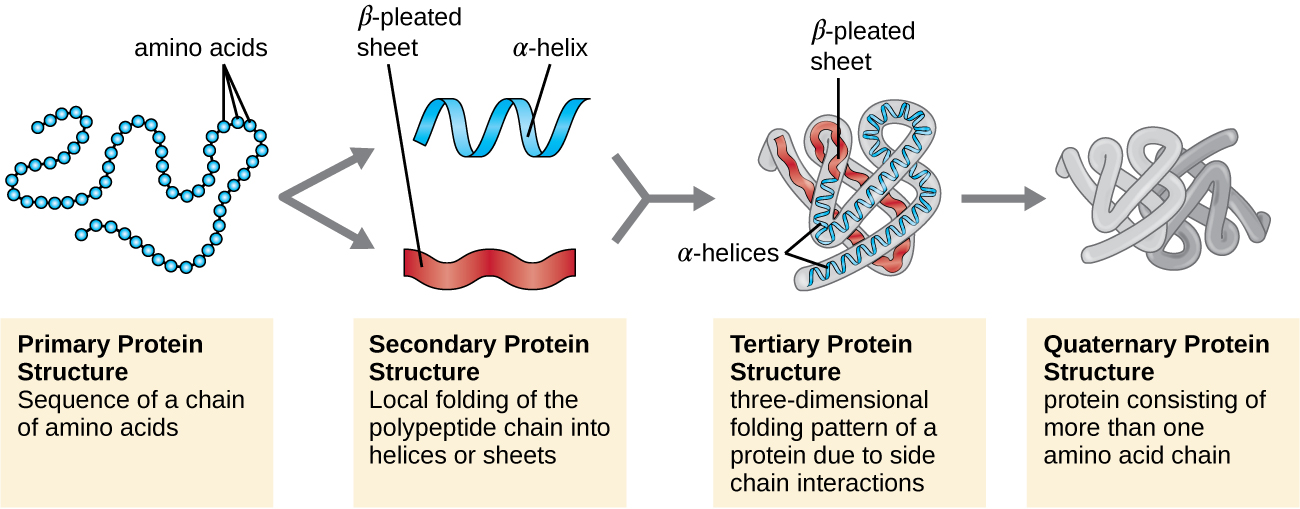
A change in just one amino acid can sometimes have dramatic consequences for the protein's final shape and function. Let's see a classic, real-world example of this.
We'll return to the 'Mutations (Updated)' video to look at the example of sickle cell anemia, which is a powerful illustration of our learning outcome.
Watch the segment from 05:15 to 06:40. Pay close attention to how a single gene mutation in hemoglobin leads to a change in red blood cell shape and causes a disease. Also, note the interesting point about how being a 'carrier' can confer an advantage.
The sickle cell anemia example is perfect: a single nucleotide substitution changes one amino acid in the hemoglobin protein. This single change causes the protein to fold incorrectly, leading to sickle-shaped red blood cells that can't carry oxygen effectively. This is a direct link from a genetic variation to an altered protein function, leading to a significant individual difference (in this case, a disease state).
2. Genetic Polymorphisms: The Common Variations
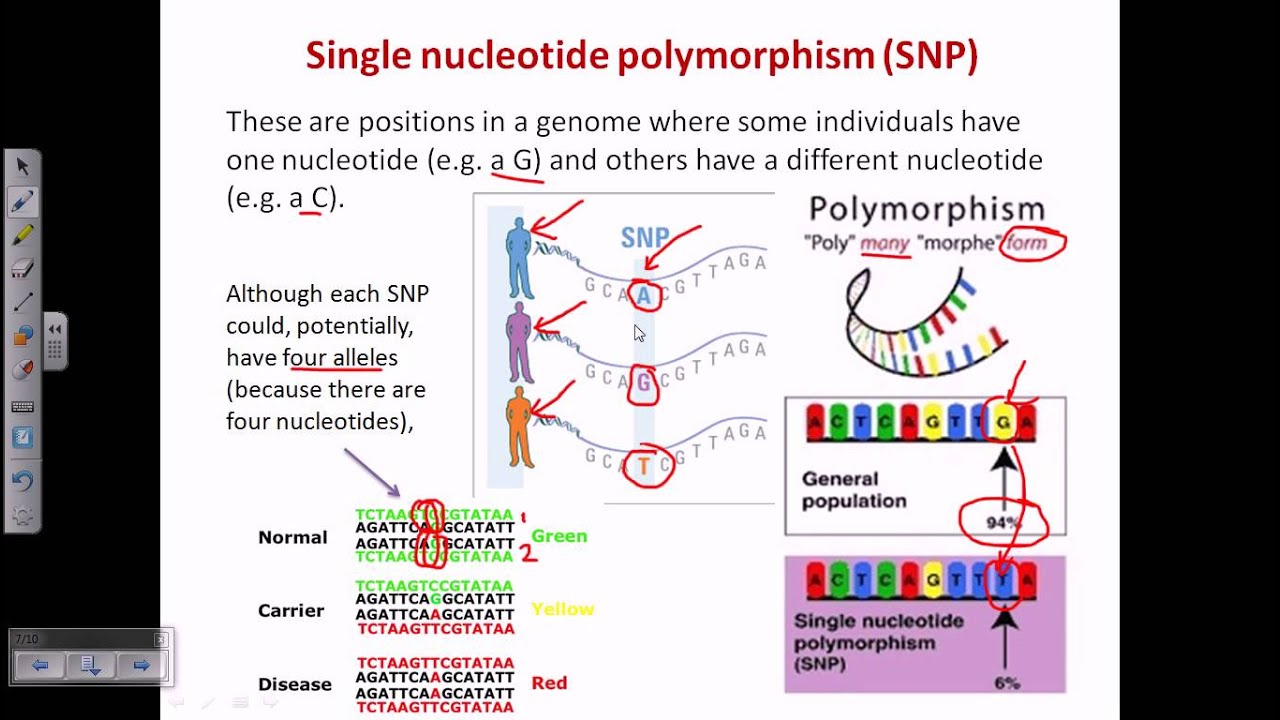
While "mutation" can sound alarming, many genetic variations are very common in the population and don't necessarily cause disease. When a specific variation is present in more than 1% of the population, scientists call it a genetic polymorphism.
The most common type of polymorphism is a Single Nucleotide Polymorphism, or SNP (pronounced "snip").
To understand SNPs and how they differ from rare disease-causing mutations, let's consult a guide from the Genetic Science Learning Center.
This article, 'Making SNPs Make Sense,' provides a clear definition of SNPs and explains how they contribute to individual differences.
Please read the following sections: Start at the heading 'SNP Quick Reference' and read down to the heading 'SNPs and disease-causing mutations: Not the same!'. This will give you the formal definition of a SNP. Continue reading the section 'SNPs and disease-causing mutations: Not the same!'. This is a crucial part of the article. It distinguishes common SNPs from rare mutations and categorizes SNPs into different functional types.
From that reading, here are the key distinctions:
- Frequency: SNPs are common (>1% of the population), while disease mutations are rare.
- Effect: SNPs do not always affect protein function, but they can. They are categorized based on their location and effect:
- Linked SNPs: Occur outside of genes. They don't change proteins but can be used as markers to track the inheritance of a nearby gene.
- Causative SNPs: Directly affect a protein's function or expression levels.
- Coding SNPs: Occur within the gene's coding region and change the amino acid sequence (like the sickle cell mutation).
- Non-coding SNPs: Occur in a gene's regulatory region (like the promoter) and change how much of the protein is made. This connects back to our previous lessons on gene regulation.
3. Pharmacogenomics: How Genetic Variation Affects Our Response to Medicines
Perhaps the most practical and fascinating application of this knowledge is in pharmacogenomics—the study of how a person's genetic makeup affects their response to drugs. Your BAMS training has taught you that a substance (dravya) that is beneficial for one person might be ineffective or even harmful for another. Pharmacogenomics provides a molecular explanation for this phenomenon.
Many drugs and herbal compounds are processed in the body by a family of liver enzymes called the Cytochrome P450 (CYP450) enzymes. Genetic polymorphisms in the genes that code for these enzymes can make them more or less active.
Let's watch a video that illustrates this with a powerful real-world story.
Pharmacogenomics: Genes and Medicine
The video 'Pharmacogenomics: Genes and Medicine' from Medicurio begins with a tragic but highly informative case study that perfectly illustrates the importance of genetic variation in drug metabolism.
Watch from the beginning to 04:17. As you watch, focus on: The role of the CYP2D6 enzyme in metabolizing codeine. How different genetic variants (alleles) lead to different metabolizer types (poor, rapid, ultra-rapid). Why the same dose of codeine can be ineffective for one person but toxic for another.
The case of codeine metabolism is a striking example.
- Codeine is a prodrug, meaning it is inactive until it is metabolized into its active form, morphine.
- The CYP2D6 enzyme performs this conversion.
- Polymorphisms in the CYP2D6 gene create different versions of the enzyme:
- Poor Metabolizers: Have non-functional enzymes. They convert very little codeine to morphine and get little to no pain relief.
- Ultra-rapid Metabolizers: Have extra copies of the gene and/or highly active enzymes. They convert codeine to morphine very quickly, leading to dangerously high levels and a risk of overdose.
This single example demonstrates how a SNP can alter an enzyme's function, leading to profound individual differences in drug response.
This principle applies to a vast number of drugs and enzymes. Let's look at a few more examples from a clinical article to solidify your understanding.
Genetic Factors in Drug Metabolism
This article, 'Genetic Factors in Drug Metabolism,' provides a clinical overview of how genetic polymorphisms affect drug response. It reinforces the concepts from the video with additional examples.
Please read the following parts: 'Definitions' (Section 1): To review the key terms. 'Pharmacokinetics' (Section 2): Read this section to understand how polymorphisms in CYP450 enzymes create different metabolizer phenotypes. Look at Table 3, which summarizes the consequences for prodrugs vs. active drugs. Skim the subsections 'Cytochrome P450 2C9 (CYP2C9)', 'Cytochrome P450 2C19 (CYP2C19)', and 'Cytochrome P450 2D6 (CYP2D6)' (Sections 3, 4, 5): Note the drug examples for each enzyme (e.g., warfarin, omeprazole, codeine) and how poor or ultra-rapid metabolism affects the outcome. Skim the subsection on Asthma under 'Pharmacogenomics in Common Conditions' (Section 7): This provides an example of a polymorphism in a drug target (the beta2 receptor), not just a metabolizing enzyme, affecting response to albuterol.
These resources show that genetic variations can affect protein function in at least two major ways relevant to pharmacology:
- Pharmacokinetics (what the body does to the drug): By changing the function of metabolizing enzymes (like CYP2D6), which affects how quickly a drug is activated or cleared from the body.
- Pharmacodynamics (what the drug does to the body): By changing the structure of a drug's target, such as a receptor, making the drug more or less effective at binding and producing its effect.
Test your understanding!
Omeprazole (a common acid-reflux medication) is an active drug that is inactivated by the CYP2C19 enzyme. Based on what you've learned, what would you predict for a patient who is a "poor metabolizer" for CYP2C19? Would they require a higher or lower dose than average for effective treatment?
Show answer
A patient who is a "poor metabolizer" for CYP2C19 has a less functional version of the enzyme. This means they will inactivate and clear the active drug, omeprazole, much more slowly than the average person. The drug will remain at higher concentrations in their body for longer.
Therefore, they would likely experience a stronger effect and may require a lower dose to achieve the desired acid suppression while minimizing the risk of side effects from excessive drug accumulation. This is the opposite of the codeine (prodrug) example.
Conclusion
In this lesson, we have moved from changes in gene expression to changes in the gene sequence itself. We've seen how common genetic variations, particularly SNPs, can have a significant impact on an individual's biology.
Key Takeaways:
- Genetic variations are changes in the DNA sequence that can alter the amino acid sequence of a protein, thereby changing its structure and function.
- Single Nucleotide Polymorphisms (SNPs) are common variations (>1% of the population) that contribute significantly to human diversity.
- Pharmacogenomics is the study of how these variations lead to individual differences in drug metabolism (pharmacokinetics) and drug targets (pharmacodynamics).
- Understanding an individual's "metabolizer phenotype" (e.g., poor, intermediate, or ultra-rapid) can help predict their response to certain medications, paving the way for personalized medicine.
- This concept of inherent biological individuality provides a strong scientific parallel to the Ayurvedic concept of Prakriti.
Preview of the Next Lesson:
You have now explored several key molecular mechanisms that create individual differences: the regulation of gene expression, epigenetics, and genetic polymorphisms. In our final lesson of this module, we will put all these pieces together. The goal will be to relate these molecular mechanisms to potential variations in an individual's response to treatments, creating a holistic, integrated view of what makes each person's response to therapies—whether a modern drug or an Ayurvedic herb—so unique.