Hello! Welcome to our next lesson.
In our last session, we focused on crafting an integrative treatment plan, using the example of a diabetic foot ulcer to demonstrate how to sequence modern and Ayurvedic interventions effectively. We established that a well-designed plan is just the starting point. The crucial next step is to track its effectiveness.
This brings us to today's topic. You can't manage what you don't measure. Once a treatment plan is in motion, how do we know if it’s working? How do we validate our approach and make necessary adjustments? This lesson is dedicated to answering that question. By the end of our session, you will be able to select appropriate traditional Ayurvedic parameters and modern biomedical markers to monitor treatment progress.
This skill is fundamental to building a credible and effective integrative practice. It allows you to create a feedback loop, using evidence from both systems to guide your clinical decisions and demonstrate tangible results.
1. The Two Lenses of Monitoring
An integrative practitioner views a patient's progress through two complementary lenses.
- The Ayurvedic Lens: This provides a rich, qualitative, and holistic assessment of the person's state of being. It focuses on the balance of functional principles (Doshas), the efficiency of metabolic processes (Agni), the quality of tissues (Dhatus), and the clarity of channels (Srotamsi). It captures the patient's subjective experience of well-being.
- The Modern Biomedical Lens: This provides precise, quantitative, and objective data. It measures specific molecules, cells, and physiological functions, offering a high-resolution snapshot of particular biological processes.
The power of integrative monitoring lies in using both lenses simultaneously. A change in an objective biomedical marker should, ideally, correlate with an improvement in a holistic Ayurvedic assessment. This synthesis provides a much more complete picture of healing than either system could offer alone.
2. Traditional Ayurvedic Monitoring Parameters
In Ayurveda, monitoring progress goes far beyond simply asking if the main symptom has disappeared. It involves a comprehensive assessment of the entire system returning to a state of balance (Svasthya).
Clinical Assessment (Ashta Sthana Pareeksha)
A skilled Ayurvedic physician continuously observes changes in the patient's physical signs. Tongue diagnosis (Jihva Pareeksha) is a particularly powerful tool for this.

As you can see, the change in the tongue's appearance provides a direct visual indicator of improved digestion and reduced Ama. Other key clinical parameters include:
- Pulse (Nadi): Assessing changes in the pulse to track the state of the Doshas.
- Stool (Mala): Observing improvements in consistency, frequency, and odor, which reflects the health of the digestive tract and Agni.
- Urine (Mutra): Noting changes in color, frequency, and clarity.
- General Appearance (Akriti): Observing healthier skin tone, brighter eyes, and increased vitality.
Conceptual and Subjective Assessment
Beyond physical signs, we monitor the foundational concepts of Ayurveda:
- Agni Status: Has the patient’s metabolic fire improved? For example, a patient with hypothyroidism may initially present with Manda Agni (sluggish metabolism). A key sign of progress is the restoration of Sama Agni, indicated by a healthy appetite, proper digestion without bloating or heaviness, and increased energy.
- Dosha Balance: Are the signs of the aggravated Dosha subsiding? For a Vata imbalance, we would look for reduced anxiety, better sleep, less bodily dryness, and more regular bowel movements.
- Mental State (Manas): Is the patient experiencing greater mental clarity, emotional stability, and a sense of calm (Sattva)?
Let's see how this applies in practice by looking at thyroid disorders.
An Ayurvedic Perspective Of Thyroid Disorder | With Dr Vignesh Devraj & Dr Alka Vijayan
In this video, 'An Ayurvedic Perspective Of Thyroid Disorder', Dr. Alka Vijayan discusses the Ayurvedic parameters used in assessment and monitoring. Let's focus on her explanation of Agni.
Please watch the segment from 18:38 to 21:50. Dr. Vijayan explains the difference between Manda Agni (sluggish digestion) and Vishama Agni (erratic digestion) in thyroid patients. Notice how she emphasizes that monitoring the type of Agni is crucial for guiding treatment, as a hypothyroid patient might not always have the expected Manda Agni.
As the video highlights, correctly identifying and monitoring the state of Agni is a critical Ayurvedic parameter. A treatment plan would aim to shift the patient from a state of Manda or Vishama Agni towards a balanced Sama Agni.
3. Modern Biomedical Markers
Biomedical markers are objective characteristics that can be measured as an indicator of a normal biological process, a pathogenic process, or a response to a therapeutic intervention.
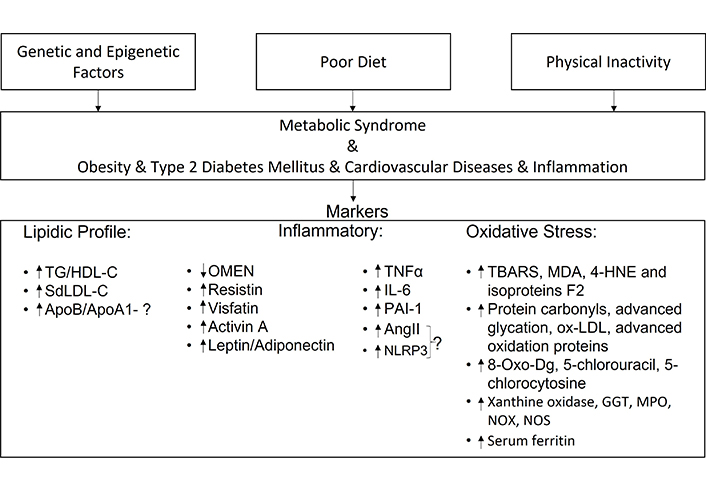
The choice of markers depends entirely on the condition being treated. Let's return to our thyroid example to see which specific markers are relevant.
An Ayurvedic Perspective Of Thyroid Disorder | With Dr Vignesh Devraj & Dr Alka Vijayan
Now let's look at the modern tests used for thyroid conditions, as discussed in the same video.
Please watch the section from 32:41 to 36:02. Dr. Vijayan lists the standard biomedical tests she uses. Pay attention to the comprehensive panel she recommends beyond just TSH.
From the video, we can compile a list of key biomedical markers for monitoring a thyroid patient:
- Thyroid Function Tests (TFTs): TSH, T3, T4 (and their free forms, fT3, fT4).
- Autoimmune Markers: Anti-TPO and Anti-thyroglobulin antibodies (especially for Hashimoto's).
- Associated Nutritional Markers: Vitamin D, Vitamin B12, and Hemoglobin.
Monitoring these provides a quantitative measure of the thyroid gland's function, the autoimmune process, and the body's overall nutritional status, all of which are interconnected.
Test your understanding!
A patient with hypothyroidism begins an Ayurvedic treatment plan. After three months, their TSH level has not changed significantly, but the patient reports a 50% reduction in fatigue, improved sleep, and better digestion. From an integrative perspective, is the treatment failing? Why or why not?
Show answer
From a purely biomedical perspective focused only on the TSH number, one might conclude the treatment is failing. However, from an integrative perspective, this is a sign of significant progress. The subjective improvements (less fatigue, better sleep) and the change in Ayurvedic parameters (improved digestion, indicating a shift towards Sama Agni) are valid and important indicators of healing. As Dr. Vijayan mentions at the end of the video (56:32), the body often shows signs of improvement before lab reports normalize. The treatment is likely addressing systemic imbalances, which may, with more time, lead to a normalization of the TSH level. The plan should be continued, with ongoing monitoring of both sets of parameters.
4. Integrating Parameters: The Complete Picture
The ultimate goal is to connect the dots between the two systems. For instance, when you implement an Ayurvedic therapy designed to correct Medo-dushti (imbalance in fat metabolism), you should expect to see a corresponding improvement in the patient's lipid profile.
Let's explore this with the example of Metabolic Syndrome, which Ayurveda understands as a condition related to Madhumeha and Medo Roga.
Ayurvedic Insights into Metabolic Syndrome Through the ...
This paper, 'Ayurvedic Insights into Metabolic Syndrome', provides an excellent framework for correlating Ayurvedic concepts with modern markers. Let's focus on the table that makes these direct connections.
Please read section 'I. Madhumeha in Ayurveda' and pay close attention to Table 2. This table explicitly maps Ayurvedic terms to their modern equivalents, which is the foundation of integrative monitoring.
As you saw, Table 2 provides a powerful translation key. Let's expand on this to build a monitoring dashboard for a patient with Metabolic Syndrome.
| Ayurvedic Concept/Parameter | Corresponding Modern Biomedical Marker(s) |
|---|---|
| Medo-dushti (vitiated adipose tissue) | Dyslipidemia (high Triglycerides, low HDL), Central Obesity (high Waist Circumference) |
| Agnimandya (sluggish metabolic fire) | Insulin Resistance (high HOMA-IR), Hyperinsulinemia (high fasting insulin) |
| Kapha-Pitta vitiation | Chronic low-grade inflammation (high hs-CRP, IL-6, TNF-α) |
| Ojas kshaya (depleted vitality/immunity) | Immune dysfunction markers, nutrient deficiencies (e.g., low Vitamin D) |
| Vata involvement (later stages) | Signs of neuropathy (nerve conduction studies), degenerative changes |
When you give a patient a formulation like Arogyavardhini Vati, which is indicated for Medo Roga and is a deepana-pachana (improves metabolic fire), you are not just hoping they "feel better." You are hypothesizing that it will improve their Agni and correct their Medo-dushti. Therefore, you monitor both the Ayurvedic signs (less sluggishness, better appetite) AND the biomedical markers (improved insulin sensitivity, lower triglycerides). This is how you build an evidence-based, integrative practice.
The same principle applies to understanding a patient's constitutional baseline, or Prakriti. Certain Prakritis have baseline tendencies that can be measured.
Prakriti: A tran-disciplinary approach to integrative medicine
This paper on 'Prakriti: A tran-disciplinary approach' connects constitutional types to specific biomarkers. Understanding this helps set a baseline for monitoring.
Please review Table 1.1: Key Biomarkers and Clinical Correlates of Prakriti Types. This table gives you an idea of the baseline metabolic and genetic profiles associated with each Dosha type.
Knowing, for example, that a Kapha individual has a tendency towards higher BMI and leptin levels helps you set realistic goals and interpret changes during treatment. The goal may not be to achieve the BMI of a Vata person, but to bring their specific markers into a healthier range for their constitutional type.
Conclusion
Today we've delved into the critical process of monitoring treatment progress. We've seen that by combining the holistic, qualitative assessments of Ayurveda with the precise, quantitative measurements of modern medicine, we can create a comprehensive and deeply informative picture of a patient's healing journey.
Key Takeaways:
- Effective monitoring is the feedback loop that validates and guides your integrative treatment plan.
- Traditional Ayurvedic parameters include clinical signs (Jihva, Nadi), subjective patient reports, and assessments of conceptual states like Agni and Dosha balance.
- Modern biomedical markers are objective, quantitative measures (e.g., blood tests for hormones, lipids, inflammatory markers) that track specific physiological processes.
- The core of integrative monitoring is correlating the changes in both systems—seeing an improvement in Agni reflected in better insulin sensitivity, or a reduction in Ama corresponding to lower inflammatory markers.
- Selecting the right markers depends on the patient's condition, their Prakriti, and the specific interventions being used.
Preview of the Next Lesson:
Monitoring your patient's progress provides you with evidence. But how do you discuss this evidence, and the evidence from the broader scientific literature, with your patients? Our next lesson, "Explain the principles of evidence-based practice and levels of evidence to a patient in clear, non-technical language," will equip you with the skills to have these important conversations, fostering trust and shared decision-making.