Hello! Welcome to the final lesson in our module on translating Ayurvedic concepts.
In our last session, we built a remarkable bridge, translating the foundational concept of Prakriti into the modern languages of genomics and metabolomics. We saw how an individual's unique constitution has tangible, measurable correlates at the molecular level. Today, we build on that foundation to explore two of Ayurveda's most vital concepts: Ojas and Bala.
Your learning goal for this lesson is to hypothesize modern scientific mechanisms for Ayurvedic concepts like 'Ojas' (vitality) and 'Bala' (strength/immunity). Understanding these concepts is central to your goal of bridging Ayurveda and modern science, as they represent the ultimate expression of health and resilience that both systems strive to promote.
1. Ojas and Bala: The Ayurvedic Pillars of Vitality
From your BAMS studies, you know that Ojas is considered the subtle essence of all seven dhatus—the superfine substance that governs vitality, consciousness, and immunity. Bala is often described as the expression or function of Ojas, representing the body's strength and capacity to resist disease (Vyadhikshamatva). While distinct, they are deeply intertwined.
To ground our scientific exploration, let's first review how these concepts are defined in the research literature we will be using.
WORLD JOURNAL OF PHARMACEUTICAL RESEARCH
First, let's look at the paper 'OJAS: A SCIENTIFIC REVIEW...' by Neelam and Yadav. This will refresh our memory on the classical functions of Ojas, which we will then attempt to translate.
Please read the section titled 'Functions of ojas'. Note how the functions described—such as 'Balen' (gift of strength) and 'Sarva Cheshta Swapratighatah' (capacity to carry out all tasks)—point to an integrated state of physical and mental well-being.
Understanding Bala: A Critical Perspective Through ...
Next, let's examine the paper 'Understanding Bala...' by Ajithakumari Amma. This paper provides a clear classification of Bala that creates an immediate and useful parallel with modern immunology.
Please read the sections 'CONCEPT OF BALA IN AYURVEDA' and 'Classification of Bala'. Pay close attention to the three types: Sahaja (innate), Kalaja (time-dependent), and Yuktikruta (acquired). Think about how these might map to concepts in modern medicine.
These readings confirm that Ojas and Bala are not single substances or functions but rather holistic indicators of a well-integrated, resilient biological system. So, where in modern science do we find systems that possess this integrative quality?
2. Hypothesizing Mechanisms for Ojas: The Network of Vitality
Classical texts list factors like grief (Shoka), fear (Bhaya), and worry (Chinta) as causes for the depletion of Ojas. This strongly suggests that Ojas is not just a physical substance but is intimately connected to our mental and neurological state. This points us toward one of the most exciting fields in modern medicine.
Hypothesis 1: Ojas as a Reflection of the Psychoneuroimmunological (PNI) Axis
Modern science has a specific field that studies the interaction between psychological processes, the nervous system, and the immune system: Psychoneuroimmunology (PNI). The central idea of PNI is that the mind and body are in constant communication. This communication network is a powerful candidate for the modern equivalent of Ojas.
Let's explore the molecules that mediate this cross-talk.
WORLD JOURNAL OF PHARMACEUTICAL RESEARCH
The discussion section of the 'OJAS' paper proposes several modern correlates. Let's start with the one that connects the mind and body.
Please read the first paragraph of the 'DISCUSSION' section, which starts with 'There is an correlation between Oja, a vital substance...'. This section proposes a link between Ojas and neuropeptides.
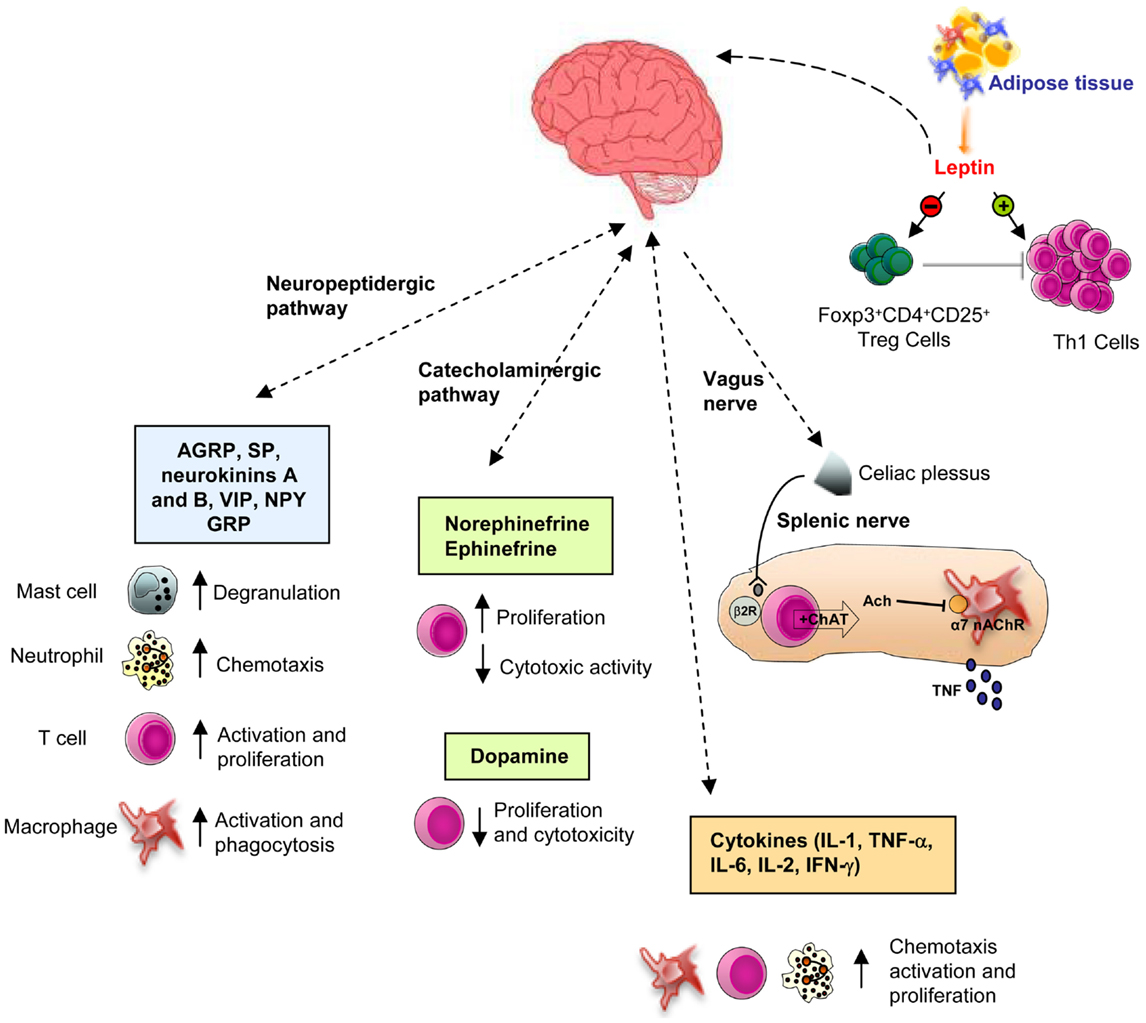
As the paper notes, neuropeptides are signaling molecules that the nervous system uses to communicate with almost every organ in the body, including the cells of the immune system. They are the biochemical messengers that translate thoughts and emotions into physical responses.
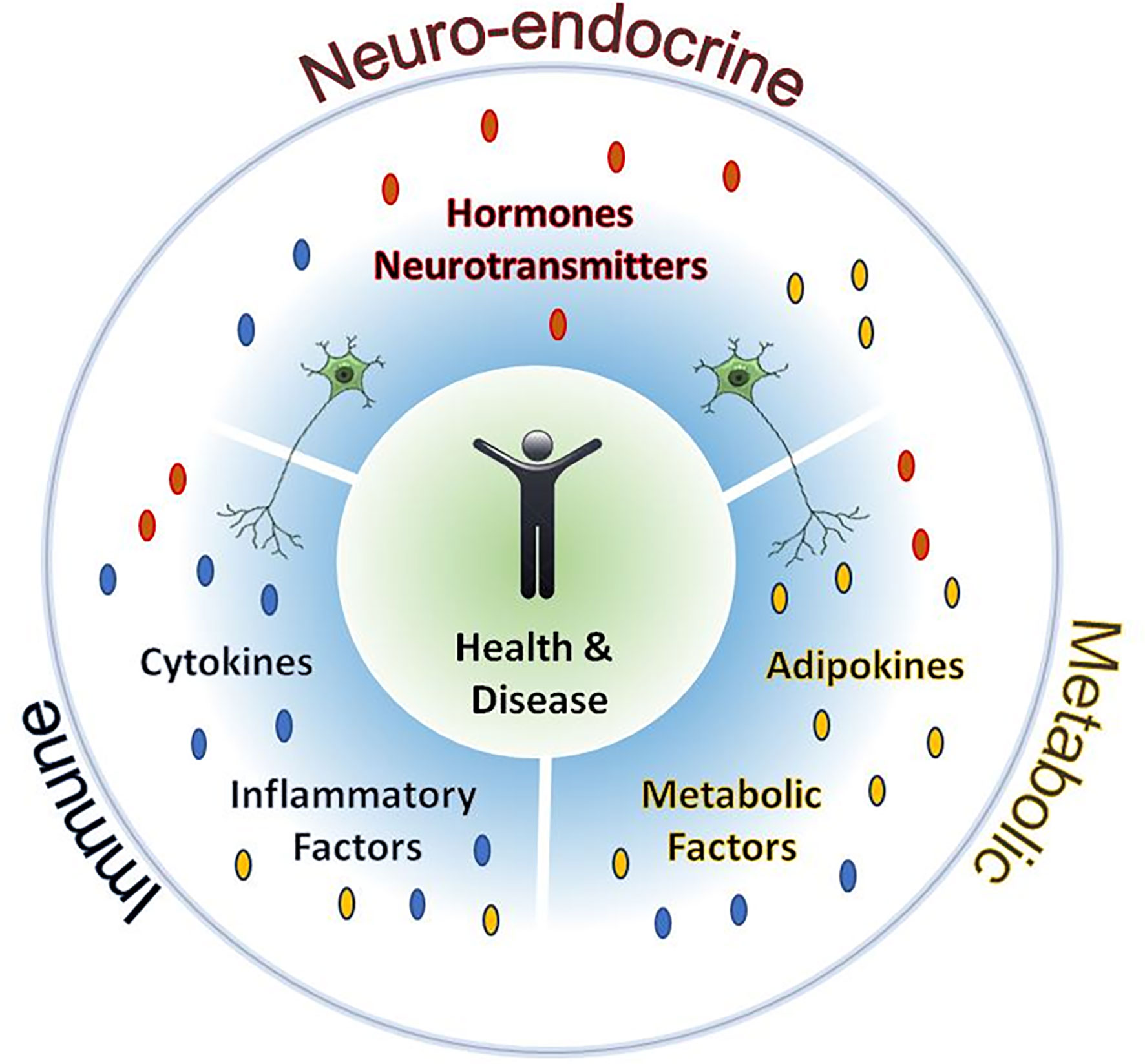
This image provides a stunning visual representation of this PNI network.
This PNI network provides a robust scientific hypothesis for Ojas:
Ojas may not be a single substance but the functional integrity of the communication network between the nervous, endocrine, and immune systems. A state of high Ojas reflects a harmonious, well-regulated network, while depleted Ojas reflects a network disrupted by stress, leading to immune dysregulation and disease.
Hypothesis 2: Ojas as a Marker of Cellular Health
Ayurveda describes Ojas as the "essence" of the dhatus. If the dhatus are the tissues of the body, then their "essence" must relate to the health of the cells that comprise them.
WORLD JOURNAL OF PHARMACEUTICAL RESEARCH
Let's return to the 'DISCUSSION' section of the 'OJAS' paper for another intriguing hypothesis at the cellular level.
Please read the paragraph starting 'Oja and endoplasmic reticulum (ER) have functional similarities...'. Focus on the concept of ER stress as a potential marker for Ojas dysfunction ('Ojo dushti').
The Endoplasmic Reticulum (ER) is a structure inside every cell responsible for building and folding proteins correctly. When the cell is under stress (from poor nutrition, toxins, or inflammation), proteins can misfold, leading to ER stress. This is a fundamental sign that the cell is not functioning properly and can lead to cell death, inflammation, and aging.
This gives us a second, complementary hypothesis:
The state of Ojas could be a reflection of the collective health of the body's cells, which can be measured by markers of cellular stress like ER stress. Ayurvedic Rasayana therapies, which aim to build Ojas, may work in part by protecting cells and reducing ER stress.
3. Hypothesizing Mechanisms for Bala: The Modern Immune System
While Ojas represents a systemic, integrative concept of vitality, Bala relates more directly to strength and, most importantly, the ability to resist disease. This makes the modern immune system its most obvious counterpart.
The paper "Understanding Bala..." draws these parallels with remarkable clarity.
Hypothesis 3: Bala as the Function of the Innate and Adaptive Immune System
The Ayurvedic classification of Bala offers a direct bridge to the major divisions of modern immunology.
Understanding Bala: A Critical Perspective Through ...
The 'DISCUSSION' section of the 'Understanding Bala...' paper synthesizes this connection beautifully. Let's read how the author maps the types of Bala to modern immunological concepts.
Read the first two paragraphs of the 'DISCUSSION' section. Focus on how 'Sahaja', 'Yuktikruta', and 'Kalaja' Bala are correlated with innate immunity, acquired immunity, and environmental influences on immunity, respectively.
This reading gives us a clear translation:
- Sahaja Bala (innate/natural strength) corresponds to Innate Immunity—the body's non-specific, first-line defense system (e.g., skin barrier, phagocytic cells) that you are born with.
- Yuktikruta Bala (acquired/induced strength) corresponds to Acquired (or Adaptive) Immunity—the highly specific immune memory your body develops in response to pathogens or interventions like vaccines. The Ayurvedic practices of Rasayana and proper diet to build Bala fit perfectly here.
- Kalaja Bala (time-dependent strength) relates to the known variations in immune function due to season (e.g., lower Vitamin D in winter) and age.
A Measurable Marker for Bala: CD4+ T-Cells
To make this hypothesis scientifically testable, we need a measurable marker. The "Understanding Bala" paper proposes a powerful candidate: the CD4+ T-cell.
CD4+ T-cells, also known as "helper T-cells," are the master regulators of the adaptive immune response. They don't kill pathogens directly; instead, they orchestrate the entire immune response, activating other cells to fight infection.
Understanding Bala: A Critical Perspective Through ...
Let's explore this specific, measurable hypothesis. The paper makes a compelling case for using CD4+ cells as an indicator of Bala.
Please read the section 'CD4 percentage' to understand their function. Then, re-read the 'DISCUSSION' and 'Conclusion' sections, focusing on how the paper connects Ojas and Bala to cellular immunity (Jeevasonita-rupi Ojas) and proposes the CD4 count as a marker. Note the powerful connection to diseases of Ojas-kshaya like AIDS and Tuberculosis.
This leads us to our most specific and compelling hypothesis:
The level and function of an individual's CD4+ T-cells could serve as a modern, quantifiable biomarker for Bala.
This is strongly supported by the observation that diseases classified in Ayurveda as conditions of severe Ojas-kshaya (depletion of Ojas), such as Rajayakshma (often correlated with Tuberculosis), are characterized by weakened immunity. The most famous modern example is AIDS, a disease defined by the progressive loss of CD4+ T-cells, leading to a complete collapse of Bala and profound vulnerability to disease.
Test your understanding!
An Ayurvedic Rasayana (rejuvenative) herb is shown in a laboratory study to increase the proliferation of T-lymphocytes and also to reduce markers of Endoplasmic Reticulum (ER) stress in cells.
Using the hypotheses from this lesson, how would you describe the potential effects of this herb in both Ayurvedic and modern scientific terms?
Show answer
Based on the hypotheses in this lesson:
- In Ayurvedic terms: The herb would be described as an Ojas-vardhak (promoter of Ojas) and Balya (promoter of Bala) substance.
- In modern scientific terms:
- By reducing ER stress, the herb supports cellular health and resilience. This aligns with the hypothesis that Ojas is a reflection of overall cellular health.
- By increasing the proliferation of T-lymphocytes (which include CD4+ cells), the herb directly enhances the adaptive immune system. This aligns with the hypothesis that Bala is a function of the immune system, and a healthy T-cell population is a key indicator of strong Bala or Vyadhikshamatva.
Conclusion
Today, we have moved from abstract concepts to testable scientific hypotheses. We have seen that the ancient, holistic ideas of Ojas and Bala are not lost in translation but find powerful resonance in some of the most integrated systems of modern biology.
Key Takeaways:
- Ojas (Vitality): This can be hypothesized as the functional integrity of the psychoneuro-endocrine-immune (PNEI) axis, the complex web of communication between our mind, nervous system, and immune system. It can also be viewed as a reflection of overall cellular health, which can be compromised by factors like ER stress.
- Bala (Strength/Immunity): This correlates directly with the modern immune system. The Ayurvedic classifications of Sahaja, Kalaja, and Yuktikruta Bala map elegantly onto the concepts of innate immunity, time-dependent variations, and acquired immunity.
- A Measurable Link: The CD4+ T-cell count and function emerge as a compelling, quantifiable biomarker that could serve as a modern indicator for an individual's state of Bala and, by extension, Ojas.
Preview of the Next Lesson:
We have now spent this entire module building bridges and translating concepts from Ayurveda to modern science. We've established molecular correlates for Prakriti and now have testable hypotheses for Ojas and Bala. The next logical step is to ask: How would we actually test these ideas?
In our next lesson, we will begin the module on "Designing Research for Ayurvedic Interventions." You will learn how to outline the key sections of a research protocol, taking the hypotheses we've formed today and turning them into the blueprint for a real scientific study.