Hello! Welcome to the final lesson in our module on Human Physiology.
In our previous lessons, we've explored the functions of the cardiovascular, respiratory, immune, and renal systems. Last time, we focused on how the kidneys masterfully regulate fluid, electrolytes, and pH. A recurring theme has been homeostasis, the body's ability to maintain a stable internal environment—a concept central to the Ayurvedic principle of Svasthya (health as a state of balance).
So far, we have looked at these systems mostly in isolation. Today, we will bring it all together. Our learning outcome is to analyze a case study demonstrating how multiple organ systems interact to maintain physiological homeostasis. We will see how a single challenge to the body can trigger a coordinated, life-sustaining response involving the nervous, endocrine, cardiovascular, respiratory, and renal systems all at once. This integrated view is essential for understanding both health and the progression of disease (samprapti).
1. The Body as an Integrated System
Before we dive into a clinical scenario, let's formalize the idea of system integration. The body isn't just a collection of independent organs; it's a highly interconnected network where systems constantly communicate and coordinate.
The two main communication networks are the nervous system, which sends rapid electrical signals, and the endocrine system, which uses slower, longer-lasting chemical signals (hormones). These two systems orchestrate the responses of all other organ systems to maintain balance.
A great example of this integration is the body's response to physical exercise.
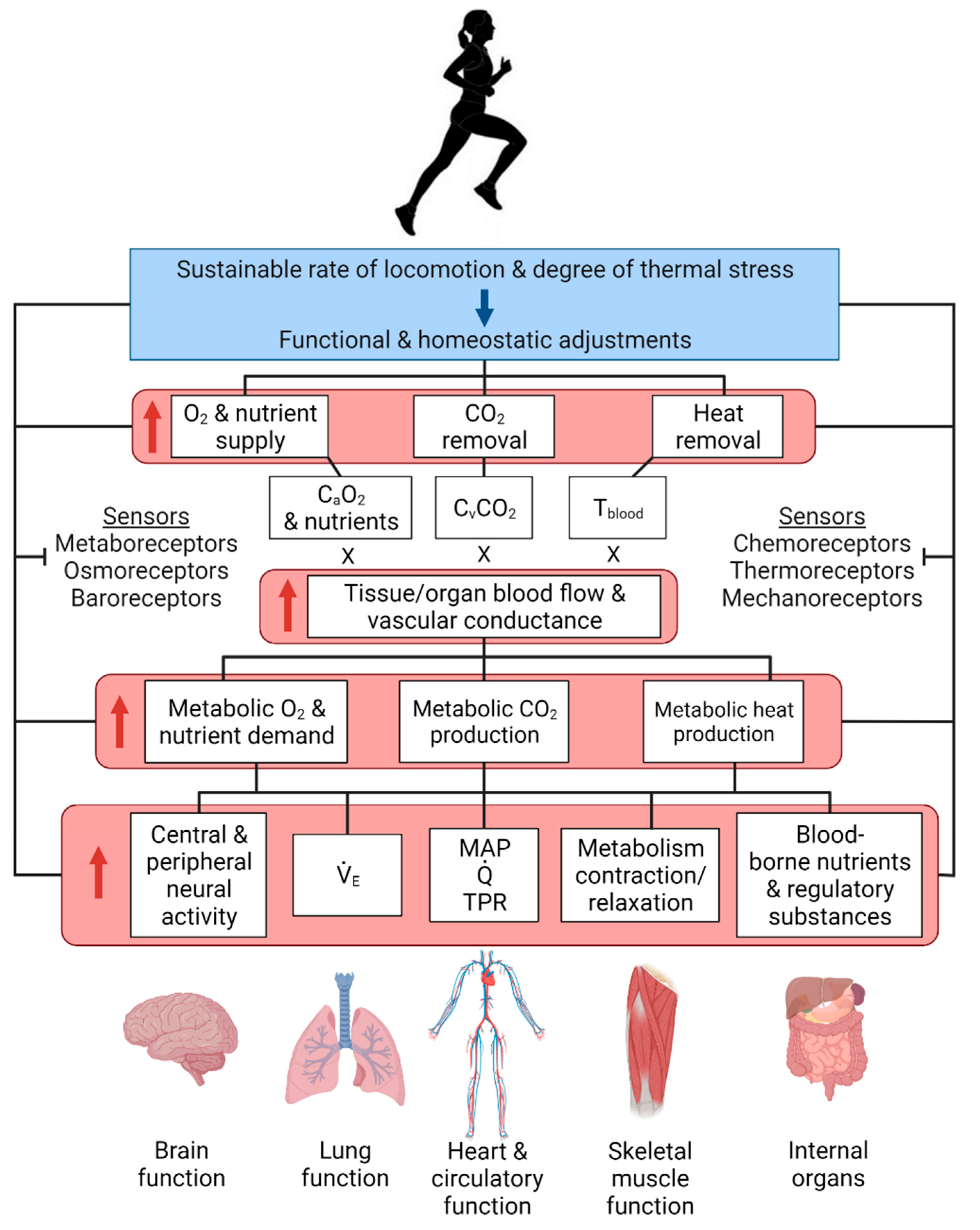
Now, let's examine what happens when this balance is severely disrupted.
2. Case Study: Hypovolemic Shock
We will analyze the case of a patient experiencing hypovolemic shock, a life-threatening condition caused by a severe loss of body fluid or blood. This is a powerful example because the body launches a dramatic, multi-system defense to survive.
Our case study is based on "Clive," an 80-year-old gentleman from the article "Hypovolaemic shock: assessment, pathophysiology and nursing care."
The Scenario: Clive fell at home and was unable to get up for three days before being found. He is admitted to the hospital dehydrated, confused, and with a risk of acute kidney injury.
This prolonged period without water intake has led to severe dehydration, meaning the volume of fluid in his blood vessels is dangerously low. Let's see how his body is responding.
First, to get a high-level overview of what happens in this condition, look at this flowchart.
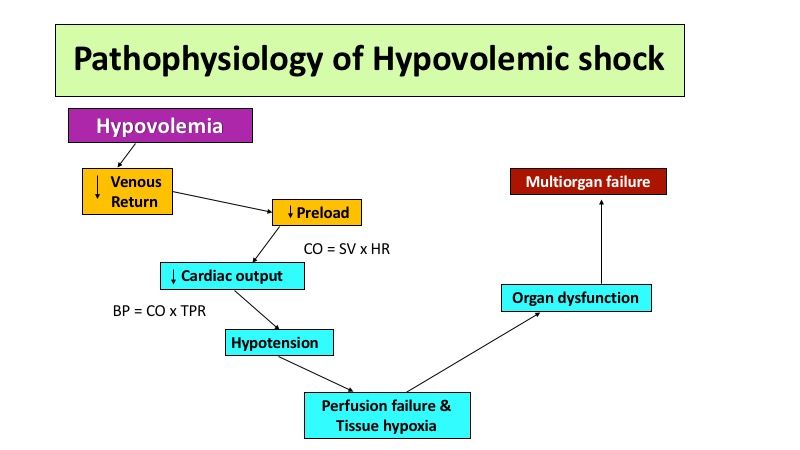
Now, let's analyze Clive's specific signs and symptoms, and uncover the physiological drama happening inside his body.
Hypovolaemic shock: assessment, pathophysiology and ...
The article 'Hypovolaemic shock' provides a detailed account of the patient's assessment and the underlying physiology. We'll read it in two parts.
First, please read the sections 'Case study' and 'Assessment' (up to the 'Arterial blood gases (ABGs)' subheading). Pay attention to the clinical findings under 'Breathing', 'Circulation', and 'Disability'.
As you've read, Clive's body is showing clear signs of distress. Let's break down what they mean:
- Breathing: His respiratory rate is high (26 breaths/minute). This is the respiratory system trying to compensate for a metabolic problem, which we will discuss shortly.
- Circulation: He is tachycardic (heart rate 130 bpm) and hypotensive (BP 100/40 mmHg). His limbs are cool, and his urine output is very low. This is the cardiovascular system and renal system responding to the crisis.
- Disability: He is confused. This is the nervous system being affected by the low blood pressure and poor perfusion to the brain.
So, how are these systems interacting? What is the body trying to achieve? The primary goal is to restore blood pressure and ensure vital organs (brain, heart) get enough oxygenated blood. Three major compensatory mechanisms are launched simultaneously.
Hypovolaemic shock: assessment, pathophysiology and ...
Now, let's explore the powerful compensatory mechanisms the body uses to fight shock. This next section of the same article explains the coordinated response beautifully.
Please read the section 'Underlying physiology/ pathophysiology'. Focus on the three subsections: Shock Mechanisms (Starling's Law) Sympathetic Nervous System response Renin angiotensin aldosterone system (RAAS)
Let's synthesize what you've just read. Faced with dangerously low blood volume and pressure, Clive's body mounts a defense involving the nervous, endocrine, cardiovascular, and renal systems.
The Coordinated Defense:
-
The Nervous System Sounds the Alarm:
- Sensors: Specialized pressure sensors called baroreceptors in the major arteries (aorta, carotid arteries) detect the drop in blood pressure.
- Control Center: They send urgent signals to the cardiovascular center in the brainstem (medulla oblongata).
- Response: The brainstem activates the sympathetic nervous system—the "fight or flight" response. This does two critical things:
- It releases catecholamines (epinephrine and norepinephrine), which cause widespread vasoconstriction (narrowing of blood vessels) in non-essential areas like the skin and limbs. This is why Clive's limbs are cool. This response increases systemic vascular resistance (SVR) to help prop up blood pressure.
- It directly stimulates the heart to beat faster (tachycardia) and more forcefully, attempting to increase cardiac output.
-
The Renal and Endocrine Systems Conserve Fluid:
- Sensor: The kidneys detect the reduced blood flow.
- Response: This triggers the Renin-Angiotensin-Aldosterone System (RAAS), a hormonal cascade you'll recognize from our last lesson.
- The kidneys release renin.
- This leads to the production of angiotensin II, a potent vasoconstrictor that further raises blood pressure.
- Angiotensin II also stimulates the release of aldosterone, which tells the kidneys to reabsorb sodium and water, and Antidiuretic Hormone (ADH), which tells the kidneys to reabsorb more water.
- The result is a drastic reduction in urine output, as the body desperately tries to hold on to every drop of fluid to restore blood volume. This is why Clive produced only 20 ml of urine.
This is a perfect example of neuro-endocrine control. The nervous system provides the immediate, rapid response, while the endocrine system (RAAS, ADH) provides a slower but more sustained effect to manage fluid volume.
Test your understanding!
In Clive's case, his body is desperately trying to increase his blood pressure. Based on the mechanisms we just discussed, identify one specific action taken by each of the following systems to achieve this goal:
- The cardiovascular system
- The nervous system
- The renal/endocrine system
Show answer
- Cardiovascular system: Increases the heart rate (tachycardia) to pump blood more frequently.
- Nervous system: Activates the sympathetic nervous system, causing vasoconstriction (narrowing of blood vessels) to increase systemic vascular resistance.
- Renal/endocrine system: Activates the RAAS, leading to the production of angiotensin II (a vasoconstrictor) and aldosterone (which retains salt and water to increase blood volume).
3. The Metabolic Consequences of Shock
These compensatory mechanisms are a short-term fix. If the underlying problem—low volume—isn't corrected, the widespread vasoconstriction leads to poor tissue perfusion. Cells throughout the body become starved of oxygen and are forced to switch to anaerobic metabolism.
A key byproduct of anaerobic metabolism is lactic acid. As lactic acid builds up in the blood, it causes metabolic acidosis, a drop in blood pH.
Let's look at Clive's lab results from an Arterial Blood Gas (ABG) test.
Hypovolaemic shock: assessment, pathophysiology and ...
The ABG results give us a window into the patient's metabolic state and how the respiratory system is responding. This final reading from the article will connect the circulatory failure to the patient's acid-base balance.
Please read the sections 'Arterial blood gases (ABGs)' and 'Interpretation of ABGs'. This will explain Clive's lab values and why he is breathing so fast.
As the article explains:
- Clive has a low blood pH (7.33) and low bicarbonate (HCO₃⁻), confirming metabolic acidosis from the buildup of lactic acid.
- His pCO₂ is also low. This is not the cause of the problem; it's the solution! His brain's respiratory center has detected the acidosis and increased his breathing rate (tachypnea) to blow off more CO₂, an acid, from his body.
- This is the respiratory system compensating for the metabolic problem created by the circulatory system's failure.
Here, we see a complete picture: A circulatory problem (hypovolemia) leads to a metabolic problem (lactic acidosis), which triggers a respiratory compensation (hyperventilation), all while the nervous, endocrine, and renal systems are working overtime to fix the root cause. This beautifully demonstrates the profound interconnectedness of the body's systems in the desperate attempt to maintain homeostasis.
Conclusion
Today we've moved from studying individual organ systems to seeing them perform as a coordinated orchestra in response to a life-threatening challenge. By analyzing the case of hypovolemic shock, we have seen homeostasis in action.
Key Takeaways:
- Physiological homeostasis is an active, integrated process involving constant communication between multiple organ systems.
- The nervous and endocrine systems act as the master controllers, sensing changes and orchestrating the body's response.
- In response to a disturbance like hypovolemic shock, the body initiates a coordinated defense:
- Sympathetic nervous activation increases heart rate and causes vasoconstriction to raise blood pressure.
- The RAAS and ADH release cause the kidneys to retain salt and water to restore blood volume.
- The respiratory system compensates for metabolic acidosis by increasing ventilation to remove CO₂.
- This integrated response highlights how a failure in one system (circulatory) has cascading effects on all other systems (metabolic, respiratory, renal, nervous). This is a modern scientific view of the Ayurvedic concept that the body functions as an indivisible whole.
Preview of the Next Lesson:
We've seen how critical the neuro-endocrine axis is for controlling homeostasis. In our next module, "Fundamentals of Modern Pharmacology," we will begin by exploring these signaling pathways in more detail, starting with a lesson on the principles of neuro-endocrine signaling, using the Hypothalamic-Pituitary-Adrenal (HPA) axis and the stress response as our prime example. This will lay the groundwork for understanding how many modern drugs exert their effects.