Hello! Welcome back to your second lesson.
In our last session, we defined graphic design as the art of visual problem-solving. We established that it's not just about making things look good, but about communicating a specific message with purpose and clarity.
Today, we'll build on that foundation to answer the question: What do graphic designers actually do? This lesson will introduce you to the main specializations within the field. By the end, you will be able to identify four major types of graphic design work: branding, digital, print, and UI/UX.
Understanding these categories is essential for your goal of becoming a professional designer. It will give you a map of the industry, show you the diverse career paths available, and help you start thinking about which areas you might find most exciting.
A World of Design Specializations
Graphic design is a vast and varied field. A designer who creates a logo for a new company uses a different set of skills than one who lays out a 100-page magazine or designs the interface for a mobile app.
To get a quick overview of the landscape, take a look at the image below. It highlights some of the most common specializations you'll encounter.
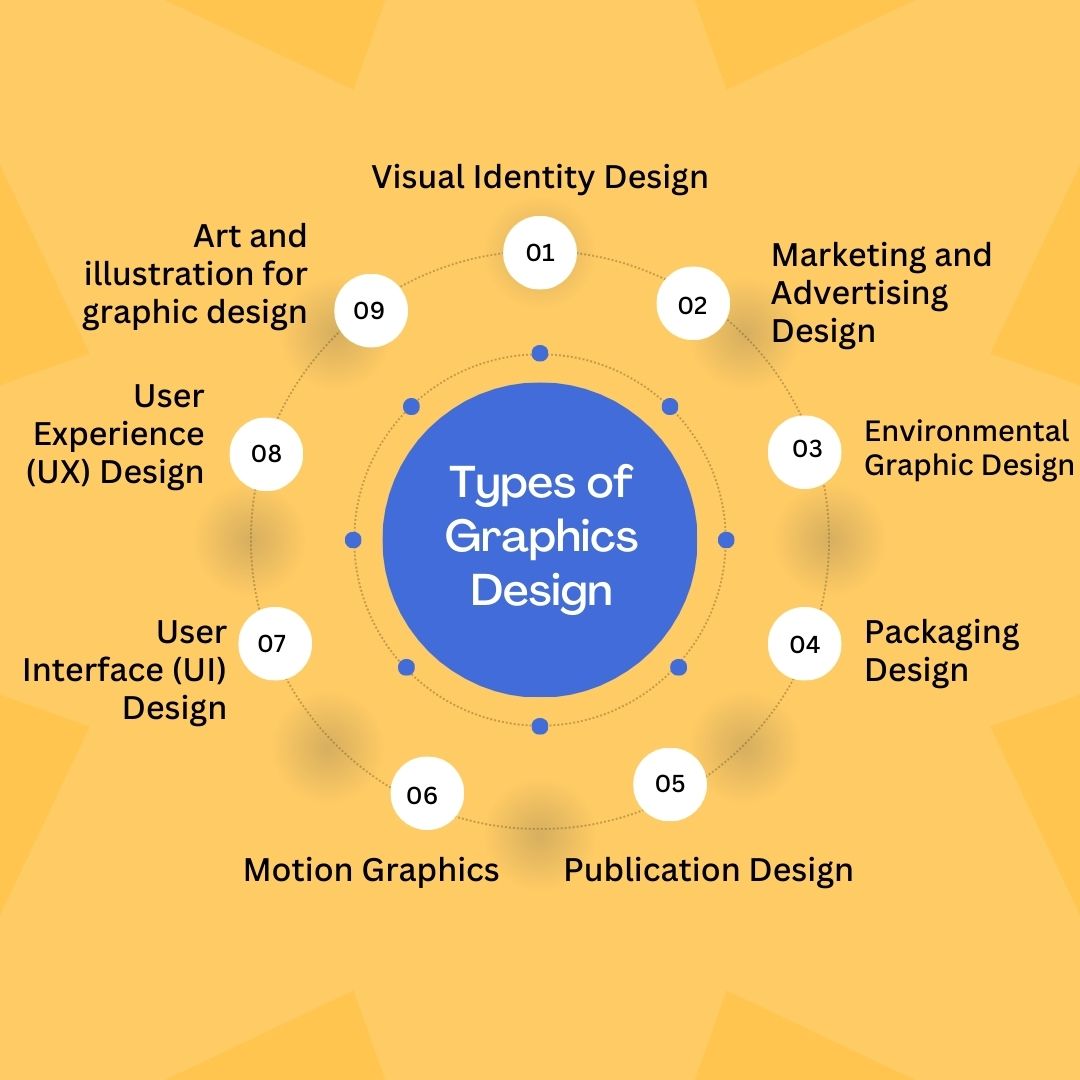
As you can see, there are many paths a designer can take. For this lesson, we will focus on the four foundational areas mentioned in the learning outcome. Let's dive into the first one.
1. Branding / Visual Identity Design
Every business, organization, or even individual has a story and a personality. Branding, or visual identity design, is the process of creating the visual elements that communicate that personality. It's about building the "face" of a brand so that it's instantly recognizable and connects with its audience.
This goes far beyond just creating a logo. It includes:
- Logos: The primary symbol of the brand.
- Color Palettes: The specific colors that will be associated with the brand.
- Typography: The fonts used in all communications.
- Imagery Style: Guidelines for photography or illustration.
- Brand Guidelines: A rulebook that ensures all these elements are used consistently.
To learn more about what's involved in creating a brand's visual identity, please read the following section from an article by 99designs.
The 8 Types of Graphic Design You Need To Know
This section from the article 'The 8 Types of Graphic Design You Need To Know' clearly explains what visual identity design is and what assets a brand designer creates.
Please read the section titled '1. Visual identity graphic design'. Focus on the different components that make up a brand's visual identity (logos, typography, color palettes, etc.).
Now, let's see this in action. The following video segment walks through a real-world branding project, showing how a designer develops a brand's identity from concept to final deliverables.
Graphic Design Basics | FREE COURSE
This video from Envato Tuts+ gives a fantastic practical overview of the brand design process, which will help you understand how the elements we just discussed come together.
Watch the video from 42:48 to 47:50. Pay attention to the steps the designer follows, from interviewing the client and creating mood boards to developing the final brand guidelines.
As you saw, a brand designer establishes the core visual foundation that will be used across all other forms of design.
2. Print & Digital Design
Once a brand identity is established, it needs to be applied to various materials. These materials generally fall into two broad categories: print and digital.
Print Design
Print design refers to any design created for a physical, tangible medium. This is the classic form of graphic design and includes things like:
- Posters, brochures, and flyers
- Magazines, books, and newspapers
- Business cards and stationery
- Product packaging
- Restaurant menus
Designers in this area must have a strong understanding of layout, typography, and the technical requirements of the printing process (like color modes and file formats).
Digital Design
Digital design is created for use on a screen. This is a massive and growing field that includes:
- Social media graphics (Instagram posts, YouTube thumbnails)
- Website banner ads
- Email marketing templates
- Digital presentations (PowerPoint, Google Slides)
- E-books and digital newsletters
The following video explores these two areas with clear examples.
Graphic Design Basics | FREE COURSE
The next two segments from the Envato Tuts+ video will walk you through examples of print design and then digital design, highlighting the unique considerations for each.
First, watch the section on Print Design from 33:24 to 38:07. Then, watch the section on Digital Design from 40:23 to 42:48. Notice the different types of projects discussed in each part.
Test your understanding!
Imagine you are designing an advertisement for a new coffee shop. If you create a physical flyer to hand out on the street, is that print or digital design? What if you create a graphic to post on the coffee shop's Instagram page?
Show answer
- The physical flyer is an example of print design. It exists as a tangible object.
- The Instagram graphic is an example of digital design. It is viewed on a screen.
Both designs would use the coffee shop's established branding (logo, colors, fonts), but they are created for different mediums.
3. User Interface (UI) & User Experience (UX) Design
Within the broad category of "digital design," there is a very important and high-demand specialization: UI/UX Design. This field is focused on creating interactive digital products like websites and mobile apps. While the terms are often used together, they refer to two distinct, but related, roles.
-
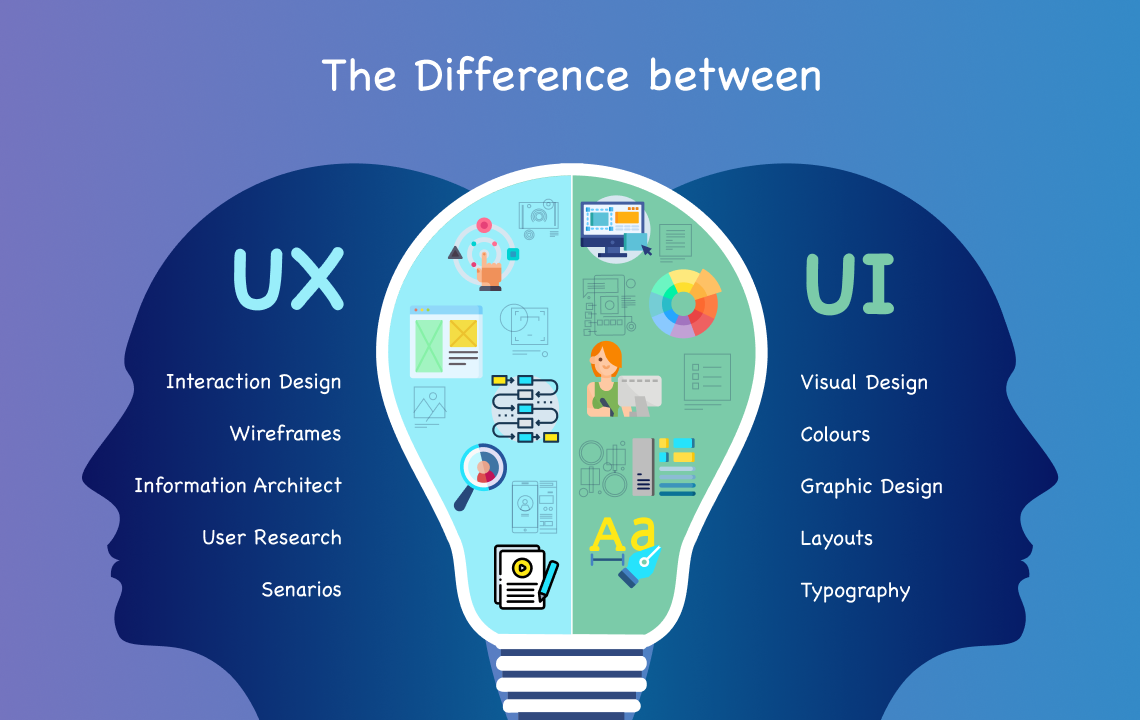
User Interface (UI) Design: This is the graphic design part of the product. UI designers focus on the look and feel of the interface—the buttons, icons, typography, color schemes, and spacing. Their goal is to create an interface that is visually appealing and easy to use. It's about what the user sees.
-
User Experience (UX) Design: This is a broader, more strategic role. UX designers focus on the overall experience a person has when using the product. They conduct user research and map out the user's journey to ensure the product is logical, efficient, and enjoyable to use. It's about how the user feels.
The image below does a great job of showing the difference.
To solidify your understanding, watch this final video segment that explains the role of a UI/UX designer.
Graphic Design Basics | FREE COURSE
This last clip from the Envato Tuts+ video explains what digital product design is and clarifies the relationship between UI and UX.
Watch from 38:07 to 40:23. Focus on how the video distinguishes between the research-focused role of UX and the visual, systematic role of UI.
In summary, a UX designer architects the house, and a UI designer furnishes and decorates it. As a graphic designer, you will be more focused on the UI side, but understanding UX principles is crucial for creating effective digital products.
Conclusion
Great work today! You've just taken a tour of the major territories in the world of graphic design. Knowing this landscape is the first step toward navigating it like a professional.
Here are the key takeaways:
- Branding (Visual Identity) Design is about creating the consistent look and feel of a brand, including its logo, colors, and fonts.
- Print Design involves creating graphics for physical items like magazines, posters, and packaging.
- Digital Design involves creating graphics for screens, such as social media posts, banner ads, and email templates.
- UI/UX Design is a specialization within digital design focused on interactive products. UI is the visual interface, while UX is the overall user journey and feeling.
These areas are not isolated; they are deeply interconnected. A company's branding is applied to its print brochures, its digital social media posts, and the UI of its mobile app.
In our next lesson, we will shift from the types of design to the process of design. We will explore the typical graphic design workflow, from understanding a client's request to delivering the final files. This will start connecting these concepts to the practical steps you'll take on a real project.