Hello! Welcome to your very first lesson in graphic design. I'm excited to guide you on this journey. Your goal is to build a professional skillset from the ground up, and this course is designed to get you there, one step at a time.
This first lesson addresses a fundamental question: What is graphic design? By the end of our session, you'll be able to explain what graphic design is and understand its crucial role in the broader field of visual communication. Mastering this core concept is the essential first step before we dive into the practical skills and software in later lessons.
Let's begin by looking at the bigger picture.
What is Visual Communication?
Before we can define graphic design, we need to understand the world it lives in: visual communication. At its simplest, communication is the process of sending and receiving information. We do this in many ways—speaking (verbal), using body language (non-verbal), or writing things down (written).
Visual communication is the fourth major type: conveying information using images, symbols, signs, and other graphic elements. Think about a red octagonal stop sign. You understand its message—"stop"—instantly, without reading a single word. This is the power of visual communication.
To explore this concept further, let's watch a short video that breaks it down clearly.
Visual Communication - What is it and why is it important?
This video from Riekreate, titled 'Visual Communication - What is it and why is it important?', provides an excellent introduction to the topic and explains why it's such a powerful tool.
Please watch the video from the beginning until the 05:12 mark. Pay close attention to the four types of communication and the five key reasons why visual communication is so effective.
As the video explains, visual communication is powerful because:
- It increases retention: We remember what we see better than what we read or hear.
- It's universally understood: A well-designed symbol can cross language barriers.
- It simplifies complexity: Charts and graphs make complex data easier to understand.
- It's easily recognizable: Logos help us identify brands instantly.
- It's impactful: Visuals can grab attention and convey emotion more quickly than text alone.
Keep these points in mind, as they are the very reasons graphic design is such a valuable and in-demand skill.
So, What is Graphic Design?
Now that we understand visual communication, we can define graphic design. Graphic design is the art and practice of planning and projecting ideas and experiences with visual and textual content. It is the specific discipline that uses visual elements to solve problems and communicate messages.
It's helpful to break the term "graphic design" into its two parts:
- Graphic: This refers to the visual things, the fundamental building blocks we work with.
- Design: This refers to the thinking, the problem-solving, and the intentional arrangement of those building blocks according to a set of principles.
Let's watch another video that explores this distinction in detail.
What is Graphic Design? Ep1/45 [Beginners Guide to Graphic Design]
This video, 'What is Graphic Design?' by Gareth David Studio, does a fantastic job of deconstructing the term and explaining that design is a thought process, not just making things look good.
Watch from 01:30 to 04:06. Focus on how the presenter separates 'graphic' (the visual elements) from 'design' (the principles and problem-solving).
The "Graphic" Part: The Elements
As the video mentioned, the "graphic" part consists of the basic visual elements. These are the raw materials you will use as a designer.
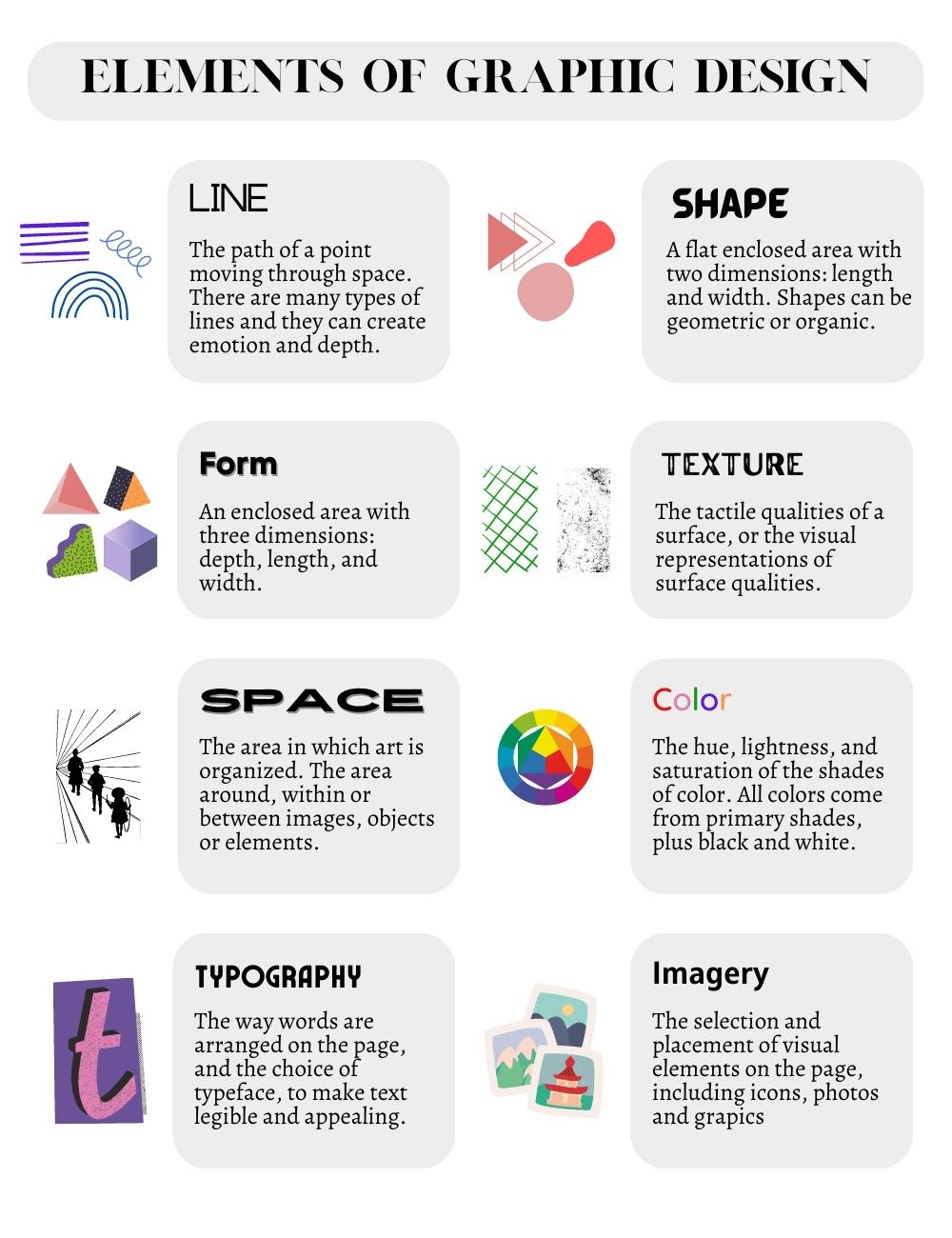
These elements—line, shape, color, texture, space, form, and typography—are the vocabulary of our visual language.
The "Design" Part: The Thinking
This is the most important concept for a new designer to grasp. Graphic design is not just about making things look pretty; it's about organizing information for a specific function or to achieve a specific goal. This involves a creative process of research, thinking, and developing a concept to communicate a message visually.
As the Figma article "What Is Graphic Design?" puts it:
"It’s common to assume graphic design is only about aesthetics. But at its core, graphic design is about clarity. Great design guides attention, tells a story, and makes information easier to understand."
Test your understanding!
Look at the packaging for a product near you—a snack, a bottle of water, or a book cover.
- Identify at least three graphic elements you can see (e.g., color, shape, typography).
- What do you think the design purpose is? What message is it trying to communicate, and what action is it trying to make you take?
Show answer
Let's use a can of Coca-Cola as an example.
- Graphic elements:
- Color: The iconic bright red and white.
- Typography: The unique, flowing "Coca-Cola" script (a logotype).
- Shape: The dynamic white "wave" or "ribbon" device.
- Design purpose: The design aims to be instantly recognizable. The bright red grabs attention on a crowded shelf. The script font conveys a sense of classic heritage and enjoyment. The overall goal is to reinforce the brand identity and persuade you to choose it over other options. It visually communicates "classic, refreshing, and familiar."
Graphic Design's Role in Visual Communication
We can now put everything together. If visual communication is the broad act of conveying a message with visuals, then graphic design is the professional discipline that creates those visuals with skill and purpose.
A graphic designer is a professional visual communicator.
This table provides a clear summary of the distinction:

To start building your professional vocabulary, it's also helpful to read through a concise overview from a leading tool in the industry.
What Is Graphic Design? | Figma
The article 'What Is Graphic Design?' from Figma—the software we will be using—provides a great summary of the key concepts and also clarifies how graphic design differs from related fields like UX design.
Please read the introduction (the first few paragraphs) and the section titled 'What’s the difference between graphic design and UX design?'. This will solidify your understanding and introduce important distinctions you'll encounter in the industry.
Conclusion
Congratulations on completing your first lesson! You've taken the first and most important step towards your goal of becoming a graphic designer.
Here are the key takeaways from today's lesson:
- Visual communication is the broad process of conveying information and ideas using visual aids. It's powerful because it's memorable, universal, and can simplify complex messages.
- Graphic design is a specific creative practice within visual communication. It involves a problem-solving process to arrange visual elements (like color, shape, and typography) to communicate a specific message effectively.
- The core of graphic design is purpose and clarity, not just making things look beautiful. It's about function.
In our next lesson, we will build on this foundation by exploring the different types of graphic design work, such as branding, marketing design, and UI/UX design. This will give you a clearer picture of the exciting career paths available and help you start thinking about what areas might interest you most.