Welcome to our next lesson. In our previous exploration of Western contemplative traditions, we delved into the intimate, silvery world of the Renaissance lute, appreciating how its contrapuntal clarity and delicate timbre offer a structured path to relaxation. Today, we journey further back in time to encounter two instruments of myth and folklore: the ancient Greek lyre and the Celtic harp.
This lesson will guide you in describing the unique tonal characteristics of these two iconic string instruments. We will analyze how their distinct sounds—one ethereal and grounding, the other rich and enveloping—create different forms of relaxation. By the end, you'll have a clear understanding of their respective qualities and specific recordings to consider for your curation projects.
The Ancient Greek Lyre: Clarity, Purity, and Order
The lyre is an instrument steeped in mythology, famously associated with the Greek gods Hermes and Apollo. It was central to ancient Greek culture, used to accompany poetry, epic storytelling, and philosophical discourse. This historical context hints at its musical character: one tied to harmony, reason, and emotional balance.

The lyre's sound is often described as ethereal, light, and soothing. To understand why, let's explore its construction and tuning.
Lyre Instrument vs Harp: Key Differences Explored
This article from Healing Sounds provides an excellent breakdown of the lyre's sonic footprint and directly contrasts it with the harp.
First, read the section What Makes a Lyre a Lyre? to understand its basic structure and sound profile. Focus on the description of its "ethereal and soothing tones" and "delicate, plucked quality." Next, jump to the section on sound quality and read the direct comparison. Pay attention to the characterization of the lyre's sound as "lighter, quieter," with "quicker decay."
The key takeaways from the reading are the lyre's light touch and quick decay. Unlike the modern guitar or harp, its notes don't sustain for long, which creates a very clean, uncluttered soundscape. This prevents the sound from becoming muddy and helps maintain a sense of clarity.
Furthermore, the lyre is typically a diatonic instrument, meaning its strings are tuned to a specific scale or mode. This is a fundamental difference from a chromatic instrument or even a fretted one like the lute, where a much wider range of notes is easily accessible.
What is a Lyre Harp, and Why is it so Amazing?
The video "What is a Lyre Harp, and Why is it so Amazing?" by Mike the Music Teacher offers a simple, clear explanation of the lyre's defining musical characteristics.
Please watch two short segments: First, from the beginning to the introduction, to hear the description of the lyre as an "open string" instrument, which contributes to its rich, open sound. Then, watch the segment from on its tuning. The presenter explains its diatonic nature, which, as you know from your jazz background, means it's built around a specific mode. This limits its harmonic complexity but makes it incredibly direct for melodic expression.
The diatonic nature of the lyre means that whatever is played on it will inherently sound harmonically consonant and resolved. This creates a feeling of stability and order, gently guiding the listener's attention without demanding complex harmonic analysis.
Curation Guide: Michael Levy and "New Ancestral Music"
For curating lyre music, there is no more significant contemporary figure than Michael Levy. He has dedicated his career to reviving the ancient lyre and its associated musical practices, including the use of just intonation—a tuning system based on pure mathematical ratios that predates modern equal temperament. This system gives the intervals a unique purity and consonance that many find profoundly relaxing.
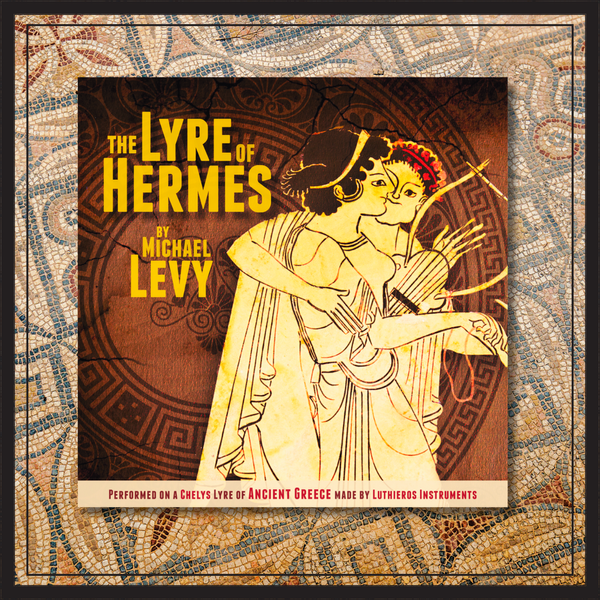
Levy's philosophy is centered on the instrument's capacity for healing and instilling inner peace.
New Ancestral Music, back into the modern musical world
This interview with Michael Levy provides a deep insight into the relaxing and healing qualities he channels through his music.
Please read the following sections from the interview: First, read his answer to his musical philosophy. He describes his goal of producing "uncluttered, minimalistic music" and the "simultaneously more relaxing, yet at the same time, more inspiring" effect of just intonation. Next, read his thoughts on the question "How does music affect the healing and mood?". He references the biblical story of David soothing King Saul, directly linking the lyre to the restoration of "inner harmony." Finally, read his answer to the question about socio-cultural impact, focusing on the concluding paragraph his ultimate goal, where he explicitly states his hope that his music evokes "a sense of inner peace and tranquility."
Levy's work is the perfect starting point for any relaxation playlist featuring the lyre. His compositions are not just historically informed; they are intentionally crafted to be meditative.
Listening Recommendation:
To experience this directly, spend some time with the following performance. You don't need to listen to the entire piece, but allow yourself to sink into its sound world for several minutes.
One & a Half Hours of Meditative Music for Ancient Greek Kithara
This video, "One & a Half Hours of Meditative Music for Ancient Greek Kithara," features Michael Levy performing on the kithara, a larger concert version of the lyre.
Listen to any portion of this performance, for example, from the beginning. Notice the clarity of the plucked strings, the simple but evocative melodies, and the overall feeling of calm and order.
In summary, the lyre's relaxing quality comes from a combination of:
- A light, plucked timbre with a quick decay, creating a clean and uncluttered sound.
- Diatonic/modal tuning and just intonation, which produce pure, consonant harmonies that feel stable and resolved.
- A melodically-focused style that guides attention gently without cognitive strain.
The Celtic Harp: Resonance, Richness, and Reverie
If the lyre's sound is one of focused clarity, the Celtic harp offers an experience of immersive richness. Associated with the bards of Ireland and Scotland, its voice is woven into a tradition of folklore, lament, and dance.
The Celtic harp (or cláirseach) is structurally different from the lyre. Its triangular frame can support more strings under greater tension, and modern versions often include levers to facilitate key changes. These differences are crucial to its sound.
Lyre Instrument vs Harp: Key Differences Explored
Let's return to the same article to now focus on the harp.
First, read the section The Majestic Harp: Sound and Structure. Note the description of its "rich, resonant, and sweeping sound." Then, re-read the comparison Sound Quality and Resonance, this time focusing on the harp's characteristics: "fuller, louder, more sustained tone with significant resonance."
The defining tonal characteristic of the harp for relaxation is its resonance and sustain. When a harpist plays arpeggios or "sweeps" across the strings, the notes blend into one another, creating a lush, enveloping soundscape. This effect is fundamentally different from the lyre's distinct, separated notes. The harp's sound can feel like a "wash" of harmony that holds you in a sonic embrace.
This resonant quality makes it ideal for inducing a state of reverie or dreaminess. The music often consists of slow, beautiful folk melodies (known as airs) or lullabies, played with a flowing, legato feel. The combination of rich harmonies and a gentle, rolling rhythm can be profoundly soothing.
Curation Guide: Airs, Lullabies, and Modern Masters
When curating Celtic harp music for relaxation, you should seek out recordings that emphasize this resonant, flowing quality.
Key Performers:
- Patrick Ball: A master storyteller and wire-strung harp player, whose work has a particularly ancient and resonant quality.
- Áine Minogue: Her work is often explicitly aimed at relaxation and healing, blending traditional melodies with a gentle, atmospheric sensibility.
- Derek Bell: The late harpist for The Chieftains, he recorded many beautiful solo albums of traditional Irish music.
What to Look For:
- Airs: Search for albums or playlists of "Slow Irish Airs" or "Scottish Airs." These are expressive, timeless melodies that are perfect for quiet contemplation.
- Lullabies: Celtic traditions are rich with beautiful lullabies. A search for "Celtic Harp Lullabies" will yield many tracks ideal for promoting sleep.
- Compositions by Turlough O'Carolan: O'Carolan was a blind Irish harpist and composer from the late 17th and early 18th centuries. His compositions are staples of the repertoire and possess a unique blend of Baroque structure and Irish folk sensibility.
The Celtic harp's relaxing quality stems from:
- A rich, full-bodied tone with significant sustain and resonance.
- Lush, consonant harmonies often played in arpeggiated, flowing patterns.
- An association with evocative folk melodies that create a sense of peace, nostalgia, or enchantment.
Conclusion
Today we have added two more ancient stringed instruments to your curator's palette, each offering a distinct pathway to relaxation. While both are plucked string instruments associated with historical traditions, their effects are quite different.
Key Takeaways:
- The Greek Lyre promotes relaxation through clarity and order. Its light, plucked sound, quick decay, and simple modal harmonies create a minimalistic, grounding experience that calms the mind without overwhelming it. It is ideal for focused meditation.
- The Celtic Harp promotes relaxation through resonance and immersion. Its rich, sustained tones and flowing, arpeggiated harmonies create an enveloping sound bath that encourages a state of dreamy reverie. It is ideal for unwinding and emotional release.
- For Your Curation: The lyre offers a sound that is grounding and pure, while the harp provides a sound that is enveloping and lush. Consider the desired mental state when choosing between them.
In our next lesson, we will synthesize what we've learned in this module. We will directly compare the suitability of Gregorian chant, Renaissance lute, lyre, and harp music for your specific goals of creating focus, relaxation, and sleep playlists.