Welcome back! In our last lesson, you mastered the art of choosing the right battlefield, strategically deciding whether a direct message or a formal email is the best way to initiate contact with a fitness or mindset coach. You now know where to engage your prospects.
Today, we transition from the "where" to the "what." This lesson is dedicated to drafting a compelling initial outreach message that not only grabs a busy coach's attention but also clearly demonstrates your value from the very first word. As a DM setter, you know that the opening line can make or break a conversation. By the end of this lesson, you will have a clear, repeatable framework and concrete scripts to craft messages that don't just get seen—they get replies.
The Core Principles: What Makes an Outreach Message Work?
Before we dive into writing, let's establish the foundational principles. A cold message to a successful coach is an interruption. To turn that interruption into a welcome conversation, your message must be built on three pillars: Personalization, Value, and a Low-Friction Ask.
The marketer and entrepreneur Alex Hormozi boils down effective cold outreach to two key actions: personalize and provide big, fast value. This is because your prospect doesn't know you and has no reason to trust you... yet.
70 clients from 100 Cold Outreach in 1 hour of work - Acquidition.COM - Alex Hormozi - 100M LEADS
This clip from a presentation on Alex Hormozi's "100M Leads" explains the core philosophy behind successful cold outreach. Understanding this 'why' will make your 'what' much more effective.
Watch these three short segments: The core concept: Pay attention to why personalization and fast value are essential for a cold audience. How to personalize: Hormozi explains that the goal is to make a cold outreach feel warm by showing you've done your research. Providing value: This part emphasizes that you need to offer something so good, they'd "feel stupid saying no."
This brings us to the rules of engagement for crafting your message. An article on Medium, "How I Write Engaging Cold DMs," provides a fantastic, no-nonsense checklist that aligns perfectly with this strategy.
How I Write Engaging Cold DMs: Tactics That Get Responses
This article breaks down the common mistakes people make in cold DMs and offers five simple rules to get replies. This is a great tactical guide to complement the strategy we just discussed.
First, read the section on why most DMs fail. Then, review the five rules for getting replies. Notice how they all center on making the message short, personal, and focused entirely on the recipient's needs, not your own.
In essence, your message must accomplish the following in just a few seconds:
- Show you're not a robot: Use a personalized detail that proves you're writing specifically to them.
- Show you're not a time-waster: Get straight to the point with a clear value proposition.
- Show you're not a threat: Make it incredibly easy for them to say "yes" (or "no") without any pressure.
The Three-Part Formula for a Compelling DM
Now, let's translate these principles into a simple, repeatable formula. You can think of your initial message as having three key components: the Personalized Hook, the Value Statement, and the Low-Friction Call-to-Action (CTA).
1. The Personalized Hook
This is your opening line. Its only job is to earn you the right to have your next line read. Generic openers like "Hey, how are you?" or "I'm a DM setter" are instant conversation killers.
Your hook must be specific to the coach you're messaging. Your research from the previous module is critical here. Look for:
- A recent Instagram post or Story you genuinely found insightful.
- A point they made on a podcast or in a YouTube video.
- A client testimonial they recently shared.
- The launch of a new program or offer.
Example Hooks:
- "Hey [Coach's Name], just saw your Reel on overcoming gym anxiety. The point about starting with just one machine was brilliant."
- "Hi [Coach's Name], I listened to your interview on the Mindset Mentor podcast and your story about starting your business really resonated."
2. The Value Statement
Once you have their attention, you must immediately connect your service to a potential problem they have or a result they want. This is where you concisely state your value proposition.
A powerful way to structure this is by using the "I help..." formula.
How to Get Coaching Clients Fast: 11 Steps (+ Examples)
This article provides an excellent framework for clarifying your messaging. We'll use its core formula to build your value statement.
Focus on the section "Clarify Your Niche & Messaging." Pay close attention to the sentence structure: "I help [type of person] who are struggling with [pain point] to [specific transformation or result]."
As a DM setter, you can adapt this formula like so:
"I help busy [fitness/mindset] coaches who are struggling to keep up with their DMs to convert those conversations into qualified, booked sales calls."
When you combine the hook and the value statement, it becomes a powerful one-two punch.
3. The Low-Friction Call-to-Action (CTA)
This is where most people go wrong. They ask for too much, too soon. A request like "Can we hop on a call?" is a big commitment for a stranger. Your goal is simply to get a reply and start a conversation.
Your CTA should be a simple, low-pressure question.
Good (Low-Friction) CTAs:
- "Would you be open to hearing a quick idea about that?"
- "Curious to know if that's something on your radar?"
- "Mind if I share how?"
Bad (High-Friction) CTAs:
- "Can you book a call on my calendar?"
- "Let me know when you're free to chat."
- "Check out my portfolio here."
Examples in Action: Good vs. Bad Outreach
Let's look at some real-world examples to see how this plays out.
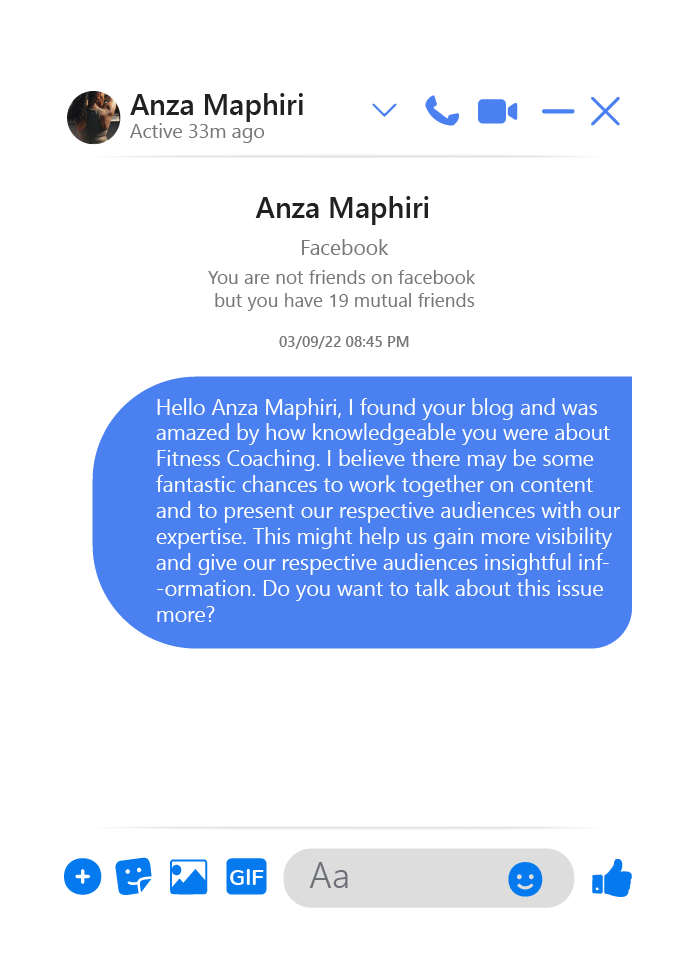
Analysis of the image above:
- Personalized Hook: "I found your blog and was amazed by how knowledgeable you were about Fitness Coaching." - This shows they've done their research.
- Value Statement: "...present our respective audiences with our expertise. This might help us gain more visibility..." - The value is clear and mutually beneficial.
- Low-Friction CTA: "Do you want to talk about this issue more?" - A simple yes/no question.
Now, consider a more direct, pain-point-driven approach.
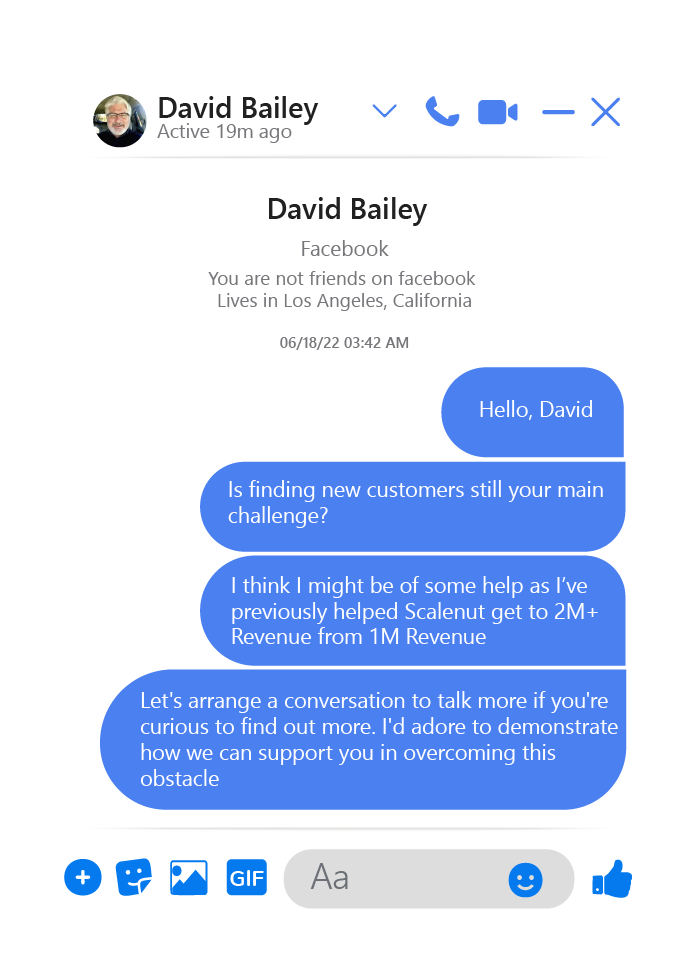
Analysis of the image above:
- Personalized Hook: "Hello, David" followed by a direct, relevant question: "Is finding new customers still your main challenge?" This is personal because it addresses a universal business problem.
- Value Statement: "I think I might be of some help as I've previously helped Scalenut get to 2M+ Revenue..." This establishes credibility and hints at the result.
- Low-Friction CTA: "Let's arrange a conversation to talk more if you're curious..." The phrase "if you're curious" makes it low-pressure.
For more examples of what to do (and what not to do), let's turn to appointment setting expert Luke Alexander.
How To Become An Appointment Setter (Full Training)
In this segment, Luke Alexander provides a rapid-fire breakdown of good and bad DMs that he has personally received. His analysis is direct and highly practical for your goal.
Watch the section from "let's talk about this more". Pay close attention to the structure of the "ideal DM" he outlines near the end of the clip. It combines a compliment (hook), an assumption that shows you know their business, a statement of your own effort, and a direct ask to work together.
Your Outreach Templates
You now have all the components. Let's assemble them into two templates you can adapt for your outreach.
Template 1: The Rapport-First Approach
This is great for coaches you genuinely admire and have been following.
Part 1 (First Message):
"Hey [Coach's Name], just saw your [post/video] on [specific topic]. Loved your point about [specific detail].Part 2 (Second Message, send immediately after):
"Quick question - with such an engaged community, I imagine your DMs must be flooded. I specialize in helping busy coaches like you turn those inbox conversations into a steady stream of qualified sales calls.Part 3 (Third Message, send immediately after):
"Would you be open to a quick idea on how you could do that without spending hours in your inbox?"
Template 2: The Pain-Point First Approach
This is effective for coaches you've identified as good prospects but don't have a deep connection with.
Part 1 (First Message):
"Hi [Coach's Name], quick question for you."Part 2 (Second Message, send a moment later):
"Your content on [their niche, e.g., mindset for entrepreneurs] is fantastic. Are you finding it challenging to manage all the DMs from potential clients?"Part 3 (Third Message, send a moment later):
"I help coaches in your space handle their inbox so they can focus on coaching, while still getting new clients booked. Curious to know if this is a priority for you right now?"
Conclusion
You are now armed with a powerful, repeatable framework for initiating conversations with your ideal clients. Remember that your first message isn't a sales pitch; it's a conversation starter. Its sole purpose is to get a reply by being personal, valuable, and easy to respond to.
Key Takeaways:
- The 3 Pillars: Your message must be Personalized, offer Value, and have a Low-Friction Ask.
- The 3-Part Formula: Structure your message with a Personalized Hook, a clear Value Statement, and a simple Call-to-Action.
- Start a Conversation, Don't Pitch: The goal is to get a reply, not to book a client in the first message. Break your message into smaller chunks to feel more conversational.
- Adapt and Test: Use the templates as a starting point, but always customize them based on your research for each specific coach.
In our next lesson, we will take personalization and value to the next level. We'll explore how to script and record a short, personalized video pitch—a powerful tool that will make you stand out dramatically from anyone else in a coach's inbox.