Welcome to the first lesson of Module 3. In our previous lesson, you built a powerful lead management system in Notion, turning your list of potential clients into an organized, actionable pipeline. You now know who you want to contact and have a system to track your progress. The next logical question is: where should you contact them?
Today, we will focus on answering that question. We'll explore how to determine the optimal outreach channel—be it a direct message, a formal email, or even a personalized video—for a specific coaching prospect. Choosing the right channel is a critical first step; it’s like choosing the right key for a lock. The best message in the world is useless if it never gets seen. By the end of this lesson, you'll have a clear framework for analyzing your prospects and confidently selecting the channel most likely to get you a positive response.
Step 1: Analyze the Prospect's "Digital Footprint"
The golden rule of outreach is to meet people where they are. Your first task is to become a detective and analyze the online presence of each coach in your Notion CRM. Your goal is to understand where they are most active and, therefore, most receptive.
As someone with experience in DM setting, you've already seen this in action. Some coaches live in their Instagram DMs, while others treat them as a noisy distraction. Look for these clues:
- Primary Platform: Where do they post most frequently? Is it Instagram, Facebook, TikTok, or LinkedIn? Check the dates on their recent posts.
- Engagement Style: How do they interact with their audience? Do they reply to comments? Do they run polls and Q&As in their Stories? A coach who actively engages with their followers is more likely to be receptive to a well-crafted DM.
- Professional Website: Do they have a "dot com"? Explore their website. Look for a "Contact" or "Work With Me" page. The presence of a dedicated business email address (e.g.,
contact@coachname.com) is a strong signal that they prefer formal, professional inquiries over casual DMs. - The Link in Bio: This is often a treasure trove of information. Does it link to a mailing list, a sales page, or a calendar booking link? This tells you how they structure their business operations.
For a high-level overview of the platforms wellness and mindset coaches typically use, the article "Top 5 Marketing Platforms for Wellness Brands" is a great resource. It confirms why platforms like Instagram are so central to this niche.
Top 5 Marketing Platforms for Wellness Brands
This article from Dharana Digital explains which platforms are most effective for businesses in the wellness space. Understanding why your prospects use these channels will help you approach them more effectively.
Skim the sections on Instagram, TikTok, and YouTube. As you read, think about the coaches on your list. Which of these platforms do they use most, and how does their activity align with the "Best Practices" mentioned in the article?
Step 2: Understand the Pros and Cons of Each Channel
Once you know where your prospect spends their time, you need to decide which channel is best for your first contact. The two primary channels for you will be Direct Messages (DMs) and Email. They each have a distinct purpose, tone, and expectation.
Charlie Morgan, a successful agency owner, emphasizes the importance of mastering one platform that is best suited to your niche. For online coaches, he makes a very specific recommendation.
Beginner Guide To Cold Outreach (this booked me 50,000+ meetings)
In this video, Charlie Morgan explains how to select an outreach platform based on the accessibility and availability of your target niche.
Watch the segment from "organize what platform". He explains that the best platform is where your niche congregates. Pay close attention to his example about gym owners versus online fitness coaches, as it's directly relevant to your goal.
As Charlie points out, Instagram is the natural habitat for many online coaches. This is your home turf. However, that doesn't mean it's always the best first choice. Let's break down the differences.
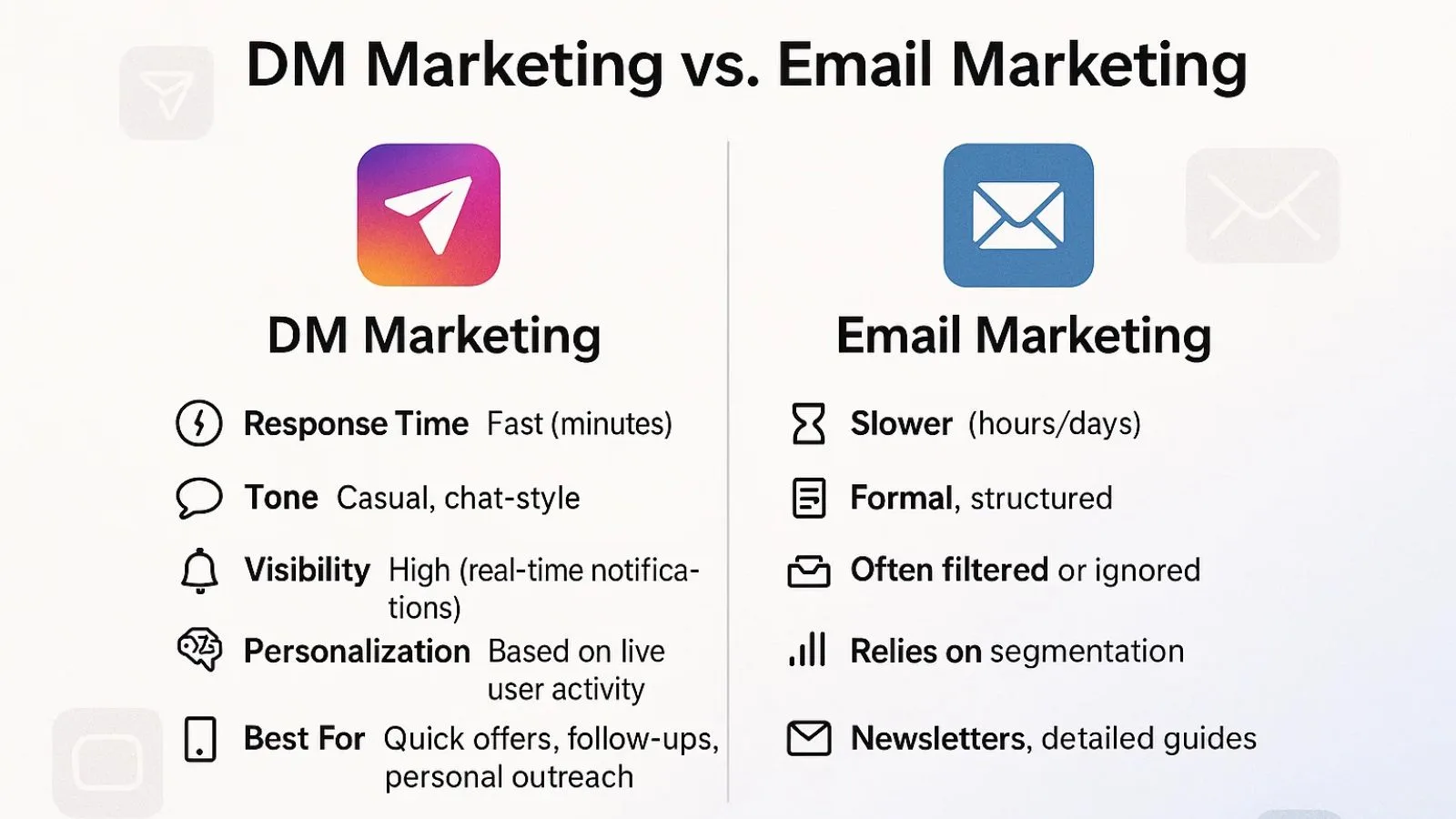
This infographic neatly summarizes the trade-offs:
-
DM (Instagram, Facebook, etc.)
- Tone: Casual, chat-style, personal.
- Best For: Building rapport, quick questions, showing personality, and leveraging your direct experience as a setter. It feels like a conversation.
- Risk: Can be perceived as less professional. Your message can get buried in a flood of DMs from fans and followers.
-
Email
- Tone: Formal, structured, professional.
- Best For: Detailed proposals, official inquiries, and contacting coaches who have a more established, corporate-like presence. It shows you respect their formal communication channels.
- Risk: Slower response times. Can be easily ignored, deleted, or filtered into a spam/promotions folder.
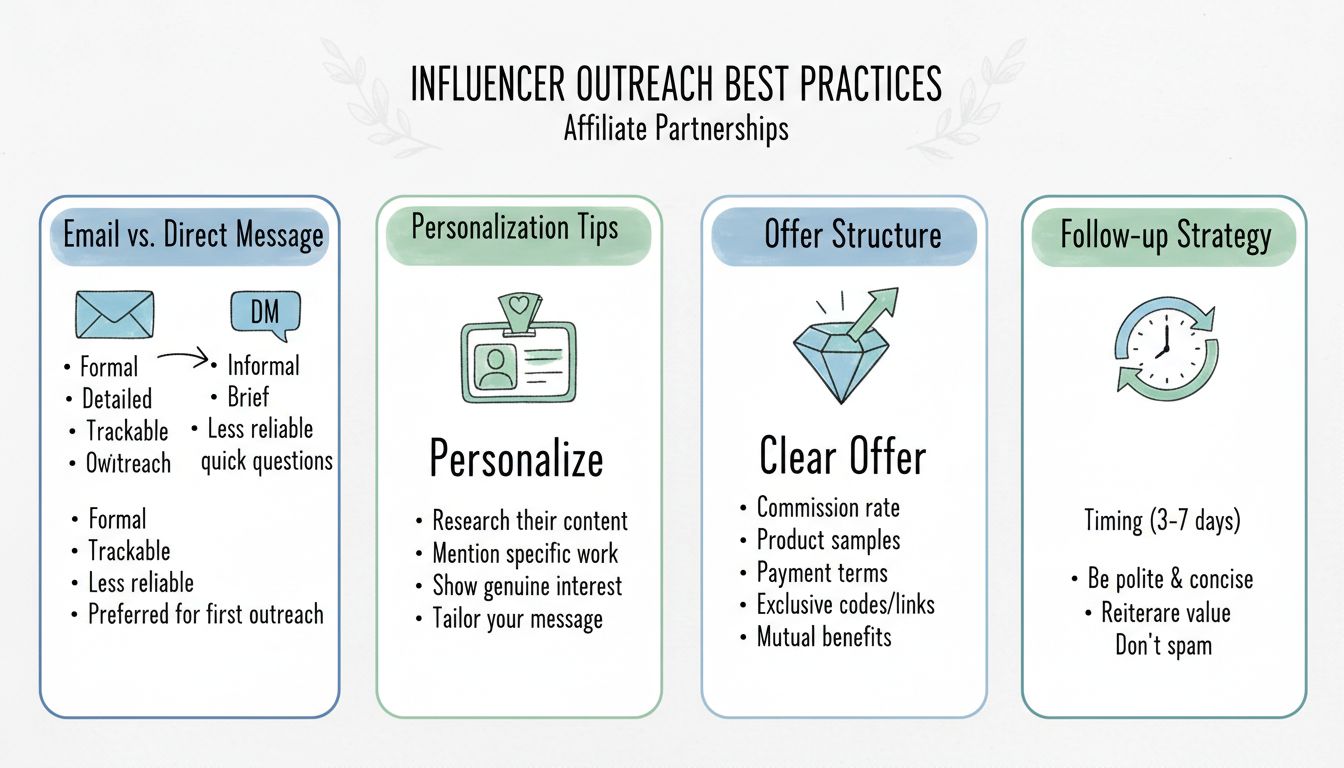
The "Influencer Outreach Best Practices" image below reinforces this distinction, noting that email is often preferred for the first outreach because it's more formal and trackable.
Step 3: Making the Decision: A Simple Framework
So, how do you choose? Use the information you've gathered to place each coach into one of these categories.
Scenario 1: The "Social Native"
- Clues: Very active on one social platform, engages personally in comments/DMs, may not have a professional website or easily found email. Their business is their social media profile.
- Optimal Channel: Direct Message. This coach lives and breathes social media. A DM is the most natural way to start a conversation. An email might feel too cold or corporate.
Scenario 2: The "Hybrid Professional"
- Clues: Active on social media, but also has a polished website with a
contact@...email address for business inquiries. They may run ads and have a more structured sales process (e.g., a "Book a Call" link). - Optimal Channel: Email. This coach has intentionally created a separate, professional channel for business. Using it shows that you are a serious professional, not just another fan in their DMs. You can always use a DM for a follow-up later.
Scenario 3: The "Established Expert"
- Clues: A large following, a team (VAs, assistants), a podcast, maybe a book. Their social media feels highly managed and less personal. They are a brand, not just an individual.
- Optimal Channel: Email. A DM will almost certainly be filtered out by a team member. Your only viable path is a highly professional email directed to the right person (if you can find their contact).
A Multi-Channel Approach
While you should choose one channel for your initial outreach, the most effective strategies often involve multiple touchpoints. The goal is to create a cohesive conversation across platforms.
Decoding Effective B2B Outreach: A Step-by-Step Guide to Engaging Your Ideal Prospects
This guide from Salaria Sales, though focused on B2B, offers excellent strategic principles for multi-channel outreach.
Read the section titled "Mastering Multi-Channel Outreach". Focus on the concepts of "Coordinated Cadences" and "Channel Strengths." This will help you think about how an email and a DM can work together. For example, you could send a professional email and, if you don't get a reply after a few days, send a brief, friendly DM like, "Hey [Name], just wanted to make sure you saw the email I sent over regarding your client acquisition. No pressure, just bumping it to the top of your inbox!"
Finally, to deepen your strategic understanding, it's helpful to grasp the fundamental trade-off between volume and conversion. Email allows for high volume, while DMs often yield a higher response rate per message.
Cold Email VS Linkedin Outreach
This video compares cold email and LinkedIn outreach. While it mentions LinkedIn, the principles of a social, conversational channel apply directly to your Instagram/Facebook DMing.
Watch these two key segments for a summary of the strategic differences: Conversion Rates: This part explains why social platforms like LinkedIn (and Instagram) have higher reply rates—it's because of the social proof from your profile. The Summary: This is the most important part. The presenter summarizes the core trade-off: LinkedIn/DMs are for lower volume but higher conversion, while email is for scale. This perfectly frames the choice you have to make.
Conclusion
You are now equipped to make a strategic decision about the best way to approach each of your prospects. This isn't about guessing; it's about making an informed choice based on analyzing your prospect's behavior and understanding the strengths of each communication channel.
Key Takeaways:
- Analyze before you act: Investigate a coach's digital footprint to understand where they are most active and receptive.
- Choose the right tool for the job: Use DMs for casual, rapport-building conversations with "Social Natives." Use email for formal, professional proposals with "Hybrid Professionals" and "Established Experts."
- Respect the signals: If a coach provides a business email, use it first. This shows professionalism.
- Think in sequences: Your first message is just the beginning. The best outreach often combines channels, such as an email followed by a gentle DM nudge.
In our next lesson, we will build directly on this foundation. Now that you've chosen your channel, we will focus on crafting a compelling initial outreach message that grabs the coach's attention, demonstrates your value, and makes them eager to reply.