Hello! Welcome to the final lesson in our module on cultivating a high-performance mindset.
In the previous lessons, we've built a strong foundation. We've distinguished between fixed and growth mindsets, explored how self-efficacy (your belief in your ability to act) is built, and understood how an internal locus of control (your belief that you are in charge of your outcomes) fuels personal agency. These concepts are the pillars of the belief system that drives elite performance.
Today, we move from theory to a powerful, practical application. Your goal is to achieve "immense results," and a critical part of that journey is not how you handle success, but how you respond to setbacks. This lesson is dedicated to transforming failures from roadblocks into stepping stones.
Our learning outcome is to reframe a past failure or setback using growth mindset principles. You will learn a structured process to analyze a negative experience, extract valuable lessons, and use it as fuel for future improvement, which is a cornerstone of resilience and long-term achievement.
1. From Failure to Feedback: The "Power of Yet"
The fundamental difference between a fixed and a growth mindset is how they interpret failure.
- A fixed mindset sees failure as a final verdict on your ability. "I failed, therefore I am a failure."
- A growth mindset sees failure as temporary feedback on your current strategy or effort. "I haven't succeeded yet."
This simple addition of the word "yet" is a profound reframing technique. It places the setback on a timeline of learning, rather than as a final destination. Carol Dweck, the pioneering researcher behind mindset theory, explains this concept beautifully.
Developing a Growth Mindset with Carol Dweck
In this classic talk, 'Developing a Growth Mindset,' Carol Dweck introduces the 'power of yet' and illustrates how it changes our entire response to challenges.
Please watch the following two clips: 00:00 - 02:11: Pay close attention to how the phrase 'not yet' transforms the meaning of failure and how children with different mindsets react to difficulty. 03:31 - 04:03: Notice the emphasis on praising the process (effort, strategy, focus), not the person's innate talent. This is the key to fostering a growth mindset in yourself and others.
The core idea is to shift your focus from proving your ability to improving your ability. When you experience a setback, the growth mindset question isn't "Am I good enough?" but rather, "What can I learn from this?"
2. A Structured Method for Reframing
While the "power of yet" is a great starting point, we need a more systematic process for analyzing and learning from complex setbacks. Reframing is a cognitive skill that involves consciously choosing to view a situation from a more constructive and empowering perspective. It's not about ignoring reality or "thinking positive thoughts"; it's about finding a more useful truth.
The following article provides an excellent three-step method for this.
Finding Solutions Through the Art of Reframing
The article 'Finding Solutions Through the Art of Reframing' from MentalHealth.com provides a clear, actionable framework that we will use for our main exercise.
Please read the introduction and the section 'A Three-Step Reframing Method'. Focus on understanding these three distinct steps: Clarify the core problem: Separating objective facts from your subjective interpretation. Build a cognitive bridge: Acknowledging the difficulty while introducing a new, empowering perspective. Reinforce the reframe: Making the new perspective stick through repetition and action.
This image provides a simple visual summary of the reframing process—transforming a limiting core belief into an empowering one.

3. Application: Your Reframing Workout
Now it's time to put this method into practice. This exercise will guide you through reframing a real past setback from your own life. Applying this process is how a theoretical concept becomes a practical tool for high performance.
Step 1: Select a Setback
Choose a specific past failure or setback. It could be an exam where you performed poorly, a personal project that didn't work out, or a habit you failed to stick with. Choose something that still carries a slight emotional charge but isn't overwhelmingly negative.
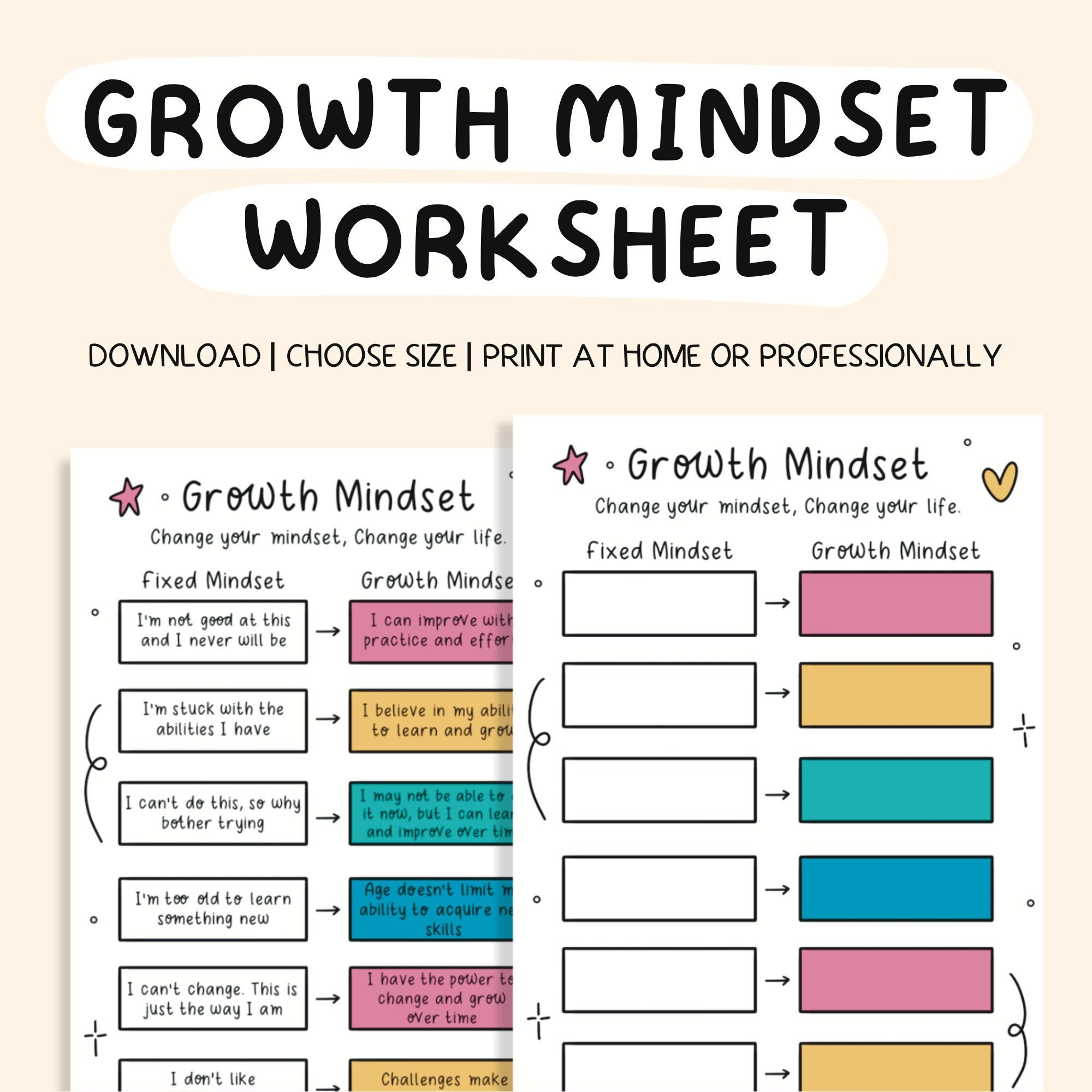
Step 2: Identify the Fixed Mindset Story
Think back to that event. What was your automatic, internal monologue? What did the "fixed mindset voice" tell you? Write down these thoughts. They often sound like:
- "I'm just not smart enough for this."
- "I always mess this up."
- "This proves I don't have what it takes."
- "There's no point in trying again."
These statements treat the setback as a permanent reflection of your identity or abilities.
Step 3: Apply the Growth Mindset Reframe
Now, let's consciously challenge that fixed mindset story using the three-step method.
1. Clarify the Core Problem:
- Describe what happened using only objective facts. For example, instead of "I bombed the test because I'm terrible at math," write "I received a score of 55% on the calculus exam. I answered all questions on differentiation correctly but answered most questions on integration incorrectly."
- This removes self-judgment and presents the situation as a set of neutral data points.
2. Build a Cognitive Bridge:
This is where you actively generate a growth-oriented interpretation. Ask yourself the following questions, inspired by the resources from PositivePsychology.com:
- What did I learn from this experience about my strategy or preparation?
- What specific knowledge or skill gaps did this setback reveal? (e.g., "This shows my comprehension of integration is a weak point that needs focused practice.")
- What different strategy could I try next time?
- What positives, if any, came out of this? (e.g., "Now I have a much clearer idea of what to focus my studies on.")
Your goal is to create a new statement that reframes the unhelpful view. Look at these examples to guide you.
3. Reinforce the Reframe:
A thought is only powerful if it leads to action. Based on your new perspective, what is one concrete, specific action you will take?
- Old View: "I'm bad at math." -> Action: Avoid math.
- Reframed View: "My study strategy for integration was ineffective." -> Action: "This week, I will schedule two 45-minute sessions to practice integration problems and watch a tutorial on the topic."
Take your time to work through these steps for the setback you chose. Writing down your answers is crucial for making the process concrete and effective.
Conclusion
In this lesson, you've learned to operationalize the growth mindset by turning it into a structured skill. Responding to failure is not a matter of innate toughness; it is a trainable process of analysis and re-interpretation. By consistently applying this reframing technique, you build the resilience necessary to persevere through the challenges that are an inevitable part of pursuing ambitious goals.
Key Takeaways:
- Failure is Feedback, Not a Verdict: A growth mindset views setbacks as temporary and informative data points on your learning journey.
- Use the "Power of Yet": Framing a failure as something you haven't achieved yet immediately places it in a context of future growth.
- Reframing is a Skill: You can systematically re-interpret a setback using the three-step method: Clarify the facts, Build a new growth-oriented perspective, and Reinforce it with a concrete action.
- Action Solidifies Mindset: The final step of taking action is what transforms a new thought into a new reality and strengthens your sense of agency.
Preview of the Next Lesson:
We have now concluded our module on the psychological foundations of a high-performance mindset. With these principles in place, we are ready to build the systems and behaviors that enable focused, productive work.
In our next lesson, we will begin the "Mastering Focus and Deep Work" module by tackling one of the biggest enemies of modern productivity. We will explain the cognitive costs of multitasking and context switching on performance, giving you the scientific "why" behind the critical importance of single-tasking for achieving deep, meaningful results.