In our previous lesson, we established a formal model for a polyandrous vee relationship, framing it as a three-player sequential game with distinct, asymmetrical roles. We identified the players as the Hinge and two non-hinge partners (Arms), and introduced the concept of player "types" to account for different preferences and behavioral tendencies. This provided us with the 'game board' and the 'pieces'.
Today, we will build on that foundation by exploring the moves each piece can make. This lesson focuses on identifying and comparing the strategy spaces available to the hinge versus the non-hinge partners. In game theory, a player's strategy space is the complete set of actions they can take at any point in the game. Understanding these distinct sets of options is crucial for analyzing why certain outcomes occur and how relationship dynamics unfold. We will see how the vee's inherent structural asymmetry grants the hinge a fundamentally different set of strategic choices compared to the arms.
1. The Hinge's Strategy Space: The Central Manager
The hinge partner occupies a unique position as the central node connecting the two arms. As we noted previously, this makes them the "sole conduit" for relational flows and a "centralized resource bottleneck." Consequently, the hinge's strategy space is primarily concerned with management, allocation, and brokering. Given your background in operations research, you can think of the hinge as a central server managing requests from two independent clients, or as an inventory manager balancing stock between two warehouses. Their strategies are about optimizing the entire system under constraints.
Let's explore the key domains of the hinge's strategic choices. A helpful resource from the podcast Multiamory provides a practical breakdown of the responsibilities and pitfalls of being a hinge, which we can translate directly into strategic actions.
334 - What Makes a Good Hinge Partner - Multiamory
This article offers a clear, practical summary of the hinge's role, which is perfect for defining their strategy space. It outlines the unique benefits, struggles, pitfalls, and skills associated with being a hinge, all of which correspond to choices and potential actions within our game model.
Please read the following sections: Start with the lists under the heading "Good hinges" to understand the trade-offs (benefits vs. struggles) that shape the hinge's decision-making environment. Next, review the list of pitfalls, which represent suboptimal strategic choices. Then, read the section on skills for being a good hinge. This list essentially outlines a set of effective strategies. Pay special attention to the points on structural imbalances and ethical information sharing, which we will discuss further.
Based on this reading and our model, we can categorize the hinge's primary strategic actions as follows:
-
Resource Allocation: This is the most evident set of strategies. The hinge must decide how to distribute finite personal resources, including:
- Time: Scheduling date nights, trips, and casual time between two partners who may have competing demands. A strategy here is a complete plan for time allocation (e.g., "alternate weekends with each partner," "dedicate two weeknights to each partner").
- Emotional Energy: Deciding how much support to offer each partner, especially when both are in need. A people-pleasing strategy might be to try to meet all needs simultaneously, often leading to burnout, as the article mentions.
- Financial Resources: Deciding on spending for dates, gifts, or shared projects across two relationships.
-
Information Management: The hinge is the information broker of the vee. Their strategic choices here are critical:
- Disclosure Level: Deciding what information about one relationship to share with the other. This ranges from a strategy of full transparency to one of heavy compartmentalization. As the article notes, both "over/undersharing" are potential pitfalls.
- Framing (PR): Choosing how to present information about one partner to the other. A strategy of "bad PR"—venting about Partner A to Partner B—can be a misguided attempt to create an alliance but often damages the overall system.
- Ethical Sharing: This involves developing a consistent policy for sharing information that respects the privacy agreements established with each partner.
-
Structural and Boundary Management: The hinge defines the architecture of the polycule.
- Metamour Interaction: Deciding whether to encourage, discourage, or remain neutral about the relationship between the two arms. Forcing a "kitchen table" dynamic or strictly enforcing separation are two opposing strategies.
- Boundary Enforcement: Upholding personal boundaries (e.g., for self-care time) and relationship boundaries (e.g., agreements about privacy). A failure to uphold boundaries is a common losing strategy.
- Managing Imbalances: Actively working to counterbalance structural privileges, such as those that come with cohabitation or a longer history with one partner. A strategy here could involve creating special rituals or forms of recognition for the non-nesting partner.
The hinge's strategy space is therefore vast and complex, revolving around proactive management and system-level decisions. Every choice creates externalities for all players.
2. The Non-Hinge Partner's Strategy Space: The Influencer
In stark contrast to the hinge, the non-hinge partners (the arms) have a more constrained strategy space. They cannot act directly on each other; their actions are almost entirely directed at the hinge. Their primary goal is to influence the hinge's decisions to maximize their own utility within their dyadic relationship. In the language of our sequential game model, they are the "Challengers" who decide whether and how to make demands on the "Defender's" resources.
The key domains of a non-hinge partner's strategy space include:
-
Demand and Request Formulation: This is their most direct action. They can choose to:
- Request Resources: Ask for more time, attention, or specific commitments from the hinge.
- Escalate Demands: Insist on their needs being met, potentially introducing conflict into the system.
- Remain Quiescent: Choose not to make demands, maintaining the status quo.
-
Metamour Relationship Preference: A crucial strategic choice for a non-hinge partner is to signal their desired level of interaction with their metamour. This preference shapes the overall dynamic of the vee.

The spectrum from Kitchen Table to Parallel represents a key axis in a non-hinge partner's strategy space. An even more extreme strategy on this spectrum is "Don't Ask, Don't Tell" (DADT).
Kitchen Table to Parallel Polyamory, Part 8: Extreme Parallel and ...
This article explains the far end of the parallel polyamory spectrum, defining "Don't Ask, Don't Tell" (DADT) as a specific strategy. It highlights how this choice fundamentally shapes the roles and information flow within the vee.
Read the introductory paragraph to understand the definition of DADT and how it frames the hinge as a "barrier." Then, read the next few paragraphs discussing the varieties and difficulties of this strategy. Notice how this strategy is defined by a lack of information, which puts significant constraints on all players, especially the hinge.
The choice of where to be on the Kitchen Table—Parallel—DADT spectrum is a powerful strategic signal from a non-hinge partner about their needs for information, security, and integration.
- Cooperation vs. Defection: Like any player in a game, an arm can choose cooperative or non-cooperative strategies.
- Cooperation: Respecting the hinge's time with the other partner, communicating needs clearly, and showing trust.
- Defection: Undermining the other relationship, making excessive demands, or punishing the hinge for time spent with the other partner.
3. Comparison: Hub vs. Spoke Asymmetry
The fundamental difference between the strategy spaces of the hinge and the arms lies in the structural power endowed by their position in the network. The hinge acts as a central hub, while the arms act as spokes.
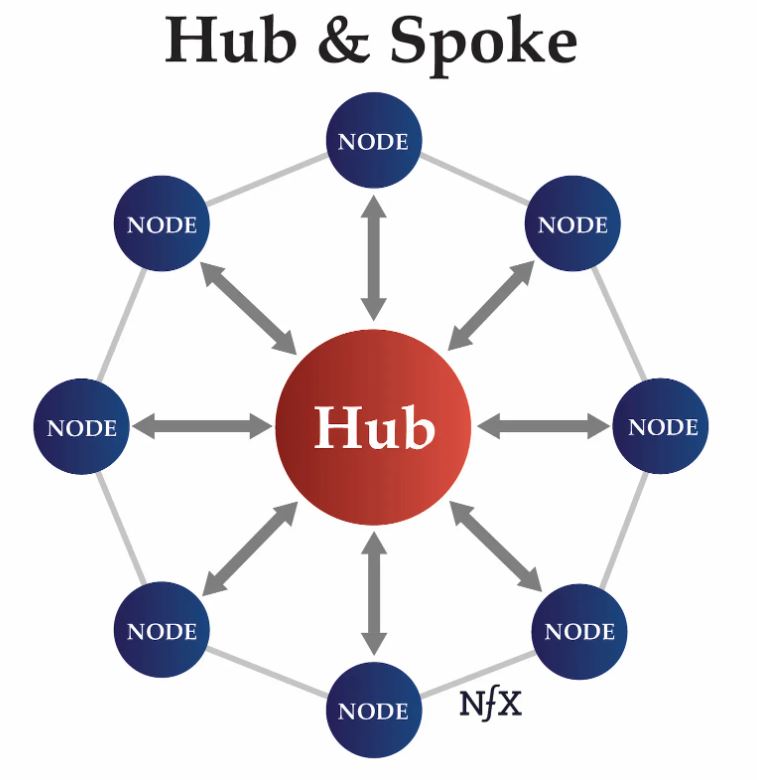
This structure dictates the asymmetry in their available strategies:
| Feature | Hinge's Strategy Space | Non-Hinge Partner's Strategy Space |
|---|---|---|
| Nature of Action | Proactive, managerial, executive | Reactive, influencing, requesting |
| Scope of Impact | System-wide (decisions affect all three players) | Primarily dyadic (decisions mainly affect self and hinge) |
| Information | Access to information from both dyadic relationships | Limited to their own dyad and what the hinge chooses to share |
| Primary Goal | Balancing the system, managing competing demands | Maximizing own utility from their relationship with the hinge |
| Core Function | Resource Allocation & Information Brokering | Influence & Preference Signaling |
The hinge plays a game of multivariate optimization under constraints, a task familiar from your background in operations research. They must allocate resources (time, energy) to satisfy two separate, often competing, objective functions (the happiness of each partner) without violating system constraints (e.g., total available time, their own sanity).
The arms, in contrast, play a game of strategic influence. Their goal is to shape the parameters of the hinge's optimization problem in their favor. They provide inputs (requests, emotional signals) to a central processor (the hinge) and react to the outputs. They have significant power, but it is indirect.
Conclusion
In this lesson, we have dissected the strategy spaces for both the hinge and non-hinge partners in a polyandrous vee. We've established that their roles are not just descriptively different but are functionally and strategically distinct due to the underlying network structure.
Here are the key takeaways:
- The Hinge is a Manager: Their strategy space involves proactive, system-wide decisions about resource allocation, information management, and boundary setting.
- The Non-Hinge Partner is an Influencer: Their strategy space is focused on reactive choices aimed at influencing the hinge's decisions. Key strategies involve formulating demands and signaling preferences for interaction and information (e.g., Kitchen Table vs. DADT).
- Asymmetry is Key: The Hub & Spoke structure of the vee grants the hinge a broader, more complex set of executive actions, while the arms have a more constrained set of influential actions. This asymmetry in available strategies is a primary driver of the dynamics within the relationship.
We have now defined the players, their roles, and the actions they can take. The next logical step in our analysis is to understand the motivations behind their choices. In our next lesson, we will define utility functions to capture the emotional, temporal, and material payoffs for each player, allowing us to formally analyze why a player might choose one strategy over another.