Welcome back. In our previous lesson, we established a formal way to represent player motivations through utility functions, combining material, temporal, and complex psychological payoffs. We now have all the necessary components in place: the players (Hinge, Arms), their available strategies, and their utility functions.
This lesson bridges the gap between defining a game's components and analyzing its outcomes. Our objective is to classify common vee relationship scenarios into fundamental game-theoretic categories: coordination, anti-coordination, and mixed-motive games. Your background in statistical classification and operations research will be an asset here, as we are essentially creating a typology of strategic interactions based on their underlying incentive structures. Recognizing these patterns is the first step toward predicting behavior and understanding the stability of relationship dynamics.
The Value of Classification: A Game Theory "Zoo"
Before diving into the specifics, it's helpful to understand why we classify games. A useful analogy is that of a zoo: once you learn the general properties of a "lion" or a "monkey," you can quickly understand a lot about any specific lion or monkey you encounter, even with their individual quirks.
The following video introduces this idea and outlines the classic games that form the basis of our classification system.
Why you should learn the classic game theory games: Prisoner’s Dilemma, Battle of the Sexes, etc
This video from Ashley Hodgson's channel explains why learning to recognize a few key game structures is so powerful. It introduces the "zoo analogy" for classifying strategic situations.
Please watch these segments to frame our task for this lesson: First, hear the core argument for why we learn these patterns. Next, note the key insight that competition and cooperation are not always mutually exclusive, and can coexist in the same game. This is crucial for understanding the nuances of polyamorous dynamics. Finally, pay close attention to the zoo analogy, which perfectly encapsulates our goal: to classify a situation to understand its fundamental incentive structure.
As the video suggests, by classifying a scenario as a "Prisoner's Dilemma" or a "Stag Hunt," we immediately gain insight into the core tensions and potential solutions, regardless of the specific narrative details.
A Framework for 2x2 Games
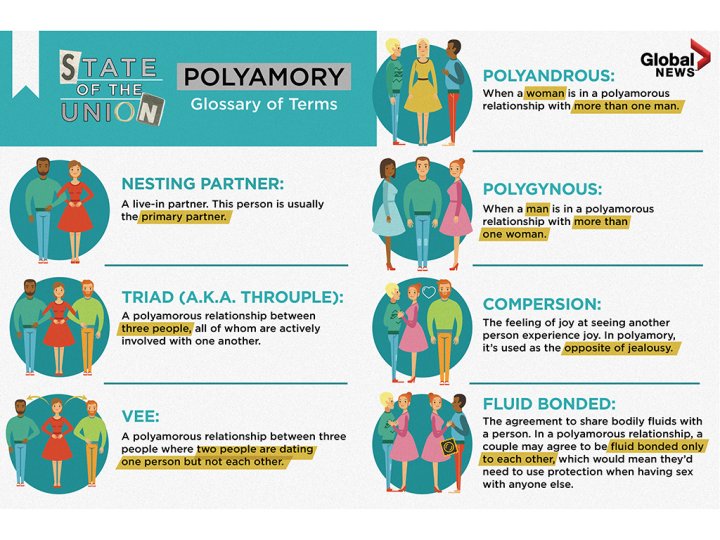
Most strategic dilemmas can be distilled into a two-player, two-strategy format, represented by a 2x2 payoff matrix. In the context of a vee, many critical interactions occur between the two non-hinge partners (the "arms"), where their payoffs are influenced by the hinge's anticipated reactions and well-being.
Let's adopt a standard notation for the payoff matrix, which will serve as our analytical foundation.
| Player 2 (e.g., Arm 2) | |||
|---|---|---|---|
| Strategy A | Strategy B | ||
| Player 1 (e.g., Arm 1) | Strategy A | (W, W) | (X, Y) |
| Strategy B | (Y, X) | (Z, Z) |
Here, the letters represent the utility each player receives for an outcome:
- W: The payoff to each when they both choose Strategy A.
- Z: The payoff to each when they both choose Strategy B.
- Y: The payoff to the player choosing B when the other chooses A.
- X: The payoff to the player choosing A when the other chooses B.
The entire classification of the game depends on the preference ordering of these four payoff values. A fascinating blog post on LessWrong provides a systematic exploration of this idea.
Classifying games like the Prisoner's Dilemma - LessWrong
This article provides a clear, systematic framework for classifying 2x2 games by analyzing the ordering of the four main payoff variables.
Please read the introductory section, from the beginning of the article down to the end of the second-to-last paragraph. Focus on how the simple ordering of Y > W > Z > X defines the Prisoner's Dilemma and creates its characteristic tension.
Now, let's use this framework to classify some archetypal vee scenarios.

1. Coordination Games: The Drive for Alignment
In coordination games, the players' interests are aligned. Everyone is better off if they can successfully coordinate on the same course of action. The main obstacle is not conflict of interest, but ensuring mutual trust and clear communication.
Scenario: Planning a Group Activity ("Let's Party")
Imagine the Hinge wants to plan a special weekend and asks both Arms for their ideal preference between two options: a "Quiet Retreat" (Strategy A) or a "City Adventure" (Strategy B). While each arm might have a slight personal preference, their primary utility comes from seeing the Hinge happy and feeling a sense of harmony in the vee. The worst outcome for everyone is disagreement and conflict, which sours the mood.
This is a classic coordination game. Let's assume both arms slightly prefer the retreat.
- Retreat/Retreat (A/A): Both get their preferred trip, and the Hinge is happy. High utility for all.
- Adventure/Adventure (B/B): Neither gets their top choice, but they are in agreement, and the Hinge is content. Medium utility.
- Retreat/Adventure (A/B or B/A): Disagreement. The Hinge is stressed, planning is difficult, and no one is happy. Low utility. and
The payoff ordering would be . The challenge is simply to align expectations.
Scenario: Deepening Commitment ("Stag Hunt" or "Assurance Game")
A more consequential coordination game is the Stag Hunt. Here, cooperation can lead to a spectacular outcome (the "Stag"), but it's risky. If you try to cooperate and your partner doesn't, you end up with nothing. The safe option is to act alone for a smaller, guaranteed payoff (the "Rabbit").
- Vee Application: The Hinge proposes a major step, such as all three partners contributing to a down payment on a shared property.
- Cooperate (Hunt Stag): Both arms agree to commit their finances and emotional energy. The outcome is a shared home, representing a huge increase in security and relationship depth for everyone. Payoff = 10.
- Defect (Hunt Rabbit): An arm can choose to keep their finances separate and not commit. This is the safe, independent route. Payoff = 2.
- Mixed Outcome: If Arm 1 commits (hunts stag) but Arm 2 defects (hunts rabbit), the deal falls through. Arm 1 has expended emotional energy, perhaps revealed financial details, and feels foolish. Payoff = 0. Arm 2 is safe with their guaranteed payoff of 2.
The payoff ordering here is . For Arm 1, the payoffs are:
- Both commit:
- A1 defects, A2 commits:
- Both defect:
- A1 commits, A2 defects:
This game perfectly models the need for assurance in high-stakes relationship decisions. The video below provides an excellent explanation of this dynamic.
Assurance Game / Stag-Hunt in Game Theory
This video from Ashley Hodgson breaks down the Stag Hunt (Assurance Game), highlighting the tension between a high-reward, high-trust option and a low-reward, low-risk one.
Watch the following segments: The initial explanation of the team vs. individual dynamic. The discussion of the two Nash equilibria and how lack of trust can lead players to the inferior but safer outcome. The summary of the three key traits of a Stag Hunt game.
2. Anti-Coordination and Mixed-Motive Games: Managing Conflict
Not all situations benefit from alignment. Sometimes, the best outcome requires differentiation.
Scenario: Scheduling One-on-One Time ("Chicken")
This is a classic anti-coordination game. Imagine the Hinge has Friday and Saturday night available for one-on-one dates. Both arms would prefer Saturday night, but their absolute worst outcome is both demanding Saturday, creating a massive conflict that ruins the weekend for everyone.
- Strategy A: Demand Saturday
- Strategy B: Be flexible (take Friday)
The payoffs might look like this (from Arm 1's perspective):
- A1 flexible, A2 demands Saturday (B/A): A1 gets Friday, A2 gets Saturday. It's not A1's first choice, but it's peaceful. Payoff = 5.
- A1 demands Saturday, A2 is flexible (A/B): A1 gets their preferred night. Best outcome. Payoff = 10.
- Both are flexible (B/B): They can easily negotiate who gets which night. Good outcome. Payoff = 7.
- Both demand Saturday (A/A): A "head-on collision." Major conflict, Hinge is distressed, and the weekend is likely ruined. Worst outcome. Payoff = 0.
The preference ordering defines the Game of Chicken (also known as Hawk-Dove or, in the LessWrong article, "Farmer's Dilemma"). The goal is to get the other player to swerve.
Scenario: Emotional Openness ("Prisoner's Dilemma")
The most famous mixed-motive game is the Prisoner's Dilemma, where individual rationality leads to a collectively poor outcome.
- Vee Application: The two arms are developing their (non-romantic) relationship. They can either be "Open" (share vulnerabilities, offer support) or "Guarded" (protect themselves, remain distant).
- Cooperate (Be Open): Builds trust and a supportive environment for the vee.
- Defect (Be Guarded): Protects oneself from potential hurt or exploitation.
Payoffs for Arm 1:
- Both are Open (Cooperate/Cooperate): Mutual trust is built. A strong, supportive dynamic emerges. Payoff = 5. ()
- A1 is Guarded, A2 is Open (Defect/Cooperate): A1 gains a sense of superiority or emotional safety while A2 feels vulnerable and foolish. This is the "Temptation" payoff. Payoff = 10. ()
- A1 is Open, A2 is Guarded (Cooperate/Defect): A1 feels exposed and like a "sucker." This is the worst outcome. Payoff = 0. ()
- Both are Guarded (Defect/Defect): No trust is built; the metamour relationship remains superficial and potentially suspicious. It's not terrible, but it's a stagnant, low-trust equilibrium. Payoff = 2. ()
The preference ordering is , which is the classic Prisoner's Dilemma. Each arm has an individual incentive to be Guarded, but if they both do so, they end up in a worse state than if they had both chosen to be Open.
The Sociological Lens: How Relationship Type Defines the Game
So far, we have assumed the game is defined by the objective situation. However, a powerful insight from sociological game theory is that the pre-existing relationship between players fundamentally shapes how they perceive and play the game.
The paper "Paradigm Shift in Game Theory" provides a compelling table that illustrates this.
Paradigm Shift in Game Theory: Sociological Re-Conceptualization ...
This paper contrasts classical game theory with a sociological approach that considers roles and social relationships. We will focus on one of its appendices, which demonstrates how relationship type transforms game outcomes.
Please navigate to the Appendix section. Our focus is on Table A3 and the paragraphs immediately preceding and following it. You can find this by searching for the text "Given a multi-agent social system" and reading from there. Examine Table A3. Notice how for a given game (the rows, e.g., "Coordination Game"), the expected outcome (the "Normative Equilibrium") changes drastically depending on the type of social relationship between the players (the columns, e.g., "Solidarity," "Competitive," "Adversary").
This table provides a profound insight for analyzing vee dynamics. Consider the scheduling "Chicken" game again.
- If the arms have a Solidarity Relationship: They will likely see the conflict as a shared problem and coordinate to avoid the worst outcome, perhaps by taking turns choosing their preferred night. The game resolves cooperatively.
- If the arms have a Competitive Relationship: They will actively try to "win" by forcing the other to swerve. The game becomes a true battle of wills, with a high risk of mutual destruction (the outcome in the table's notation, which corresponds to our payoff).
- If the arms have an Adversary Relationship: They might even prefer the mutually destructive outcome to one where the other player gains an advantage. The goal shifts from winning to making the other lose.
This means that to correctly classify a vee scenario, you must not only understand the objective payoffs but also assess the nature of the relationship between the players involved.
Conclusion
In this lesson, we have developed a systematic approach to classifying strategic dilemmas within a polyandrous vee. By recognizing the underlying incentive structures, we can categorize scenarios into well-understood families of games, which gives us immediate insight into the core challenges and potential outcomes.
Key Takeaways:
- Game classification is a powerful analytical tool. By identifying a situation as a Stag Hunt, Chicken, or Prisoner's Dilemma, we can leverage a vast body of knowledge about that game's dynamics.
- Coordination games (e.g., planning activities, making commitments) are about achieving mutual alignment. Their success hinges on trust and communication to reach the superior cooperative outcome.
- Anti-coordination games (e.g., scheduling conflicts) are about avoiding mutual disaster. The challenge is often about fairness, turn-taking, or one party strategically yielding.
- Mixed-motive games (e.g., emotional vulnerability) contain a fundamental tension between individual and collective interests. Overcoming the temptation to defect is the central problem.
- The nature of the relationship transforms the game. A situation that is a simple coordination problem for allies can become a destructive conflict for rivals.
We have now moved from defining the components of a game to identifying the type of game being played. In our next lesson, we will make this process fully quantitative. We will take specific vee scenarios and construct the complete payoff matrices with numerical utilities, preparing us to formally analyze their equilibria.